Principal, JWC Academy · 10th Place, 2017 World Latte Art Championship · 3× Malaysia Latte Art Champion
7 min read · Updated Jul 2026 · Bukit Jalil · Kajang · Mount Austin
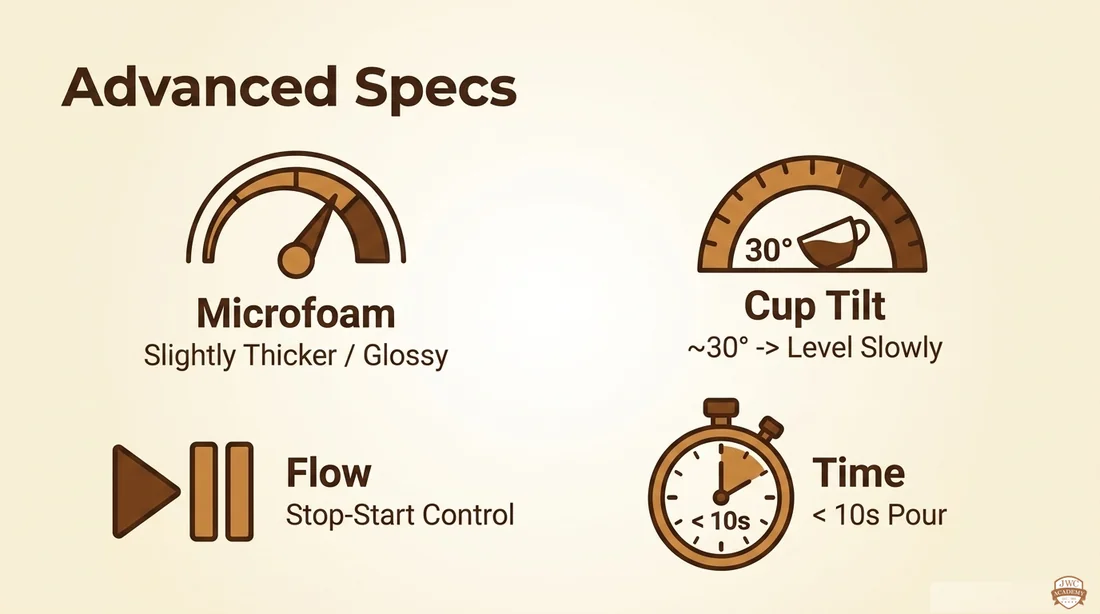
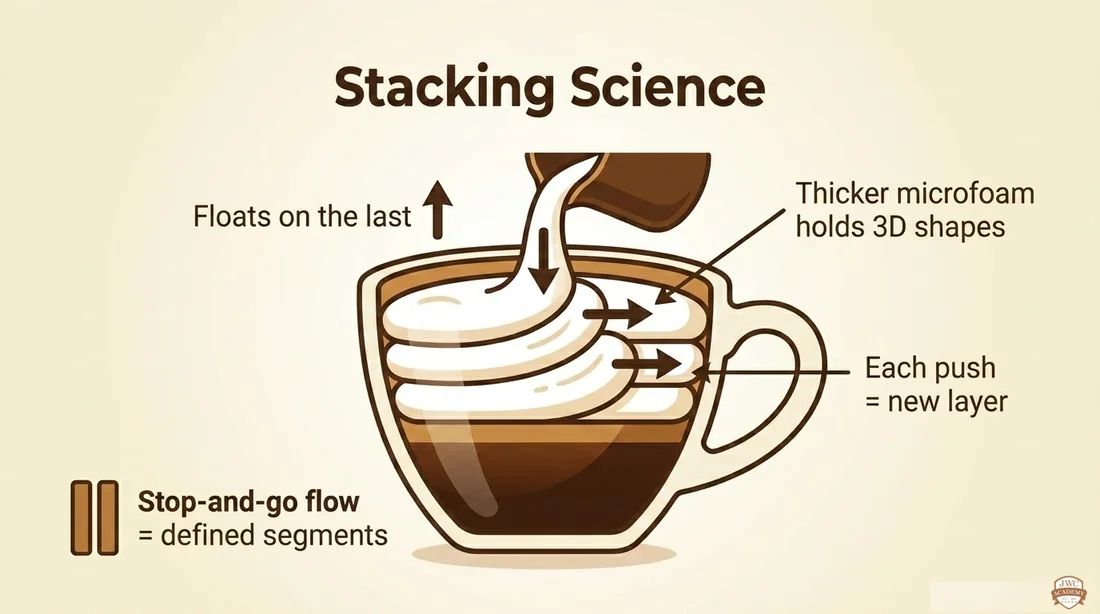
Answer firstAdvanced patterns are built on stacking: each push floats a new layer on top of the last, and stop-and-go flow divides the design into segments. The foam must be slightly thicker and glossy to hold 3D shapes. Tulip = repeated pushes; swan = rosetta plus a heart neck; etching = drawn with a tool.
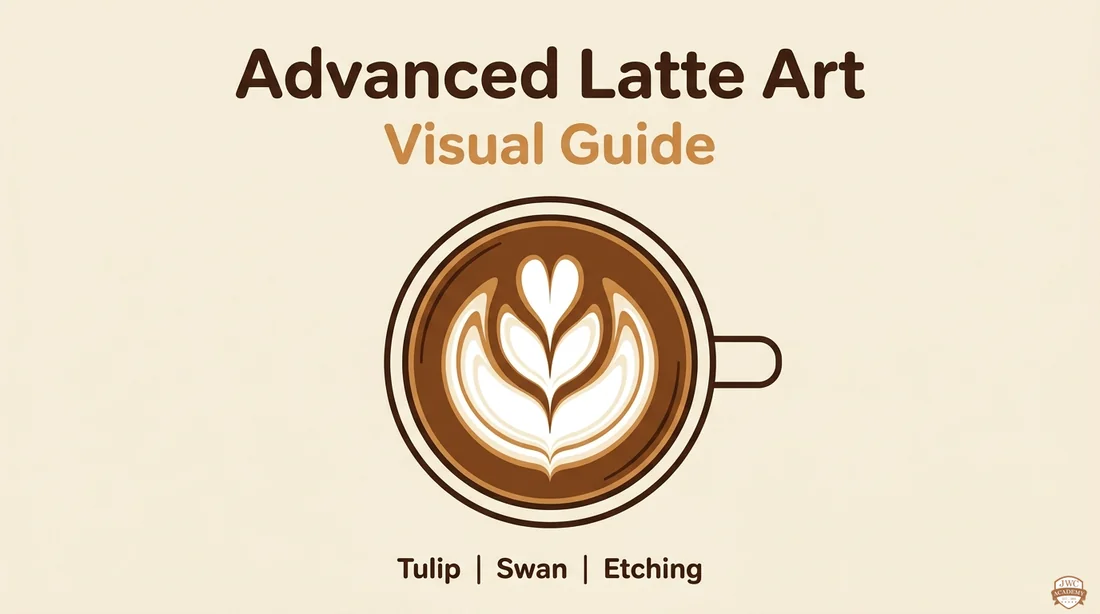
Three advanced directions: tulip · swan · etching
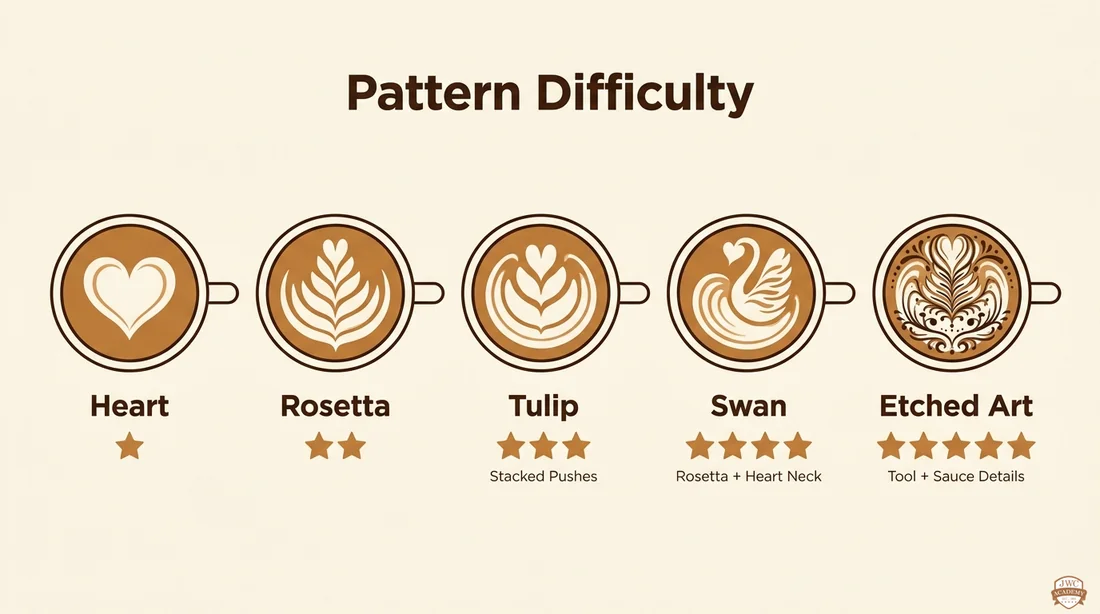
The difficulty ladder: where are you now?
Heart ★ → rosetta ★★ → tulip ★★★ → swan ★★★★ → etching ★★★★★. Master the heart and rosetta first; without a solid base, advanced patterns just blur.
Each push floats new white on top of the last (the newest sits highest); the pause lets each segment set with a clean edge; slightly thicker foam keeps the 3D shape from collapsing. That is the secret to crisp tulips and swans.
Stop-and-go stacking = crisp, layered 3D patterns
· · ·
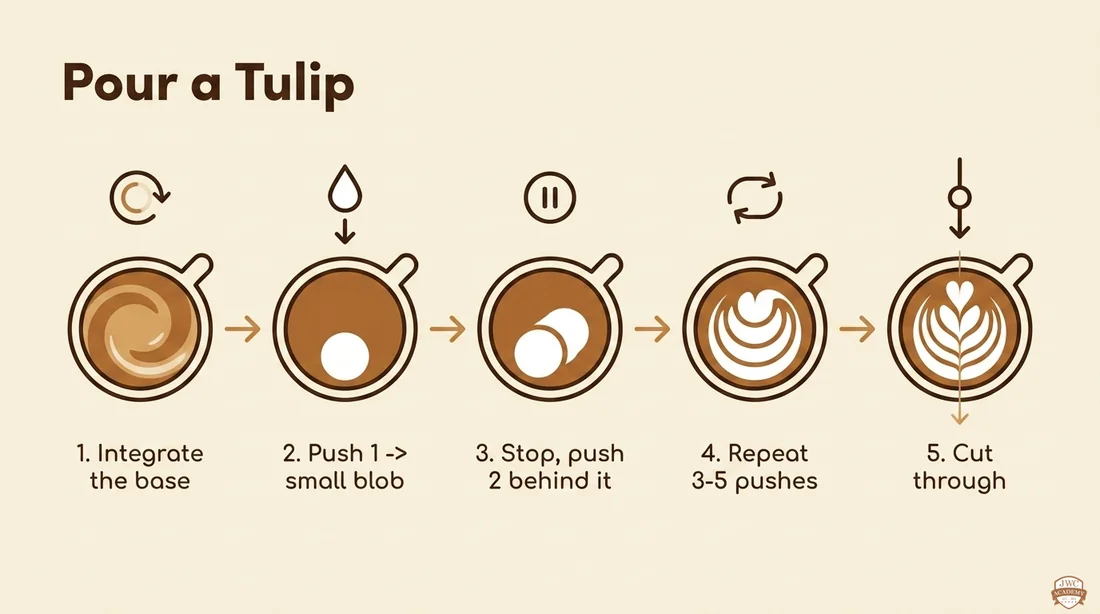
Pour a tulip
1. Integrate the base. 2. Push a first small blob. 3. Stop, then push a second blob behind it. 4. Repeat 3–5 pushes, stacking forward. 5. Lift and cut a line through the middle to finish.