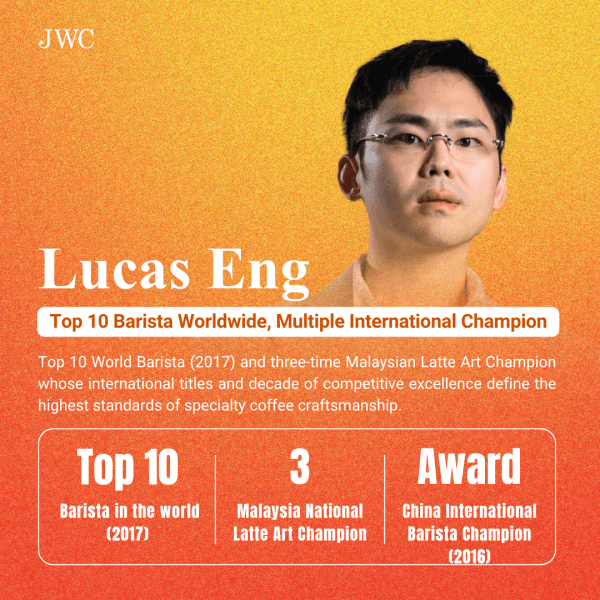
Principal, JWC Academy · 10th Place, 2017 World Latte Art Championship · 3× Malaysia Latte Art Champion
6 min read · Updated Jul 2026 · Bukit Jalil · Kajang · Mount Austin
Answer firstAlmost all coffee comes from two species. Arabica (about 60%) is sweet, fruity-acidic, complex, lower in caffeine, pricier and fussy (grows at high altitude). Robusta (about 40%) is strong, bitter, heavy-bodied, crema-rich, nearly double the caffeine, cheaper and hardy. Specialty coffee leans Arabica; espresso and traditional kopi rely on Robusta for strength and crema; the best blends use both.
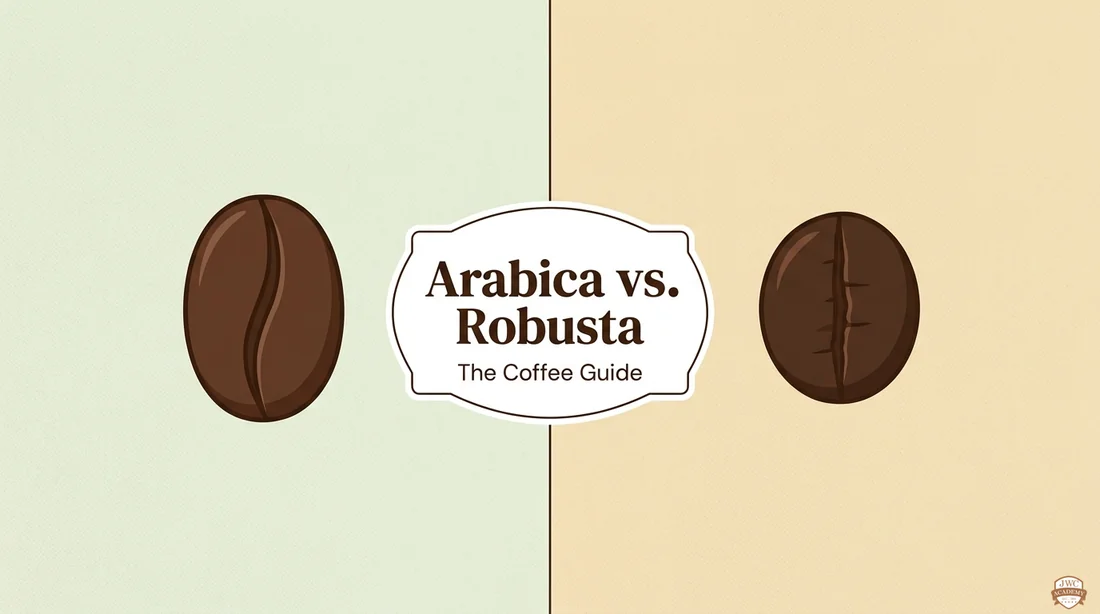
Arabica vs. Robusta · the guide at a glance
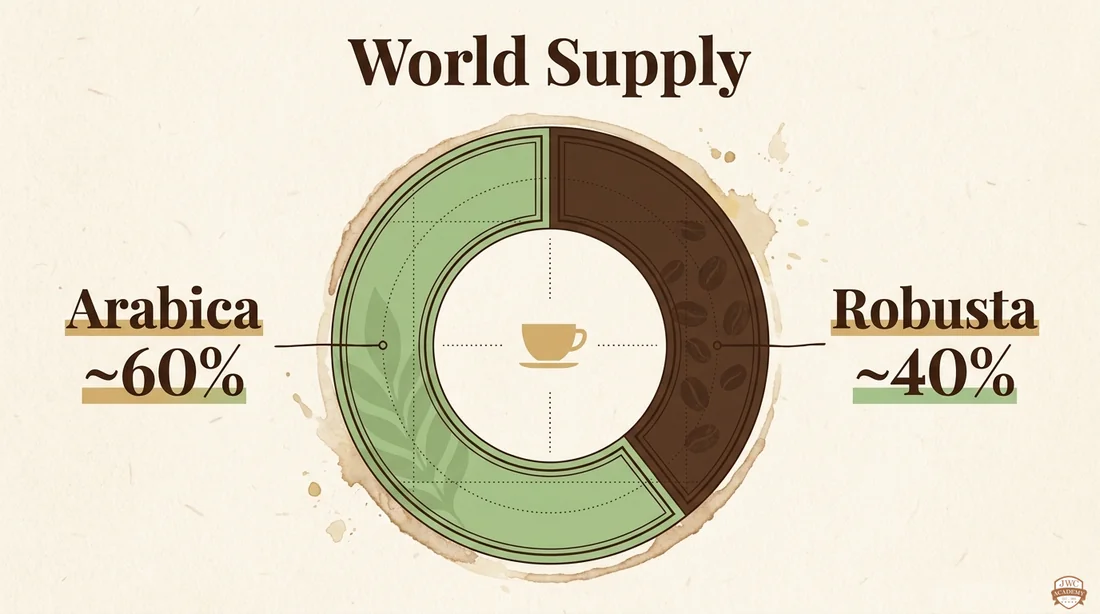
World supply: roughly 60/40
About 60% Arabica, 40% Robusta. What you drink in a specialty or pour-over cafe is usually Arabica; supermarket instant, traditional kopi and many espresso blends lean on Robusta.
Arabica ~60% · Robusta ~40%
Arabica: sweetness and complexity
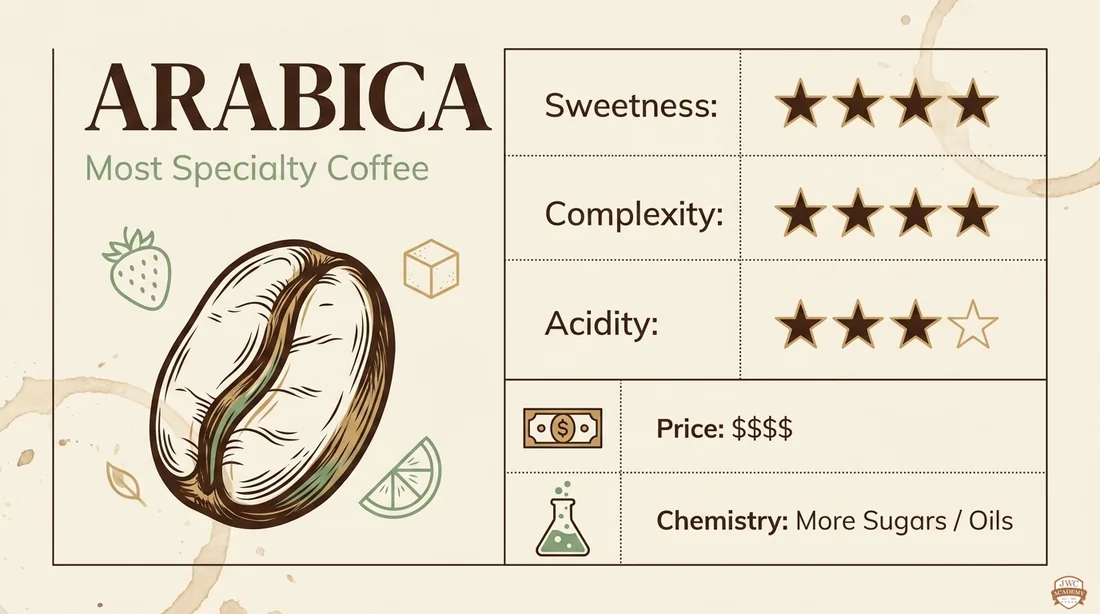
Arabica has more sugars and oils, so it tastes sweet, brightly acidic and complex, the star of specialty coffee. The catch is it’s fussy: high altitude only, prone to pests and disease, lower yield, so it costs more.
High sweetness · complex · bright acidity · price $$$$
Robusta: strength and crema
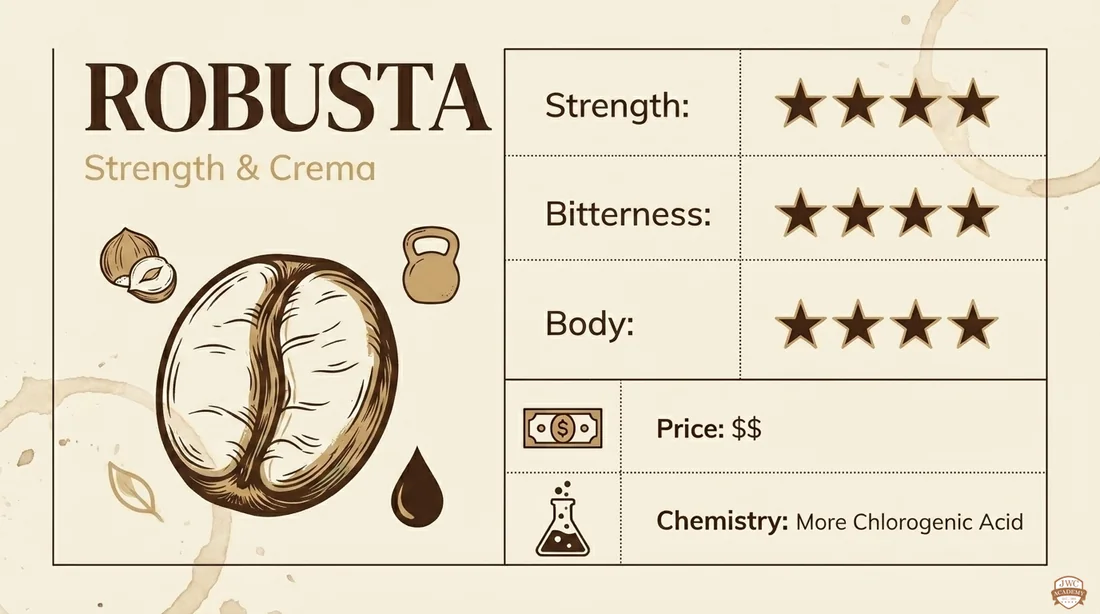
Robusta is strong, bitter and heavy-bodied, and it pulls a thick, lasting crema on espresso. It’s hardy, pest-resistant and grows at low altitude, so it’s cheap. The trade-off is less complexity, more bitterness and a grainy or rubbery note.
Buying green or eyeing roasted beans, shape and crease are the quickest tells.
Double the caffeine
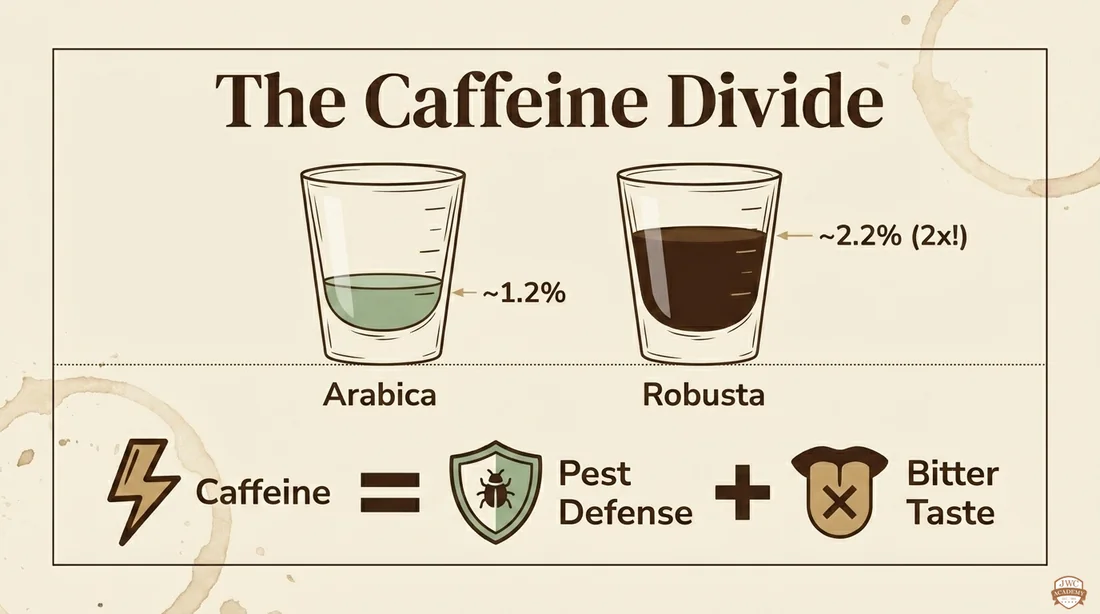
Robusta is about 2.2% caffeine, nearly double Arabica’s 1.2%. Caffeine is actually Robusta’s natural pest defence, which is also why it’s hardier and more bitter. For a bigger kick and a heavier taste, Robusta or a Robusta blend hits harder.
~1.2%
Arabica caffeine
~2.2%
Robusta caffeine (about 2×)
Caffeine = pest defence, and it brings bitterness
Side by side
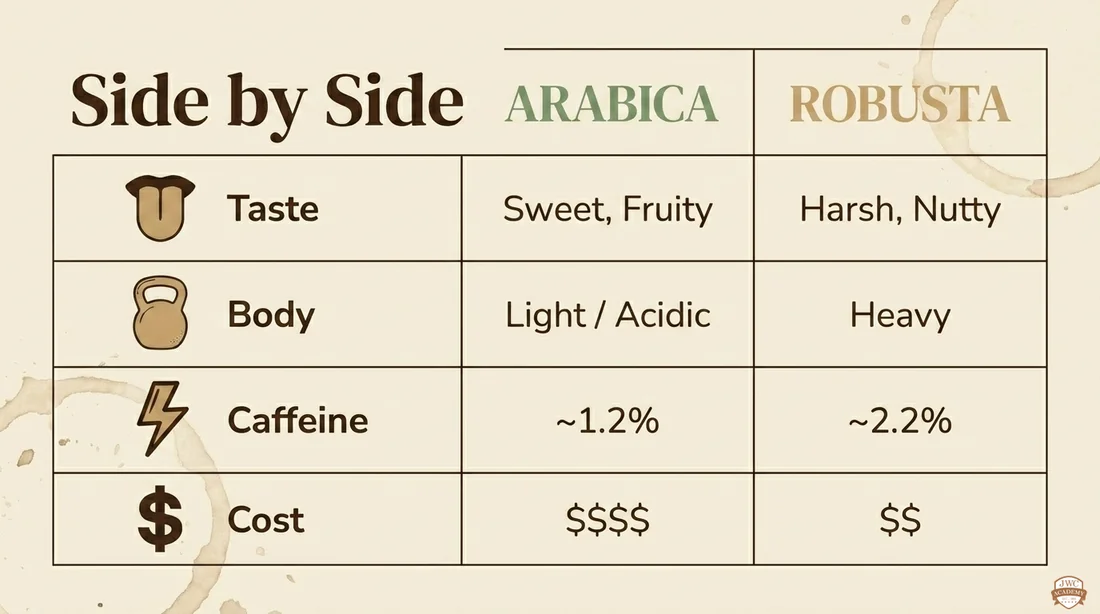
Flavour · body · caffeine · price at a glance
Arabica
Robusta
Flavour
sweet, fruity
strong, bitter, nutty
Body
light, acidic
heavy
Caffeine
~1.2%
~2.2%
Price
$$$$
$$
How to choose
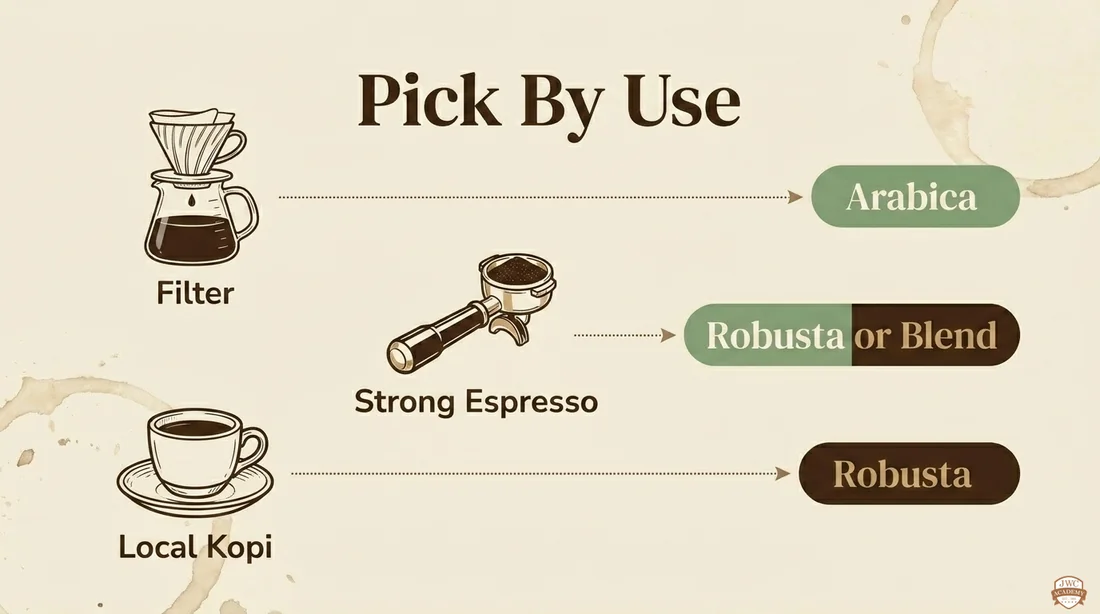
Pour-over, specialty, complexity and fruit → Arabica. Strong espresso, thick crema and strength → Robusta or a Robusta blend. Traditional kopi → mostly Robusta: bold and bitter, perfect with condensed milk.
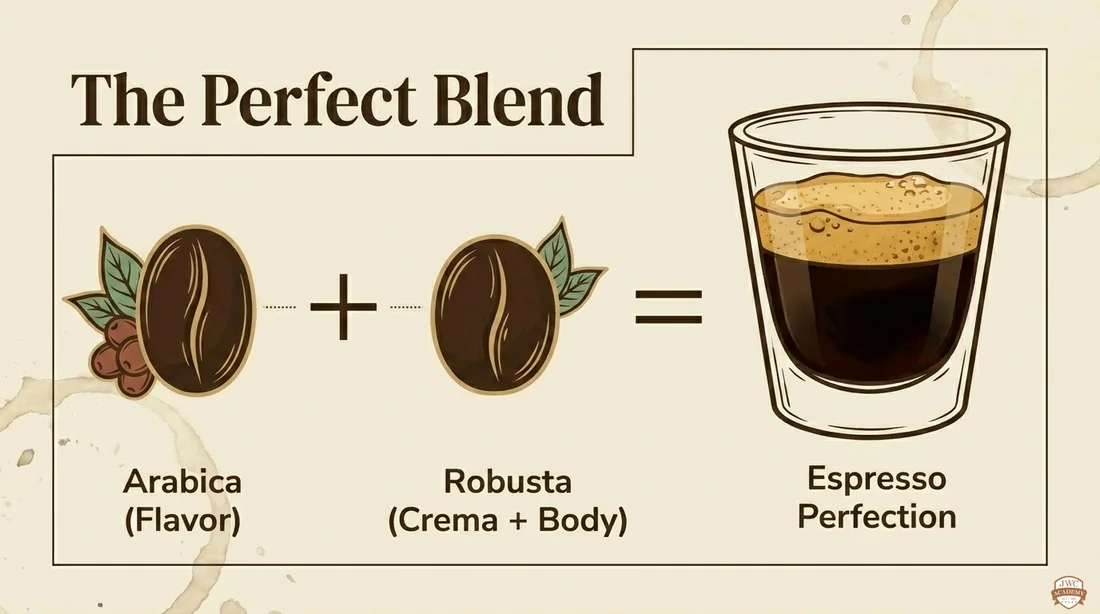
It isn’t either/or. Many top espresso blends pair Arabica’s flavour with Robusta’s crema and body, each doing what it’s best at: Arabica for sweetness and complexity, a little Robusta for thick crema and a longer finish.
Want to taste the difference between Arabica and Robusta and find your cup? JWC classes start with knowing your beans.
FAQ
Is Arabica always better than Robusta?
No. Arabica is sweeter and more complex, but Robusta gives strength, body and crema. It depends on use: specialty filter leans Arabica, strong espresso and kopi use Robusta or a blend.
How do I tell the two beans apart?
Arabica is more oval with an S-shaped crease; Robusta is rounder with a straighter crease. Robusta is also cheaper and more bitter.
Why add Robusta to espresso?
Robusta pulls a thick, lasting crema and body, so a little in a blend gives a fuller, longer-lasting shot than pure Arabica.
Is Robusta just a bad bean?
No. There’s high-grade fine robusta too. It’s naturally bitter and heavy, and used in the right place (crema, strength, kopi) that’s a strength.
Know your beans
Want to taste and choose the right bean?
From Arabica and Robusta to origin and roast, taste the difference cup by cup with a mentor · from RM199 · real machines