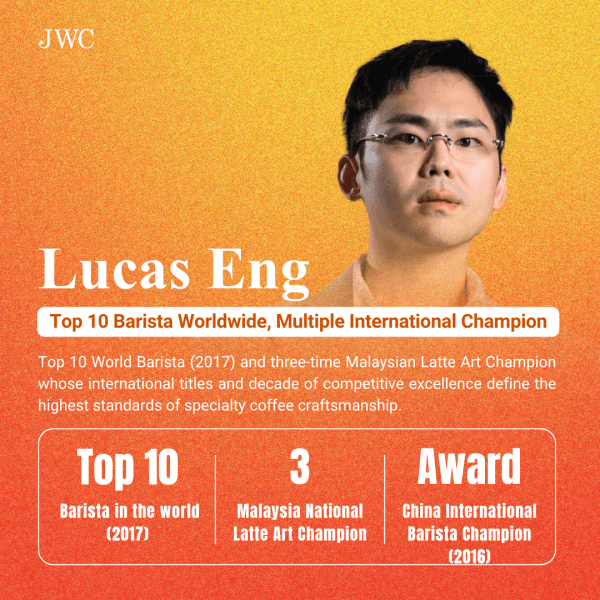
Principal, JWC Academy · 10th Place, 2017 World Latte Art Championship · 3× Malaysia Latte Art Champion
6 min read · Updated Jul 2026 · Bukit Jalil · Kajang · Mount Austin
Answer firstGoing from hobbyist to professional barista is a path you can plan: build bar skills (milk, latte art), add extraction theory (dial in, not luck), keep training your palate (cup often), then get SCA certified. You cross three gaps along the way: consistency, sensory and extraction theory. Self-teaching is slow with bad habits; structured training is faster, builds a correct foundation and a network.
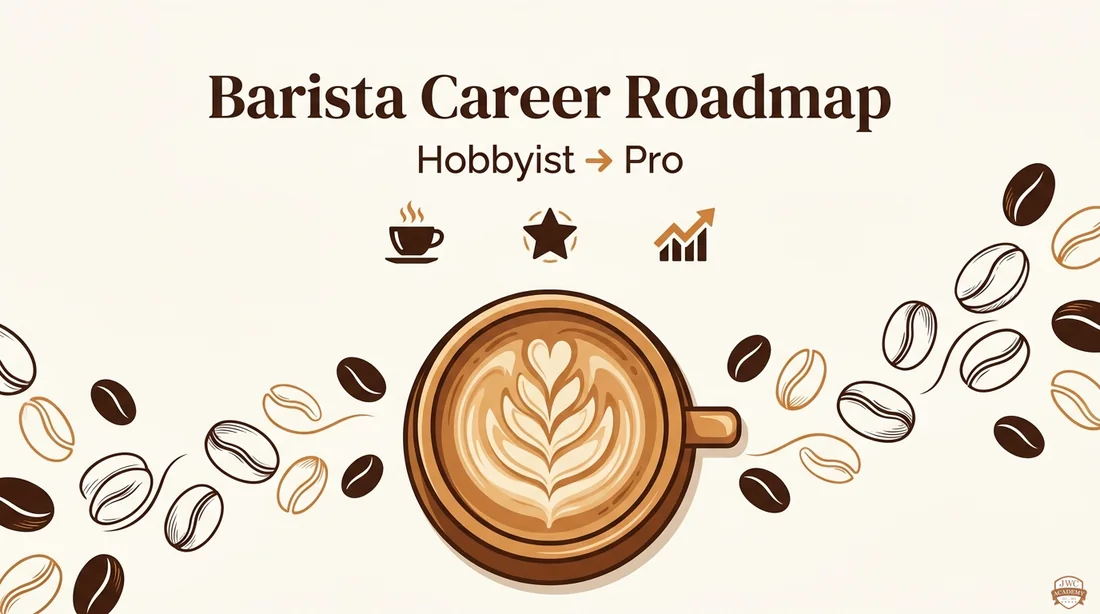
Barista Career Roadmap · hobbyist → pro
The roadmap
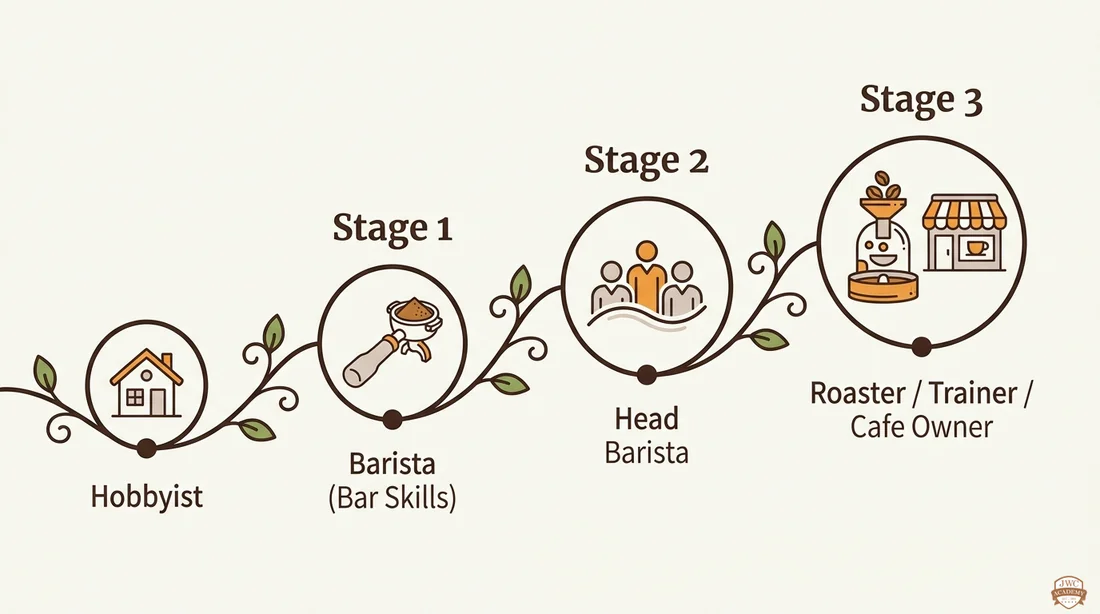
A clear growth line: hobbyist → barista (bar skills) → head barista (leading a team) → roaster / trainer / cafe owner. Each stage stacks skills onto the last. You don’t leap to the top, but the direction should be clear.
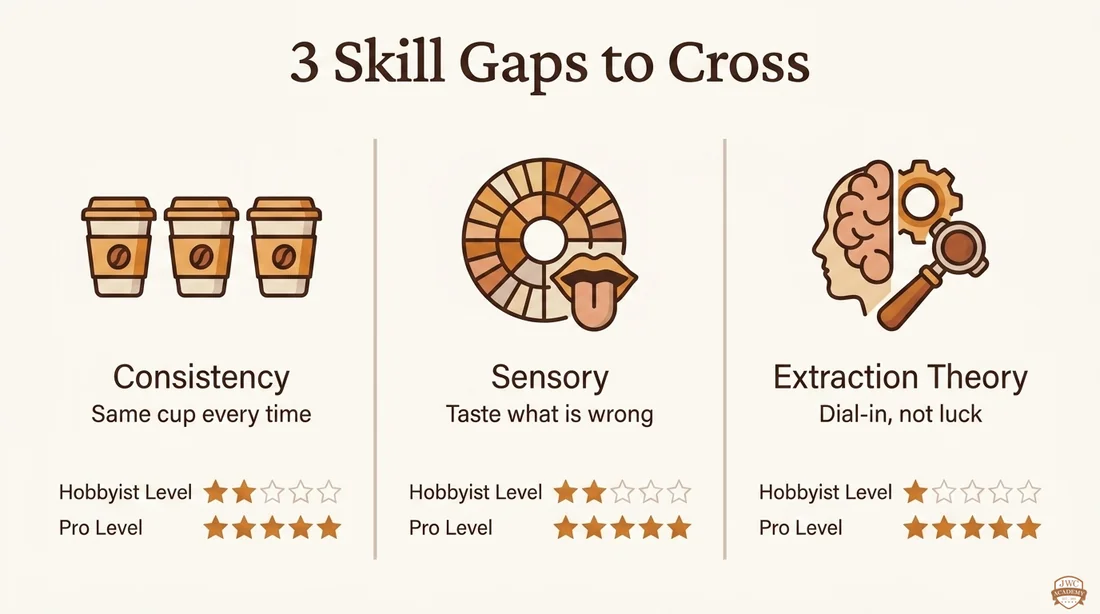
The gap between amateur and pro sits in three things: consistency (can you make the same cup every time), sensory (can you taste what’s wrong), and extraction theory (dialing in, not luck). Hobbyists sit around ★★; pros train to ★★★★★.
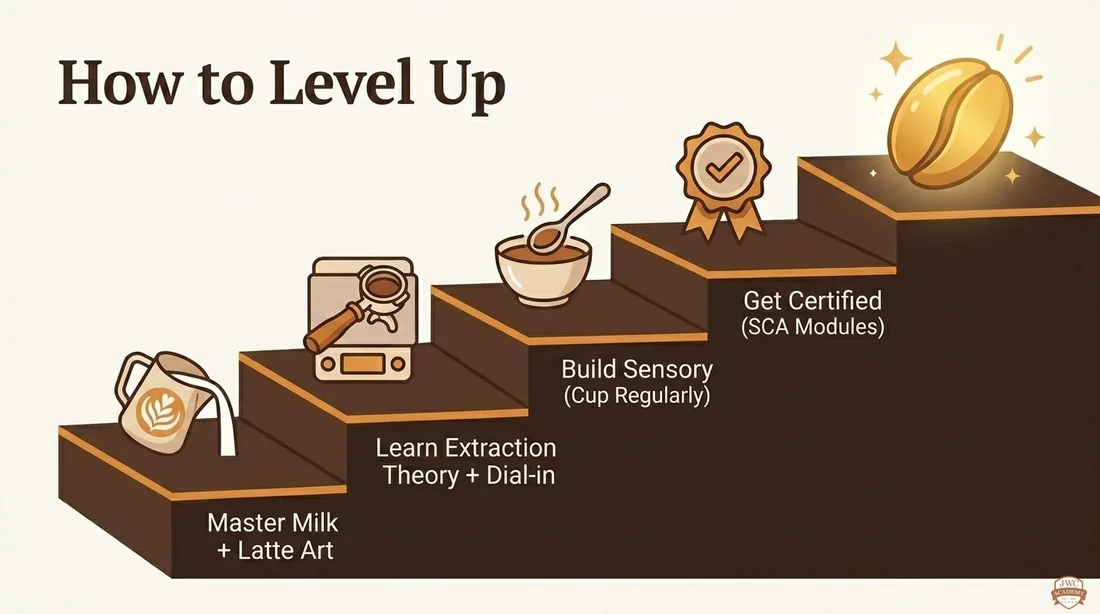
Bar fundamentals milk and latte art, steady your hands first.
2
Extraction theory learn to dial in, understand grind/temp/ratio.
3
Sensory cup regularly to build your flavour vocabulary.
4
Get certified take SCA modules to turn skill into proof.
Milk & latte art → extraction theory → sensory → SCA certification
Self-taught vs structured
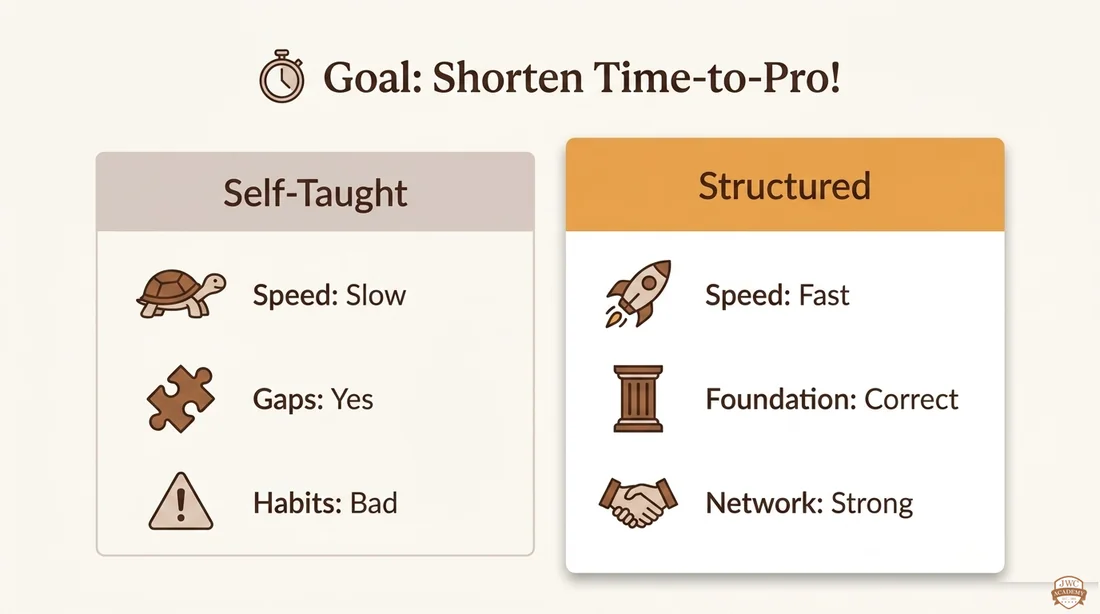
Both can reach pro, but the speed and quality differ. Self-taught: slow, easy to miss things, and can build bad habits (harder to fix later). Structured: faster, a correct foundation, and it builds a network (mentors, classmates, industry). To shorten the time to pro, structure is the shortcut.
Self-taught: slow · gaps · bad habits Structured: fast · correct base · network
SCA: a globally recognised proof
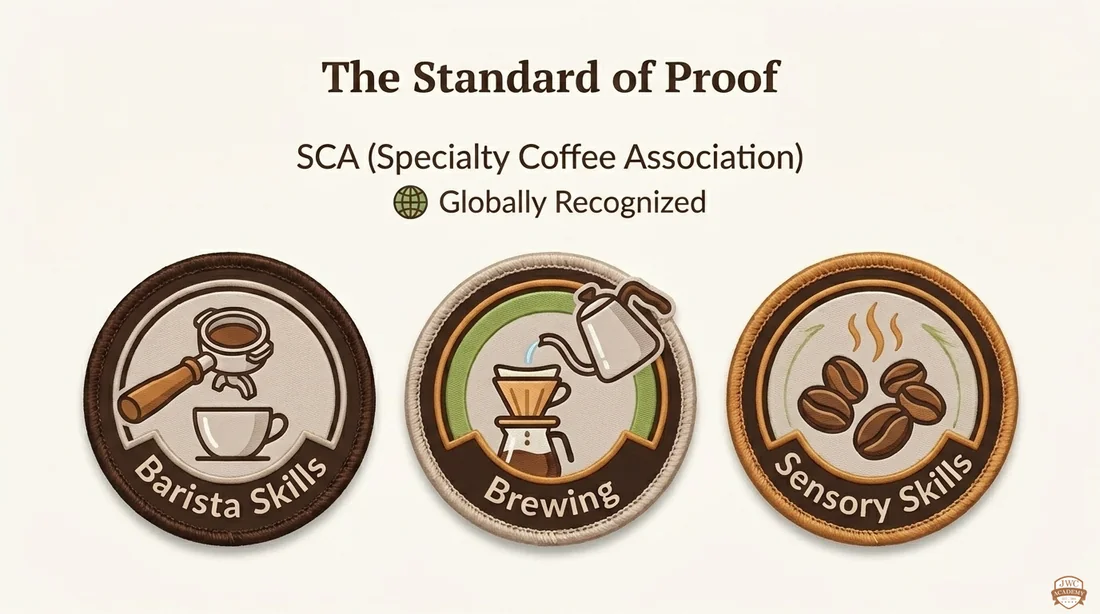
SCA (Specialty Coffee Association) is a globally recognised professional standard covering barista, brewing and sensory modules. It turns “you can” into “proof you can”, which carries weight when hiring or moving up. (Pay rises with skill and certification; for local figures, just ask JWC.)
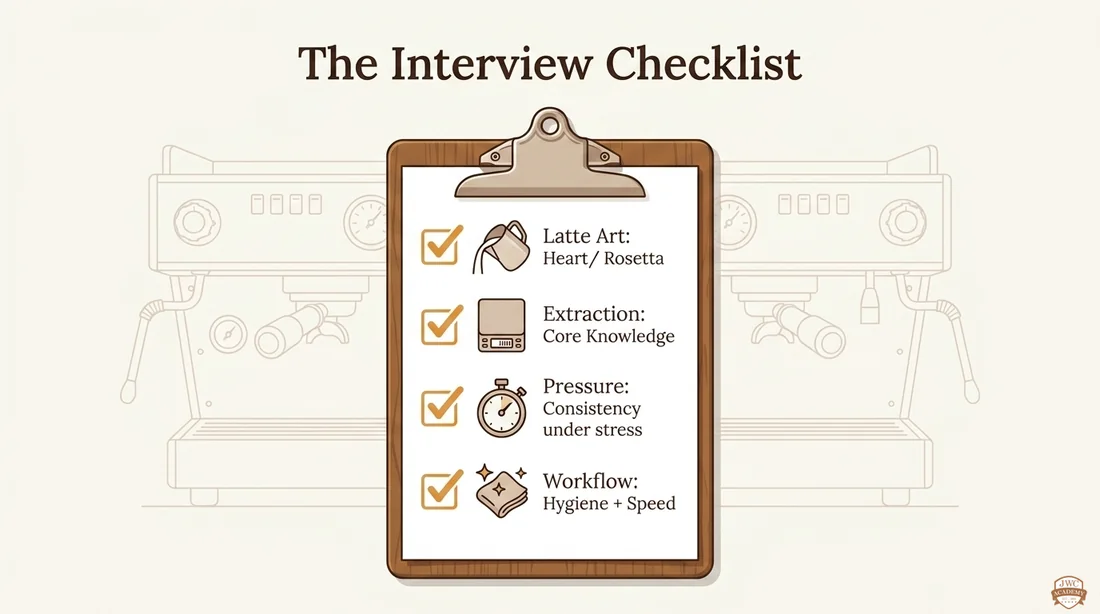
Applying as a barista, you’ll usually be tested live on: latte art (heart/rosetta), extraction (core knowledge, can you dial), pressure (stay consistent when busy), and workflow (hygiene + speed). Get these four solid and the interview is yours.
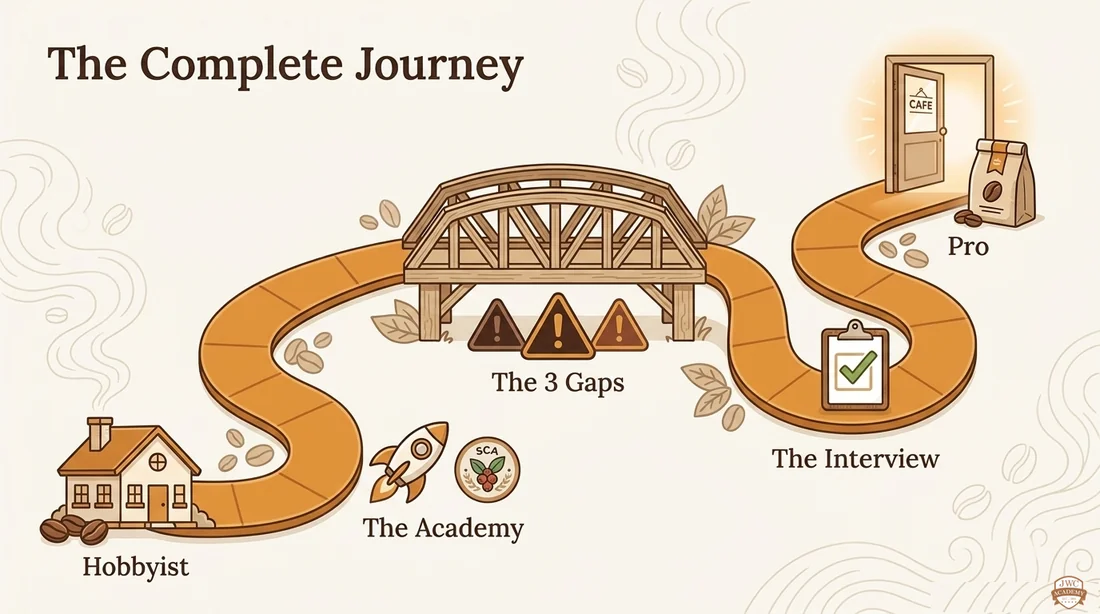
Join the whole path: hobbyist → academy for a foundation → cross the three gaps → pass the interview → become a pro. Everyone’s pace differs, but the route is just as clear.
Hobbyist → academy → three gaps → interview → pro
Want to turn “loves coffee” into “makes a living from coffee”? JWC classes are built for this path: from bar fundamentals to SCA certification, step by step to pro.
FAQ
How do I become a professional barista?
Build bar skills (milk, latte art), learn extraction theory and dialing in, cup regularly for your palate, then get certified. Crossing the consistency, sensory and theory gaps does it.
Self-taught or a course?
Structured is faster, with a correct base and a network; self-teaching is slow with gaps and bad habits. Both reach pro, but structure saves time.
Is SCA certification worth it?
Yes. It’s a globally recognised proof across barista, brewing and sensory, helpful for hiring and credibility.
Can I switch careers with no background?
Yes. Most pros started as hobbyists. The key is closing the three gaps systematically, no need to fear starting from zero.
Turn passion into profession
Want to go from hobbyist to earning from coffee?
From bar fundamentals and extraction theory to SCA certification, a mentor takes you step by step to pro · hands-on