Principal, JWC Academy · 10th Place, 2017 World Latte Art Championship · 3× Malaysia Latte Art Champion
6 min read · Updated Jul 2026 · Bukit Jalil · Kajang · Mount Austin
Answer firstIf one espresso tastes sour AND bitter, with a flow that gushes then stalls, it’s usually channeling: water finds the path of least resistance through the puck, over-extracting one part and missing the rest. The fix is one idea: make water pass evenly through the whole puck. That means WDT to break up clumps, then a level, consistent tamp.
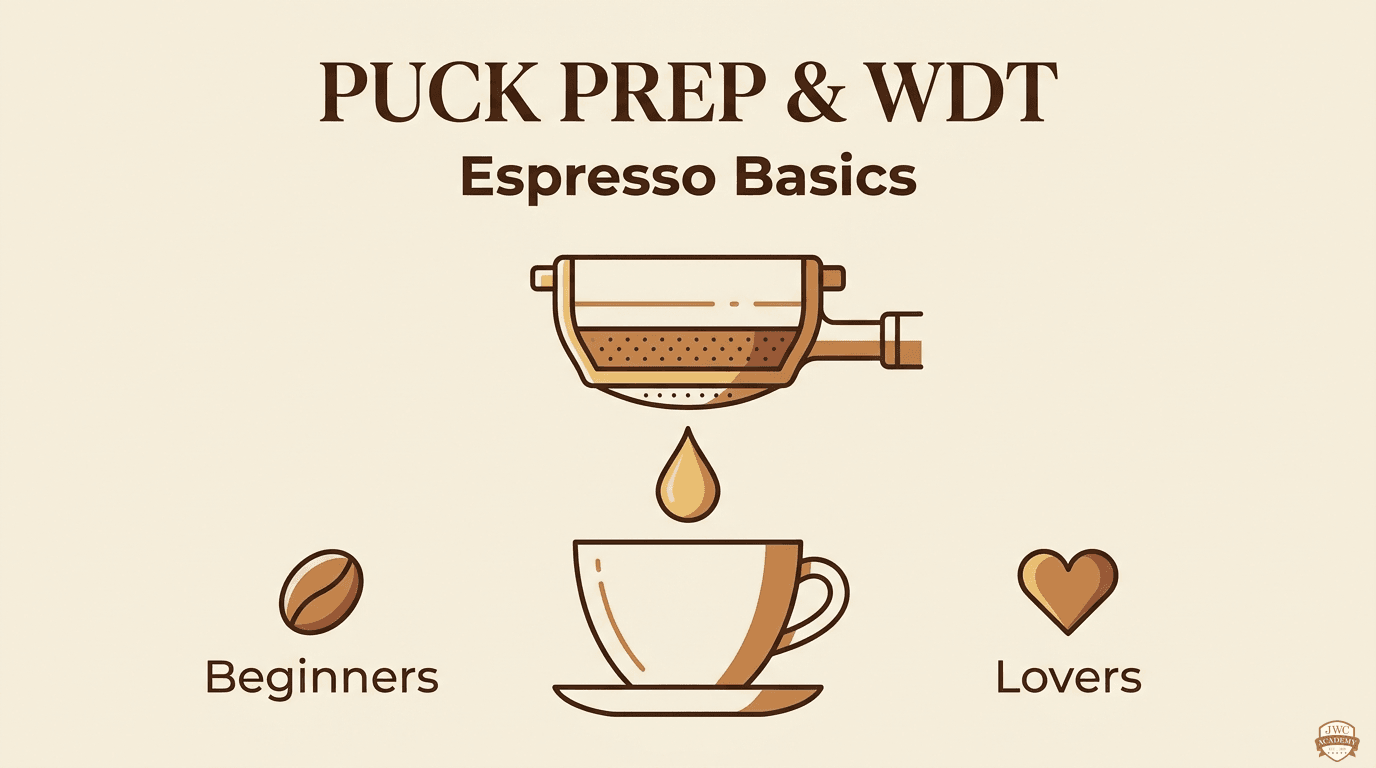
Puck Prep & WDT · distribution cheat sheet
What channeling is
Extraction relies on water flowing evenly through the coffee bed. But any clump, uneven density, tilt or crack lets water rush through the loosest spot like a shortcut, and that is channeling. The channel gets over-extracted and bitter; the grounds water never touches stay under-extracted and sour. Both show up in one cup, and no dialing of numbers can fix it.
Sour + bitter
in one cup = channeling
Gush & stall
unstable flow
Side spray
visible on a bottomless
Pale patches
holes in the crema
✕ Channeling
Water bolts through a crack · one side bitter, one side sour
✓ Even extraction
Water passes evenly through the whole puck · balanced · sweet
Same machine, same beans. The only difference is an even puck.
A bottomless portafilter catches it red-handed: even extraction pulls into one warm “mouse-tail” stream; channeling shows sideways spray and uneven colour.
WDT: break up the clumps
WDT (Weiss Distribution Technique) uses a bundle of fine needles (0.3–0.4mm) stirred through the grounds to break up clumps and even out the bed. Static from grinding makes coffee stick into little balls, and those clumps are the density differences that cause channeling. Stir a few circles, reach the bottom, level gently, a cheap tool that’s the best value upgrade for even extraction.
Order matters: WDT first, then level, then tamp. A tamp only compresses, it cannot un-clump grounds that are already balled up.
Tamping: level beats force
The biggest beginner myth is “tamp hard.” In truth, consistency matters far more than force. What you actually need: press level (not tilted), with the same pressure every time (15–20kg is plenty). A tilted tamp channels more than a light one, because the slope leaves one side looser, and water finds the shortcut again. Then check the surface: flat, no cracks, no chipped edge.
Level
not tilted = priority
15–20kg
enough force
Consistent
same every time
No cracks
check before locking in
· · ·
The full puck-prep routine
1
Dose a consistent weight (e.g. 18g), same every time.
2
WDT needles to the bottom, a few stirs, break every clump.
3
Level tap or use a distributor to flatten the bed.
4
Tamp straight down, 15–20kg, level and consistent.
5
Check flat, crack-free surface, then lock in and pull.
Symptom → cause → fix
You see / taste
Likely cause
Fix
Sour and bitter
channeling
WDT + level tamp
Side spray
clumps / tilted tamp
WDT then level tamp
Too fast
cracked puck / too coarse
check cracks, grind finer
Holes in crema
a spot never extracted
distribute more evenly
Distribution, tamping, reading a bottomless flow, and these are fastest to learn on a real machine. JWC classes start with one even puck.
FAQ
What is channeling?
Water rushes through the loosest gap in the puck: that path over-extracts (bitter), the rest under-extracts (sour), both in one cup.
Do I really need a WDT tool?
It’s the best-value upgrade for even extraction. Breaking clumps before tamping removes the density differences that cause channeling.
How hard should I tamp?
Level and consistent beats force; 15–20kg is plenty. A tilted tamp channels more than a light one.
How do I confirm there’s no channeling?
Watch a bottomless portafilter: even flow forms one “mouse-tail”; side spray or uneven colour means channeling.
Even extraction
Want an even puck that doesn’t channel?
WDT distribution, a level tamp, reading a bottomless flow, hands-on · from RM199 · real machines