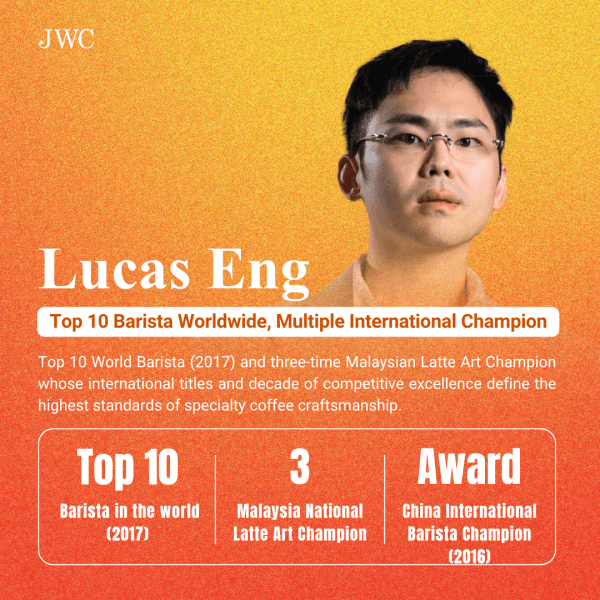
Principal, JWC Academy · 10th Place, 2017 World Latte Art Championship · 3× Malaysia Latte Art Champion
6 min read · Updated Jul 2026 · Bukit Jalil · Kajang · Mount Austin
Answer firstCoffee is the seed of a fruit (the coffee cherry). After picking the red cherry, how much fruit you leave on before drying decides the flavour. Washed strips all the fruit: clean, bright, clear acidity. Natural dries the whole cherry on: fruity, berry, heavy and sweet. Honey leaves some mucilage: in between, round and syrupy. Same bean, different process, two very different cups.
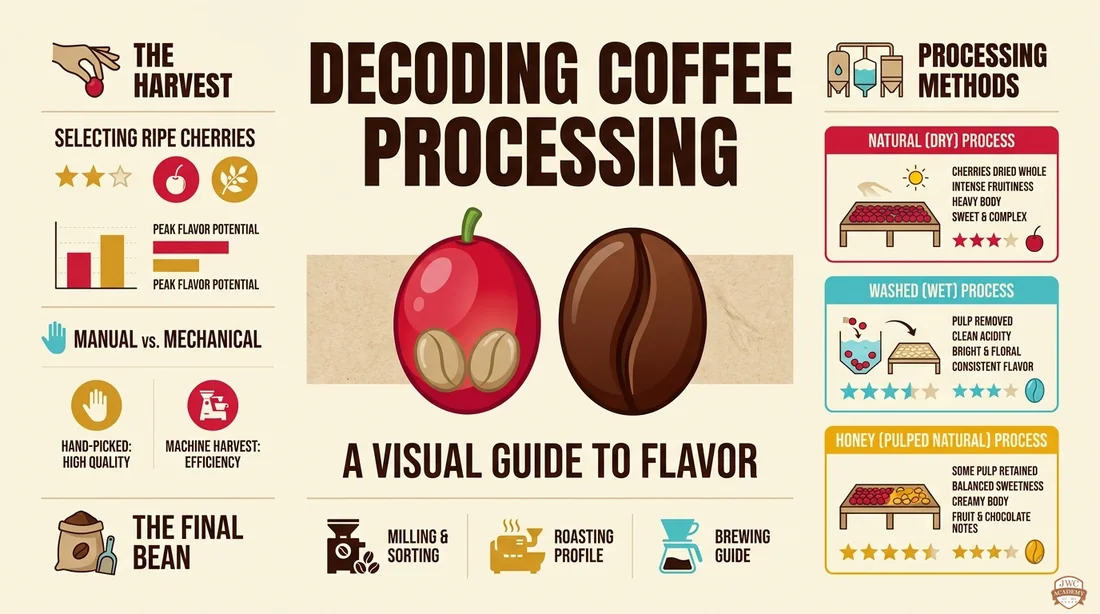
Decoding Coffee Processing · at a glance
Start with the cherry
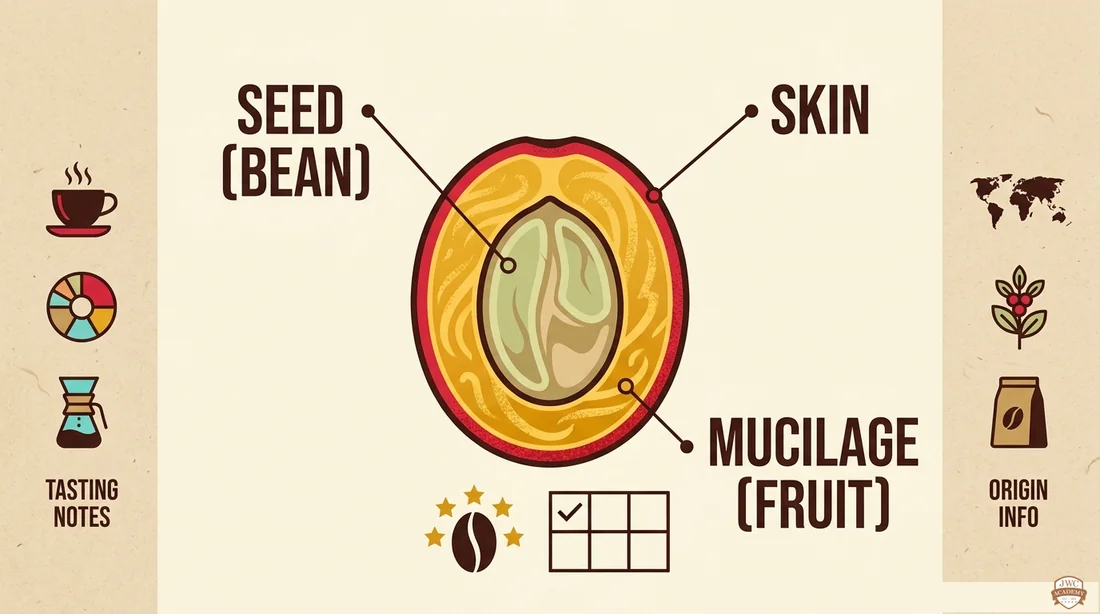
A coffee cherry, outside in, is skin, then fruit and mucilage, and inside is the seed (green bean) we roast. Processing is all about how much of that fruit you remove, and in what state you dry it.
Skin · mucilage/fruit · seed (bean)
Three methods: how much fruit stays on
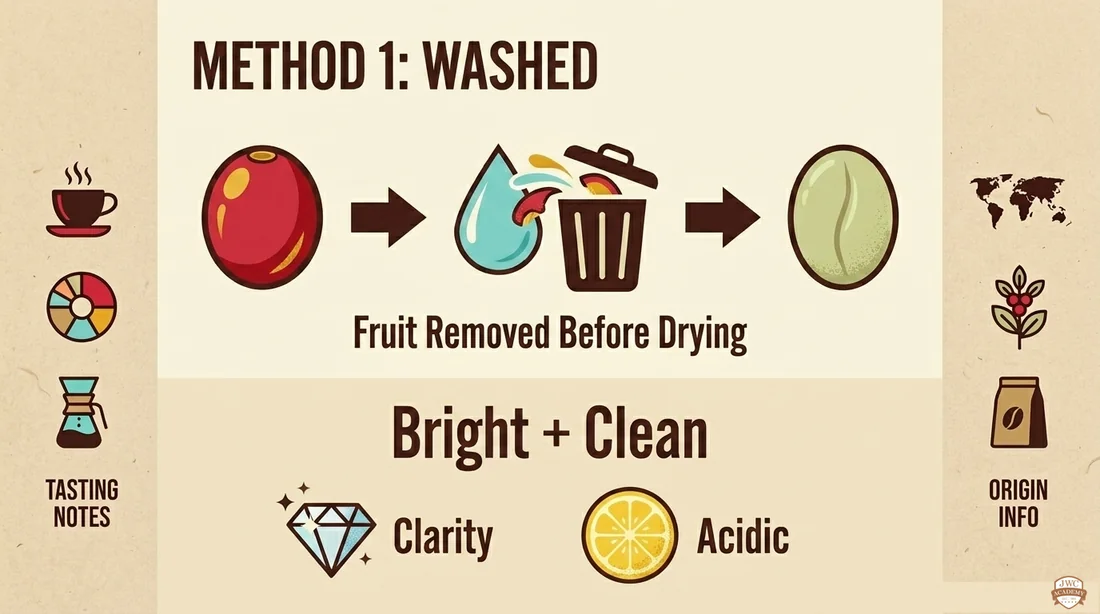
Washed
all fruit removed
clean · bright · acidic
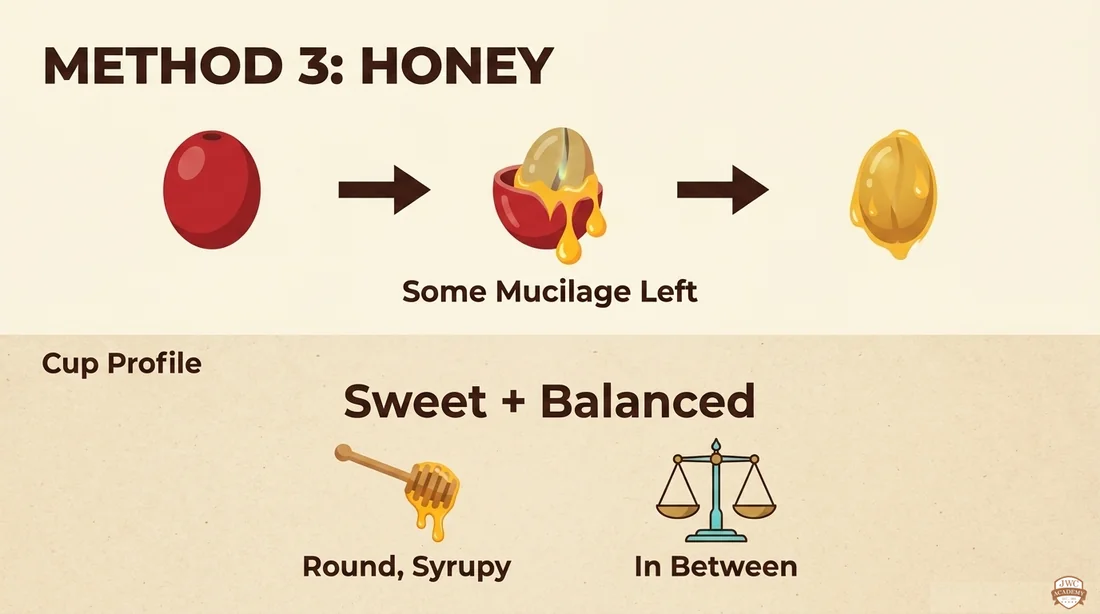
Honey
some mucilage left
round · syrupy · balanced
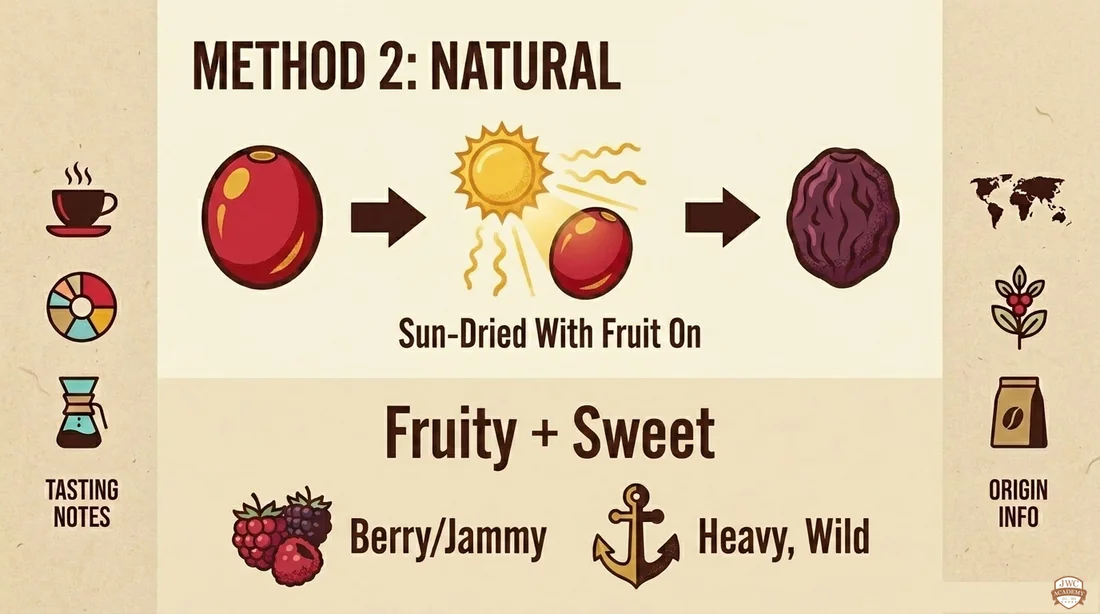
Natural
whole cherry dried on
fruity · berry · sweet
The more fruit left on, the fruitier, sweeter and heavier; the cleaner it’s stripped, the brighter and clearer.
Washed: clean and bright
The fruit is washed off and only the bean is dried. With less fruit contact and fermentation, it tastes clean, transparent and clearly acidic, and shows origin flavour most plainly. It’s the most common specialty process.
Fruit removed, then dried → clean · bright · clear acidity
Natural: fruity and sweet
Dried with the whole red cherry on, so sugars and fruit flavour soak into the bean: intensely fruity, like berry or wine, heavy-bodied and sweet, and wild in style. The risk is off-notes or over-fermentation if done poorly.
Dried with fruit on → fruity · berry · heavy sweetness
Honey: in between
The skin is removed but some mucilage is left on for drying, landing right between washed and natural: round, syrupy-sweet, medium body. The more mucilage left (black > red > yellow honey), the closer it gets to a natural’s rich sweetness.
Some mucilage left → round · syrupy · balanced
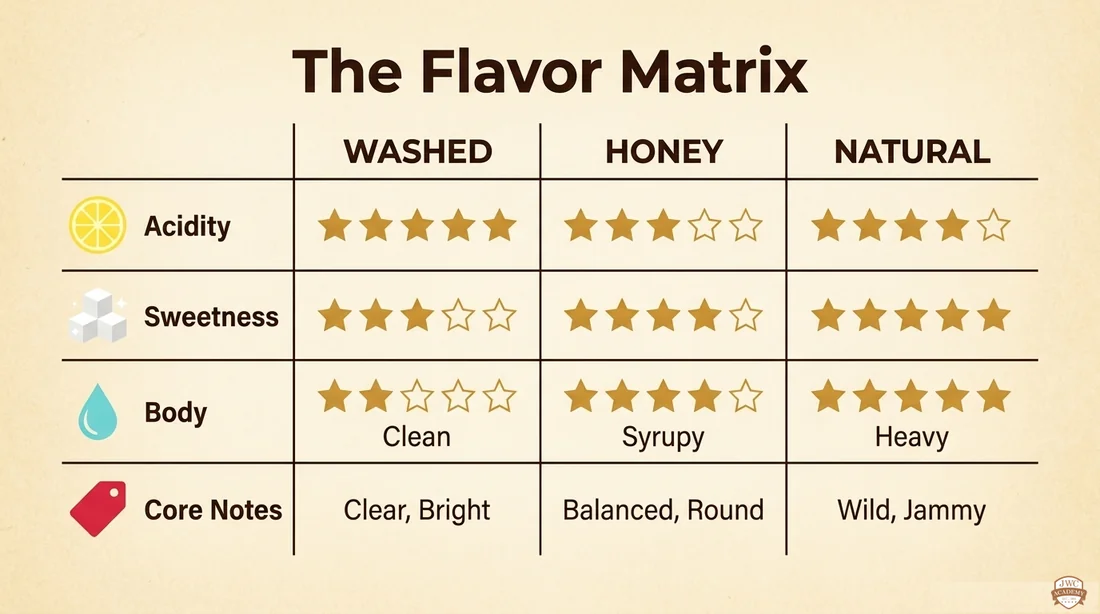
The flavour matrix
One table for the acidity, sweetness, body and core notes of all three:
Washed · honey · natural across acidity / sweetness / body
Washed
Honey
Natural
Acidity
high
medium
medium
Sweetness
medium
high
highest
Body
light
medium
heavy
Core notes
clean, bright
round, balanced
wild, fruity
Brewing adjustments
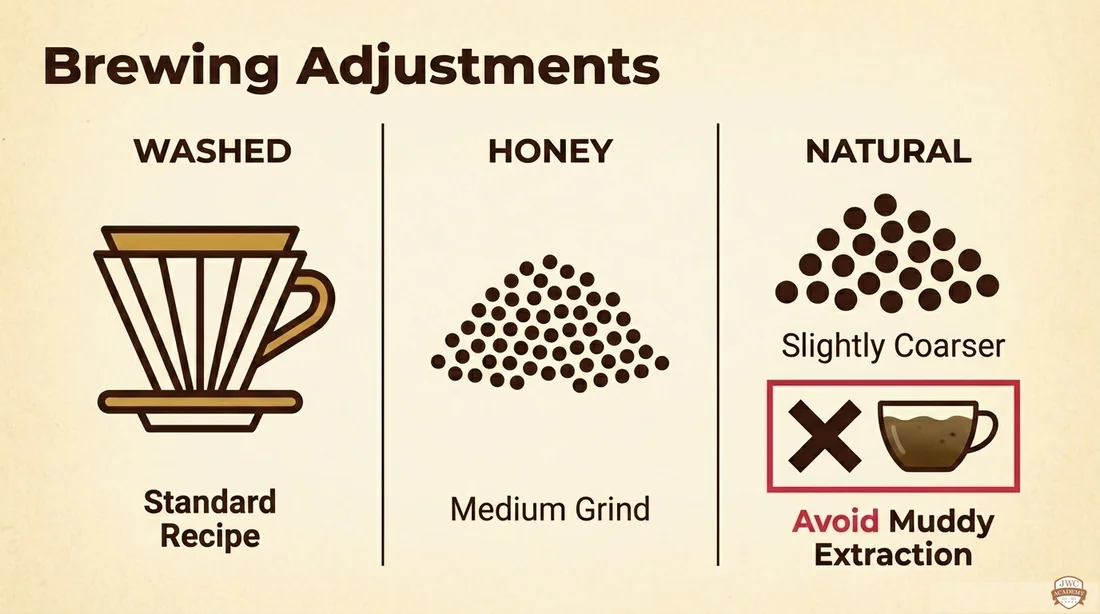
Tweak the brew a little by process: washed takes a standard recipe; honey a medium grind; natural a slightly coarser grind and no over-extraction, or you get a muddy, over-fermented cup.
Washed standard · honey medium · natural coarser to avoid mud
· · ·
Common mistakes
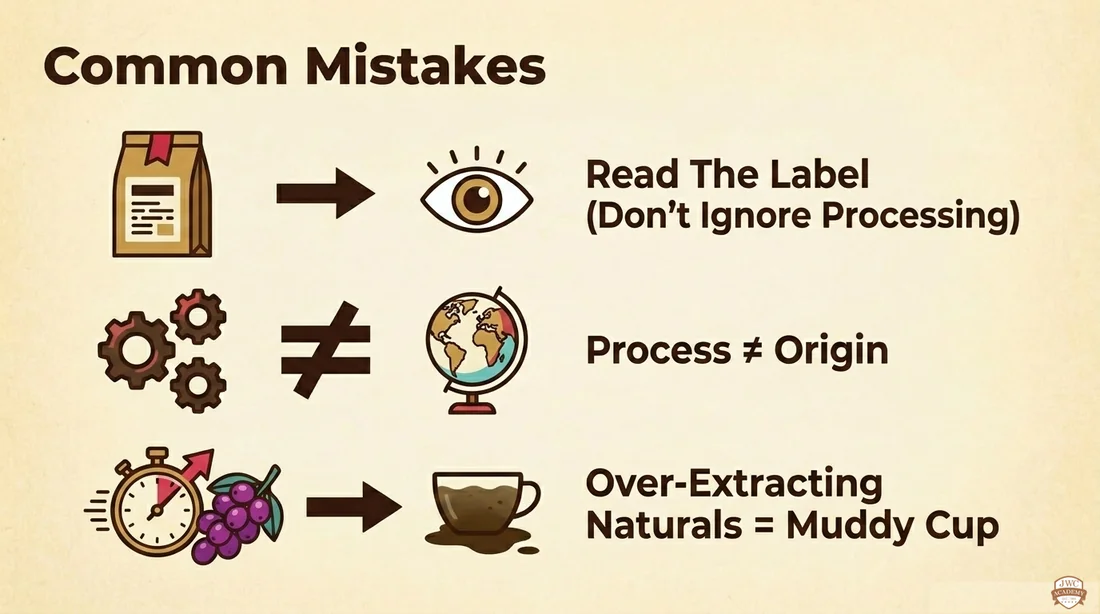
Ignoring the process: read the label, process matters as much as origin. Treating process as origin: process is “how it’s made,” origin is “where it’s grown,” two different things. Over-brewing a natural: naturals are already intense, and over-extraction turns them muddy and harsh.
Read the label · process ≠ origin · don’t over-extract naturals
Same bean, washed vs honey vs natural, tastes completely different. Want to taste and tell them apart? JWC classes taste through all three.
FAQ
What’s the difference between washed and natural?
Washed strips all fruit before drying: clean, bright, acidic. Natural dries the whole cherry on: fruity, sweet, heavy. Honey is in between.
Is natural or washed better?
Neither, just preference. Washed is clean and clear, natural is wild and fruity, honey is round and balanced. Pick what you like.
Does processing change how I brew?
A little. Washed takes a standard recipe, honey a medium grind, natural a slightly coarser grind to avoid a muddy over-extracted cup.
Is process the same as origin?
No. Process is how the fruit is handled; origin is where the bean is grown. Two different dimensions.
Taste the process
Want to taste washed, honey and natural apart?
From cherry to cup, taste all three processes side by side with a mentor · from RM150 · real machines