Principal, JWC Academy · 10th Place, 2017 World Latte Art Championship · 3× Malaysia Latte Art Champion
6 min read · Updated Jul 2026 · Bukit Jalil · Kajang · Mount Austin
Answer firstWhen an espresso tastes off, diagnose before you touch anything: sour = under-extracted (grind finer), bitter = over-extracted (grind coarser), watery = too weak (add dose). One rule of discipline: set a baseline, then change one variable at a time.
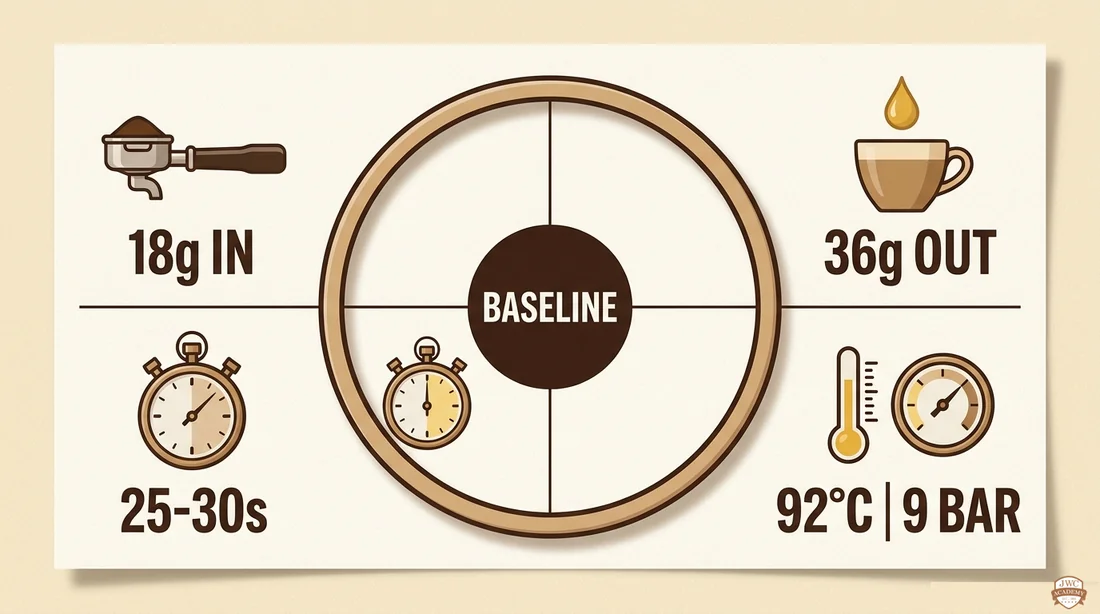
Baseline · 18g in → 36g out · 25–30s · 92°C · 9 bar
Set a baseline first
Before dialing, you need an origin point. A common industry starting baseline: 18g in, 36g out, 25–30s, 92°C, 9 bar. Repeat that reliably first, then change only one thing each time, so you know which step fixed or broke the shot.
18 → 36g
dose in · yield out (1:2)
25–30s
shot time
92°C
water temp
9 bar
pressure
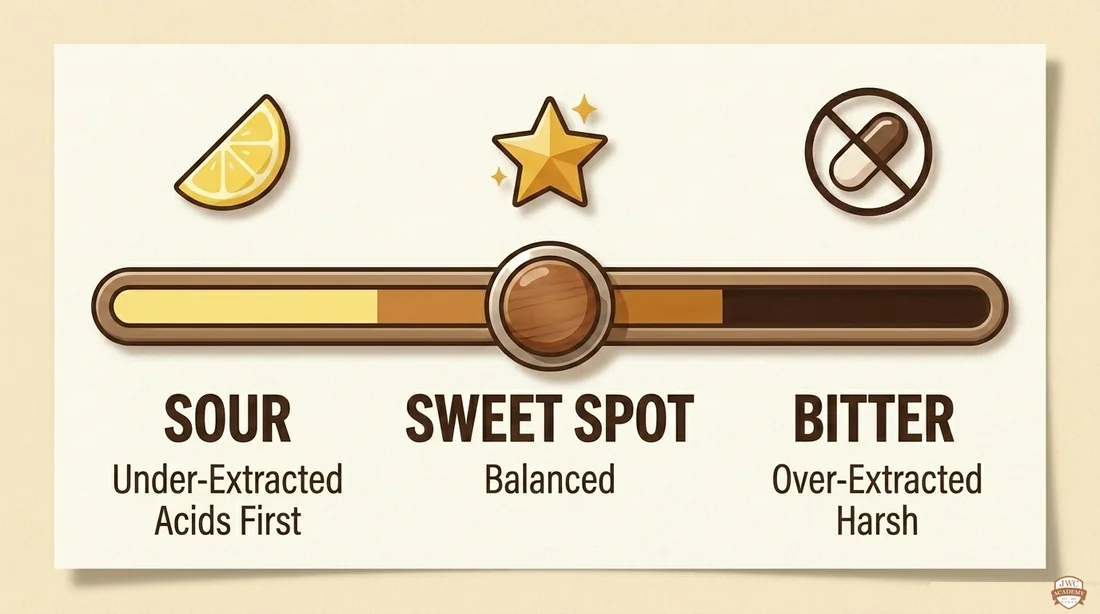
The sour to bitter spectrum
Learn to read taste first: sour hits early and means under-extracted; sweet is the balanced sweet spot; bitter comes late and means over-extracted. Whichever end you taste tells you which way to move.
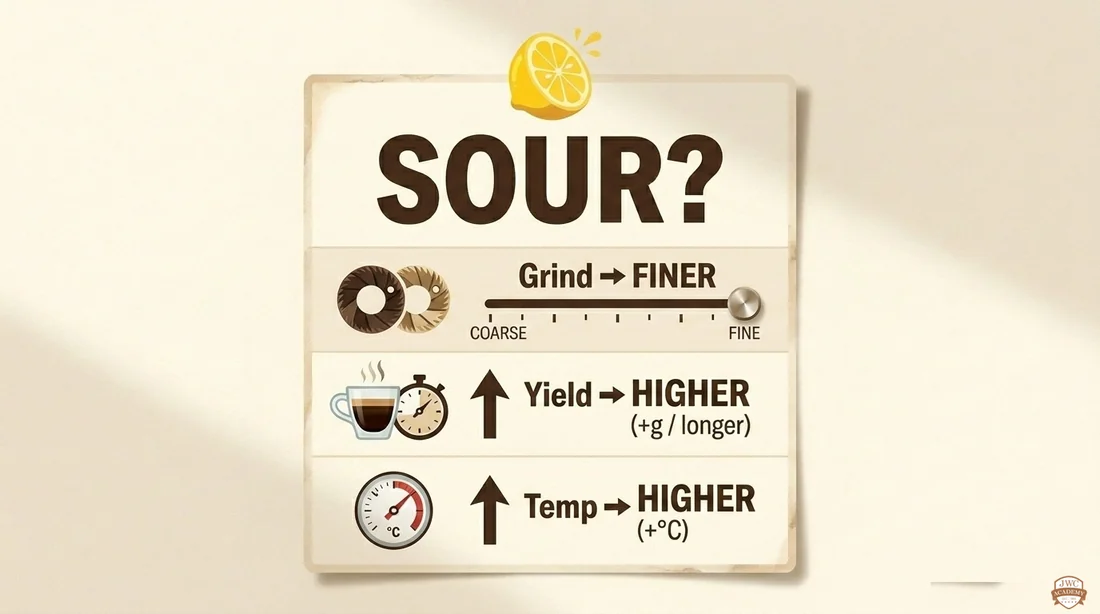
Sour means not enough extraction, so “push”: grind finer (first choice), then if needed raise the yield (more grams / longer), then raise the water temperature. One at a time; taste before the next step.
Sour: grind finer → raise yield → raise temp
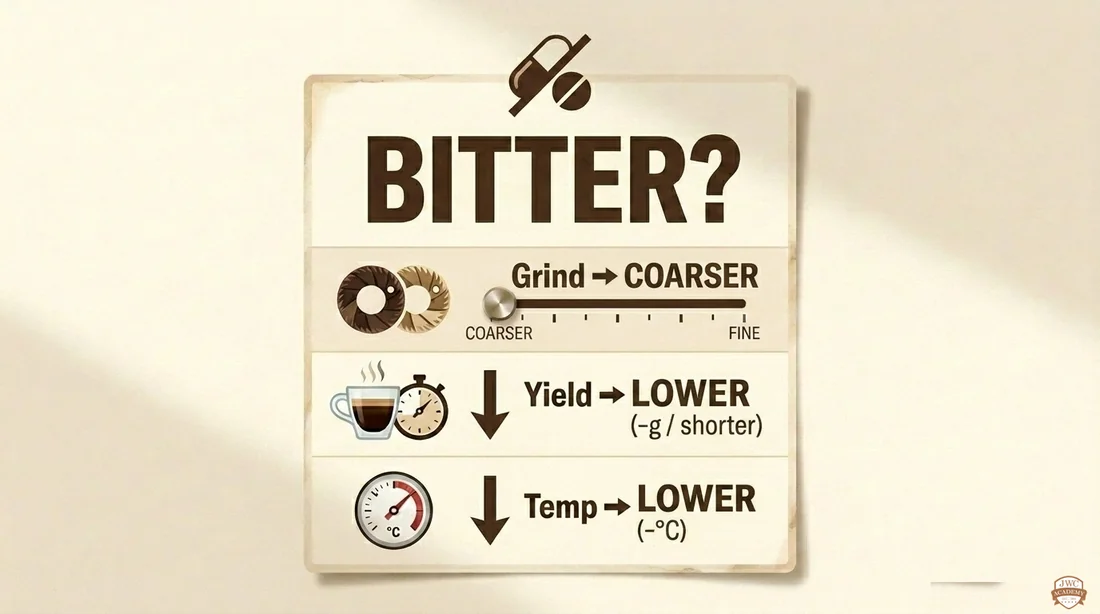
Bitter? (over-extracted)
Bitter means too much extraction, so “ease off”: grind coarser (first choice), then lower the yield (fewer grams / shorter), then lower the temperature. The exact opposite direction to sour.
Bitter: grind coarser → lower yield → lower temp
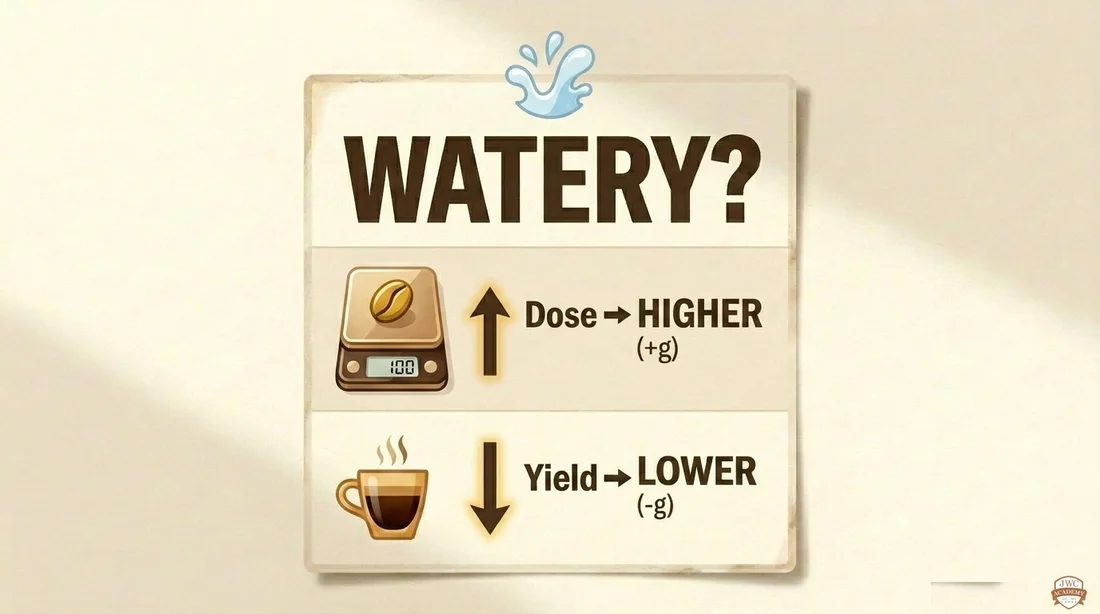
Watery? (too weak)
If it’s neither sour nor bitter but the cup is thin with no body, the issue is strength, not extraction: raise the dose (more grams) and lower the yield (fewer grams out) for a stronger ratio. The reverse, too intense and harsh, means less dose and more yield.
Watery: raise dose → lower yield
· · ·
One variable at a time
The most important discipline: change one variable, taste, then decide the next step. Move grind, dose and temperature together and you’ll never know which one fixed or broke the shot. Slow is fast.
You taste
Means
Change this first
Sour
under-extracted
grind finer
Bitter
over-extracted
grind coarser
Watery / thin
too weak
add dose
Too intense
too strong
less dose, more yield
“Read the taste, pick the direction, change one variable” is a feel you can train. JWC classes get any bean dialed to sweet.
FAQ
My espresso is sour, what do I change?
Sour means under-extracted. Grind finer, then if needed raise the yield (longer) and the temperature. One thing at a time.
My espresso is bitter, what do I change?
Bitter means over-extracted. Grind coarser, then if needed lower the yield (shorter) and the temperature.
Why only one variable at a time?
Move grind, dose and temperature together and you can’t tell what fixed or broke it. Set a baseline, change one, taste, repeat.
Not sour or bitter, just thin?
That’s low strength. Raise the dose and lower the yield for a stronger ratio; leave the grind alone.
Dial it to sweet
Want to dial any bean to sweet?
Read the taste, pick the direction, change one variable, hands-on with a mentor · from RM199 · real machines