Principal, JWC Academy · 10th Place, 2017 World Latte Art Championship · 3× Malaysia Latte Art Champion
6 min read · Updated Jul 2026 · Bukit Jalil · Kajang · Mount Austin
Answer firstWhen a pour-over slows down and ends up muddy and bitter, it’s usually a stall: fine particles migrate down and clog the filter pores, so the coffee over-steeps and turns bitter. Four fixes: rinse the paper, grind evenly with few fines, pour gently without digging the bed, and (optionally) sift out fines. Paper matters too: bleached and abaca flow fast and clean, natural paper must be rinsed or it tastes papery.
The Perfect Filter Brew · start here
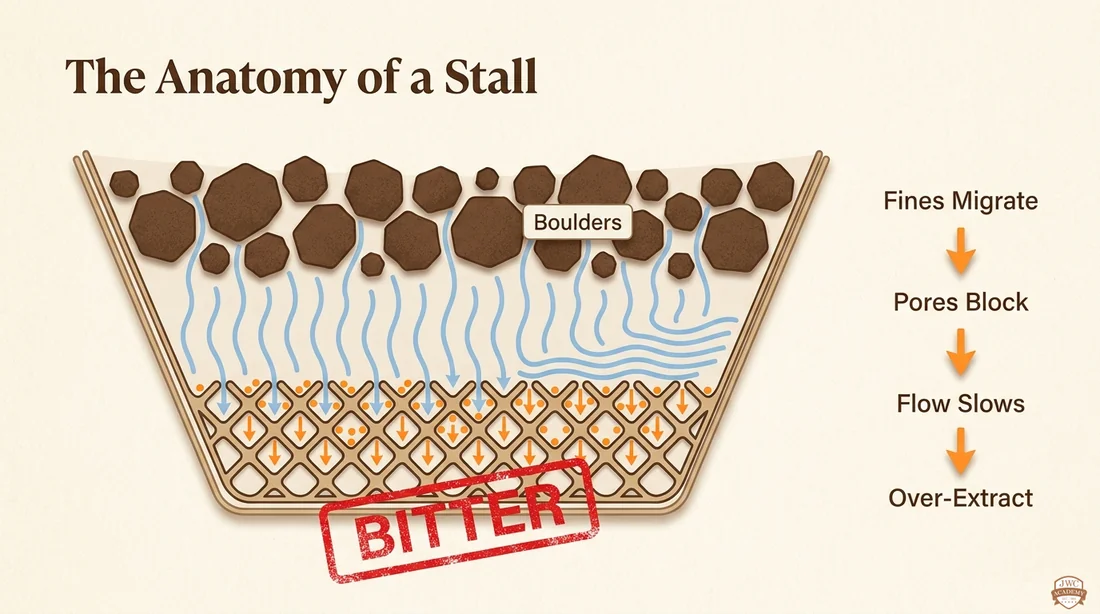
What a “stall” is
Grounds are a mix of big boulders and small fines. As you pour, fines migrate down and lodge in the filter pores, choking the flow bit by bit: pores block, flow slows, coffee steeps too long, and it over-extracts and turns bitter. So “slower and bitter” is almost always a stall.
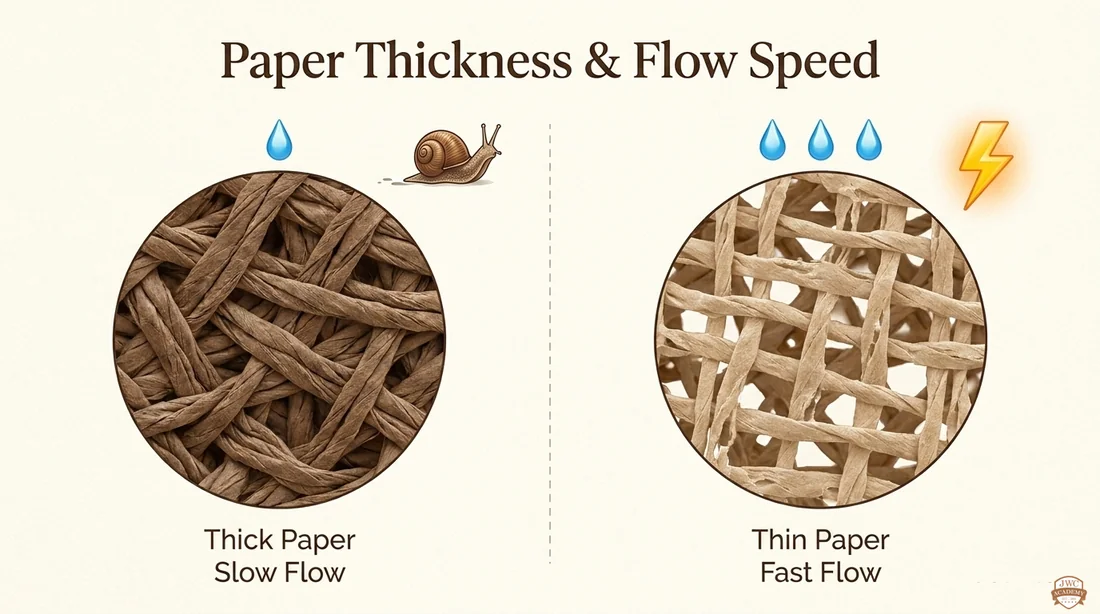
The paper itself changes flow: thick paper flows slower with longer contact; thin paper flows faster and cleaner. Neither is simply better; the point is to know whether your paper is fast or slow and match grind and pour to it.
Thick paper slow · thin paper fast
The paper showdown
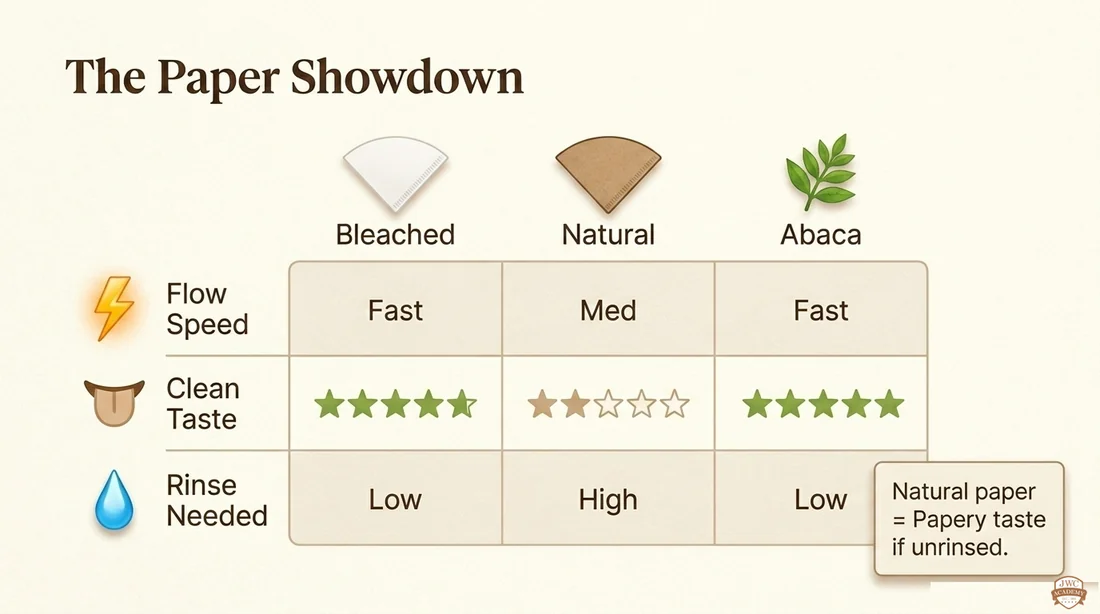
Three common types: bleached is fast, clean, almost no paper taste, low rinse; natural (unbleached) is medium and tastes papery if you don’t rinse it; abaca is fast, clean and greener. For an easy life, bleached or abaca; with natural, always rinse well.
Flow and paper-taste of bleached · natural · abaca
Paper
Flow
Clean taste
Rinse
Bleached
fast
high
low
Natural
medium
papery if unrinsed
high
Abaca
fast
high
low
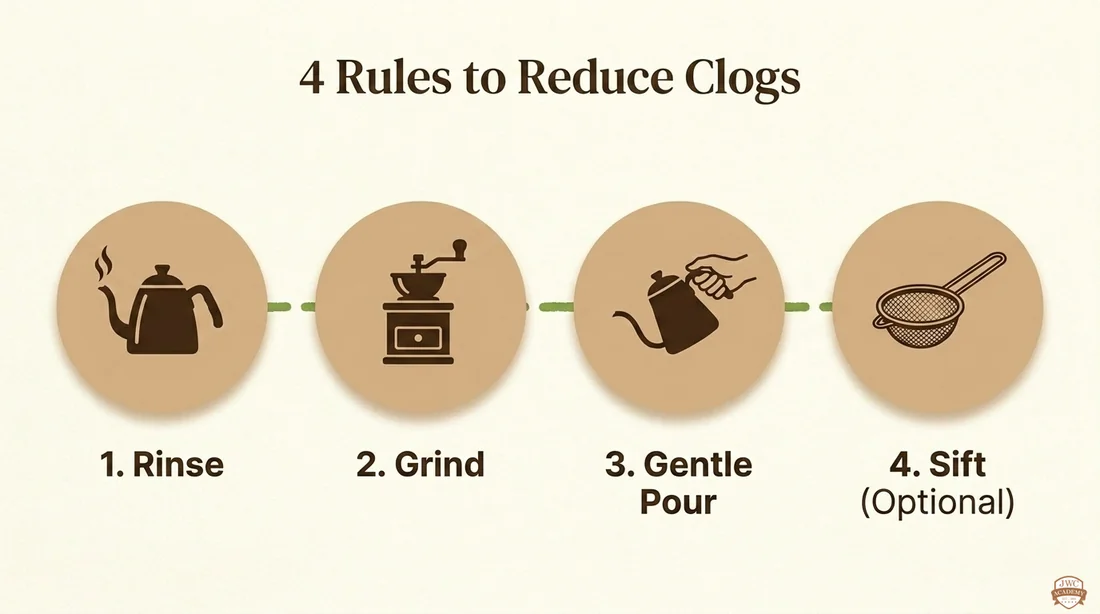
Four ways to reduce clogs
1
Rinse the paper hot water to wash off paper taste and seat it to the walls.
2
Grind evenly a good grinder makes even particles and fewer fines, the best defence.
3
Pour gently don’t drive the stream into the bed and churn or compact it.
4
(Optional) sift sift out the finest particles for freer flow.
Rinse · grind evenly · gentle pour · (optional) sift
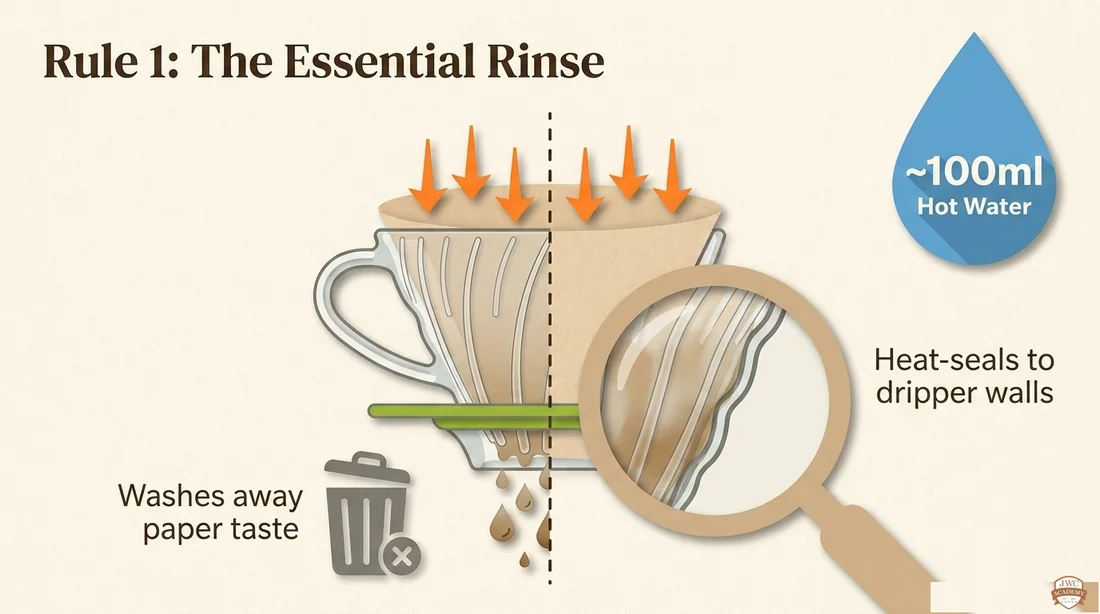
Rule 1: always rinse
Before brewing, wet the whole paper with about 100ml hot water: it washes away paper taste and heat-seals the paper to the walls, so less water sneaks down the gap. Never skip this with natural paper.
About 100ml hot water: removes paper taste + seats the filter
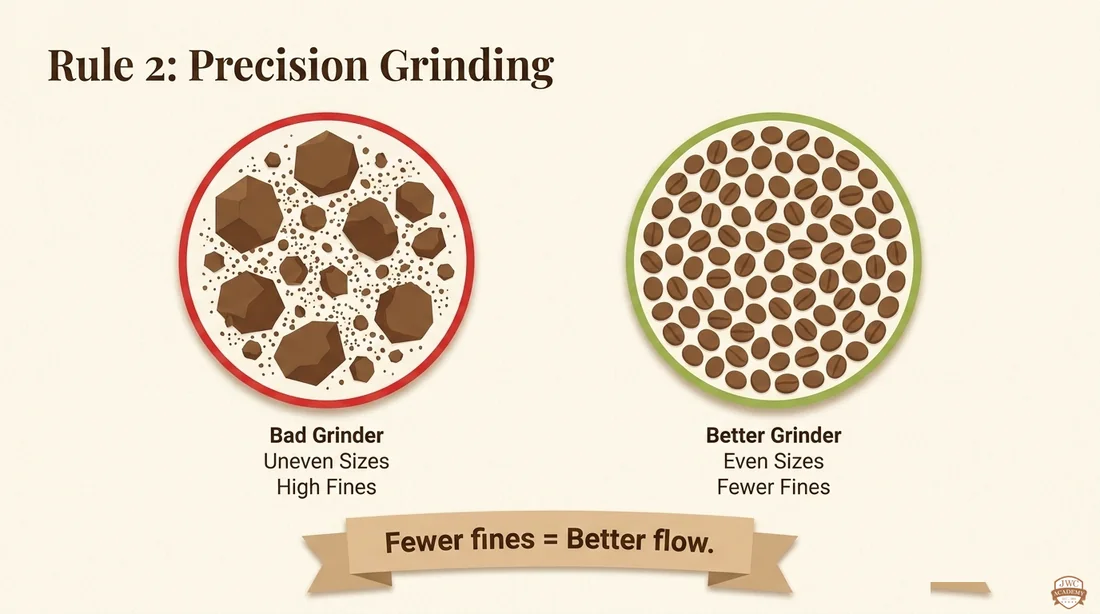
Rule 2: grind evenly
The real defence is your grinder. A bad grinder makes uneven sizes and lots of fines, which clog easily; a better grinder makes even particles and fewer fines, so flow stays smooth. Remember: fewer fines, better flow.
Even particles · fewer fines = better flow
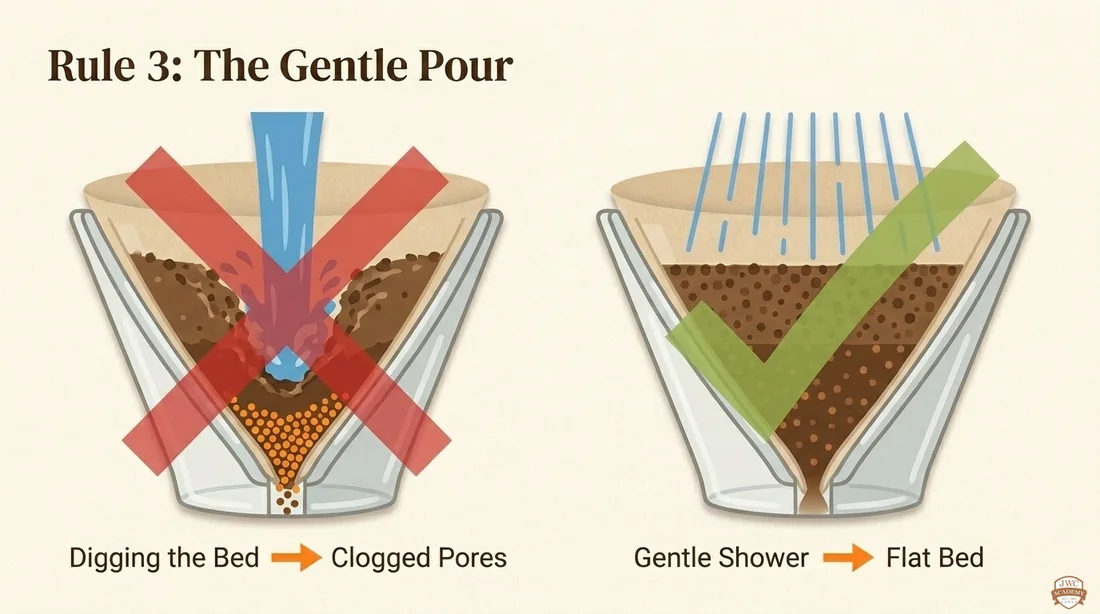
Rule 3: pour gently
A rough pour digs a crater and compacts fines at the bottom, worsening the clog from both ends. Instead pour like a gentle shower, keeping the bed flat so water percolates evenly.
Digging the bed → clogged pores Gentle shower → flat bed
· · ·
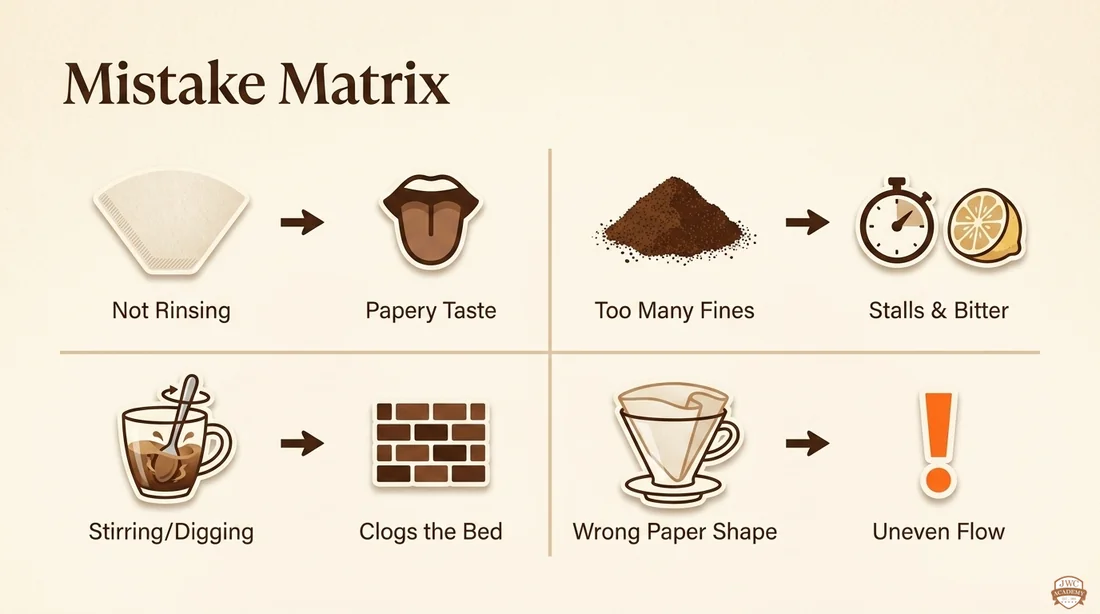
The mistake matrix
Self-diagnose at a glance: no rinse → papery; too many fines → stalls and bitter; stirring or digging → clogs the bed; wrong paper shape → uneven flow.
No rinse / too many fines / stirring / wrong paper and their results
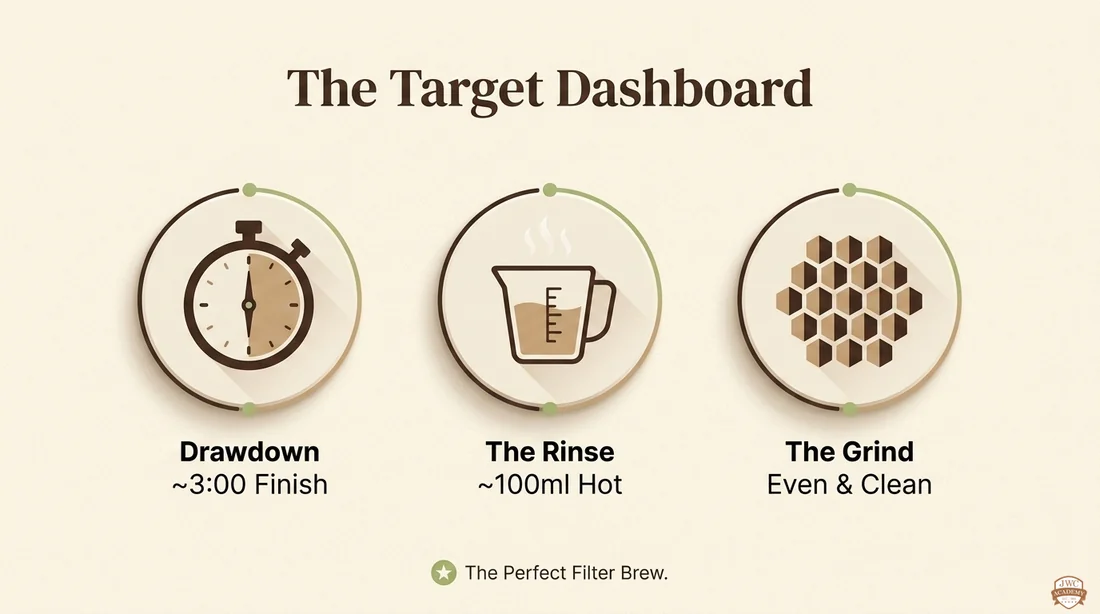
The target dashboard
Three measurable targets to judge a brew: drawdown around 3:00 (too fast under-extracts, too slow means a stall), rinse with about 100ml hot water, and an even, clean grind.
Drawdown ~3:00 · rinse ~100ml · even grind
Unstable flow and constant stalls usually come down to grind and pour technique, fastest to fix on a real setup. JWC classes get your flow dialled in.
FAQ
Why does my pour-over slow and taste bitter?
Usually a stall: fines clog the filter pores, so flow slows and the coffee over-steeps into bitterness. Grind evenly, rinse the paper, pour gently.
Do I need to rinse the paper?
Yes, especially natural paper. About 100ml hot water washes off paper taste and seats the filter to the walls.
Bleached or natural paper?
Bleached and abaca flow fast and clean with little rinsing. Natural is fine too but must be rinsed well or it tastes papery.
Do I have to sift out fines?
Not necessarily. An even grind is usually enough; sifting is an optional step for chasing maximum flow.
Fix the flow
Want every brew to flow smoothly, no bitterness?
From paper and grind to pour technique, a mentor steadies your flow · from RM199 · real machines