Principal, JWC Academy · 10th Place, 2017 World Latte Art Championship · 3× Malaysia Latte Art Champion
6 min read · Updated Jul 2026 · Bukit Jalil · Kajang · Mount Austin
Answer firstTasting coffee isn’t a gift, it’s memory-matching: aroma (nose) + taste (tongue) + mouthfeel = the memory in your head. The method is to name the broad group first (floral / fruity / nutty / roasty), then narrow down (fruity → citrus → limau), and compare to real foods you’ve actually eaten. Local fruits and kuih are the best anchors.
Coffee Tasting 101 · anyone can do it
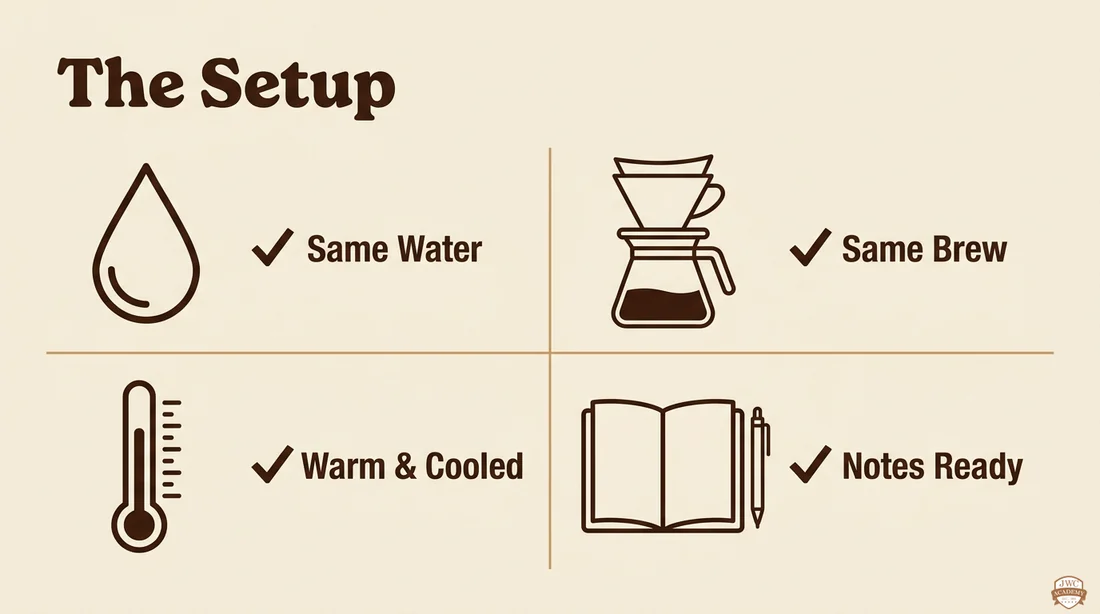
Fix the variables first
To train your palate, keep every session the same so differences show: same water, same brew, taste from hot to cool, and keep a notebook handy. If variables drift, you can’t tell if a difference is the bean or your technique.
Same water · same brew · warm to cool · notes ready
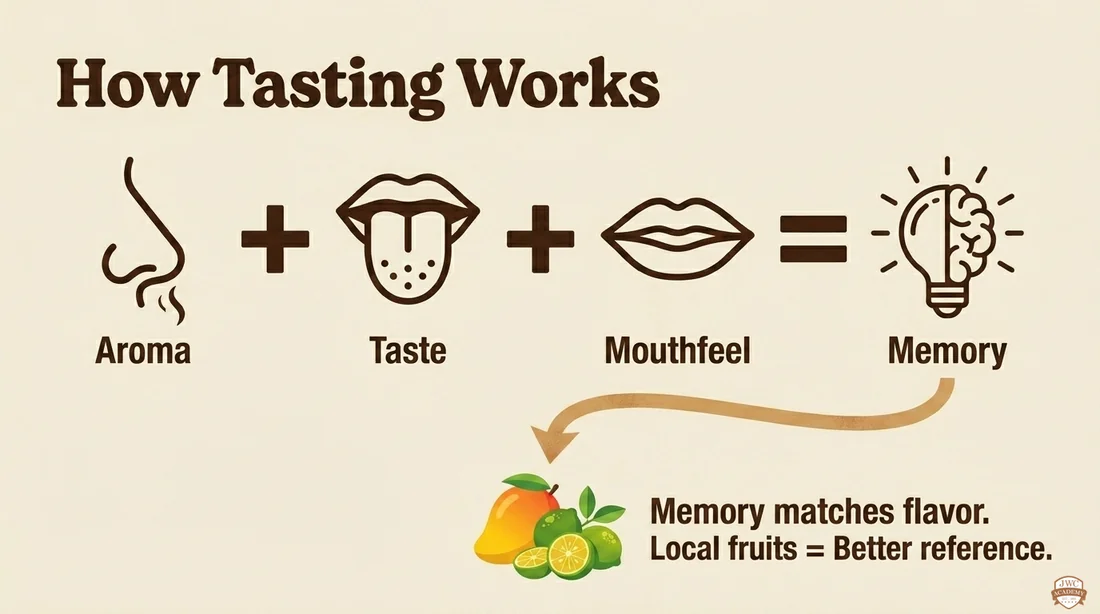
How tasting works
“Tasting” is really your brain matching memory: the nose smells aroma, the tongue tastes, the mouth feels texture, and together they trigger something you’ve eaten before. So the more familiar the food, the more useful it is, and local fruit beats an imported berry you rarely eat.
Aroma + taste + mouthfeel = memory; local food = a better reference
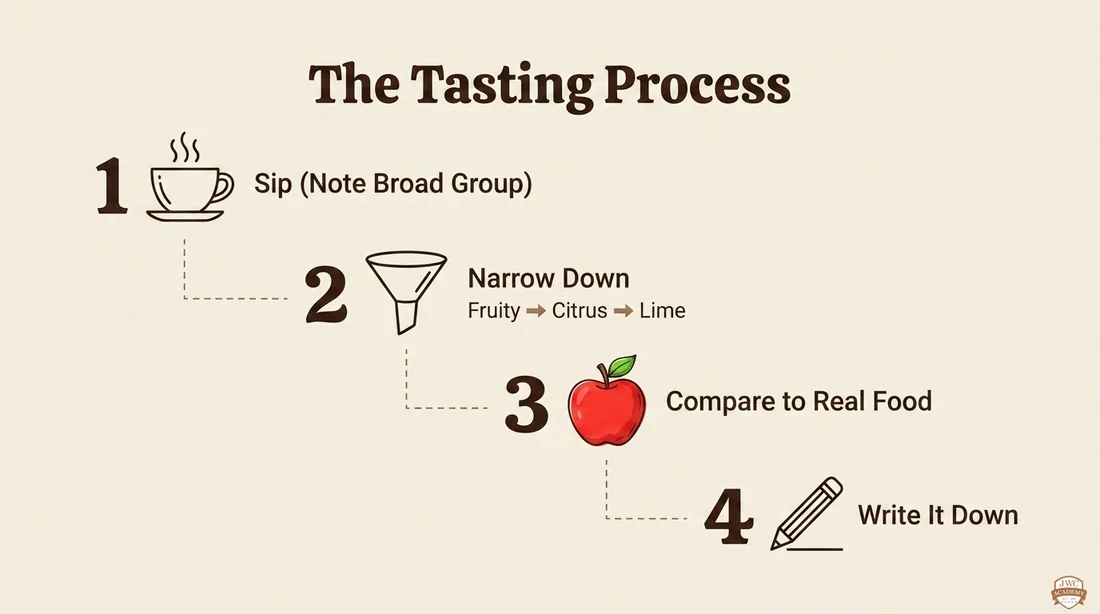
The tasting process
1
Sip name a broad group first (fruity? nutty? roasty?).
2
Narrow down fruity → citrus → more like limau or orange?
3
Compare to real food match it to something you’ve eaten.
4
Write it down note it, so next time you have a baseline.
Sip → narrow → compare to food → write it down
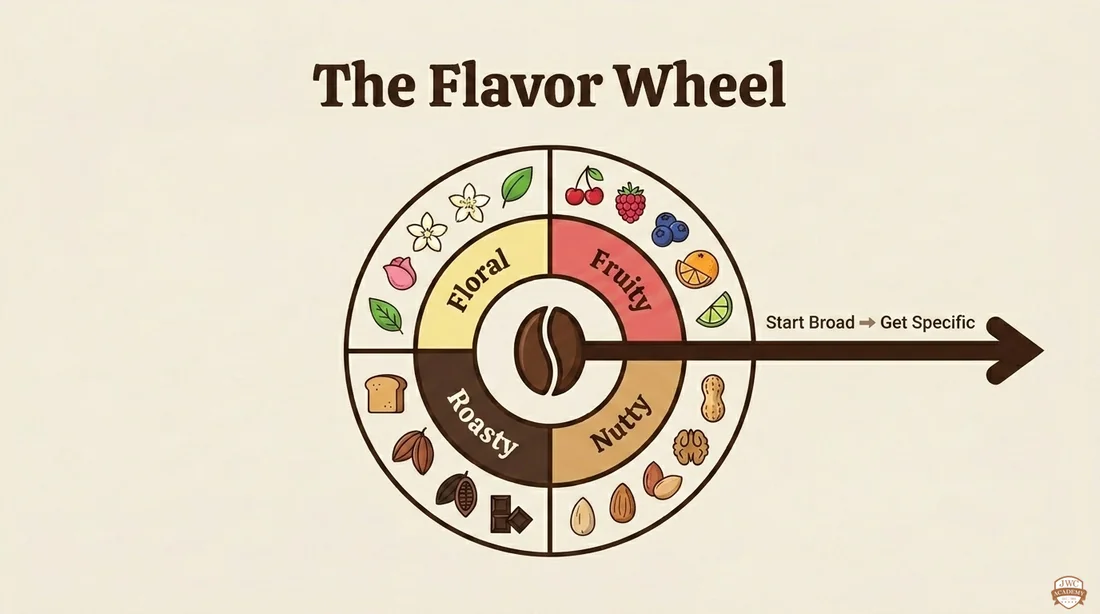
The flavor wheel: broad to specific
The flavor wheel is exactly that “broad to specific” map. The centre holds big groups (floral, fruity, nutty, roasty), and it gets more specific outward. Beginners, don’t jump to “bergamot”; saying “fruity” is already great, then work your way out.
Floral · fruity · nutty · roasty, broad to specific
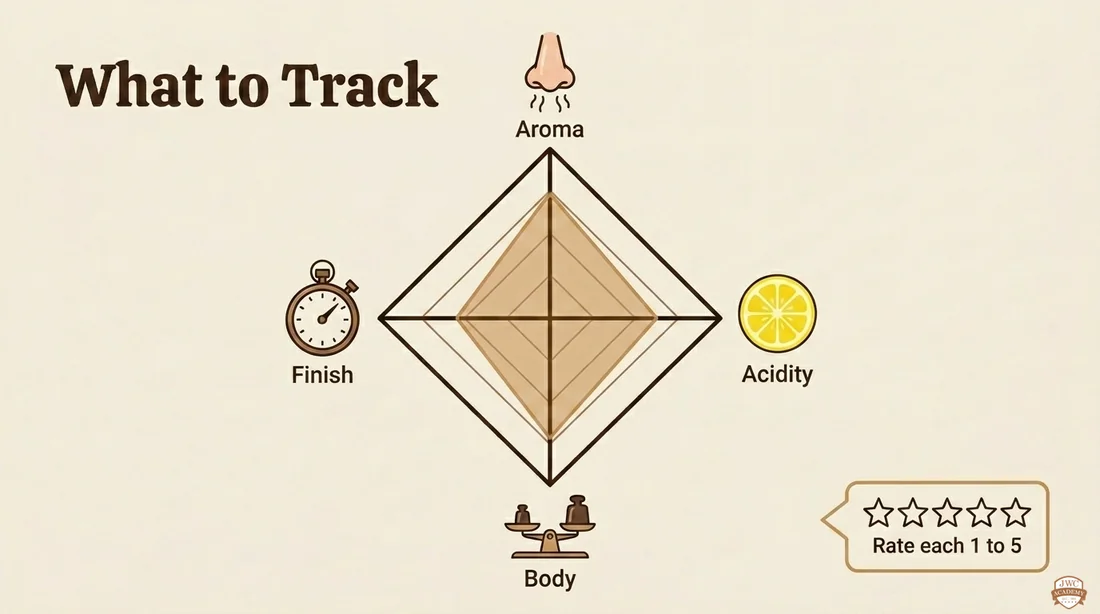
What to track
Score four boxes (1–5 each): aroma (how it smells), acidity (how bright), body (how heavy), finish (how long it lingers). Note those four and you have a framework to describe any coffee.
Aroma · acidity · body · finish, rate each 1–5
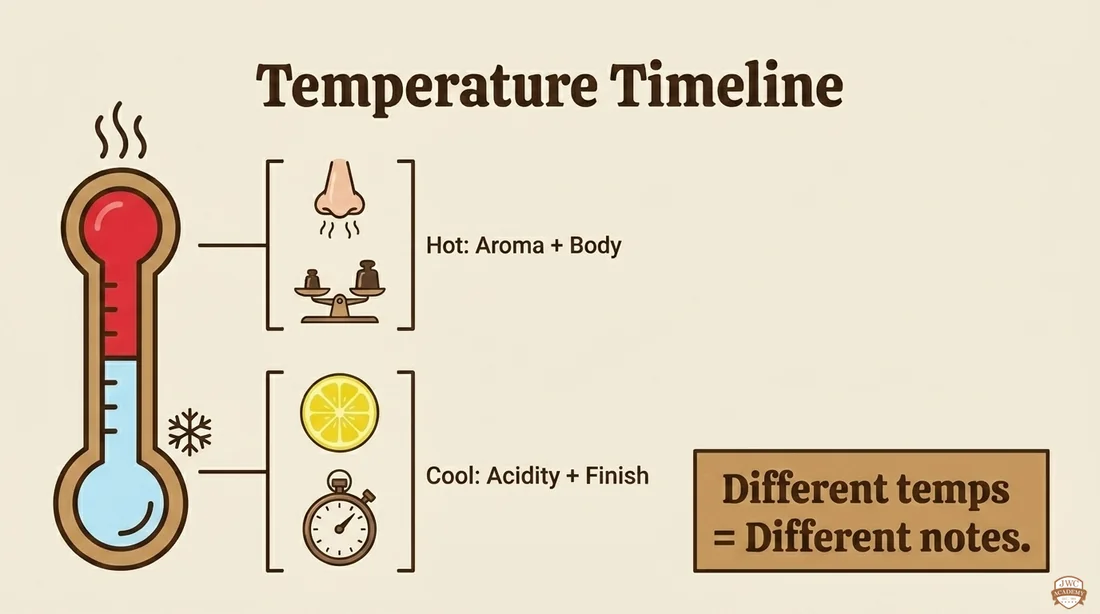
The temperature timeline
Same cup, change the temperature and the taste changes. When hot, aroma and body stand out; as it cools, acidity and the finish emerge. So don’t only drink it hot; let it cool and you’ll taste more layers.
Hot: aroma + body Cool: acidity + finish
Local flavour anchors
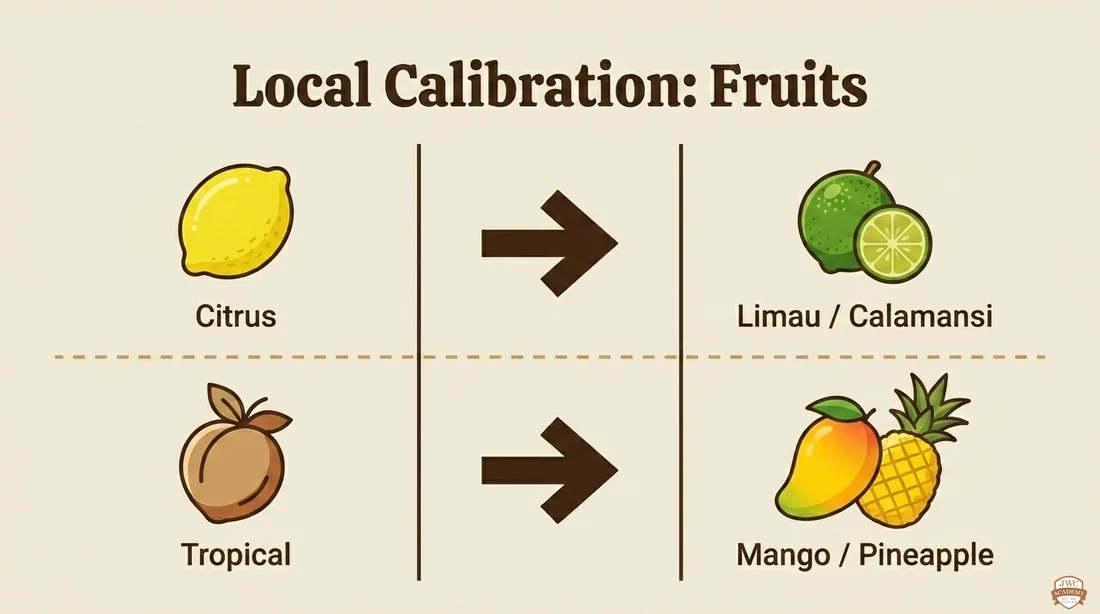
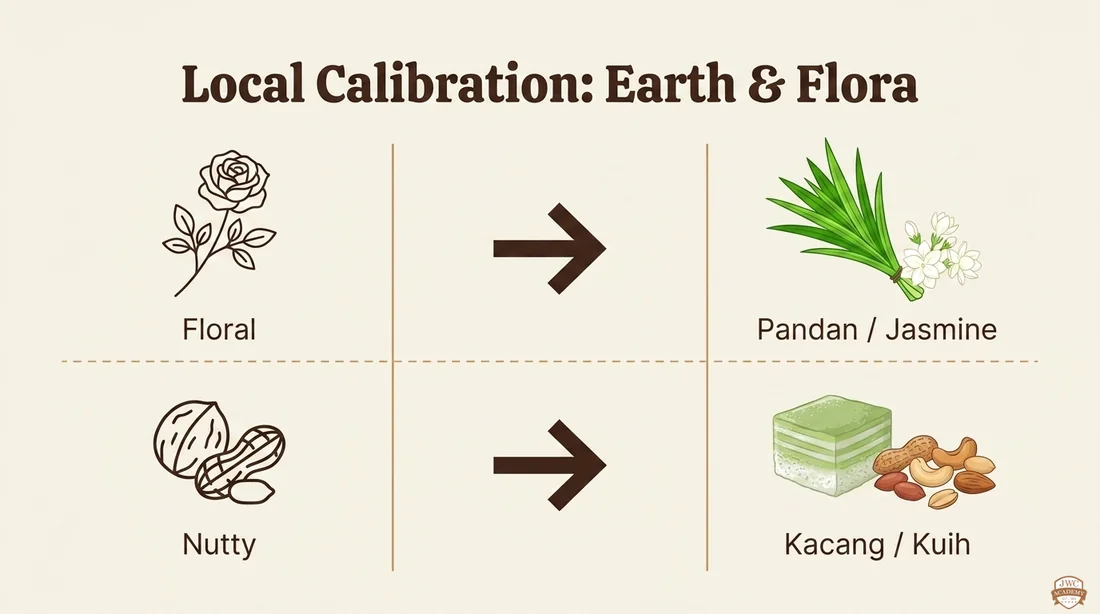
Here’s the most practical trick: use the local flavours you eat every day as references, and your descriptions get both friendlier and more accurate. Instead of forcing foreign flavour words, anchor like this:
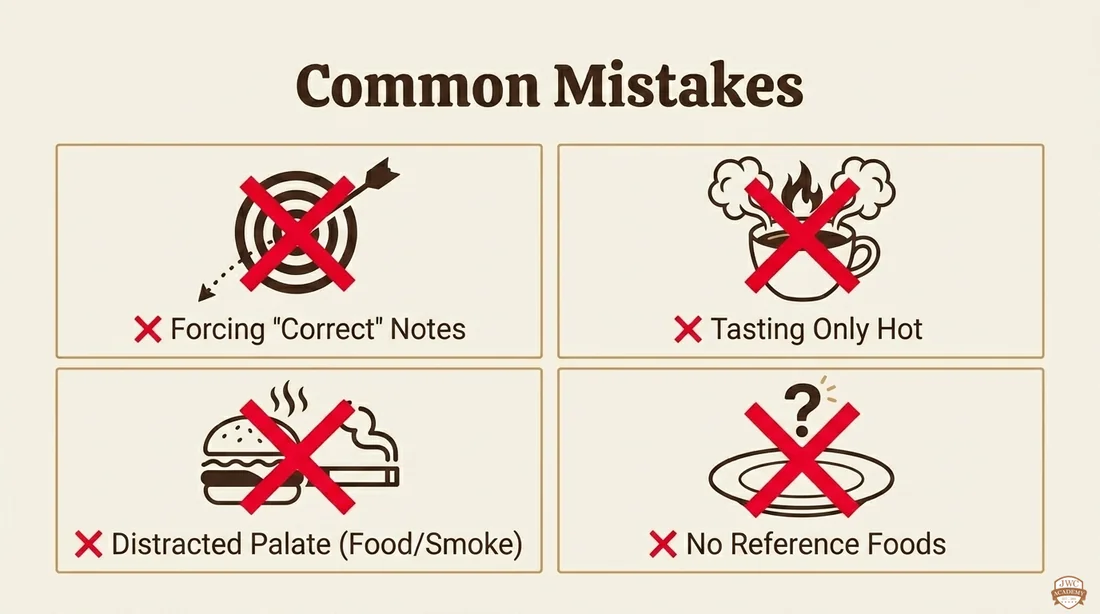
Forcing “correct” notes: write what you taste, not what you should. Tasting only hot: you miss the layers a cool cup shows. A distracted palate: don’t judge right after smoking or a strong meal. No reference foods: keep familiar fruit or kuih nearby to compare.
Don’t force it · don’t only taste hot · don’t judge distracted · keep references
The golden rules
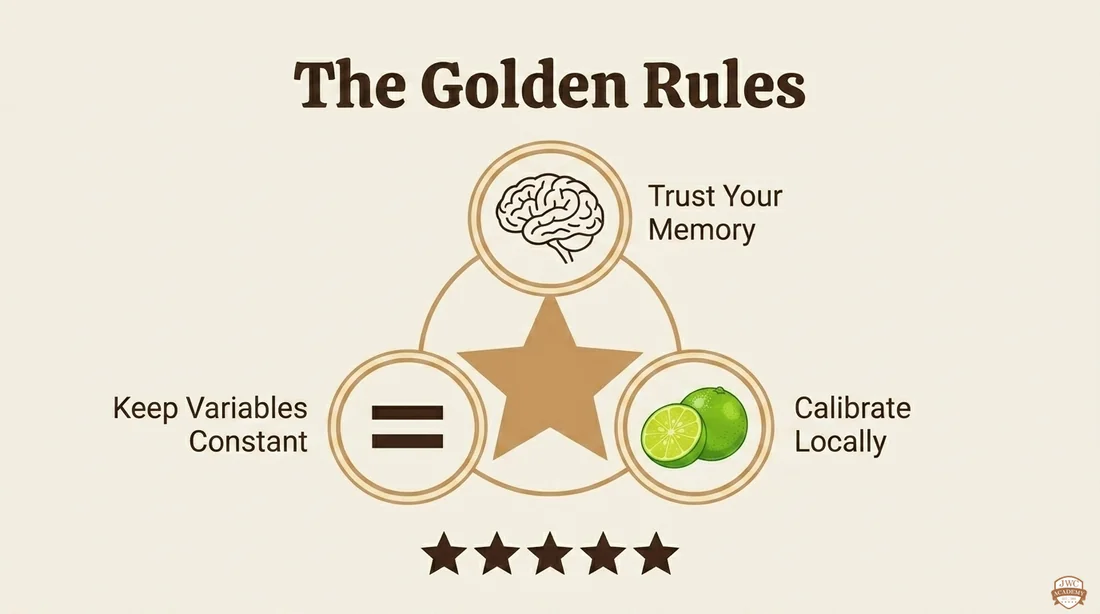
Three to remember: keep variables constant (so comparisons are fair), trust your own memory (what you’ve eaten is your vocabulary), and calibrate locally (use nearby flavours as the ruler). The more you taste and note, the richer your flavour vocabulary grows.