Principal, JWC Academy · 10th Place, 2017 World Latte Art Championship · 3× Malaysia Latte Art Champion
6 min read · Updated Jul 2026 · Bukit Jalil · Kajang · Mount Austin
Answer firstCupping is a standard way to compare several coffees at once. Fix 12g coffee : 200g water, a coarse grind, 93°C and 4 minutes, then smell the dry grounds → pour → break the crust and smell → slurp loudly, and score aroma / acidity / sweetness / body / aftertaste 1–5. Three tricks: compare side by side, keep the grind identical, slurp loud.
Coffee Cupping · the visual guide
Why cup
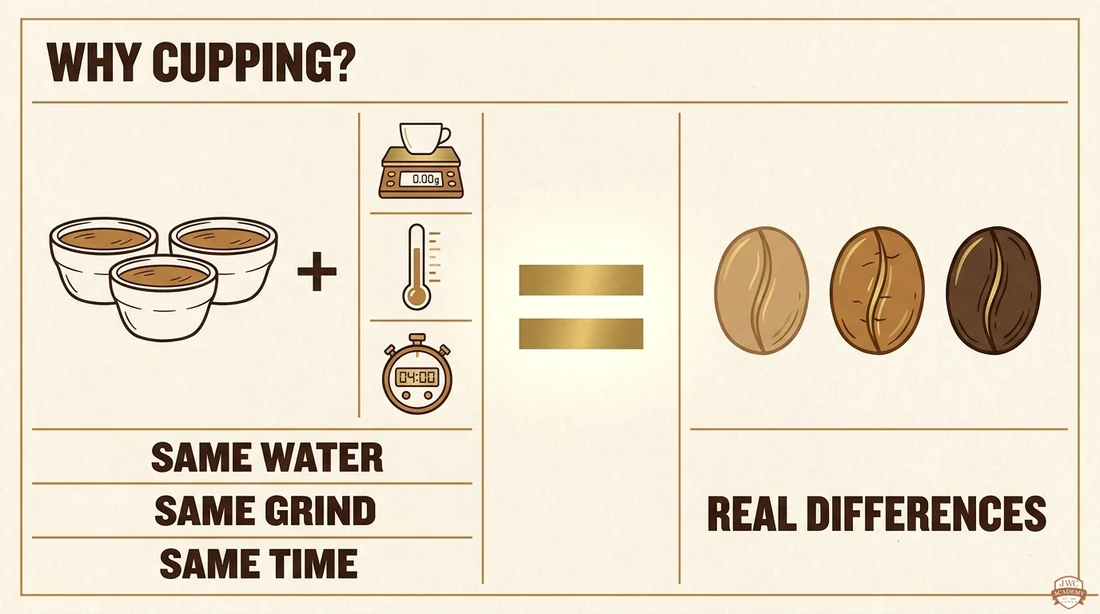
To compare beans fairly, hold every variable constant: same water, same grind, same time. Then any difference you taste is the bean itself, not your technique. It’s the same method baristas worldwide use to choose and score coffees.
Same water · same grind · same time = only the bean’s real difference
The setup
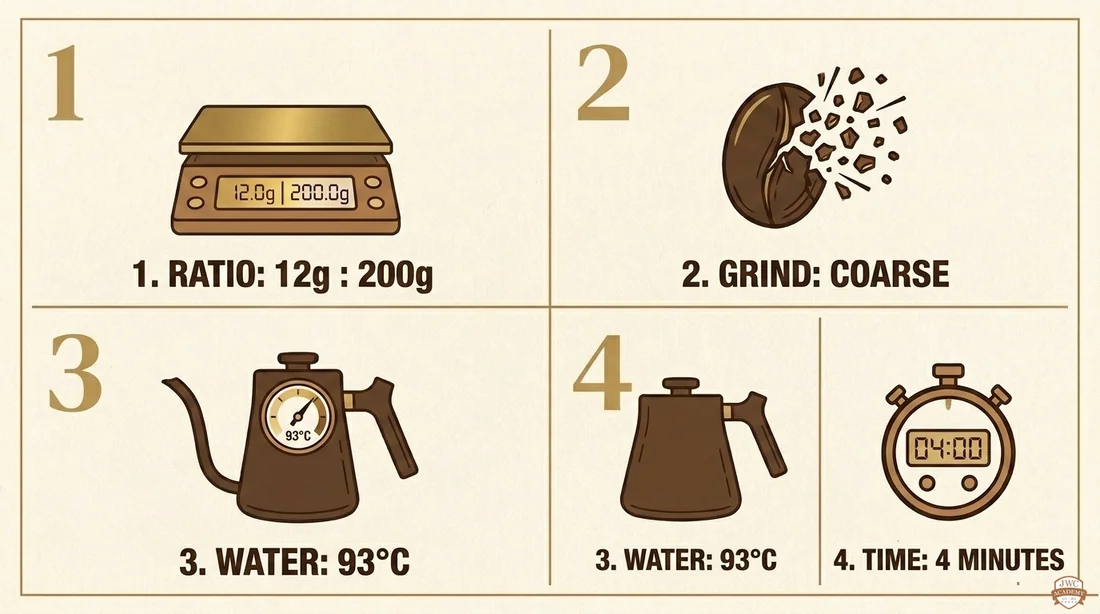
The standard start: 12g coffee to 200g water per bowl (about 1:16.7), grind coarse, water at 93°C, timer 4 minutes. Prepare a few identical bowls and line several beans up side by side.
12g : 200g
coffee : water
Coarse
grind
93°C
water temp
4 min
steep time
12g:200g · coarse · 93°C · 4 minutes
The four steps
1
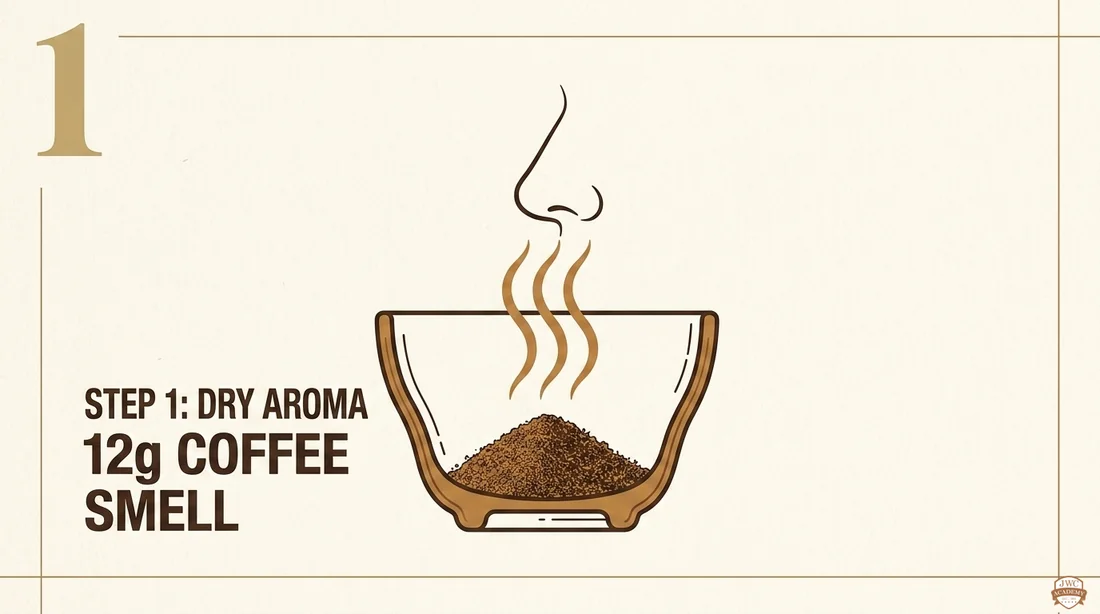
Dry aroma grind 12g and smell the dry grounds first.
2
Pour & time add 200g water at 93°C and start the timer.
3
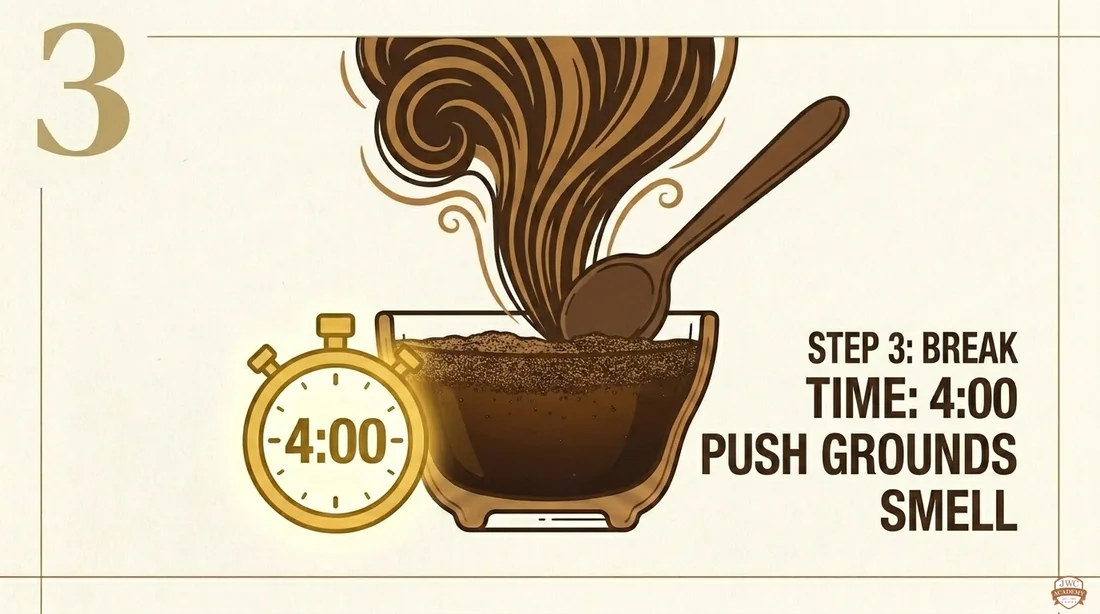
Break at 4:00 push the crust with a spoon and smell the release.
4
Slurp slurp loudly from a spoon to aerate, taste and score.
Step 1: 12g dry grounds, smell first
Step 3: break at 4:00, smell the released aroma
Why slurp loudly
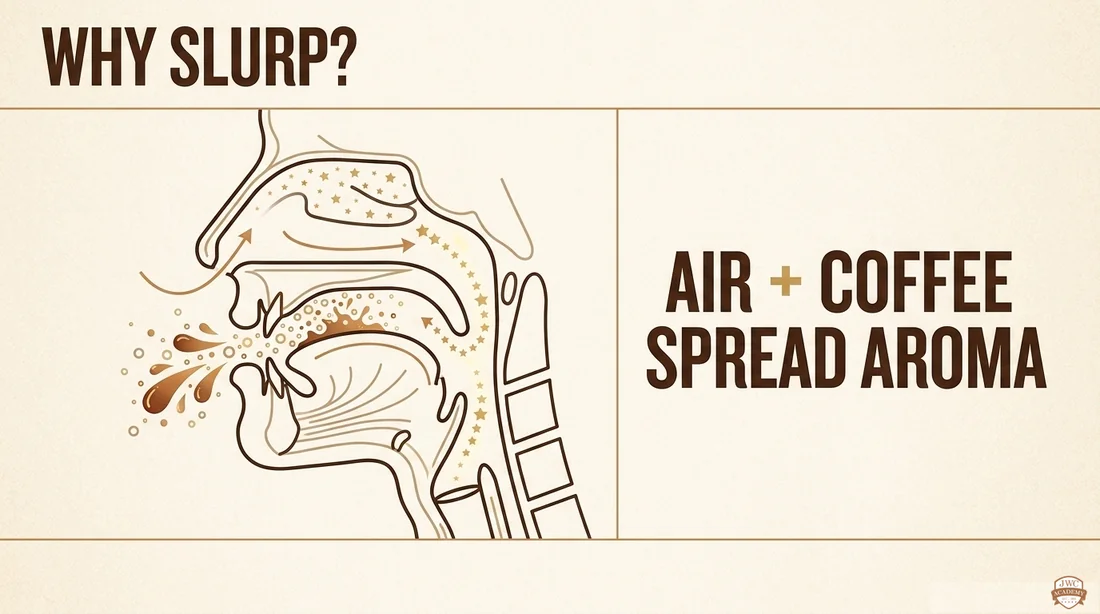
Slurping isn’t rude, it’s science: a loud slurp sprays the coffee into a fine mist that instantly coats your whole palate and shoots up into your nose. Air plus coffee spreads the aroma, so you taste and smell far more than a quiet sip.
Air + coffee mist → aroma across palate and nose
How to score
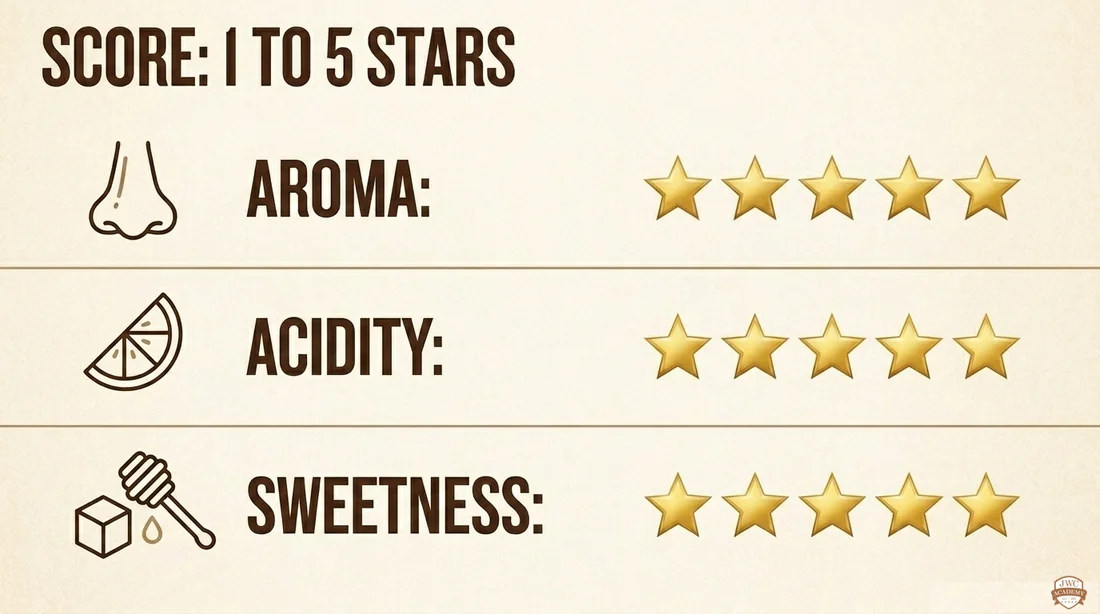
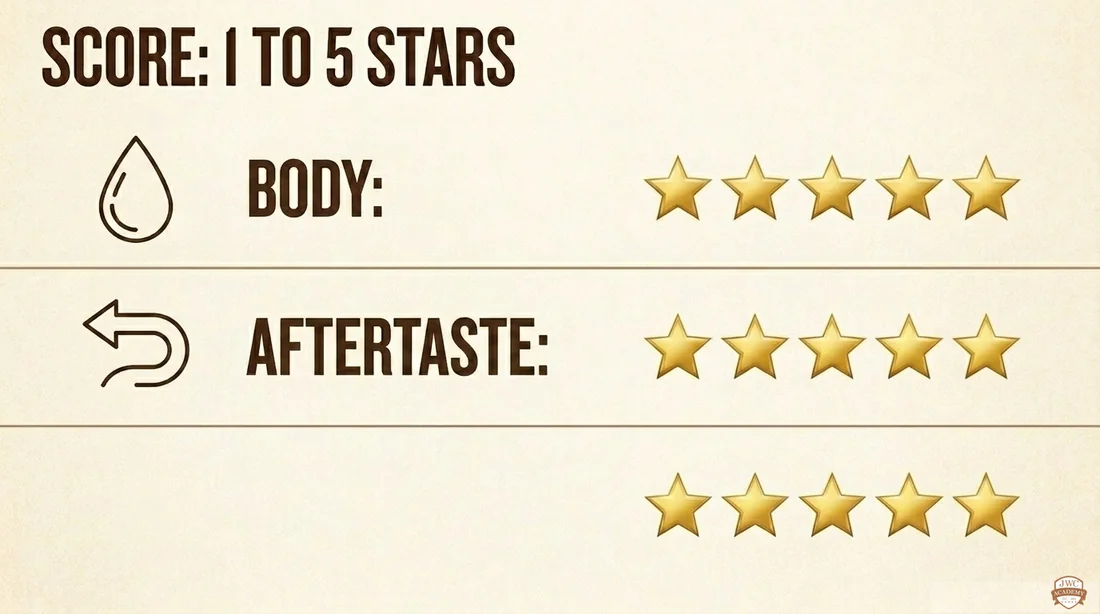
Rate five dimensions 1–5 each: aroma, acidity, sweetness, body and aftertaste. The score isn’t a test, it’s a stable comparison frame: this one is more acidic, that one is sweeter, at a glance.
Aroma · acidity · sweetness, 1–5 each
Body · aftertaste, 1–5 each
· · ·
Common mistakes
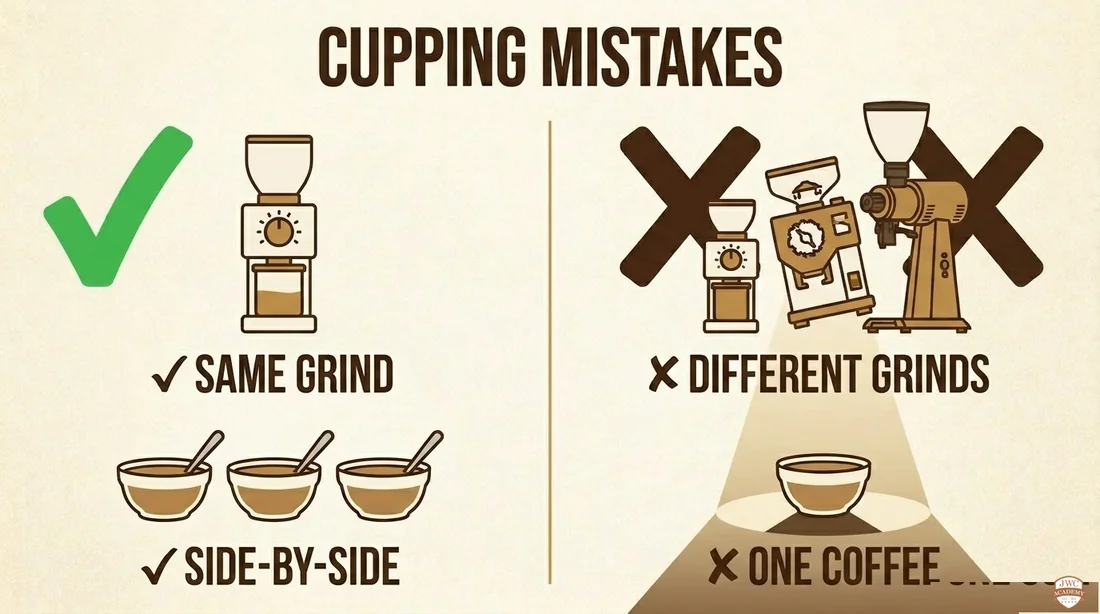
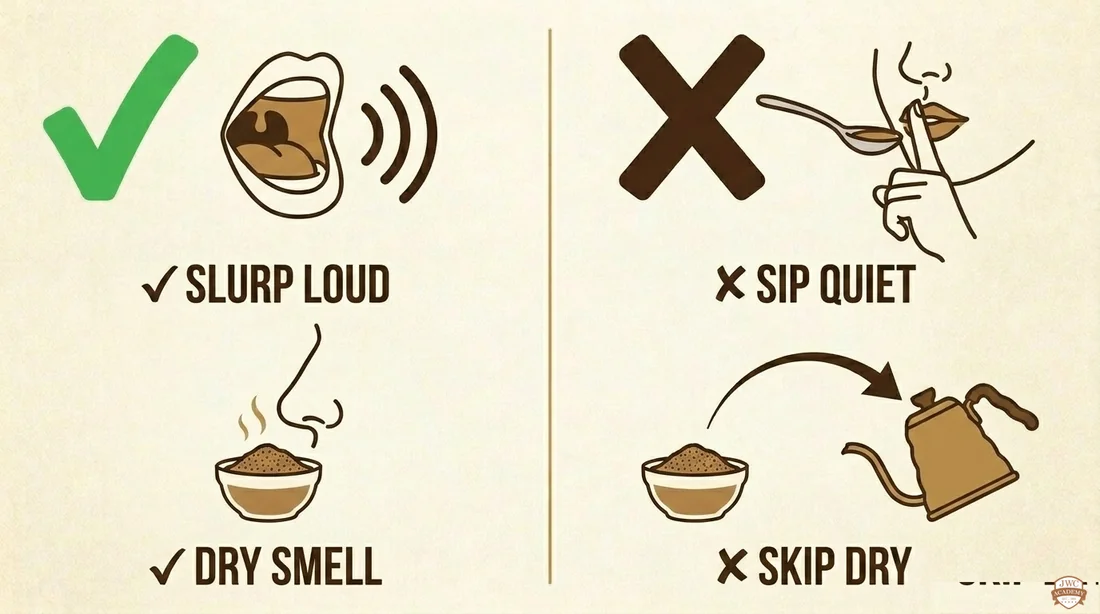
Different grinds: if each bowl is ground differently the comparison is void, keep it identical. Only one coffee: cupping is about comparison, use at least two side by side. Quiet sipping: slurp loud to aerate. Skipping the dry smell: dry aroma is your first clue, don’t skip it.
Same grind · compare side by side · not just one coffee
Slurp loud ✓ quiet sip ✕ · smell dry ✓ skip ✕
The whole flow in four words
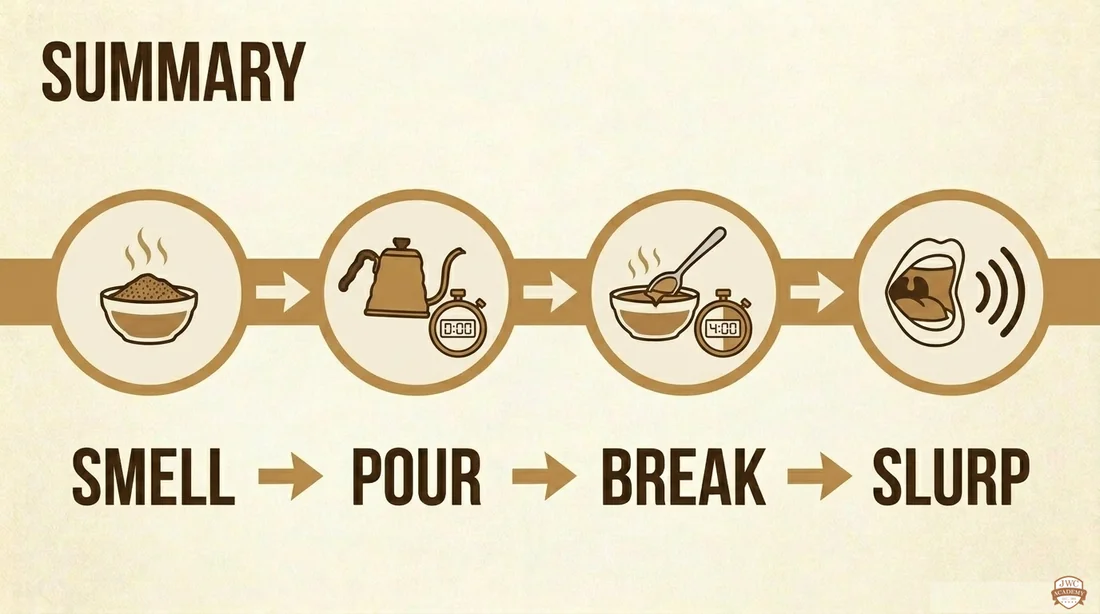
Compress it to four beats: smell → pour → break → slurp. Smell the dry grounds, pour, break and smell, then slurp and score. Remember those four and you can compare beans at home as fairly as a barista does.
Smell → pour → break → slurp
The fastest way into cupping is someone slurping and scoring alongside you. JWC classes cup real beans and train your comparing eye.
FAQ
What is cupping?
A standard way to compare several coffees at once, same ratio, grind, water and time, so any difference comes from the beans, not the method.
Why slurp when cupping?
Slurping sprays coffee as a mist across your palate and into your nose, spreading aroma and flavour so you notice far more than a quiet sip.
Do I need special gear at home?
No. A few identical bowls, a scale, a kettle and spoons. The key is keeping every bowl the same and comparing side by side.
Why a coarse grind and 93°C?
Coarse grind with a 4-minute steep extracts steadily without over-extracting; 93°C is the common cupping temperature, easy to align with others.
Cup like a pro
Want to compare and choose beans fairly at home?
From setup to slurp-and-score, taste real beans with a mentor and build your comparing skill · from RM199 · real machines