Principal, JWC Academy · 10th Place, 2017 World Latte Art Championship · 3× Malaysia Latte Art Champion
6 min read · Updated Jul 2026 · Bukit Jalil · Kajang · Mount Austin
Answer firstA coffee’s flavour is origin + altitude + fermentation. Origin (soil and climate) sets the baseline; the higher the altitude, the slower the cherry grows, so the bean is denser, more acidic and more complex; fermentation (especially anaerobic and carbonic) brings bold, wild flavour. Classic origins each have a signature: Ethiopia floral and citrus, Colombia balanced and caramel, Kenya bright and berry, Brazil nutty and chocolatey.
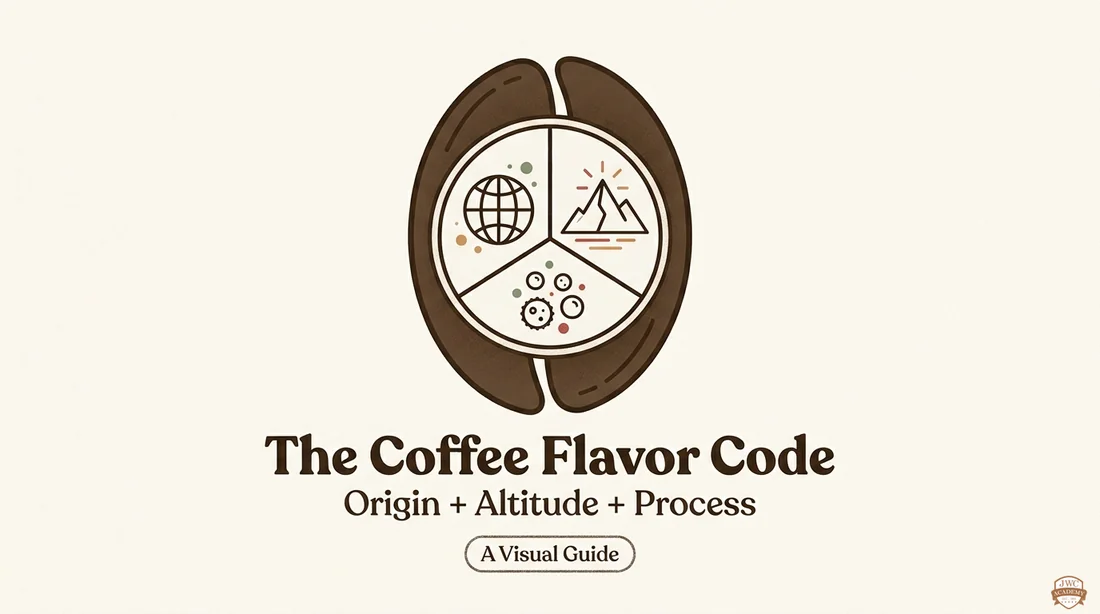
The Coffee Flavor Code · origin + altitude + process
The flavour formula
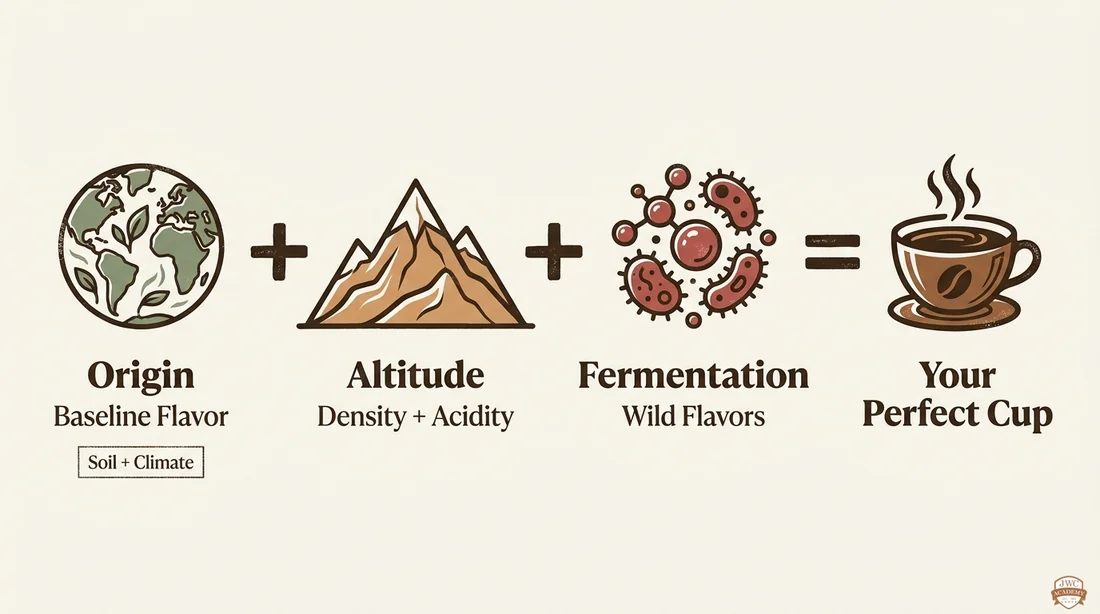
Remember it as an equation: origin (baseline) + altitude (density and acidity) + fermentation (wild flavour) = what’s in your cup. Change any one and the cup changes. It’s why the same country, different farms, can taste worlds apart.
Origin + altitude + fermentation = your cup
The origin map
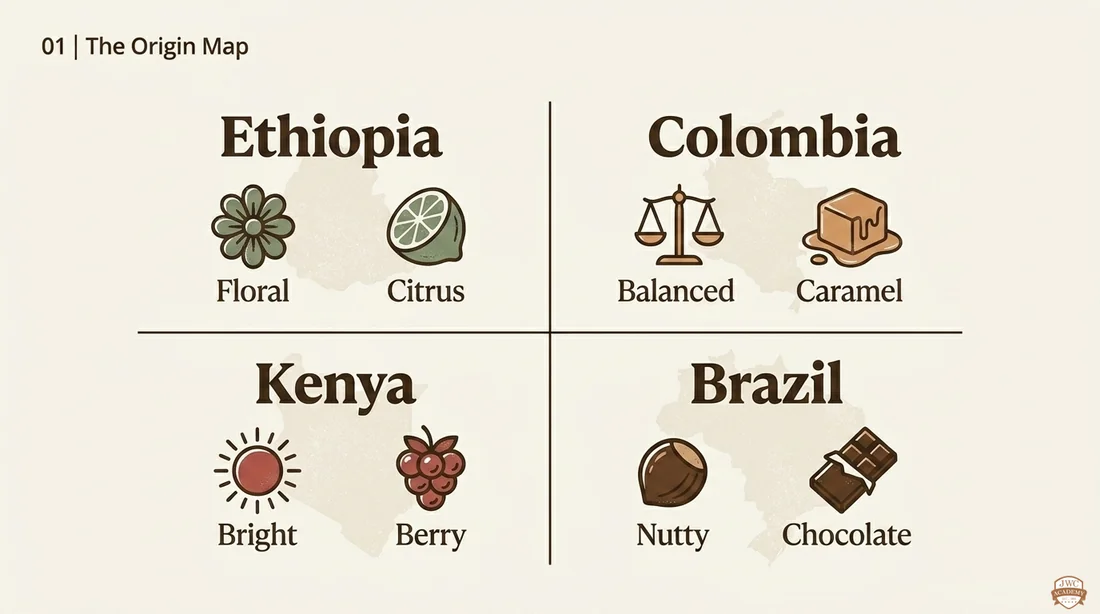
Classic origins have signature flavours: Ethiopia floral and citrus (Arabica’s homeland); Colombia balanced with caramel sweetness; Kenya bright and berry with standout acidity; Brazil nutty, chocolatey and full-bodied (a common espresso base).
Ethiopia · Colombia · Kenya · Brazil
The altitude scale
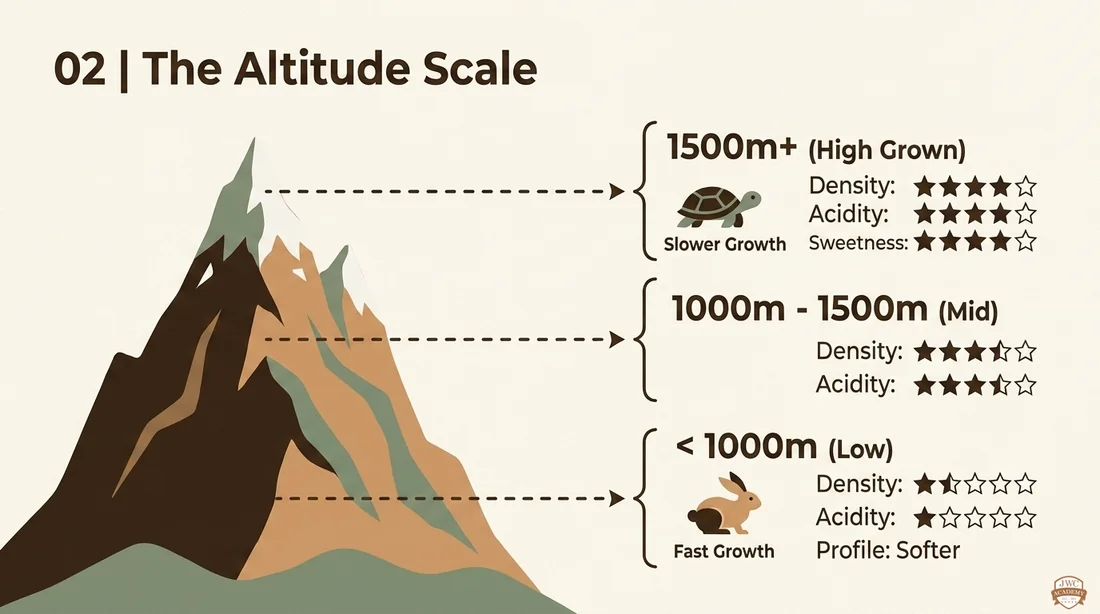
Higher altitude means cooler air and slower cherry growth, so sugars and flavour compounds build up more fully. So high altitude = denser, brighter, more complex; low altitude grows fast and tastes softer and flatter.
1500m+
high grown dense · bright · complex
1000–1500m
mid balanced
< 1000m
low fast growth · softer
Higher and slower → denser, brighter, more complex
Special ferments
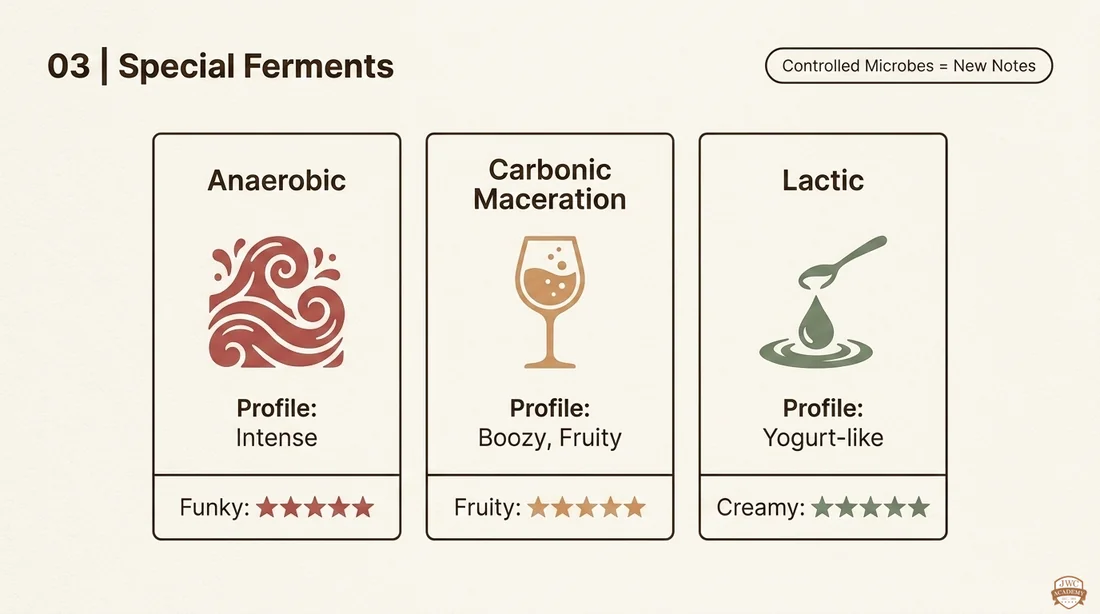
The hottest flavour source lately: controlled microbial fermentation that creates notes you can’t get otherwise. Anaerobic (no oxygen) is intense and funky; carbonic maceration (borrowed from winemaking) is boozy and vividly fruity; lactic is yogurt-like and creamy. These “exotic” beans usually cost more and need careful brewing.
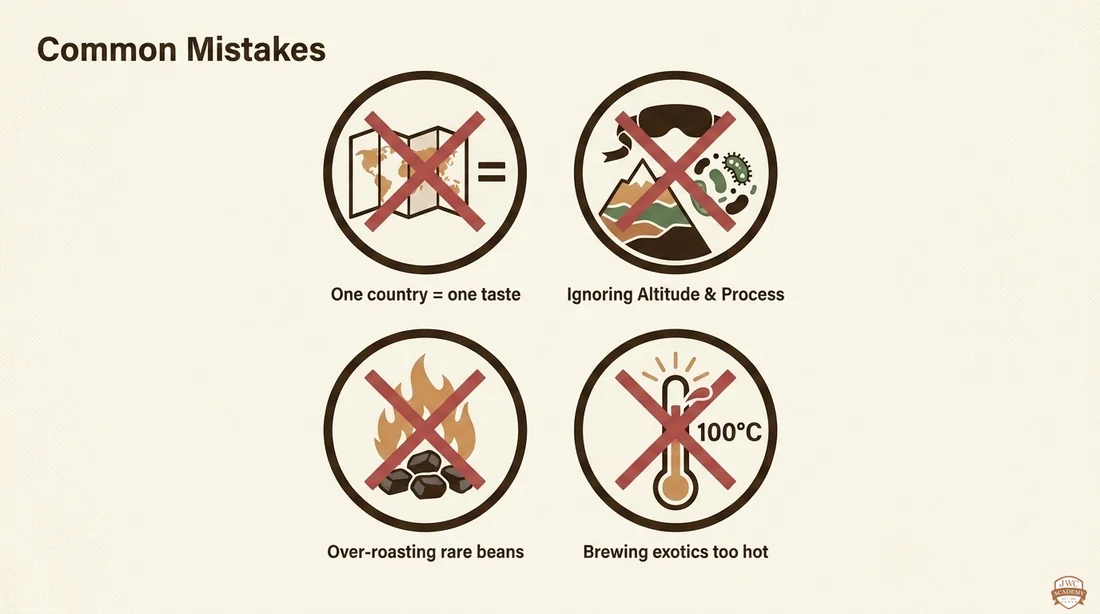
“One country, one taste”: wrong. Within a country, altitude, variety and process vary a lot. Ignoring altitude and process: origin alone isn’t enough. Over-roasting rare beans: it buries their unique flavour. Brewing exotics too hot: it smears the delicate notes.
Country ≠ taste · don’t ignore altitude/process · don’t over-roast or over-heat exotics
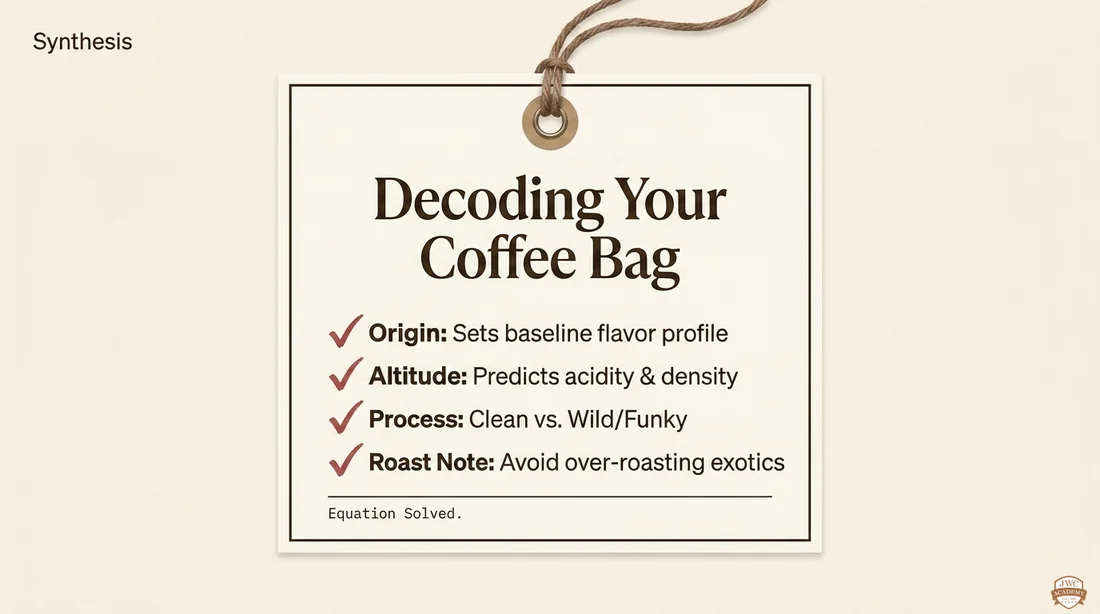
Decoding your coffee bag
Next time you buy, these four words on the bag are enough to predict the cup: origin sets the baseline, altitude hints at acidity and density, process tells clean vs wild, roast reminds you not to over-roast a good bean.
Origin · altitude · process · roast, four keywords
On the bag
Tells you
Origin
baseline flavour direction
Altitude
acidity and density
Process
clean vs wild / funky
Roast
don’t over-roast a rare bean
Same coffee, different origin, altitude and ferment, and it tastes completely different. Want to read a bean’s story as you drink? JWC classes taste through them cup by cup.
FAQ
Why does high-altitude coffee cost more?
Higher altitude means slower growth, building denser beans with brighter acidity and more complexity. It’s harder to farm, so it usually costs more.
What is anaerobic or carbonic fermentation?
Controlled ferments done without oxygen or under CO2 pressure, creating bold, boozy or fruity flavours a standard process won’t give.
Does one country taste the same?
No. Within a country, altitude, variety and process create very different cups.
How do I brew exotic ferment beans?
They’re already intense, so don’t use water that’s too hot and don’t over-extract; a gentler brew shows their nuance.
Taste the terroir
Want to taste origin, altitude and ferment apart?
From a bean’s story to the cup, taste them side by side with a mentor · from RM199 · real machines