Principal, JWC Academy · 10th Place, 2017 World Latte Art Championship · 3× Malaysia Latte Art Champion
6 min read · Updated Jul 2026 · Bukit Jalil · Kajang · Mount Austin
Answer firstFor pour-over, put your money where it matters. The grinder (burr) is the most important: it decides how even the grind is, and even grind means even extraction. Priority: grinder > gooseneck kettle (control & temperature) > 0.1g scale > dripper and filters (cheapest, last). The biggest mistake is splurging on a pretty dripper while using a cheap blade grinder. One cup a day, hand grinder; several, electric.
The Perfect Pour-Over Kit · a beginner gear guide
What’s in the kit
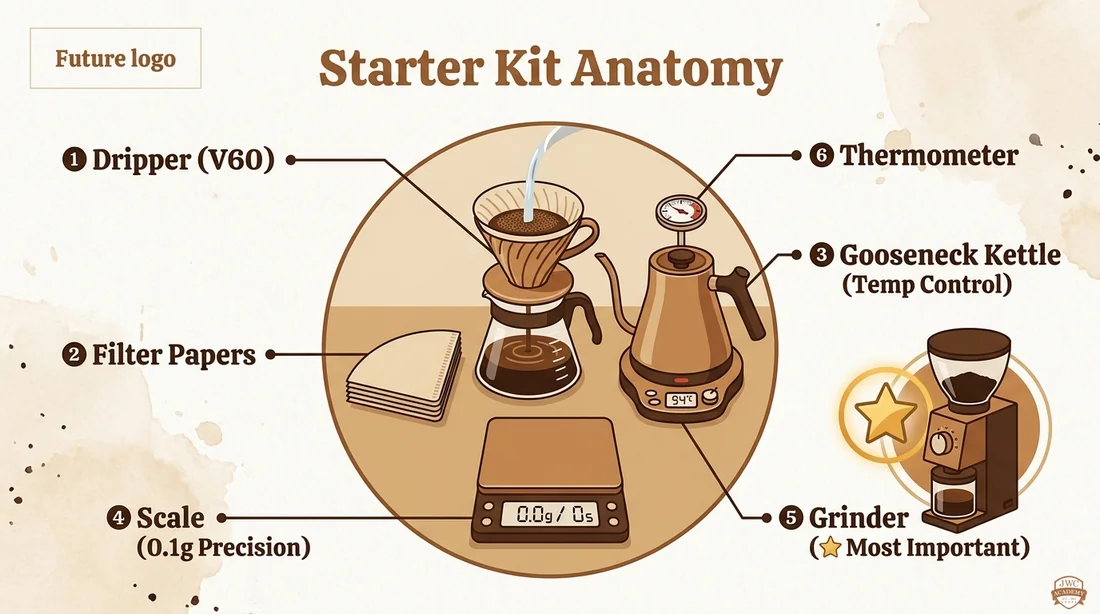
A basic pour-over set: dripper (V60), filters, a gooseneck kettle (control and temperature), a 0.1g scale, a grinder, and optionally a thermometer. It looks like a lot, but only one thing truly separates the cups, next section.
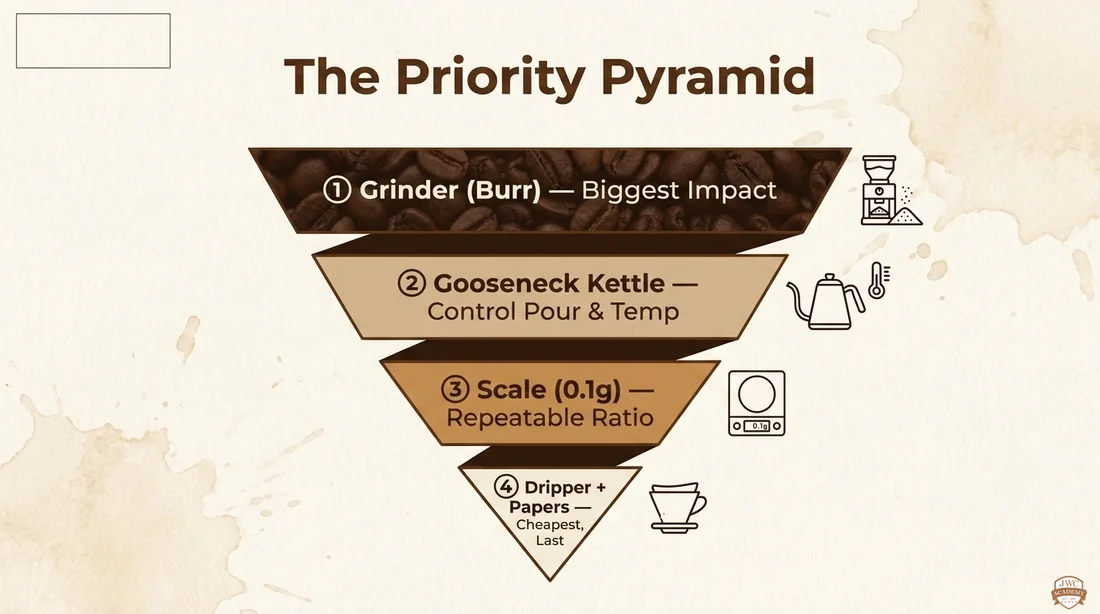
On a budget, spend in this order: 1. grinder (biggest impact) → 2. gooseneck kettle (pour and temperature control) → 3. 0.1g scale (to repeat a recipe) → 4. dripper + filters (cheapest, add last). Buying in reverse is the classic mistake.
Grinder > kettle > scale > dripper and filters
Why grinder > dripper
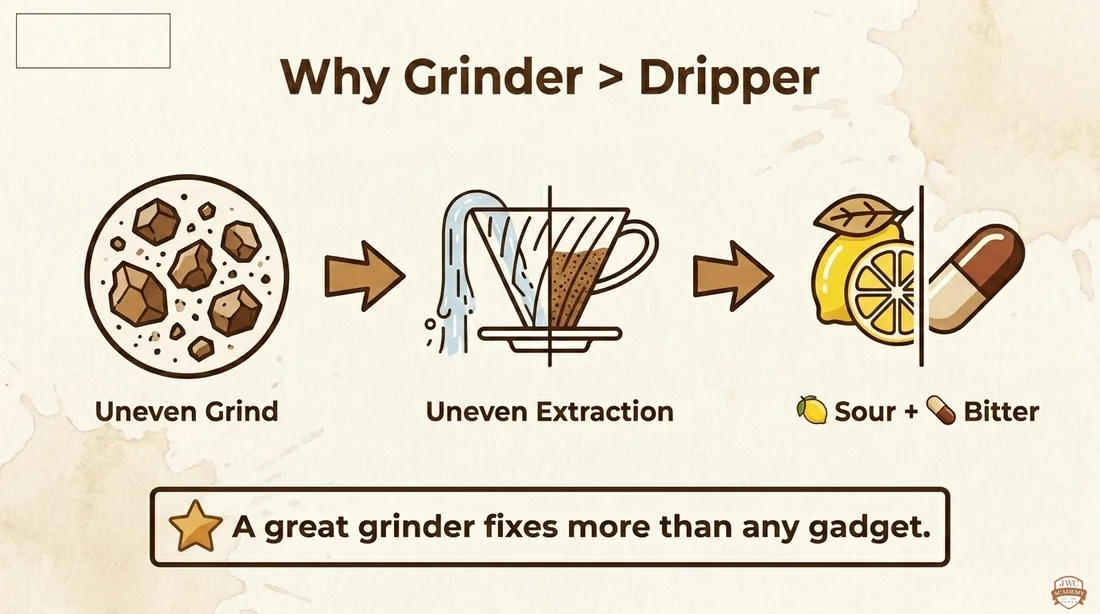
Because everything starts with the grind: uneven grind → uneven extraction → sour and bitter. No dripper, however expensive, fixes a mess of uneven particles. Flip it, and a good grinder makes even a basic dripper brew clean and tasty. A great grinder is worth more than any small gadget.
Uneven grind → uneven extraction → sour + bitter
The grinder rule: burr vs blade
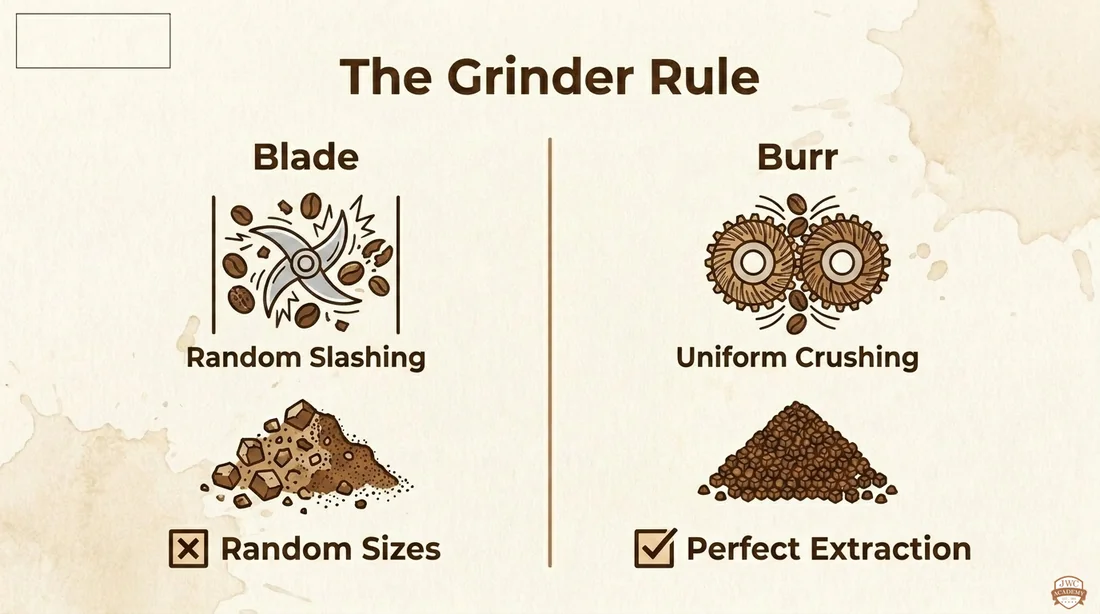
Buying a grinder comes down to one thing: get a burr grinder, not a blade one. A blade slashes randomly like a chopper, making uneven sizes; a burr crushes evenly to a set coarseness, so extraction is even. This one rule largely sets the ceiling of your pour-over.
Blade: random slashing, uneven Burr: uniform crushing, even extraction
Hand or electric
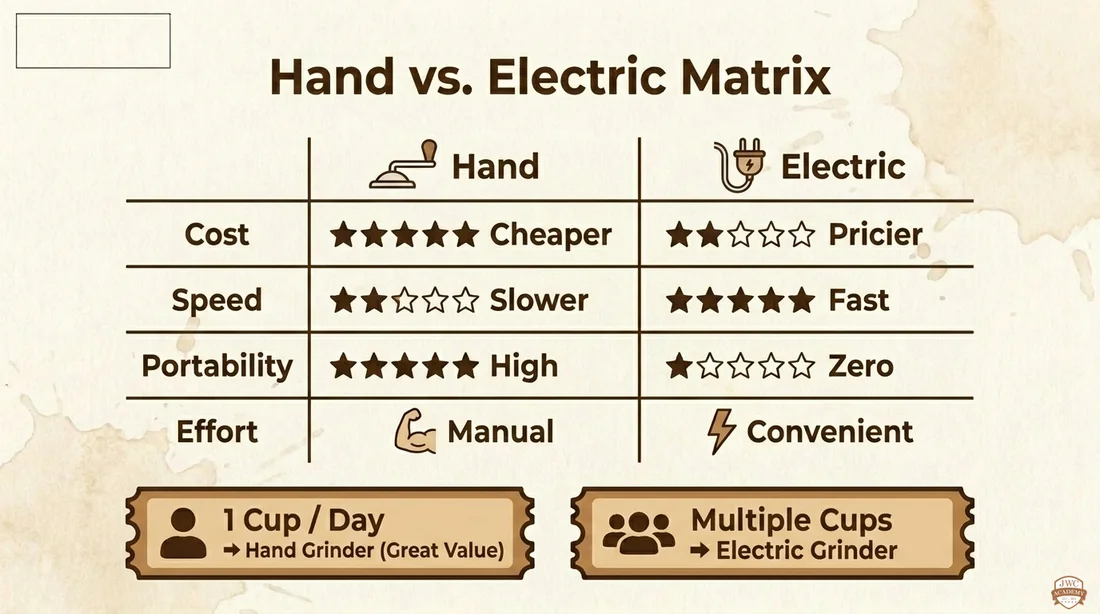
Assuming both are burr, pick by use: one or two cups a day → hand grinder (cheap, portable, great value); several cups or want speed → electric (fast, effortless). A hand grinder is cheap and still makes great grounds, a common first grinder.
One cup → hand (value) · many cups → electric (convenience)
Hand
Electric
Cost
cheaper
pricier
Speed
slower
fast
Portability
high
almost none
Effort
manual
convenient
How to split the budget
No specific prices (they vary a lot by brand), just an allocation principle: the biggest share goes to the grinder, then the kettle and scale, with dripper and filters last and good-enough. Better to spend a bit more on the grinder than to sacrifice grind for a pretty dripper. (For JWC’s specific model and budget picks, just ask Cindy.)
· · ·
Mistakes to avoid
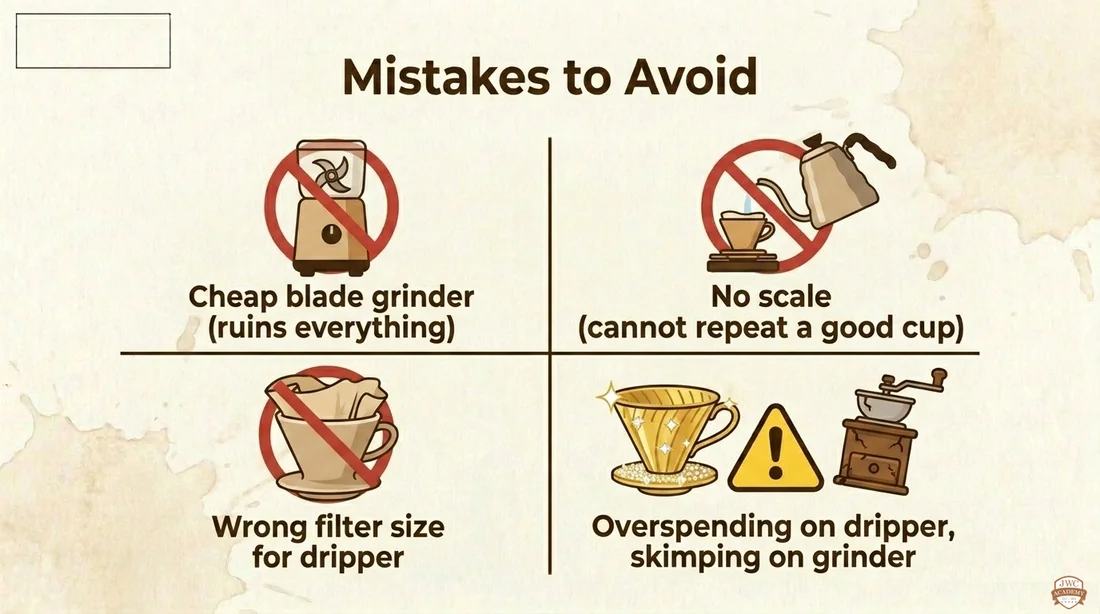
A cheap blade grinder: it ruins everything, don’t start here. No scale: pouring by feel means you can’t repeat a good cup. Wrong filter shape: cone dripper needs cone filters, flat bed needs flat. Splurging on the dripper, skimping on the grinder: money in the wrong place.
No blade · don’t skip the scale · right filter · don’t skimp on the grinder
Not sure how to pick your first grinder or a whole kit, or which model? JWC classes give advice for your budget and habits, so you don’t waste money.
FAQ
What should I buy first?
A good burr grinder, it has the biggest impact. Then a gooseneck kettle, a 0.1g scale, and the dripper and filters last.
Burr or blade grinder?
Burr. Burrs crush to uniform sizes for even extraction; blades slash randomly and make uneven grounds that taste sour and bitter.
Hand or electric grinder?
For one cup a day, a hand grinder is great value and portable. For several cups or speed, electric is more convenient. Both should be burr.
Do I really need a scale?
Strongly recommended. A 0.1g scale lets you repeat a recipe; otherwise every brew is by feel and you can’t reproduce a good one.
Buy smart
Want to buy right the first time?
From the grinder to a full kit, a mentor advises for your budget and lets you try it live · from RM199 · real machines