Principal, JWC Academy · 10th Place, 2017 World Latte Art Championship · 3× Malaysia Latte Art Champion
6 min read · Updated Jul 2026 · Bukit Jalil · Kajang · Mount Austin
Answer firstRoast level decides flavour, not caffeine. Light is acidic, fruity and floral; medium is balanced, caramel and nutty; dark is bold, bitter, chocolatey and smoky. The darker the roast, the lower the acidity, the heavier the body, and the oilier the surface. The biggest myth: dark roast is not more caffeinated. By weight it’s essentially the same.
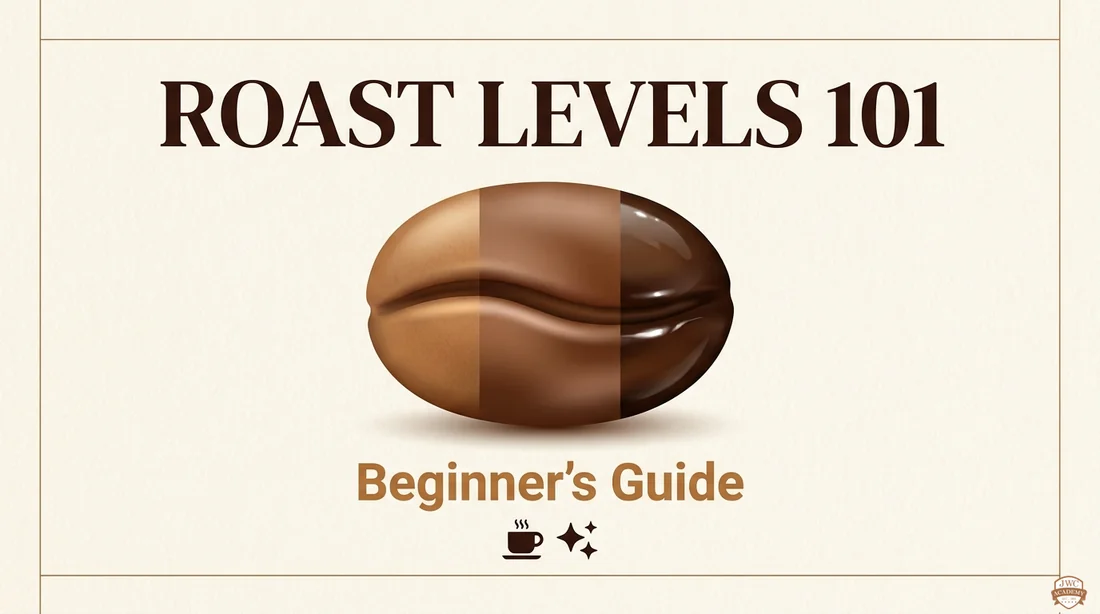
Roast Levels 101 · start here
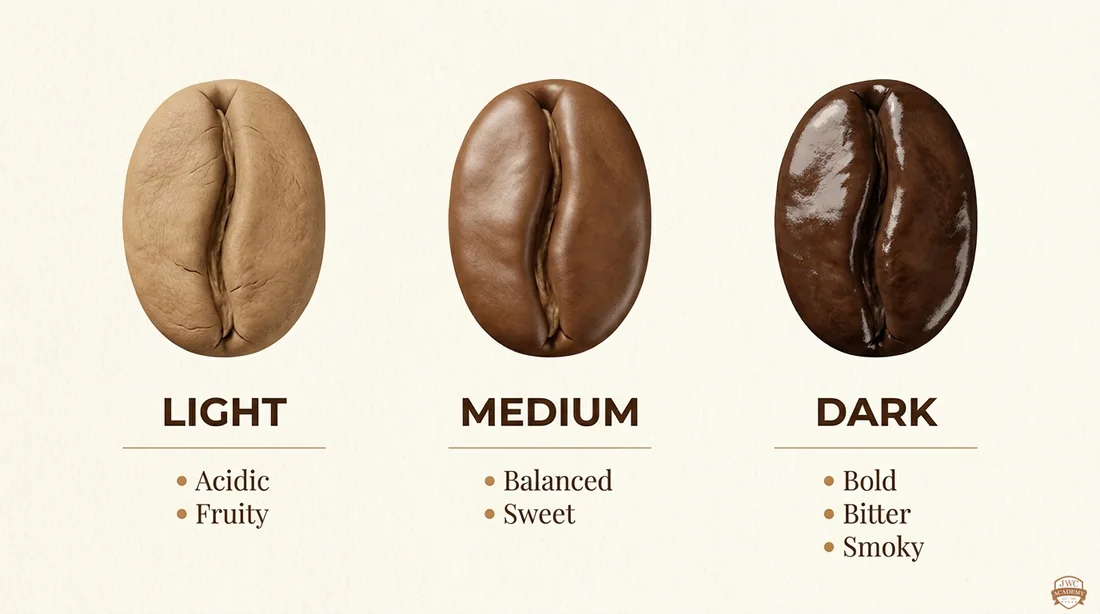
The three roast levels
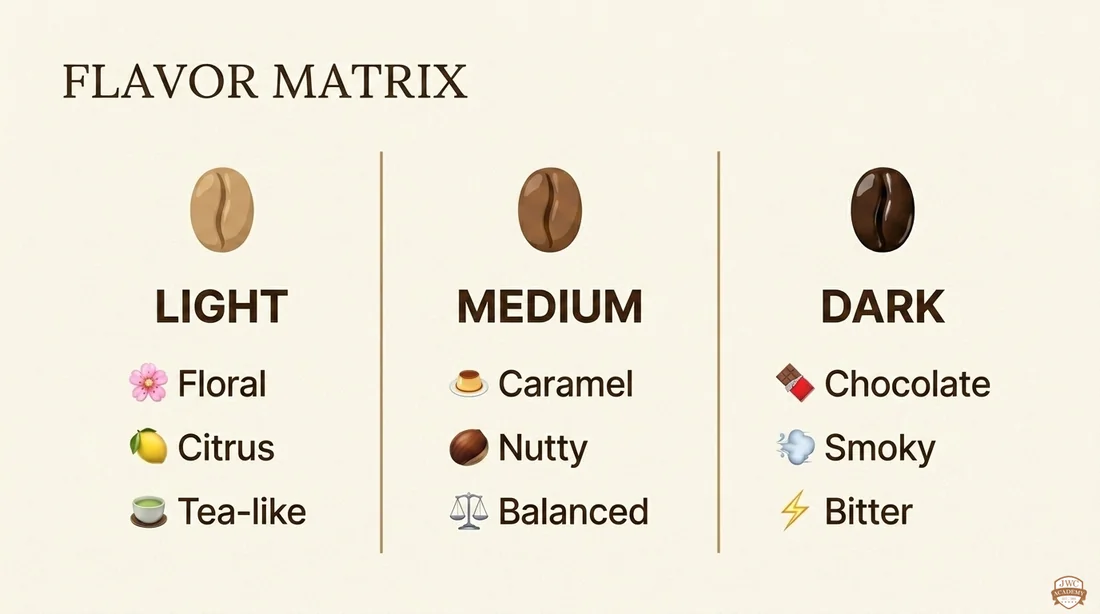
Light keeps the most of the bean’s origin flavour: acidic, fruity, floral. Medium is the most balanced, with caramel sweetness and nuttiness. Dark is rich and slightly bitter, with chocolate and smoke. Colour only marks how far the roast went; whether it tastes good is decided by tasting.
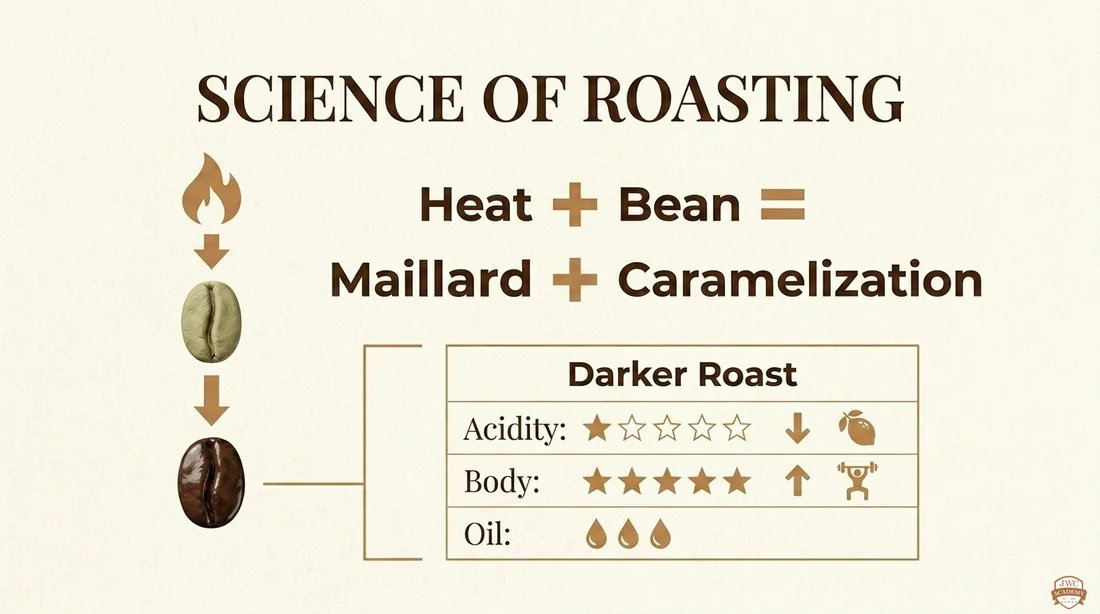
Roasting is heat + bean, triggering two reactions: the Maillard reaction (nutty, toasty notes and colour) and caramelisation (sugars browning, sweetening then turning bitter). The darker it goes, the more acidity burns off, the heavier the body, and the more oil is pushed to the surface.
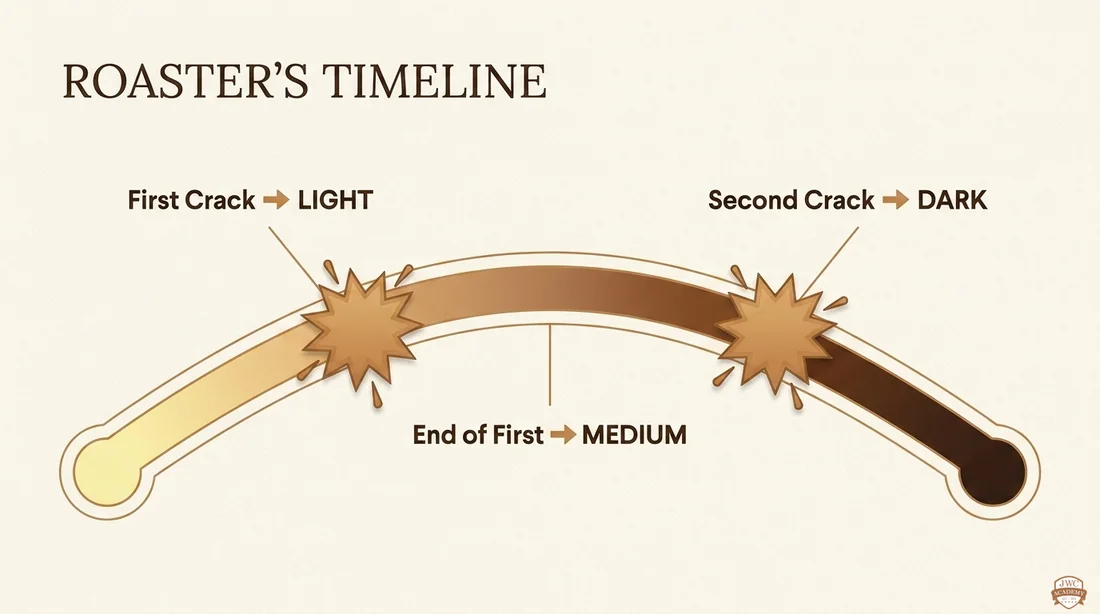
Roasters read progress by cracks. From First Crack it’s light roast; around the end of first it’s medium; into Second Crack it’s dark. The further it goes, the more flavour slides from bright and acidic to rich and bitter.
First Crack → light · end of first → medium · Second Crack → dark
Flavour matrix
Chase the flavour you want to the right roast: light for floral, citrus, tea-like; medium for caramel, nutty, balanced; dark for chocolate, smoky, bitter.
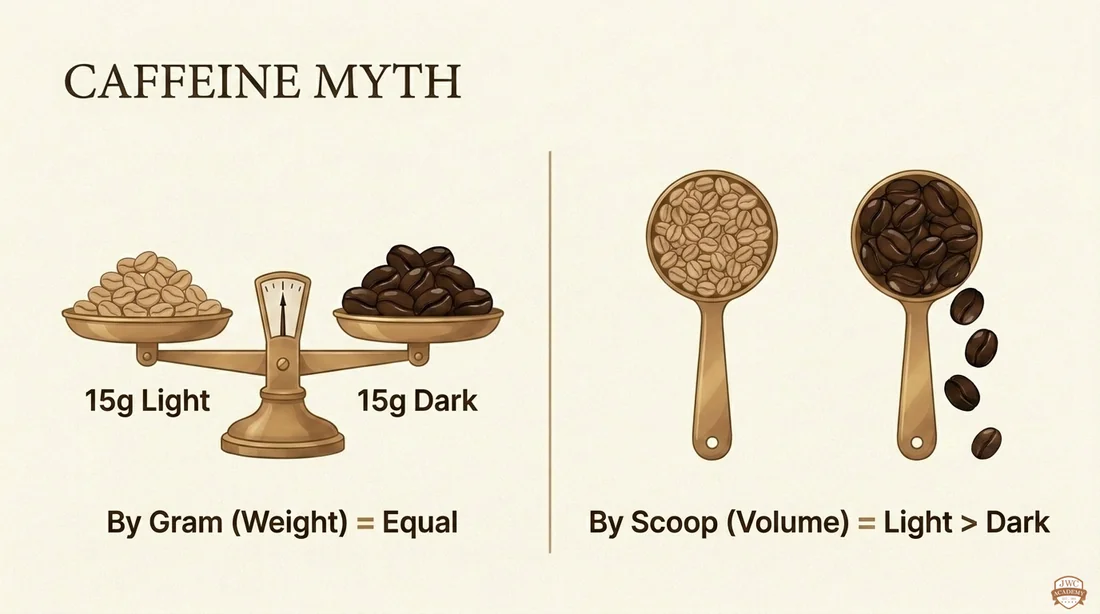
“Dark roast is stronger” is wrong. It comes down to how you measure:
By weight
light ≈ dark (about the same)
By scoop
light > dark (dark beans are puffier)
Dark roasting drives off water and puffs the bean up, so its density drops. By weight the caffeine is about equal; by volume (a scoop) light roast gives slightly more, because more solid bean fits in the same scoop.
By weight = equal · by volume = light slightly more
· · ·
Busting the common myths
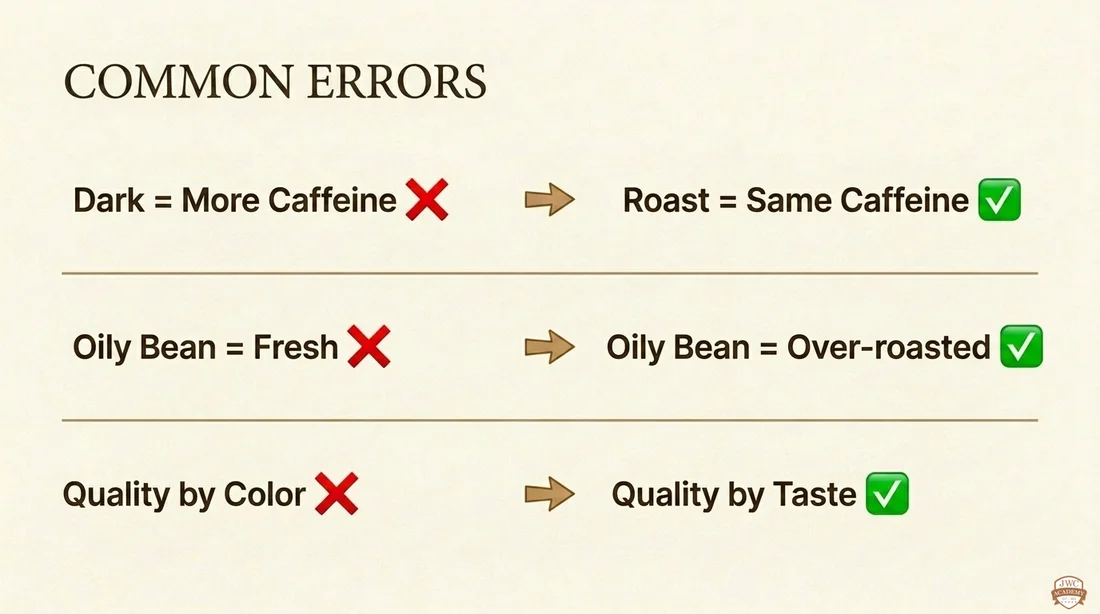
✕ Dark = more caffeine → ✓ about equal by weight. Caffeine is heat-stable; it doesn’t spike just because the roast is darker.
✕ Oily bean = fresh → ✓ oil usually means a dark or older roast. Oil migrates to the surface; it isn’t a freshness sign.
✕ Judge quality by colour → ✓ judge by taste. Colour only tells you the roast level, not the quality.
The three most common roast myths
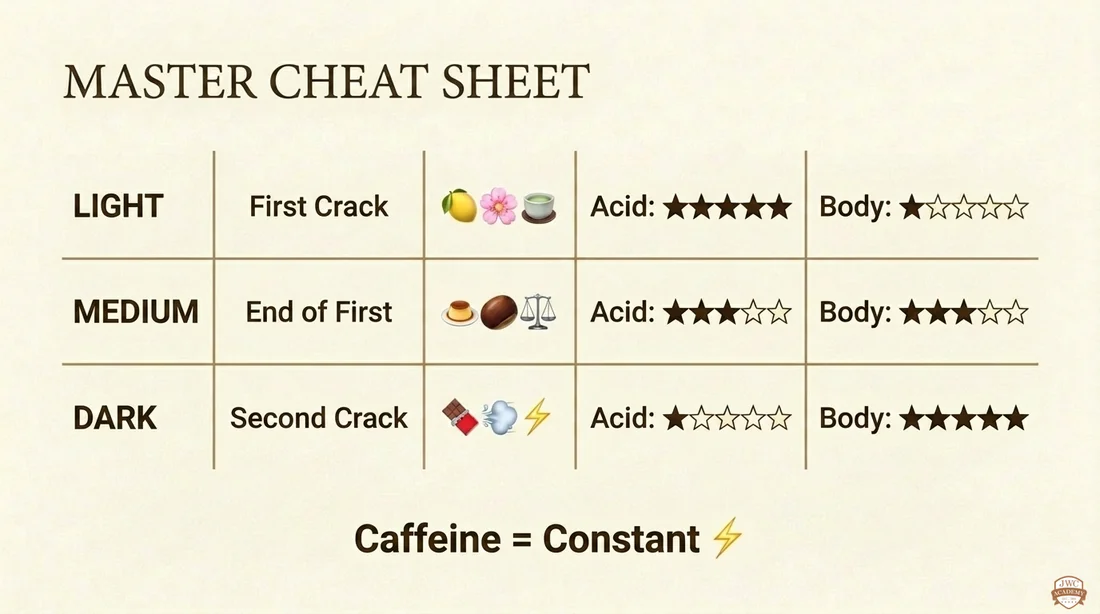
Master cheat sheet
Light/medium/dark × crack × flavour × acidity & body
Roast
Marker
Flavour
Acidity / body
Light
First Crack
floral · citrus · tea
high acid / light body
Medium
end of first
caramel · nutty · balanced
medium / medium
Dark
Second Crack
chocolate · smoky · bitter
low acid / heavy body
One bean, light or dark, tastes completely different. Want to taste your way to the roast you love? JWC classes taste through them cup by cup.
FAQ
Does dark roast have more caffeine?
No. By weight, light and dark are about the same. Dark beans are puffier and less dense, so by the scoop light roast gives slightly more.
Does an oily bean mean it’s fresh?
No. Surface oil usually means a darker or older roast where oil has migrated out. It’s not a freshness sign.
How do I choose a roast level?
By taste, not colour. Light is acidic and fruity, medium is balanced, dark is bold and bitter. Pick the flavour you enjoy.
Is light roast always more acidic?
Usually. Light roast keeps more fruit acidity; the darker it goes, the more acidity burns off and the more bitterness and body show.
Taste the roast
Want to taste the difference across roasts?
From roast flavour to busting the myths, taste them side by side with a mentor · from RM199 · real machines