















Why Baristas Are So Picky About Milk Temperature
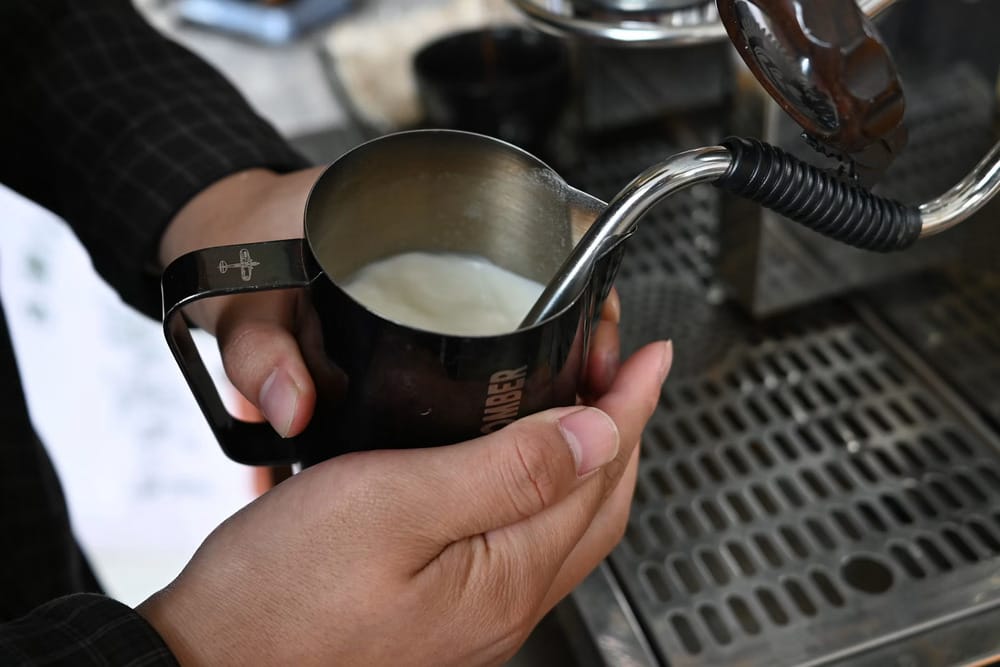
At home, it’s common to crank the steam wand to maximum — assuming “more steam means more professional.” The result: coarse foam, and latte art that won’t pour. The problem comes down to one word: temperature.
The sweet spot is 60–65°C
Lactose — the sugar in milk — registers sweetest on your tongue at 60–65°C. Below 55°C it tastes thin. Above 70°C lactose starts caramelising and turns bitter. When the steel pitcher is too hot to hold for more than half a second, you’re at roughly 65°C. Stop.
Protein determines the foam
β-lactoglobulin is the protein scaffold that holds your foam structure. Above 70°C it denatures — the foam collapses. Good steamed milk is microfoam: bubbles so fine you can’t see them with the naked eye. Pourable like wet paint.
Fat carries the flavour
Full-fat milk (3.5%) always beats skim. Fat wraps aroma molecules and releases them slowly in your mouth — that’s why latte art has lingering sweetness. It’s also why oat milk needs to be “barista blend” — extra fat to behave like dairy.
Tactical tips
- Start with cold milk — gives you longer to build microfoam.
- Insert the steam wand only 1cm below the surface. Listen for a “tearing paper” hiss — that’s the right sound.
- Use a thermometer to start, but train yourself to stop by feel on the pitcher.Master the milk first — only then can latte art truly begin.