Principal, JWC Academy · 10th Place, 2017 World Latte Art Championship · 3× Malaysia Latte Art Champion
6 min read · Updated Jul 2026 · Bukit Jalil · Kajang · Mount Austin
Answer firstTwo numbers define a cup: extraction yield (EY), how much of the bean was dissolved out (ideal 18–22%), and strength (TDS), the percentage of dissolved solids in the cup (filter about 1.15–1.45%). Below 18% tastes sour (under-extracted), 18–22% tastes sweet (ideal), above 22% tastes bitter (over-extracted). Read TDS with a refractometer, calculate EY, then grind finer for sour or coarser for bitter. Always remember: palate > numbers.
The Golden Cup · Extraction 101 (TDS · EY · ratio)
The two key numbers
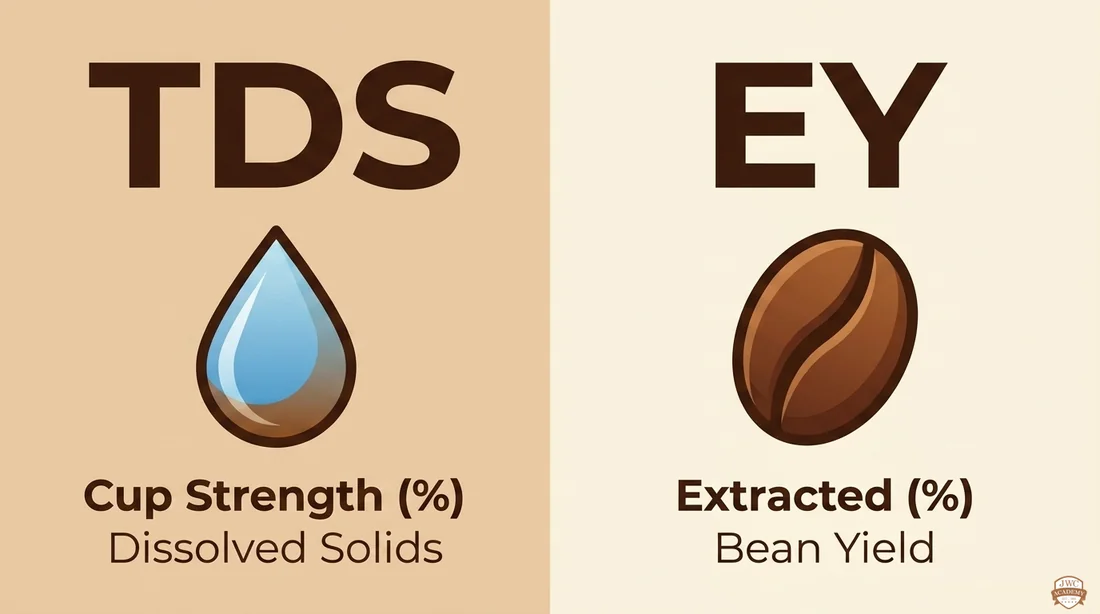
A good cup is extraction plus strength. Extraction yield (EY): how much of the bean dissolved into water (as a % of bean weight). Strength (TDS): how much of the final cup is dissolved solids (as a % of liquid weight). One is “enough or not”, the other is “strong or not”.
TDS = strength in the cup % EY = extracted from the bean %
The golden windows
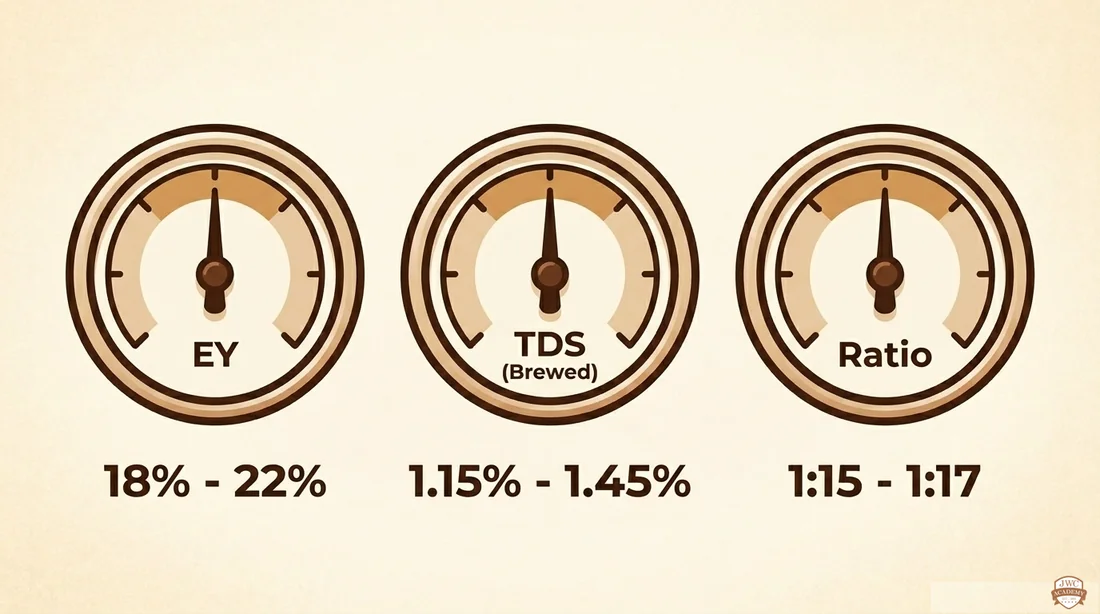
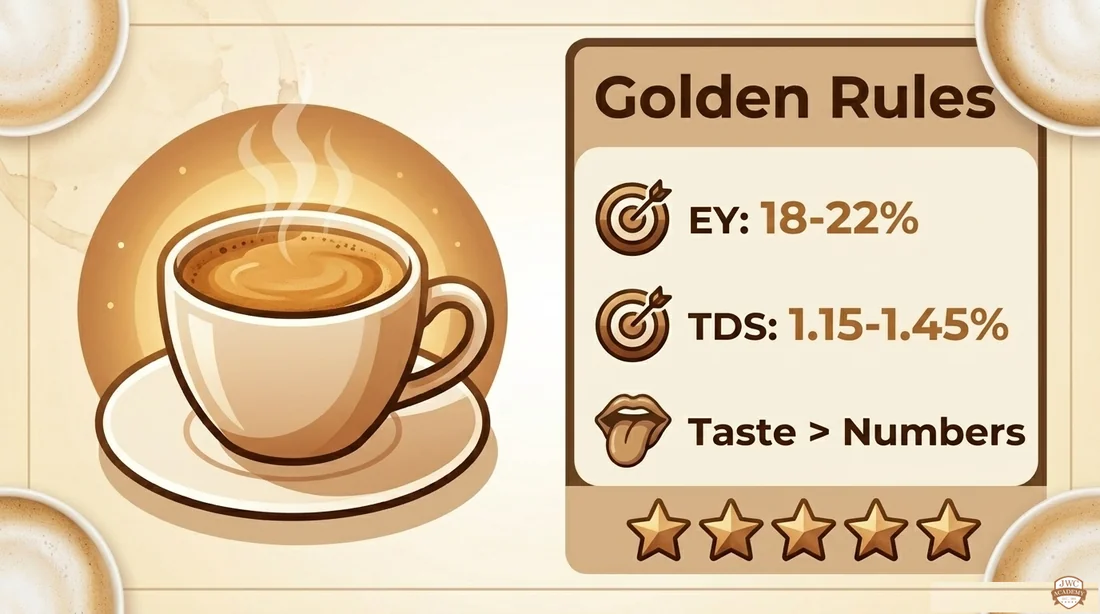
The industry sweet spots: extraction 18–22%, TDS 1.15–1.45% (filter), ratio 1:15–1:17. Land all three there and you usually have a balanced, tasty cup.
18–22%
extraction (EY)
1.15–1.45%
strength (TDS)
1:15–1:17
brew ratio
EY 18–22% · TDS 1.15–1.45% · ratio 1:15–1:17
Sour, sweet, bitter by yield
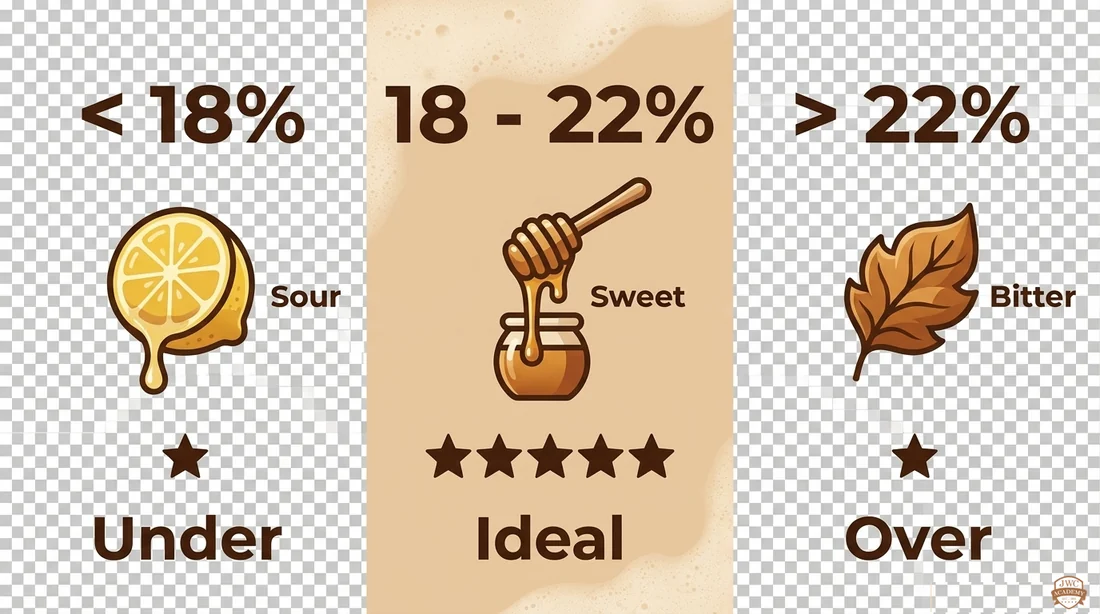
Extraction maps straight to taste: <18% (under) → sour, sharp, thin; 18–22% (ideal) → sweet, balanced; >22% (over) → bitter, drying, harsh. Whichever end you taste tells you where the extraction sits.
<18% sour · 18–22% sweet · >22% bitter
How to adjust
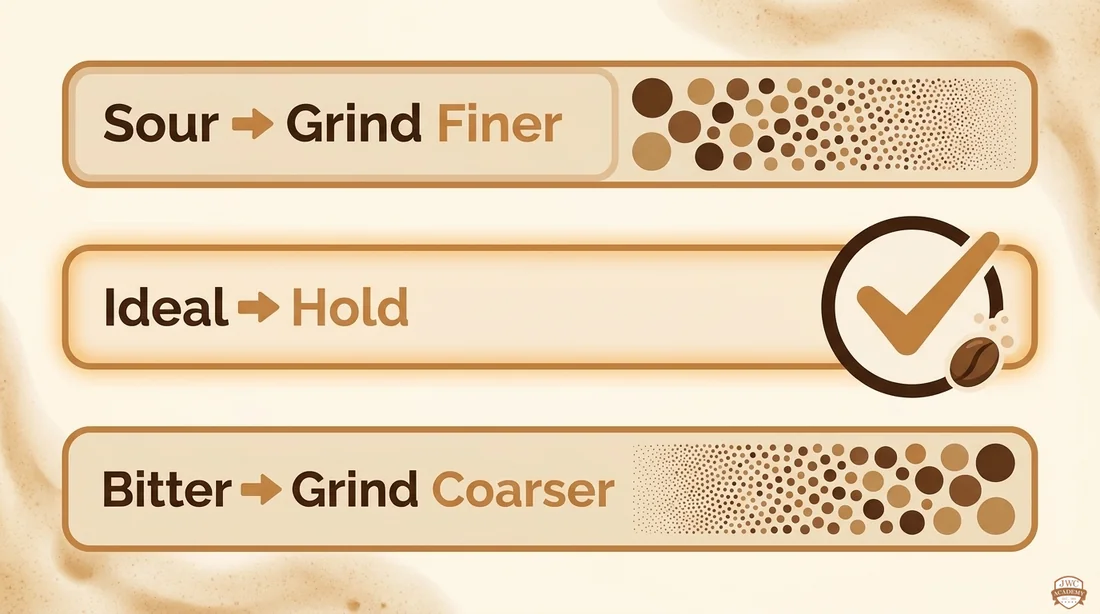
The direction is intuitive: too sour (under) → grind finer (more extraction); ideal → hold; too bitter (over) → grind coarser (less extraction). Grind is the most powerful dial for extraction yield.
Sour → finer · ideal → hold · bitter → coarser
The tool: a refractometer
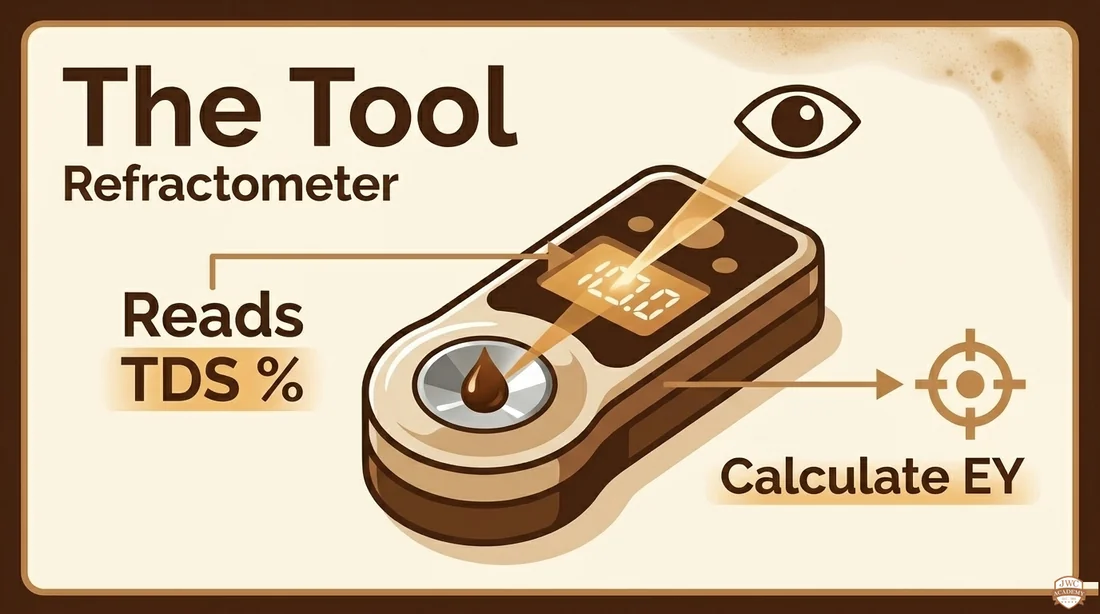
To turn “feel” into a “number”, use a refractometer: drop in a little cooled coffee and it reads TDS % directly. With TDS plus your dose and yield, you can calculate the extraction yield EY.
A refractometer reads TDS % → calculate EY
The EY formula
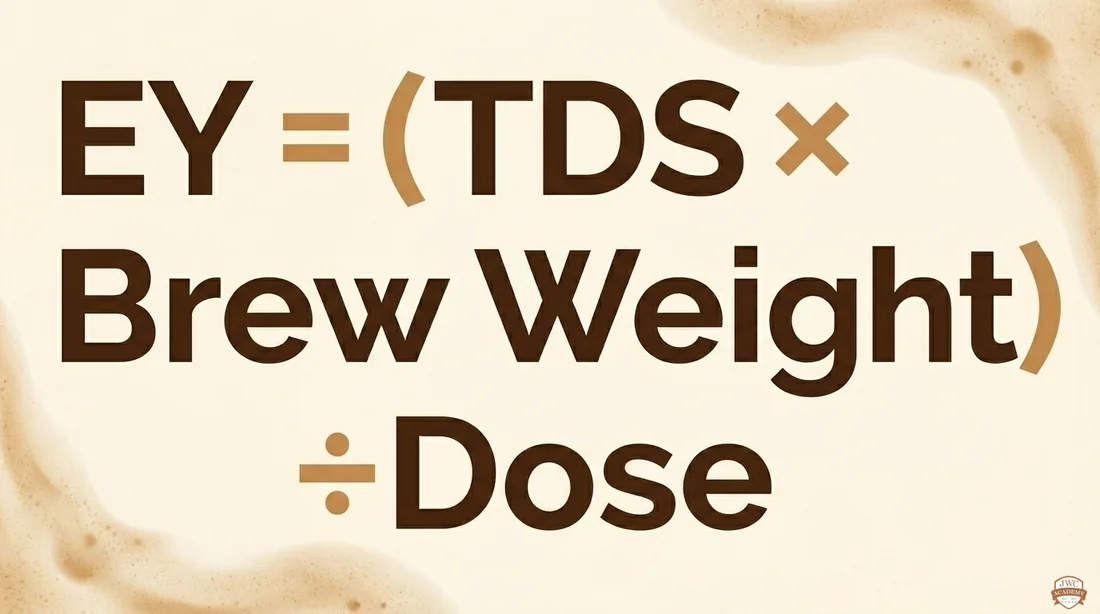
Converting TDS into extraction yield takes one formula:
EY = ( TDS × brew weight ) ÷ dose
EY = (TDS × brew weight) ÷ dose
Example: 18g dose, 300g of coffee out, TDS reads 1.35%, so EY ≈ (1.35% × 300) ÷ 18 ≈ 22.5%, a touch high, so grind one step coarser.
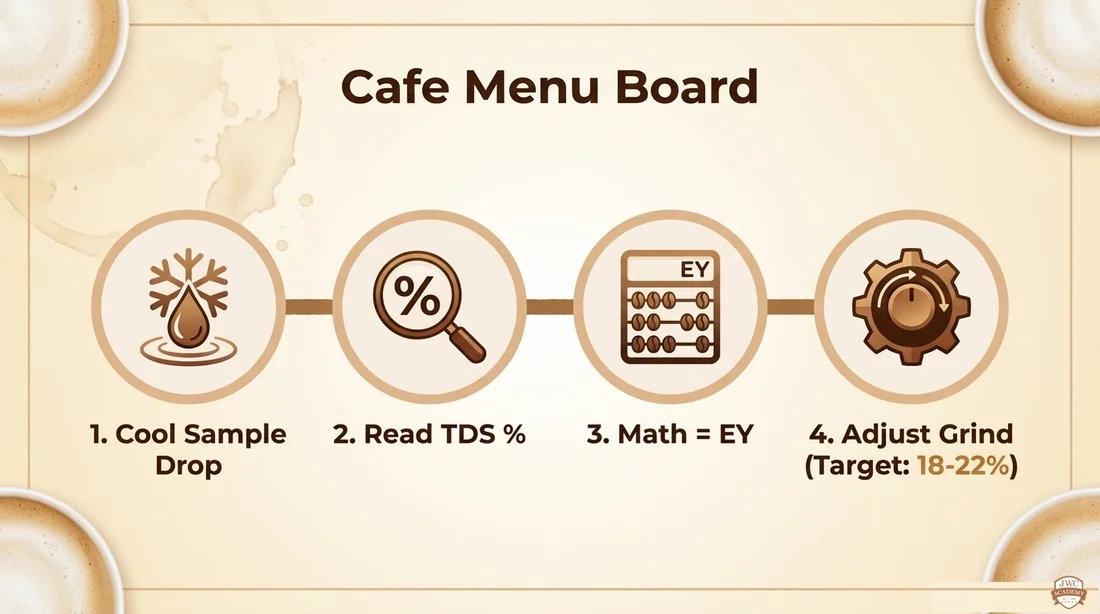
The routine
1
Cool the sample measure at room temperature for accuracy.
2
Read TDS the refractometer reads strength %.
3
Calculate EY plug into the formula.
4
Adjust grind nudge toward 18–22%, one step at a time.
Cool → read TDS → calculate EY → adjust grind
· · ·
Common mistakes
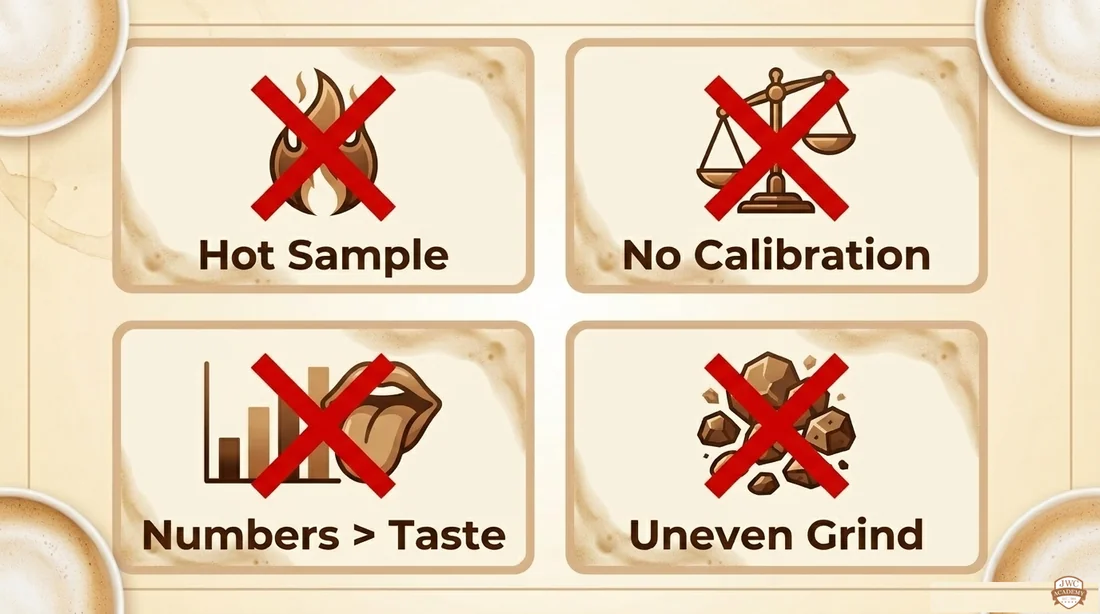
Measuring hot: temperature skews the reading, cool it first. No calibration: zero the refractometer before use. Numbers over taste: numbers guide, your mouth decides. Uneven grind: if the grind is uneven, an accurate reading is meaningless.
Don’t measure hot · calibrate · not numbers-only · even grind
The golden rules
To close: extraction 18–22%, TDS 1.15–1.45%, palate > numbers. Numbers help you repeat and communicate, but what makes a cup delicious is always your own taste.
Refractometers and EY formulas sound technical, but they click fast in practice. Want someone to line up “numbers” with “taste” for you? JWC classes measure and dial it live.
FAQ
What is a good extraction yield?
Around 18–22% is the sweet spot. Below 18% tends sour and under-developed; above 22% tends bitter and over-extracted.
What’s the difference between TDS and EY?
TDS is strength (dissolved solids in the cup %, filter about 1.15–1.45%); EY is extraction yield (how much of the bean dissolved out). Measure TDS, calculate EY.
Can I brew well without a refractometer?
Yes. It makes results repeatable and easy to compare, but the palate is the boss. Use numbers to guide, taste to decide.
Why cool the sample before measuring?
Temperature affects the refractometer reading, so measure at room temperature, and calibrate to zero before use.
Dial by numbers, decide by taste
Want every cup steady and explainable?
From refractometer and EY formula to grind tweaks, a mentor lines up numbers with taste · from RM199 · real machines