














中EN
红酒知识 · 品种入门
JWC 红酒指南 · 06 / 12
Cabernet、Pinot Noir、Shiraz 总分不出来,是舌头不灵吗?
 Lucas Eng
JWC Academy 创办人 · 世界赛咖啡师 · 侍酒教学
先给答案
分不出来 ≠ 舌头不灵。别急着盲猜名字,先用 酸度、单宁、酒体、果味/香料方向 四个轴去排。典型风格只是线索,不是身份证——产区会改变表现。
先别猜名字:用四个轴去排
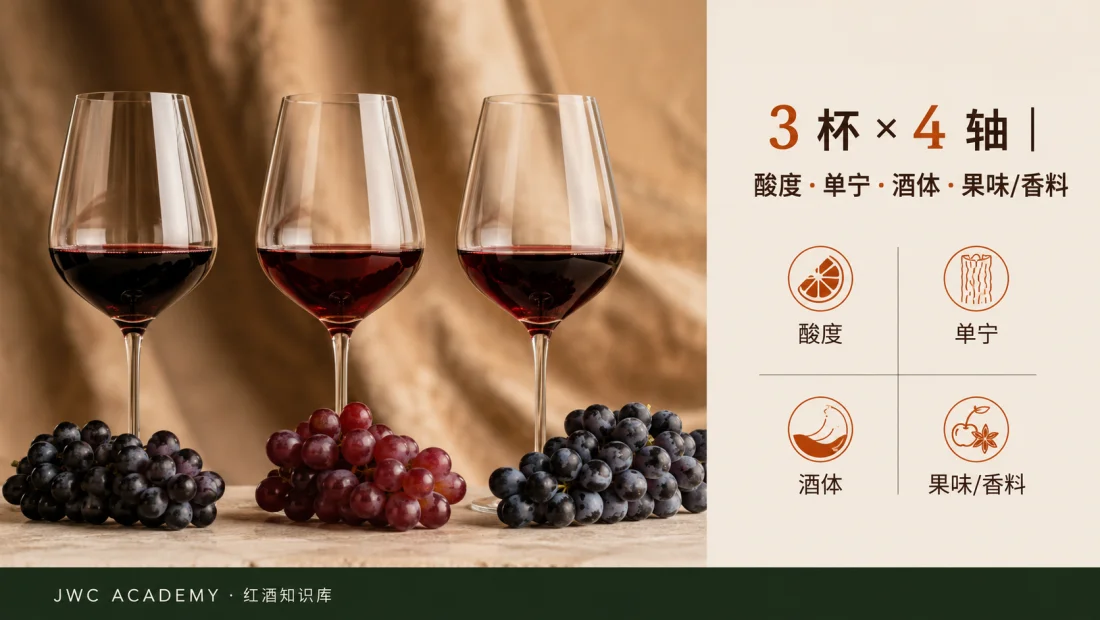
分不出 Cabernet、Pinot Noir、Shiraz,多半不是舌头不灵,而是你还没有固定的比较轴。别一上来就盲猜名字,先用四个结构问题去排:酸度、单宁、酒体、果味/香料方向。典型情况下 Pinot Noir 单宁较轻、酸度较明显,Cabernet 单宁骨架更硬,Shiraz 酒体更饱满、常带黑果与香料。但这些只是线索,不是身份证——产区和酿造会让边界重叠。
基准线:三杯并排,先排结构
准备三个典型风格的样本,不看答案,先做相对排序。每一轮只回答一个问题——「哪杯单宁最高」「哪杯酸度最明显」——比逼自己给绝对分数稳定得多。三杯并排会自动帮你建立坐标,单杯盲猜则缺少参照,很容易被一个香气带偏。先把结构排稳,香气只当最后的辅助。
你遇到的,意味着什么
先看症状,再决定动哪一个变量:
| 症状 | 可能原因 | 先做什么 |
|---|---|---|
| 三杯都只觉得苦涩 | 把单宁和苦味混在一起 | 先用口腔收敛感找单宁,别只问苦不苦 |
| Pinot 也觉得很重 | 样本风格或产区偏离典型 | 只做相对比较,别死背标签 |
| Cabernet 和 Shiraz 总混 | 两者都可能浓郁黑果 | 加上单宁质感与香料线索一起看 |
| 闻香很多,结构说不出 | 只练了鼻子没练口腔 | 先排 acid / tannin / body |
| 单杯怎么都猜不出 | 缺少相对参照 | 改成三杯并排再判断 |
进阶 · 中级
为什么 Pinot 天生轻、Cabernet 天生重?
差别很大一部分写在葡萄皮里。单宁和色素主要来自果皮:Pinot Noir 果粒小、皮薄,能萃取的单宁和颜色本就少,所以酒体轻、颜色浅;Cabernet Sauvignon 皮厚籽多,单宁骨架天生更硬。Shiraz 常长在温暖产区,成熟度高、糖分足,酿出来酒精和酒体都更饱满。懂了这一层就明白,「轻」和「重」不是随手贴的标签,而是果皮厚薄加气候共同决定的结构——也解释了为什么同样是黑果,Cabernet 收得紧、Shiraz 铺得开。

四种「猜错」,各有各的拆法
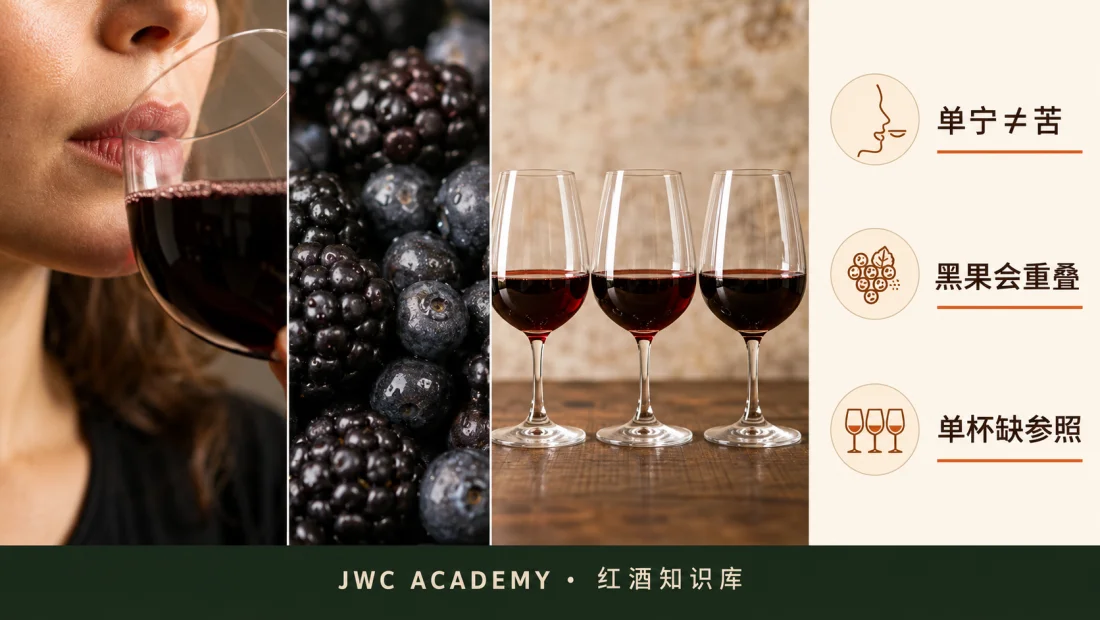
猜错通常不是一个原因。三杯都只觉得苦,多半是把单宁的收敛感和苦味混在一起;Pinot 喝起来很重,可能是样本偏离典型风格;Cabernet 和 Shiraz 老是混,是因为两者都能浓郁黑果,得再加单宁质感和香料线索。而如果你能稳定说出哪杯酸更高、哪杯单宁更强,只是名字没对上——那其实已经在进步了。
一次只改一个变量:三轮相对排序
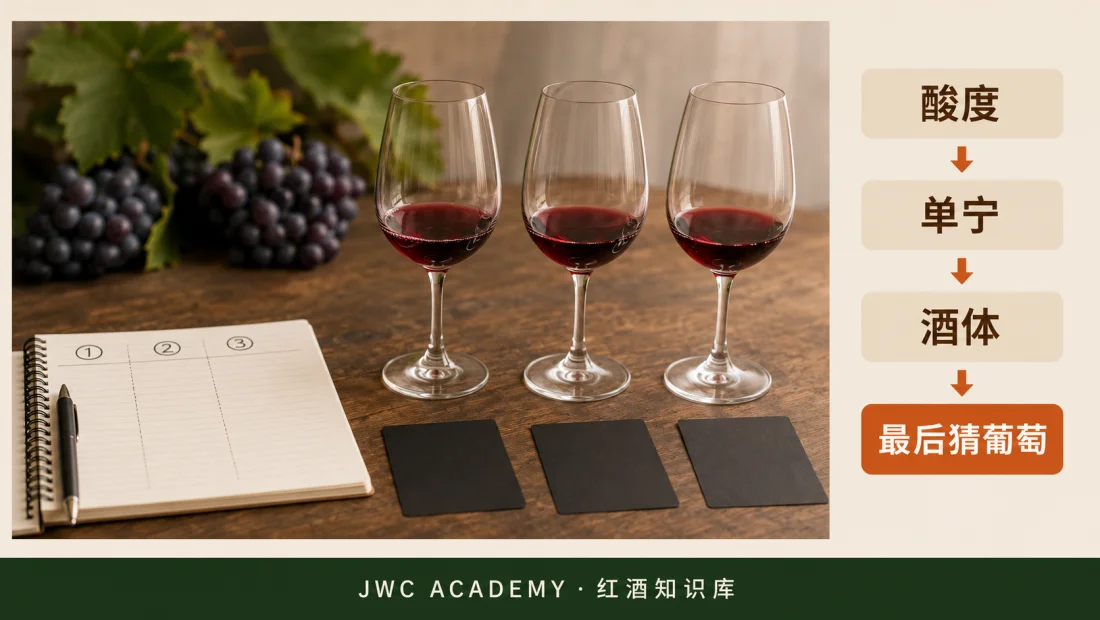
三杯同时上桌,温度和杯型尽量一致,然后分轮进行:第一轮只排酸度高低,第二轮只排单宁,第三轮只排酒体,最后一轮才用果味和香料方向去猜品种、再揭晓答案。把变量拆开,你就知道自己每一步是靠什么在判断,而不是一次面对四件事、手忙脚乱地乱猜。

顺手拆掉四个盲品迷思
「高手一口就认得出葡萄」——结构化比较远比表演式盲猜可靠;「单宁就是苦」——收敛感是触觉,苦是味觉,不是一回事;「Pinot 一定很淡」——产区、成熟度和酿造都会改变表现;「猜错就是没天分」——训练要的是可重复的判断,不是一次猜中。放下这四个包袱,你才敢相信自己排出来的结构。
品种课给你的,是一套感官坐标
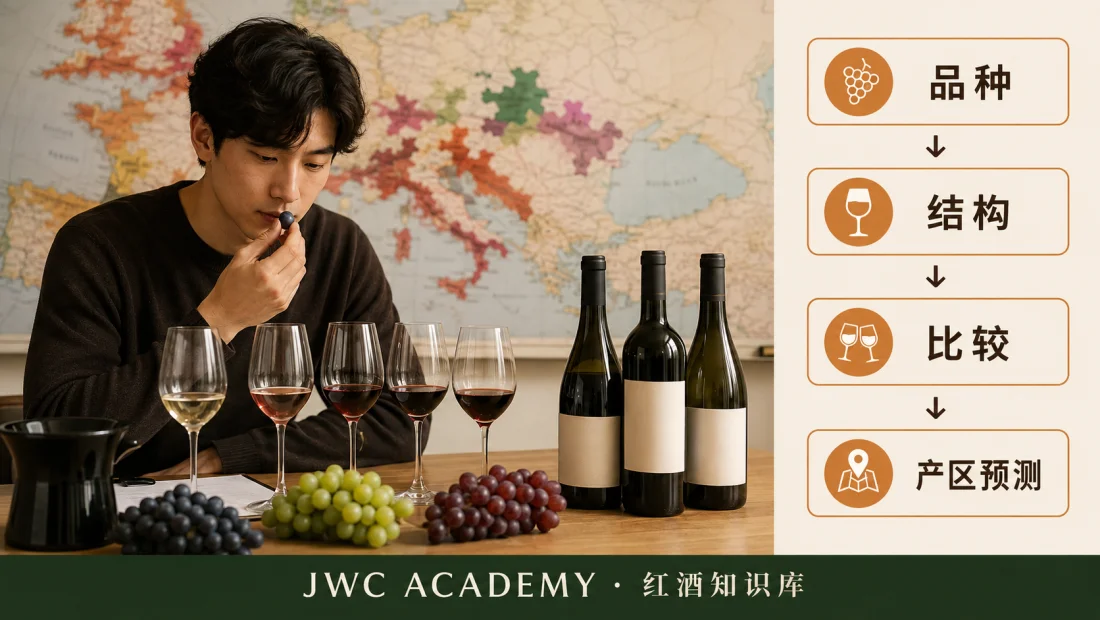
初级新世界品鉴最适合用这几个常见品种练酸度、单宁和酒体,因为它们的典型风格清晰、容易建立基准。坐标一旦搭好,进到高级旧世界,你就能反过来用产区和气候去预测品种与风格,而不是靠运气猜名字。目标从来不是在饭桌上背对葡萄,而是拿起一杯酒,你清楚自己为什么这样判断。
冷知识
Shiraz 和 Syrah 其实是同一个葡萄
如果你觉得 Shiraz 和 Syrah 有点像——它们本来就是同一个品种。法国罗讷河谷叫它 Syrah,到了澳洲习惯写成 Shiraz,名字换了,葡萄没换。所以练习分辨这三个品种时,别被拼写骗到:Shiraz 和 Syrah 不是两种葡萄,是同一颗的两个名字。
常见问题
这三种葡萄有绝对分法吗?
没有。典型风格能给你线索,但产区和酿造会让边界重叠。把它当起点,不要当身份证。
先练闻香还是先练单宁?
建议一起练,但刚开始区分品种时,先把酸度、单宁、酒体排清楚,香气留到最后辅助。
单宁到底怎么找?
留意牙龈和舌面的干涩、收敛感,那是触觉;别只问「苦不苦」——苦是味觉,和单宁不是一回事。
一定要盲品吗?
盲品能减少标签暗示,但训练早期先做半盲或对照学习也可以,重点是建立可重复的判断。
JWC Wine Course新世界葡萄酒课程
新世界葡萄酒课程
一堂 2.5 小时 · 零基础友好
5 款实杯,比较澳洲、纽西兰、智利、阿根廷与南非。把葡萄品种、香气与结构连成一套下次还能用的选酒方法。小班到店品鉴,无需任何基础。
看课程详情或用 WhatsApp 问 Emily参考资料
- Wine & Spirit Education Trust (WSET) · wsetglobal.com
- Jancis Robinson(葡萄品种参考)· jancisrobinson.com
© JWC Academy · Wine Guides 红酒指南
Wine Knowledge · Grape Varieties
JWC Wine Guide · 06 / 12
I can never tell Cabernet, Pinot Noir and Shiraz apart — is my palate broken?
Lucas EngPrincipal, JWC Academy · World-stage barista · Wine educator
Quick answer
Mixing them up doesn’t mean your palate is broken. Stop blind-guessing the name — sort by four structural axes first: acidity, tannin, body and fruit/spice direction. Typical styles are clues, not ID cards; region shifts everything.
Don’t guess the name — sort by four axes
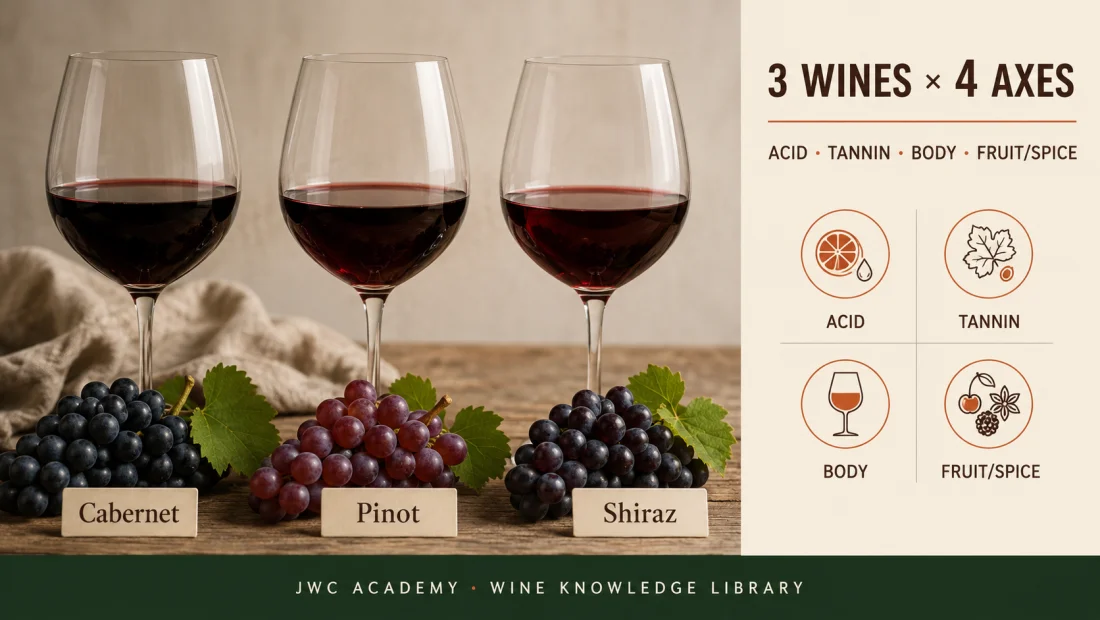
If you can’t tell Cabernet, Pinot Noir and Shiraz apart, it’s usually not your palate — you just don’t have a fixed set of comparison axes yet. Instead of blind-guessing the grape, run four structural questions: acidity, tannin, body, and fruit/spice direction. Typically Pinot Noir is lighter in tannin with brighter acidity, Cabernet carries a firmer tannin frame, and Shiraz shows fuller body with dark fruit and spice. But these are clues, not ID cards — region and winemaking blur the edges.
Baseline: three glasses side by side, structure first
Line up three typical-style samples and rank them without peeking at the answer. Each round, answer one question only — “which has the most tannin?”, “which is most acidic?” — that’s far steadier than forcing an absolute score. Three glasses side by side build your coordinates automatically; a single blind glass has no reference and one stray aroma can throw you off. Get the structure straight, and treat aroma as the final helper.
What you hit, and what it means
Read the symptom first, then decide which variable to change:
| Symptom | Likely cause | First move |
|---|---|---|
| All three just taste bitter and harsh | Tannin and bitterness are getting mixed up | Find tannin by its grip, not by asking “is it bitter?” |
| Even the Pinot feels heavy | Sample strays from the typical style / region | Compare relatively; don’t cling to the label |
| Cabernet and Shiraz keep blurring | Both can show ripe dark fruit | Add tannin texture and spice cues to the read |
| Lots of aroma, but can’t name the structure | Trained the nose, not the palate | Sort acid / tannin / body first |
| Can’t guess a single glass | No relative reference | Switch to three glasses side by side |
Level up · Intermediate
Why is Pinot light and Cabernet heavy by nature?
A lot of the difference is written into the grape skin. Tannin and colour come mainly from the skins: Pinot Noir has small berries and thin skins, so there’s simply less tannin and pigment to extract — hence its light body and pale colour. Cabernet Sauvignon has thick skins and plenty of seeds, giving it a naturally firmer tannin frame. Shiraz often grows in warm regions, ripening high in sugar, so it ferments to fuller body and higher alcohol. Once you see this, “light” and “heavy” stop being random labels — they’re structure set by skin thickness and climate.
Four ways to guess wrong — each with its own fix
Guessing wrong rarely has one cause. If all three just taste bitter, you’re probably folding tannin’s grip into bitterness. If the Pinot feels heavy, your sample may sit off its typical style. If Cabernet and Shiraz keep merging, it’s because both can go deep on dark fruit — add tannin texture and spice cues. And if you can reliably say which glass is more acidic or more tannic but miss the name, that’s not failure — your palate is already improving.
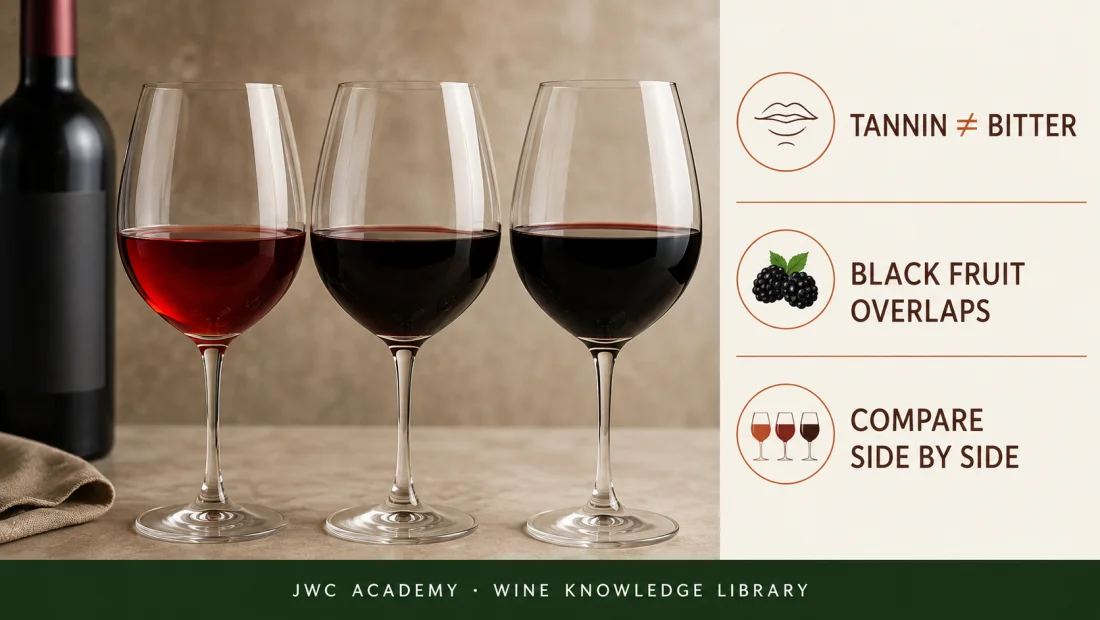
One variable at a time: three ranking rounds
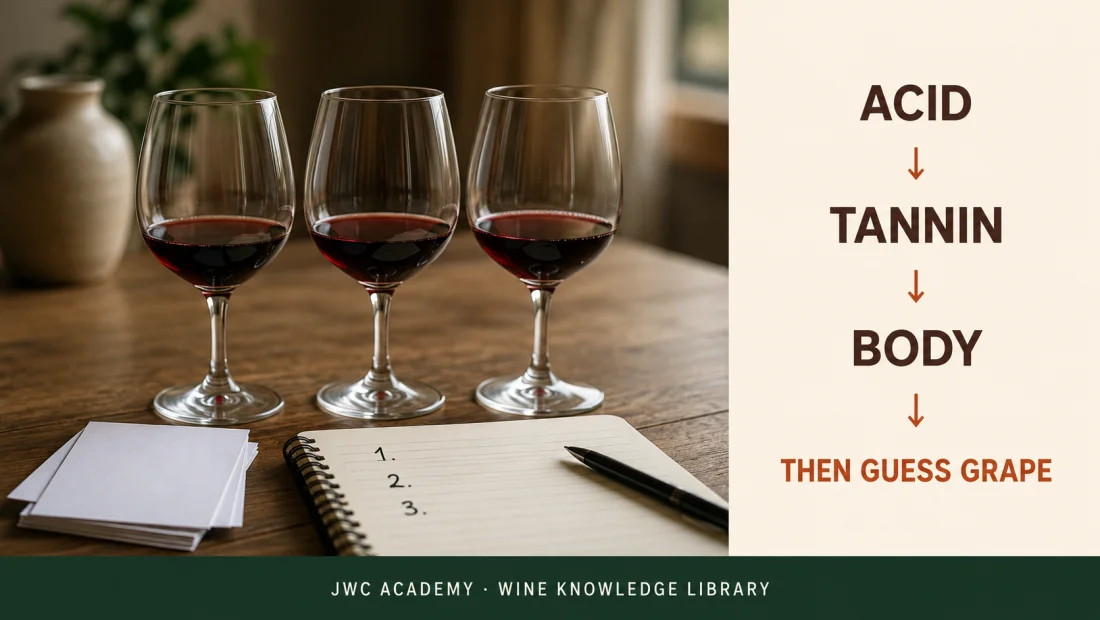
Pour all three at once, keep temperature and glassware consistent, then go in rounds: round one ranks acidity only, round two tannin, round three body — and only the last round uses fruit and spice to guess the grape before the reveal. Splitting the variables tells you exactly what each judgement rests on, instead of facing four things at once and scrambling to guess.
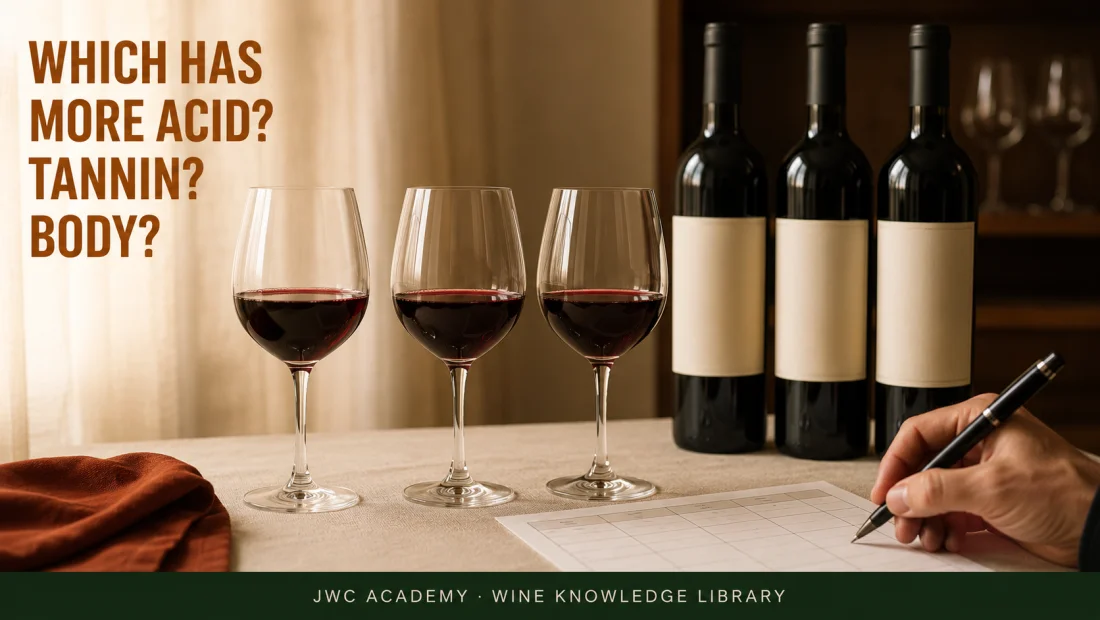
Clear four blind-tasting myths along the way
“Experts name the grape in one sip” — structured comparison beats performative guessing. “Tannin is just bitterness” — grip is a touch sensation, bitter is a taste; not the same thing. “Pinot is always light” — region, ripeness and winemaking all shift it. “Guess wrong and you have no talent” — training is about repeatable judgement, not one lucky hit. Drop these four and you’ll trust the structure you sorted out.
What a varietal class really gives you: a sensory grid
Entry-level New World tasting is ideal for practising acidity, tannin and body on these common grapes, because their typical styles are clear enough to set a baseline. Once the grid is built, an advanced Old World class lets you run it backwards — using region and climate to predict grape and style instead of guessing the name. The goal was never to recite grapes at dinner; it’s to pick up a glass and know exactly why you judge it the way you do.
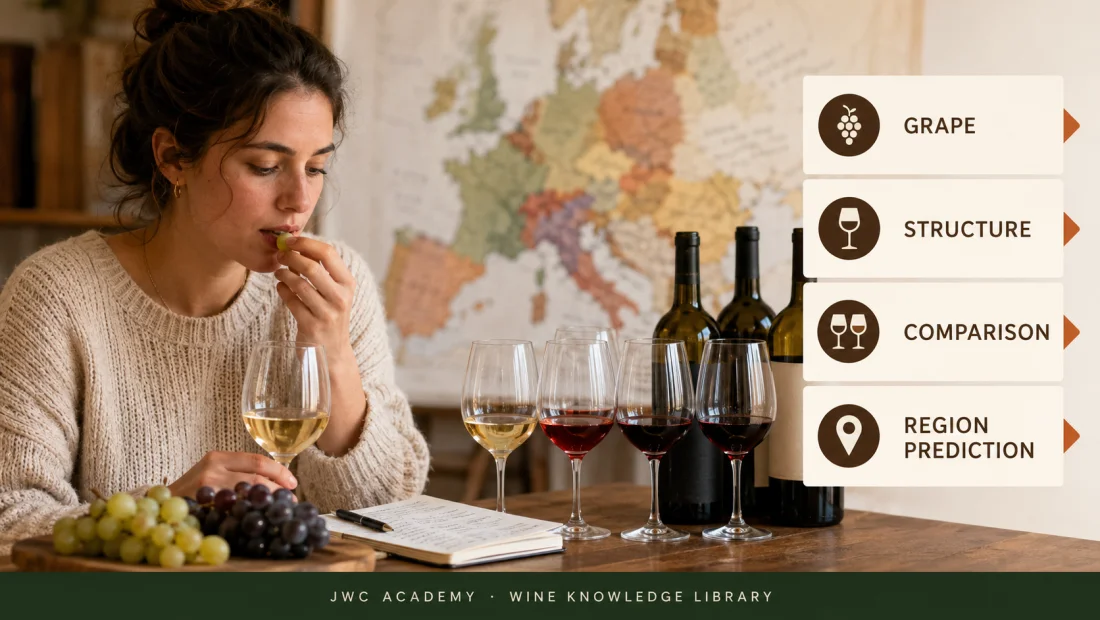
Did you know
Shiraz and Syrah are the same grape
If Shiraz and Syrah feel similar — they’re literally the same grape. France’s Rhône Valley calls it Syrah; Australia spells it Shiraz. The name changed, the grape didn’t. So when you’re practising to tell these three grapes apart, don’t let spelling fool you: Shiraz and Syrah aren’t two grapes, just two names for one.
FAQ
Is there an absolute way to tell the three grapes apart?
No. Typical styles give you clues, but region and winemaking make them overlap. Treat style as a starting point, not an ID card.
Should I train aroma or tannin first?
Train both, but when you’re first separating grapes, get acidity, tannin and body straight first and let aroma assist at the end.
How do I actually find the tannin?
Notice the dry, grippy feel on your gums and tongue — that’s touch. Don’t just ask “is it bitter?”; bitterness is taste and a different thing.
Do I have to taste blind?
Blind tasting cuts label bias, but early on semi-blind or side-by-side comparison works fine. The point is building repeatable judgement.
JWC Wine CourseNew World Wine Course
New World Wine Course
One 2.5-hour session · Beginner-friendly
Five wines side by side across Australia, New Zealand, Chile, Argentina and South Africa — turning grape, aroma and structure into a method you can use next time you buy. Small in-house tasting class, no experience needed.
See course detailsOr ask Emily on WhatsAppReferences
- Wine & Spirit Education Trust (WSET) · wsetglobal.com
- Jancis Robinson (grape variety reference) · jancisrobinson.com
© JWC Academy · Wine Guides