














中EN
红酒知识 · 品种与风格
JWC 红酒指南 · 05 / 12
同样是 Cabernet Sauvignon,为什么不同品牌喝起来差这么多?
 Lucas Eng
JWC Academy 创办人 · 世界赛咖啡师 · 侍酒教学
先给答案
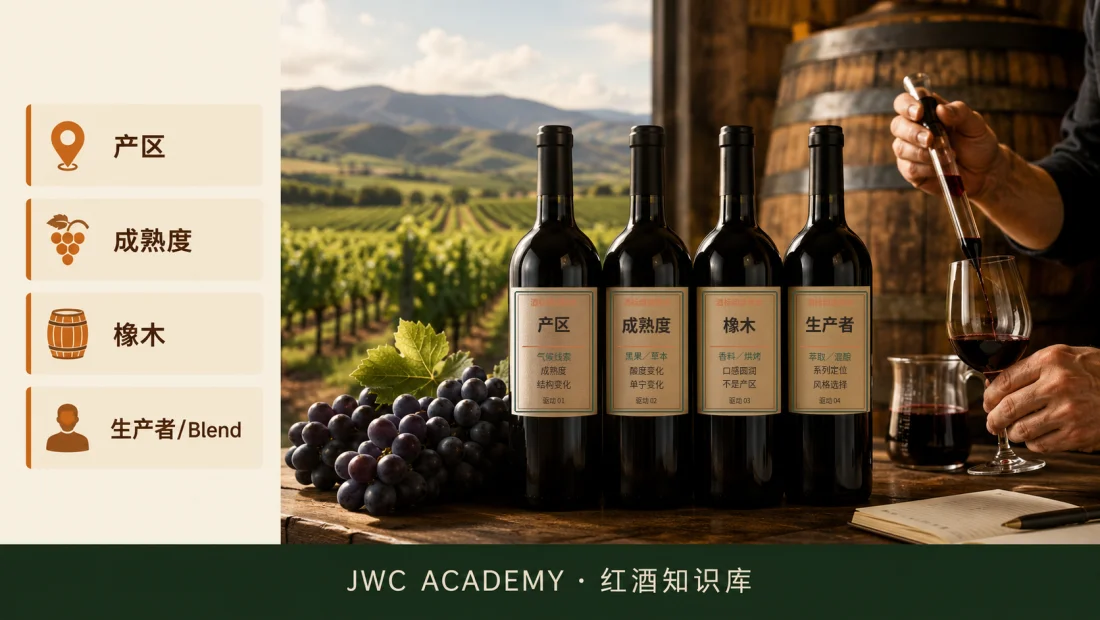
同样写 Cabernet,味道能差很远,不是谁更高级,而是 产区、成熟度、橡木、调配 四件事不同。别问「哪个品牌最好」,先问这瓶属于哪种风格。
先记四个驱动:味道是它们决定的
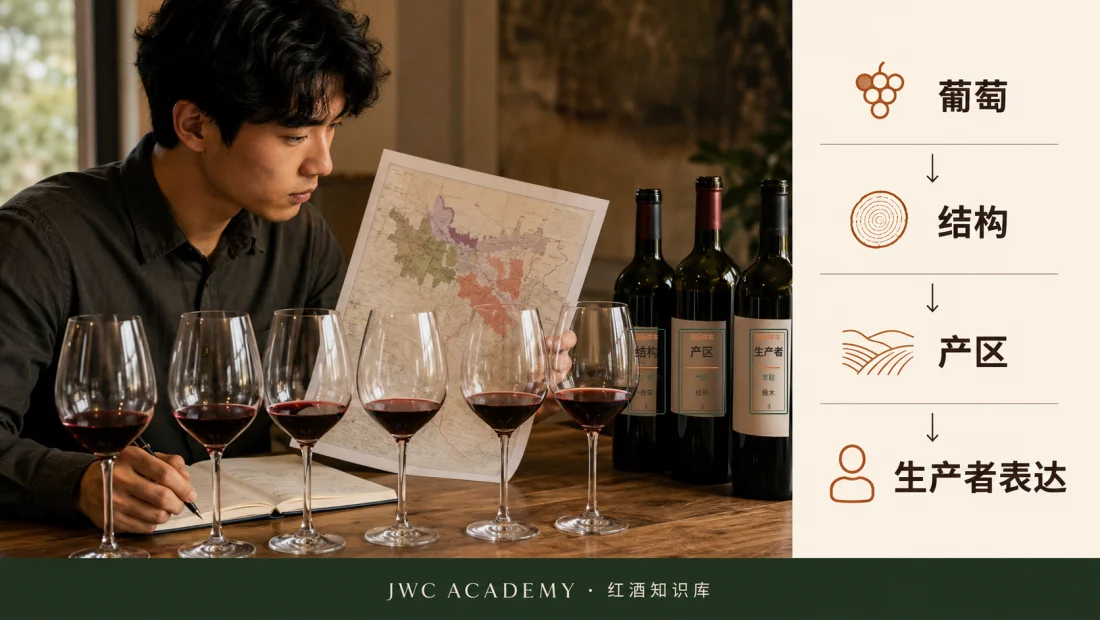
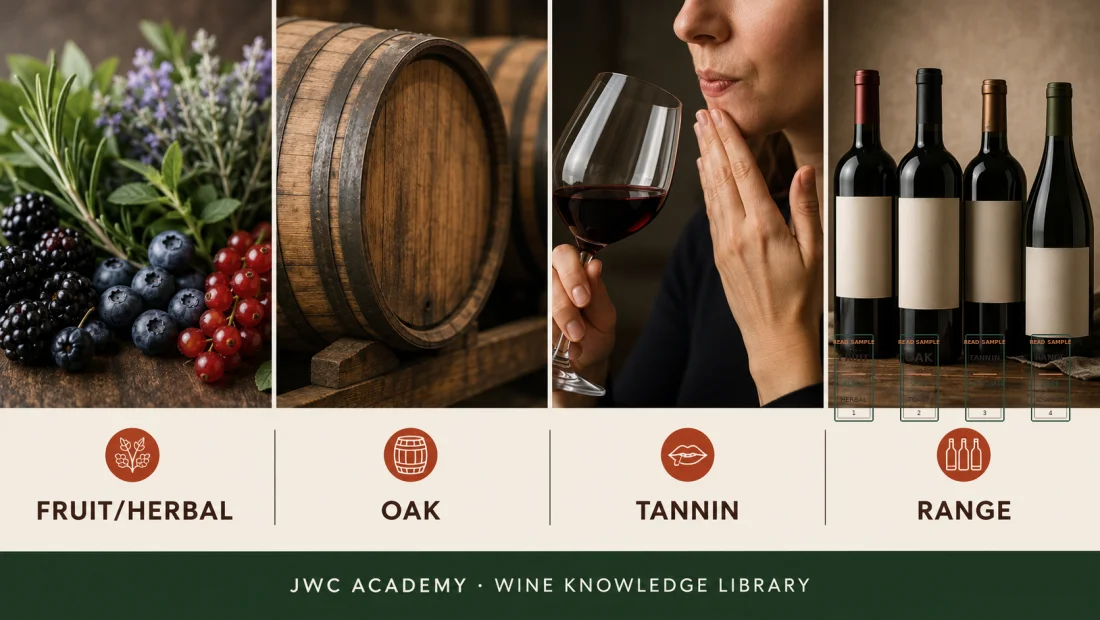
同一颗赤霞珠喝起来差这么多,先看四件事:产区与气候、葡萄成熟度、橡木与熟成、生产者的调配与风格取向。品牌名只是包装,真正决定味道的是这四个驱动。记住它们,你就有一套能套用到任何一瓶 Cabernet 的框架,而不是靠 logo 猜味道。
品种是起点,不是固定配方
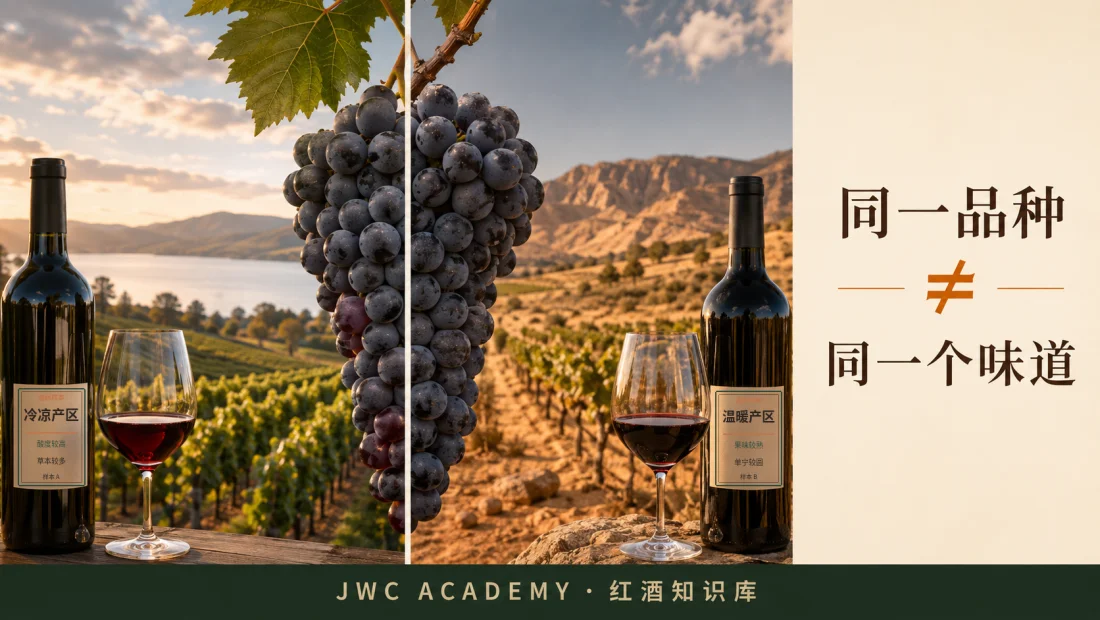
赤霞珠常见的黑醋栗、黑樱桃,还有草本、青椒类线索,会随成熟度和产区改变表达——同一品种在凉产区偏紧、偏草本,在暖产区偏熟、偏饱满。所以「Cabernet 都一个味」不成立:品种只是共同起点,不是终点。把品种当坐标原点,风格才是你真正要读的东西。
你注意到什么,意味着什么
把差异对上它最可能的驱动,就知道先比什么:
| 症状 | 可能原因 | 先做什么 |
|---|---|---|
| 一瓶黑果很熟、另一瓶偏草本 | 成熟度/气候不同 | 先比产区与酒精、风格线索 |
| 香草、烘烤味特别明显 | 橡木影响较强 | 看熟成信息,别当成葡萄本身 |
| 同品牌不同系列差很大 | 原料来源与系列定位不同 | 读清楚具体 range、产区、blend |
| 单宁都高但质感不同 | 成熟度、萃取与熟成不同 | 分别记单宁「量」与「质感」 |
| 只看 logo 猜味道就失手 | 品牌信息太粗 | 回到四驱动框架 |
进阶 · 中级
同一颗赤霞珠,换个橡木桶就换张脸
橡木不是葡萄自带的味道,而是熟成时「借」来的。新桶、小桶、法国橡木的香草、烘烤、雪松线索最明显;旧桶、大桶几乎不加味,主要让酒慢慢接触微量空气,把年轻单宁磨顺。所以两瓶同产区 Cabernet,一瓶奔放奶油橡木、一瓶干净果味,差的往往不是葡萄,而是酒庄在桶上的选择——桶越新、烘烤越重,那层「甜香木头味」就越突出。

先诊断:差异来自产区,还是橡木?
两瓶 Cabernet 差很多,先分它来自哪个驱动。较暖产区常更容易出现成熟黑果、更饱满的口感;较凉产区可能保留更多酸度和草本线索。香草、烘烤、雪松则多半来自橡木熟成,不是葡萄本身。把「葡萄香气」和「橡木香气」拆开看,你就知道这个品牌在做什么风格,而不是笼统说「这瓶比较高级」。
一次只换一个变量,差异才看得清
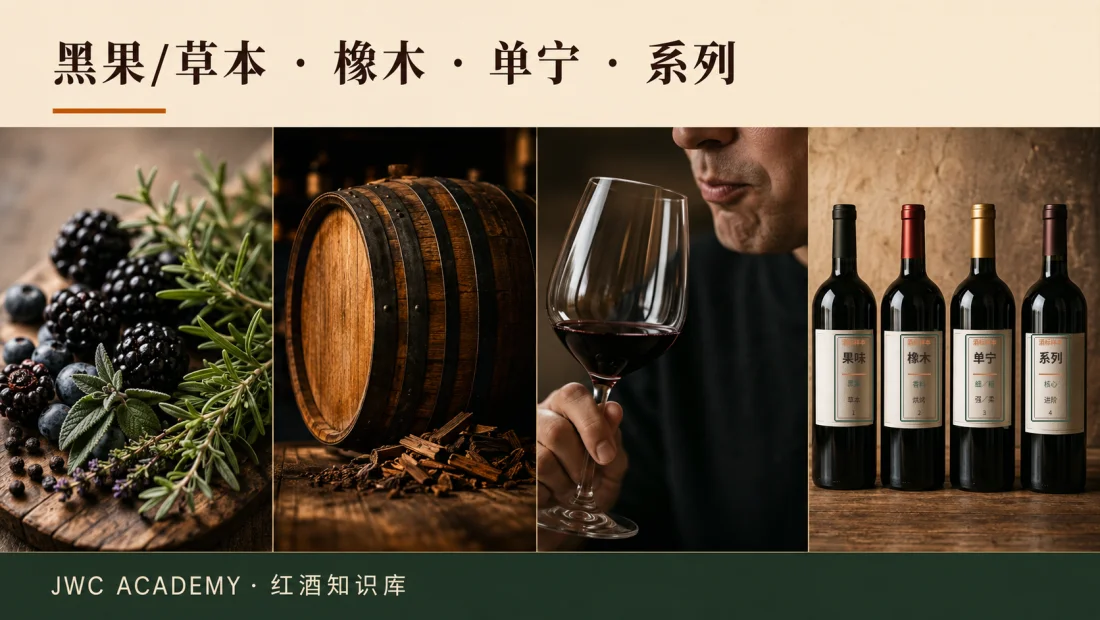
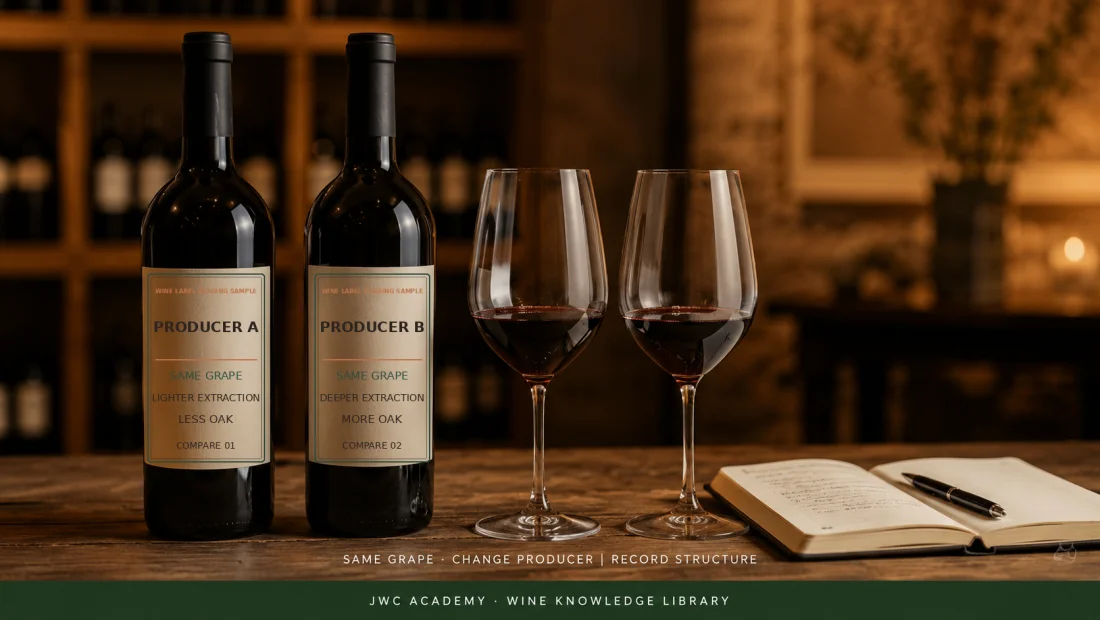
想搞懂品牌差在哪,别一次跨太多变量。准备两瓶 Cabernet,先让产区、价位尽量接近,只换生产者,记录果味、酸度、单宁和橡木线索;下一轮反过来固定生产者,只换产区。最后才翻开品牌宣传文字做核对。这样你尝到的差异,才对得上某一个具体原因,而不是一团模糊的「感觉不一样」。

顺手拆掉四个选酒迷思
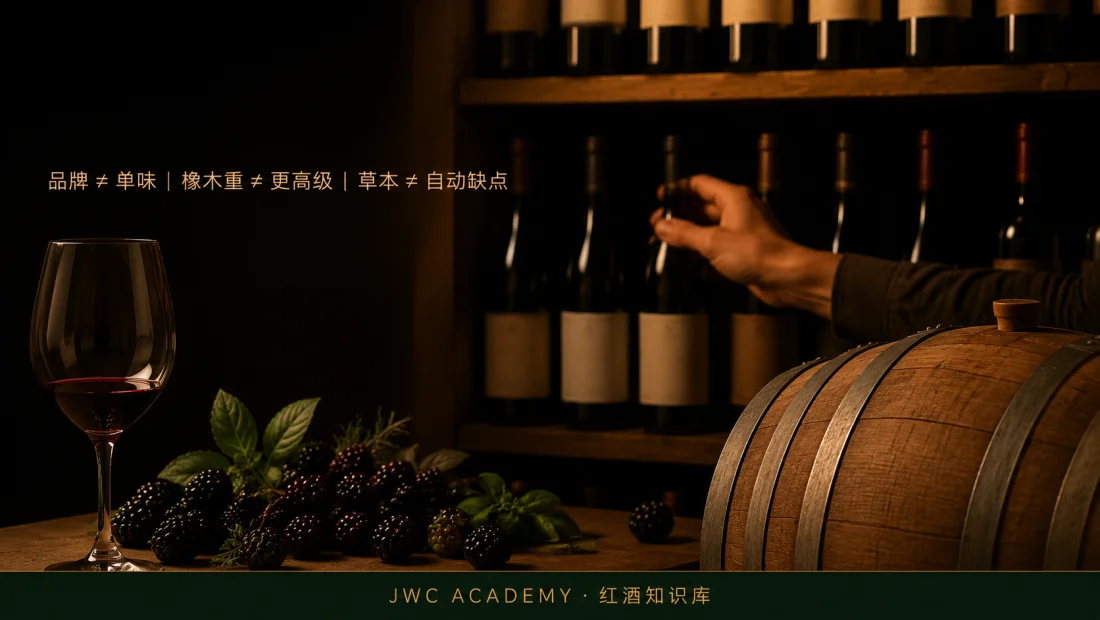
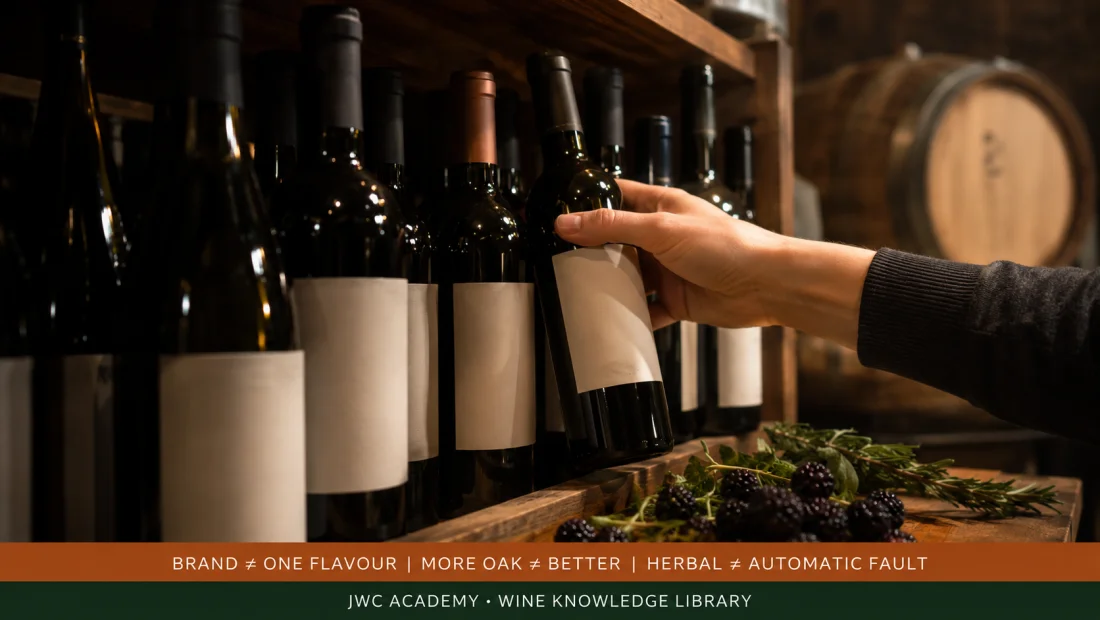
「Cabernet 都一个味」——品种只是共同起点;「有草本味就是没熟好」——要结合成熟度和整体平衡;「橡木味越重越高级」——橡木是风格选择,不是品质分数;「记住品牌就不用看产区」——同品牌可以横跨很多产区和系列。放下这四个包袱,你才不会被 logo 和价格带牵着走。
从「记品牌」到「读风格」
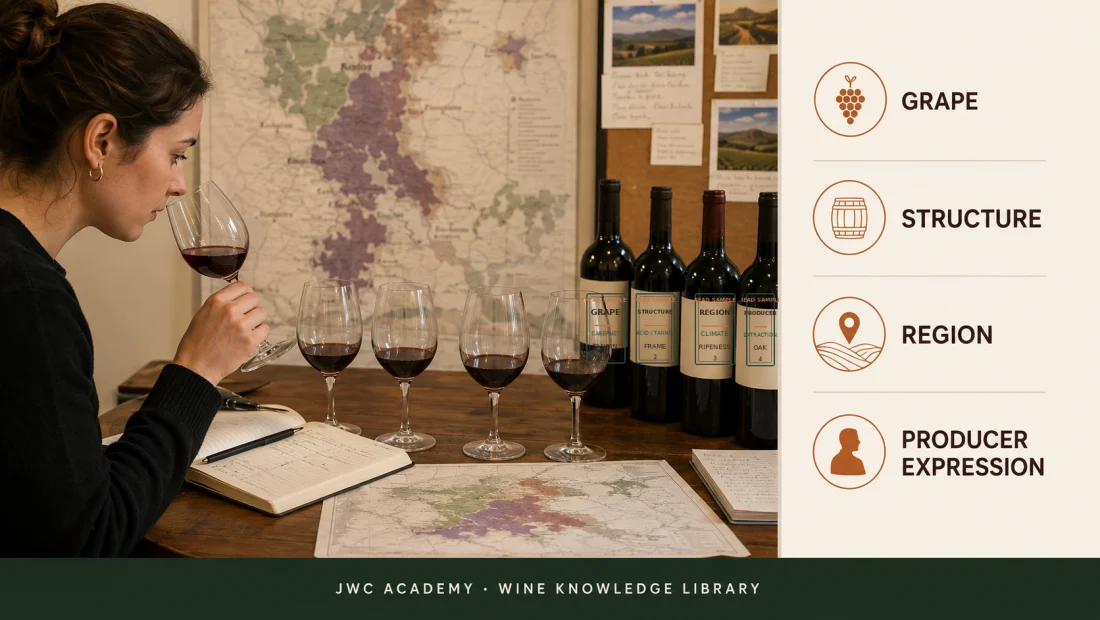
品牌差异真正好玩,是你开始喝得出「为什么」。新世界品鉴先用 Cabernet 这类品种,帮你建立酸度、单宁、果味的坐标;进阶阶段再把这些差异放回旧世界的产区与风土逻辑。以后换一个没喝过的品牌,你不必上网查评分,靠这套框架就能预判它大概是什么风格。
冷知识
赤霞珠其实是两种葡萄「生」出来的
赤霞珠不是古老原生品种,而是 Cabernet Franc(品丽珠)和 Sauvignon Blanc(长相思)意外杂交出来的后代——这个身世直到 1990 年代靠 DNA 检测才被确认。它那股青椒、叶片般的草本气息,也和长相思的血统一脉相承(这类”青”味主要随成熟度和气候变化)。下次闻到这股「青」味,不妨想起它有一半来自一颗白葡萄。
常见问题
Cabernet 初学者怎么比较品牌?
先选两瓶条件尽量接近的酒,记录四个驱动(产区、成熟度、橡木、调配),不要一次跨太多变量。这样尝到的差异才对得上具体原因。
贵一点单宁一定更顺吗?
不一定。单宁质感受葡萄成熟度、萃取、熟成方式和酒龄多重影响,价格不是保证。有些年轻高价酒反而更紧。
为什么有些 Cabernet 有青椒味?
赤霞珠家族本来就会出现青椒、叶片类草本线索,成熟度越低越明显。这是品种特征,不一定是缺点。
同品牌为什么也会差很多?
同一品牌不同系列,可能换了产区、原料来源、调配比例和橡木熟成策略,风格自然不同。要读清楚具体 range。
JWC Wine Course新世界葡萄酒课程
新世界葡萄酒课程
一堂 2.5 小时 · 零基础友好
5 款实杯,比较澳洲、纽西兰、智利、阿根廷与南非。把葡萄品种、香气与结构连成一套下次还能用的选酒方法。小班到店品鉴,无需任何基础。
看课程详情或用 WhatsApp 问 Emily参考资料
- Wine & Spirit Education Trust (WSET) · wsetglobal.com
© JWC Academy · Wine Guides 红酒指南
Wine Knowledge · Grape & Style
JWC Wine Guide · 05 / 12
Same Cabernet Sauvignon — why do different brands taste so different?
Lucas EngPrincipal, JWC Academy · World-stage barista · Wine educator
Quick answer
Two wines both say Cabernet yet taste worlds apart — not because one is “better,” but because region, ripeness, oak and blending differ. Stop asking “which brand is best” and ask which style this bottle is.
Learn the four drivers — they decide the flavour
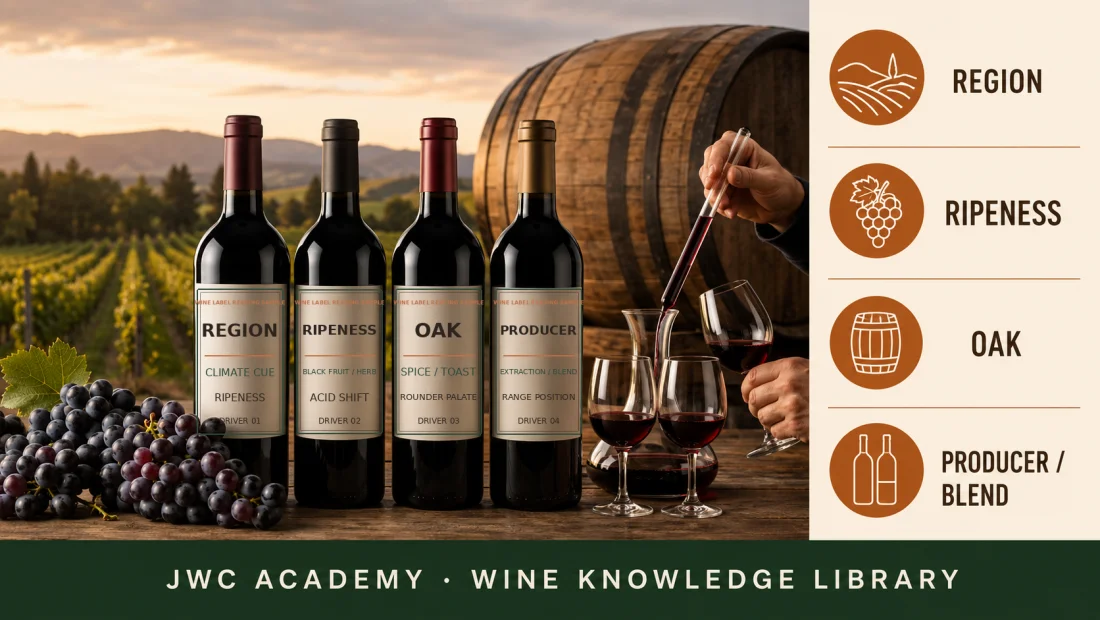
When the same grape tastes this different, look at four things: region and climate, grape ripeness, oak and maturation, and the producer’s blending and style choices. The brand name is just packaging — these four drivers decide the flavour. Learn them and you have a framework you can apply to any Cabernet, instead of guessing from a logo.
The grape is a starting point, not a recipe
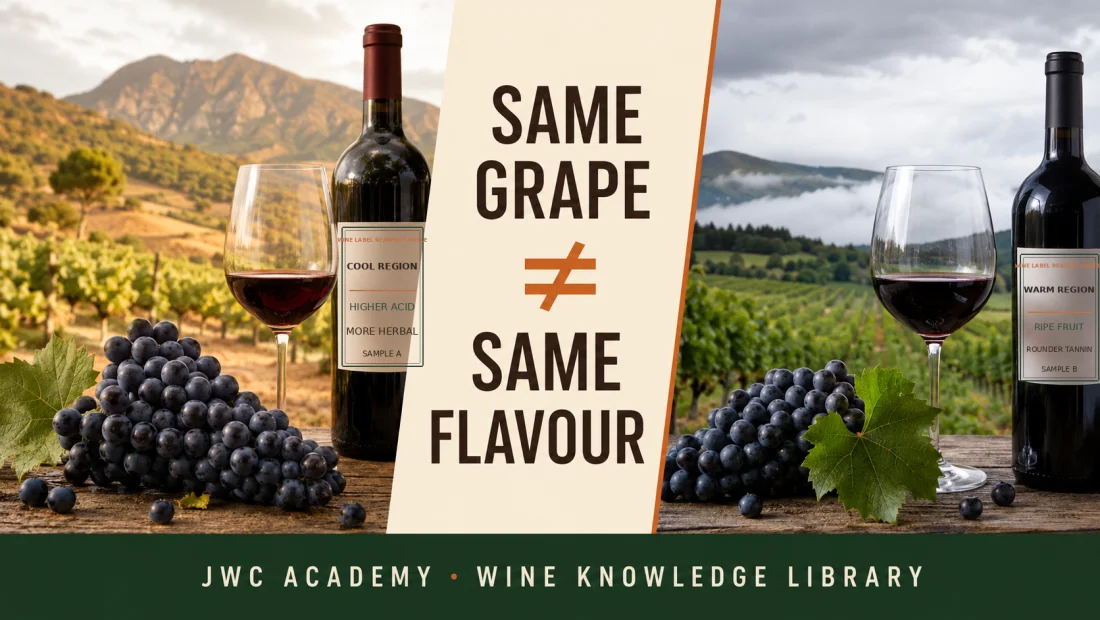
Cabernet’s blackcurrant and black cherry, plus its herbal, green-pepper cues, shift with ripeness and region — tight and herbal in cool areas, ripe and full in warm ones. So “all Cabernet tastes the same” doesn’t hold: the grape is a shared starting point, not the finish line. Treat the variety as your origin point and read the style from there.
What you notice, and what it means
Match the difference to its likely driver, then decide what to compare first:
| What you notice | Likely driver | First move |
|---|---|---|
| One bottle ripe & jammy, another herbal | Different ripeness / climate | Compare region and alcohol / style cues first |
| Strong vanilla and toast notes | Heavier oak influence | Check maturation info; don’t blame the grape |
| Same brand, ranges taste very different | Different sourcing and range position | Read the exact range, region and blend |
| Tannin high in both, but feels different | Different ripeness, extraction, ageing | Note tannin amount and texture separately |
| Guessing flavour from the logo fails | Brand info is too coarse | Go back to the four-driver framework |
Level up · Intermediate
Same grape, new barrel, new face
Oak isn’t the grape’s own flavour — it’s borrowed during maturation. New, small, French-oak barrels give the loudest vanilla, toast and cedar; old or large barrels add almost none, mostly letting the wine sip tiny amounts of air so young tannin smooths out. So two same-region Cabernets — one lush and creamy, one clean and fruit-driven — often differ not in the grape but in the winery’s barrel choice. The newer and more toasted the barrel, the more that “sweet woody” note stands out.
Diagnose it: region, or oak?
When two Cabernets differ a lot, first pin down which driver. Warmer regions tend toward ripe black fruit and a fuller body; cooler ones keep more acidity and herbal cues. Vanilla, toast and cedar, though, usually come from oak maturation, not the grape. Separate “grape aromas” from “oak aromas” and you’ll see what style the brand is going for — instead of vaguely calling one “more premium.”
Change one variable at a time
To see where brands really differ, don’t cross too many variables at once. Take two Cabernets, keep region and price close, and change only the producer — noting fruit, acidity, tannin and oak cues. Next round, hold the producer and change only the region. Read the brand’s marketing copy last, as a check. That way every difference you taste maps to one specific cause, not a fuzzy “feels different.”
Clear four wine-buying myths
“All Cabernet tastes the same” — the grape is only a shared start. “Herbal means underripe” — judge it with ripeness and overall balance. “More oak means more premium” — oak is a style choice, not a quality score. “Remember the brand and skip the region” — one brand can span many regions and ranges. Drop these four and you won’t be led around by logos and price tags.
From “remember brands” to “read style”
Brand differences get fun once you can taste why. New World tasting uses grapes like Cabernet to build your coordinates for acidity, tannin and fruit; the advanced stage puts those differences back into Old World region and terroir logic. Next time you meet a brand you’ve never tried, you won’t need to look up a score — the framework tells you roughly what style to expect.
Did you know
Cabernet was “born” from two other grapes
Cabernet Sauvignon isn’t an ancient native variety — it’s the accidental offspring of Cabernet Franc and Sauvignon Blanc, a parentage only confirmed by DNA testing in the 1990s. That green-pepper, leafy herbal streak runs in the family alongside its Sauvignon Blanc parentage (though how strong it shows tracks mostly with ripeness and climate). Next time you catch that “green” note, remember half of it comes from a white grape.
FAQ
How should a beginner compare Cabernet brands?
Pick two bottles with conditions as close as possible and note the four drivers — region, ripeness, oak, blend. Don’t cross too many variables at once, so each difference maps to a real cause.
Does a pricier bottle guarantee smoother tannin?
No. Tannin texture depends on ripeness, extraction, ageing and the wine’s age — price is no guarantee. Some young, expensive wines actually taste tighter.
Why do some Cabernets taste of green pepper?
The Cabernet family naturally shows green-pepper and leafy herbal cues, more so at lower ripeness. It’s a varietal trait, not necessarily a flaw.
Why does the same brand still vary so much?
Different ranges from one brand may change region, sourcing, blend ratio and oak-ageing strategy, so the style shifts. Read the specific range carefully.
JWC Wine CourseNew World Wine Course
New World Wine Course
One 2.5-hour session · Beginner-friendly
Five wines side by side across Australia, New Zealand, Chile, Argentina and South Africa — turning grape, aroma and structure into a method you can use next time you buy. Small in-house tasting class, no experience needed.
See course detailsOr ask Emily on WhatsAppReferences
- Wine & Spirit Education Trust (WSET) · wsetglobal.com
© JWC Academy · Wine Guides