














中EN
红酒知识 · 配餐进阶
JWC 红酒指南 · 09 / 12
咖喱、叻沙、肉骨茶、海南鸡饭,怎么配酒才不会互相打架?
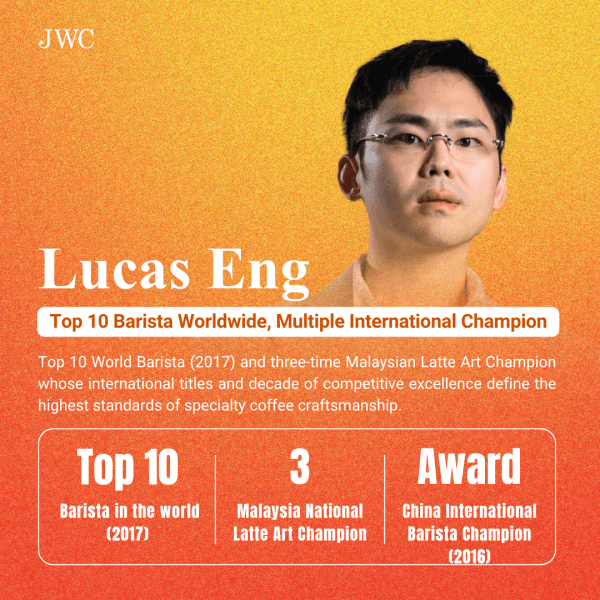 Lucas Eng
JWC Academy 创办人 · 世界赛咖啡师 · 侍酒教学
先给答案
别先问 「哪瓶配咖喱」。先把菜拆成结构——辣度、油脂椰香、咸鲜、草药、重量——再去挑酒的酸度、甜度、单宁与酒体。没有一瓶能包打整桌。
先配结构,不先配菜名
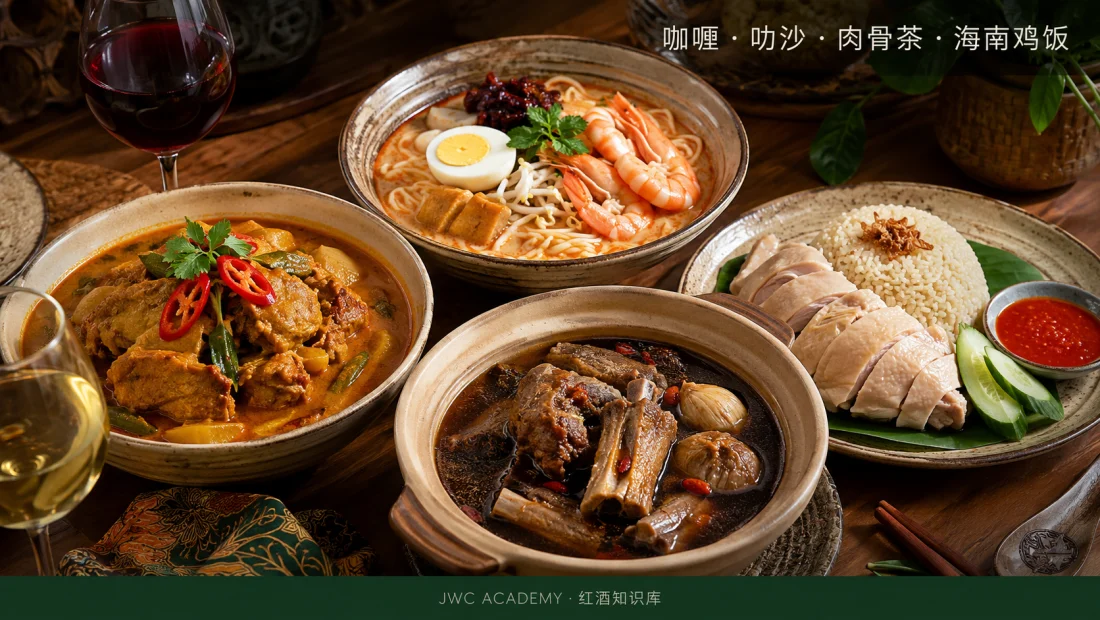
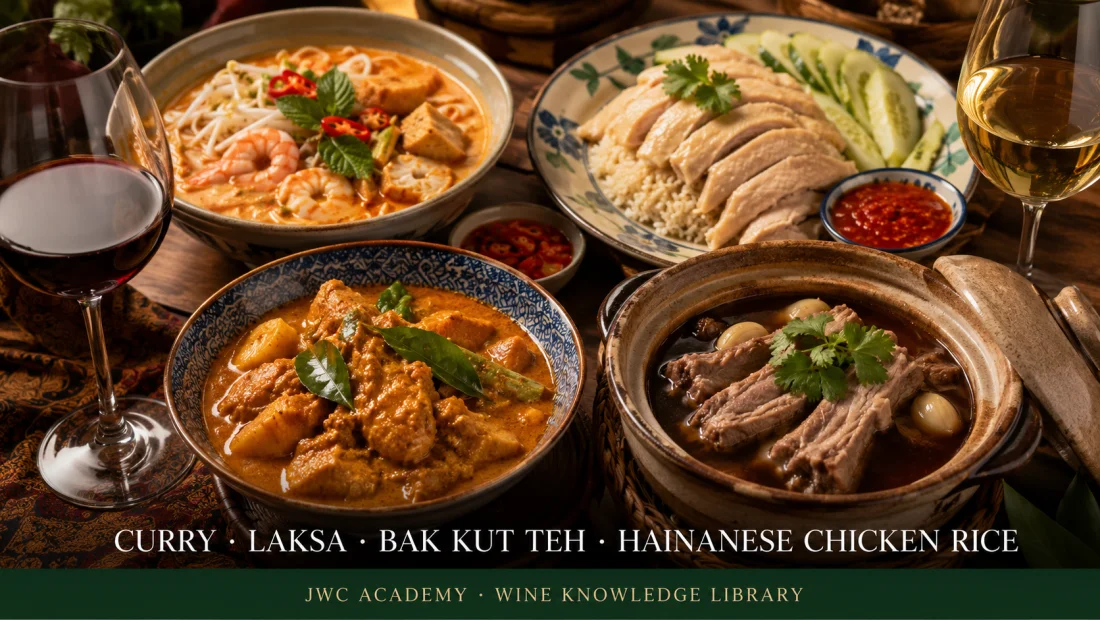
大马菜配酒最常见的错,是先问「哪个牌子配咖喱」。正确顺序反过来:先拆盘子里的结构——辣度、油脂/椰香、咸鲜、草药香、菜肴重量,再回头挑酒的酸度、甜度、单宁与酒体。咖喱和叻沙要盯辣度与椰香;肉骨茶靠当归、胡椒和咸鲜撑风味强度;海南鸡饭细致,怕单宁太重把菜压住。没有一瓶酒能包打整桌。
上桌前,先给菜打 5 个分
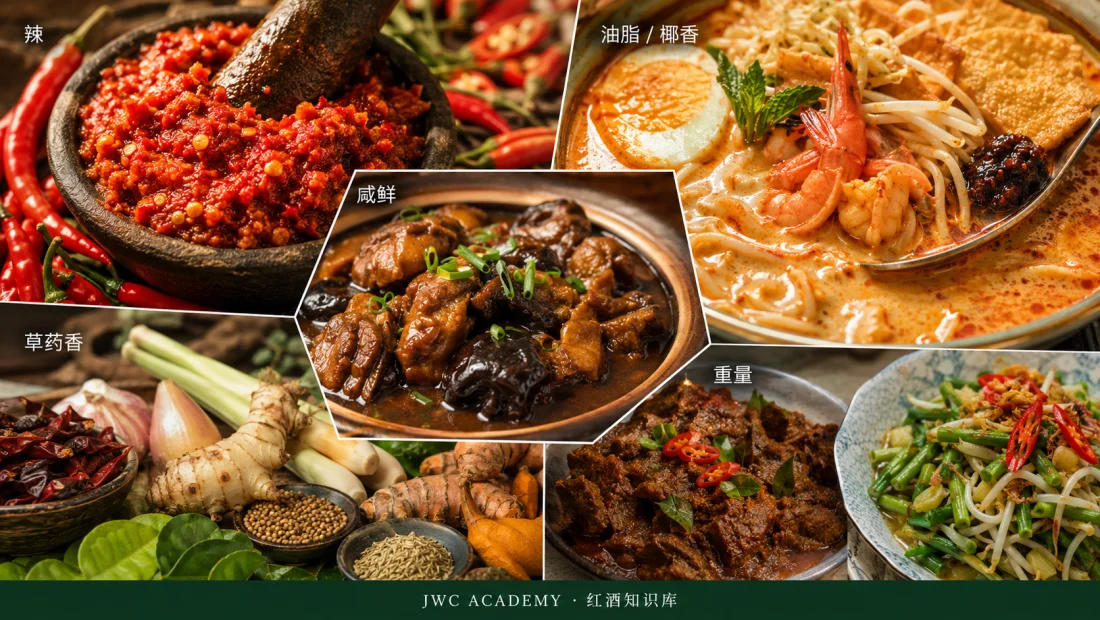
点完菜先在心里给它评分:辣不辣、油不油/椰浆多不多、咸鲜够不够、有没有当归白胡椒这类草药香、整体是清淡还是浓重。这五项决定酒该往哪个方向走,比死记「某菜配某酒」耐用得多。记住这是一张感官框架,不是标准答案——每家店的咖喱、叻沙配方差很多,最终以桌上那盘为准。
你遇到什么,先动哪个变量
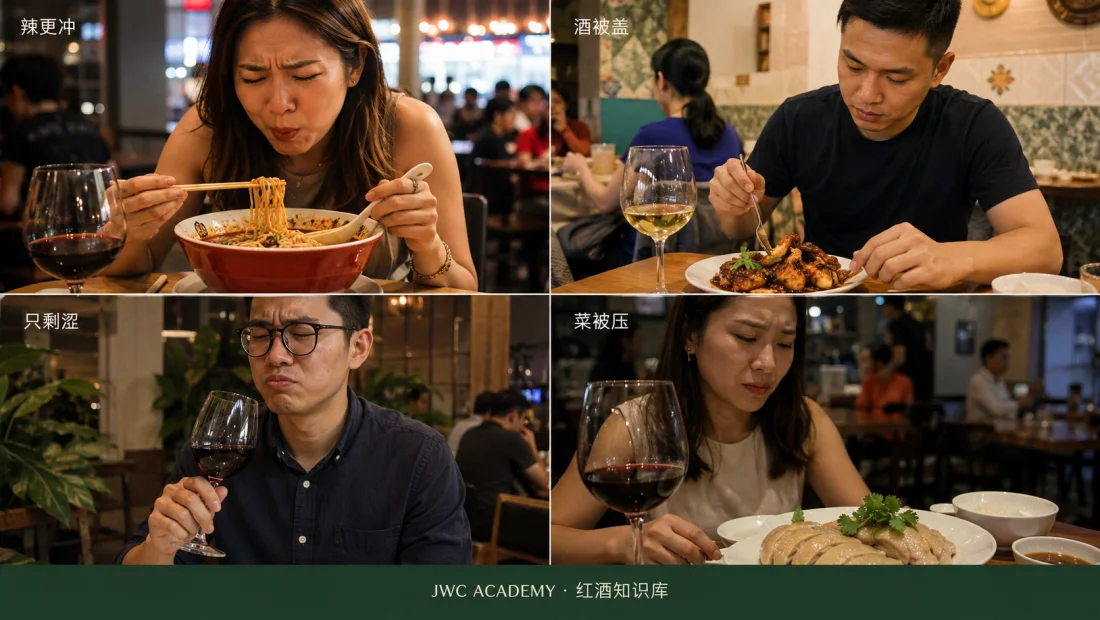
把症状对上原因,就知道下一步先调什么:
| 你遇到的症状 | 可能原因 | 先调什么 |
|---|---|---|
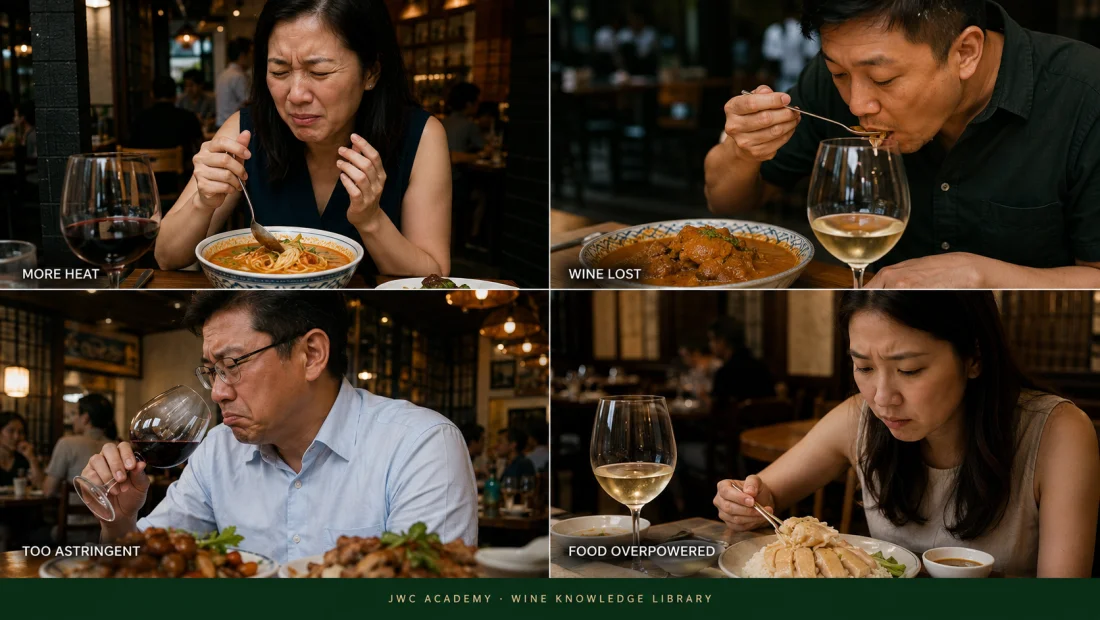
| 咖喱越吃越辣、酒也更冲 | 酒精/单宁把辣感放大 | 换更轻、带果味或适度甜感的方向 |
| 叻沙把酒完全盖掉 | 椰香、香料与鲜味太强 | 先提高酒的香气与酸度存在感 |
| 肉骨茶配酒只剩苦涩 | 草药/咸鲜撞上高单宁 | 先降单宁,保留足够风味强度 |
| 海南鸡饭被酒压住 | 酒体或橡木太重 | 换更轻、更清爽的结构 |
| 一桌菜想只开一瓶 | 菜式结构跨度大 | 找中等强度、酸度够、单宁不过度的折中 |
进阶 · 中级
为什么辣椒会「放大」酒精,微甜酒反而解辣?
辣不是味觉,是辣椒素(capsaicin)触发的灼热痛感。酒精会一起激活同一套热痛受体,所以配辣时高酒精红酒会越喝越烧;单宁本来的涩,在被辣激过的口腔里也更容易被读成苦、变粗糙。反过来,酒里留一点残糖(off-dry 微甜)能安抚灼热,酸度则负责把椰浆、油脂的厚重刷干净——这就是为什么带点甜、酸度好、酒精不高的酒,配咖喱和叻沙常常比「厚重大红酒」更稳。这是酒类教育里通行的配辣原则,不是玄学。

四道菜,四条诊断路线
把四道菜拆开看:咖喱先处理辣,别一见红肉就上厚重红酒;叻沙看椰香与汤底,浓椰奶需要香气和酸度顶上去;肉骨茶的主角是当归、白胡椒和咸鲜,不是「有猪肉就配重红酒」;海南鸡饭是鸡肉、油饭、姜葱和辣酱几个小变量,越细致越怕酒太大声。先认症状,再决定动哪一项。
一次只改一个变量
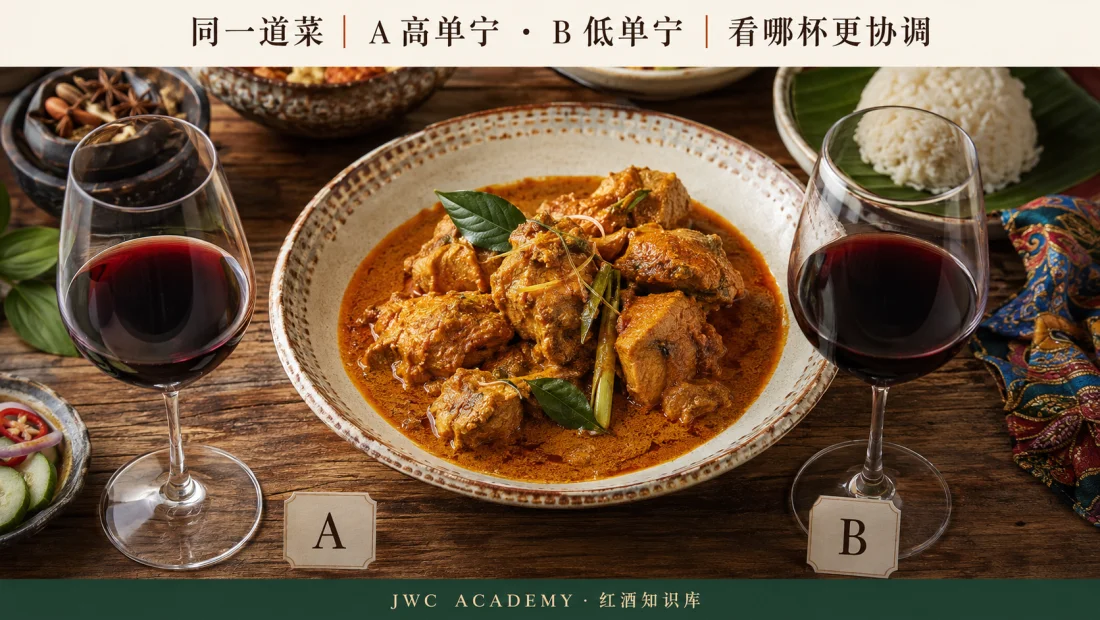
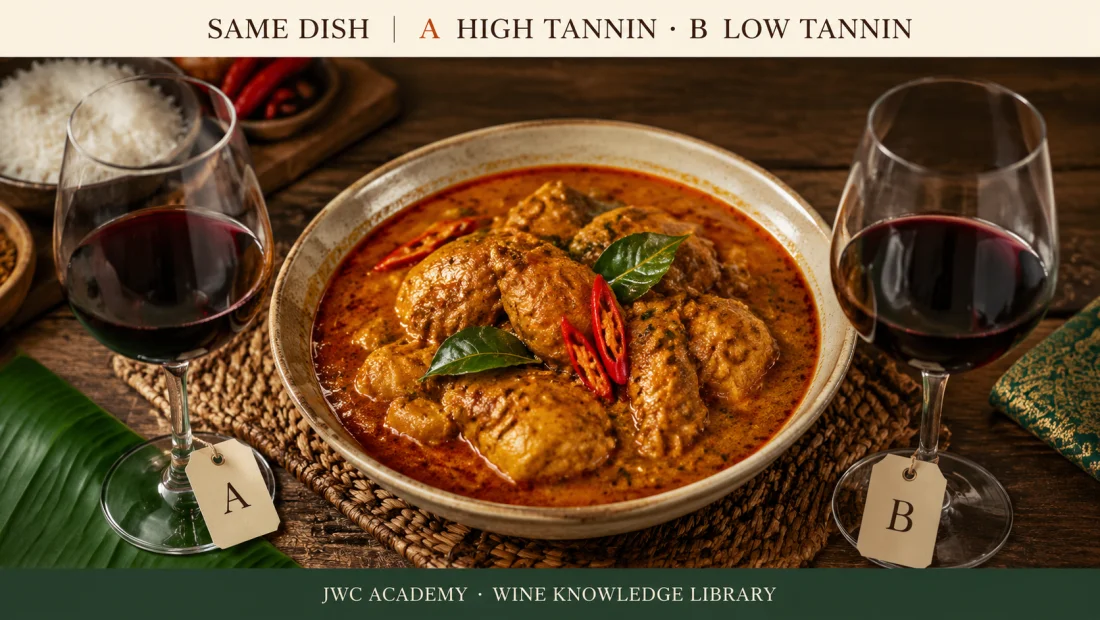
想练配餐,就用同一道菜配两小杯结构差很多的酒——高单宁 vs 低单宁,或干型 vs 带一点甜。步骤:吃一口菜喝 A,记辣/油/鲜怎么变;清口后吃同样一口喝 B;只问哪杯让菜更舒服,不先问哪瓶贵。结构对上了,再去比具体品牌。手机计时就够,不用醒酒器。
顺手拆掉四个配餐迷思
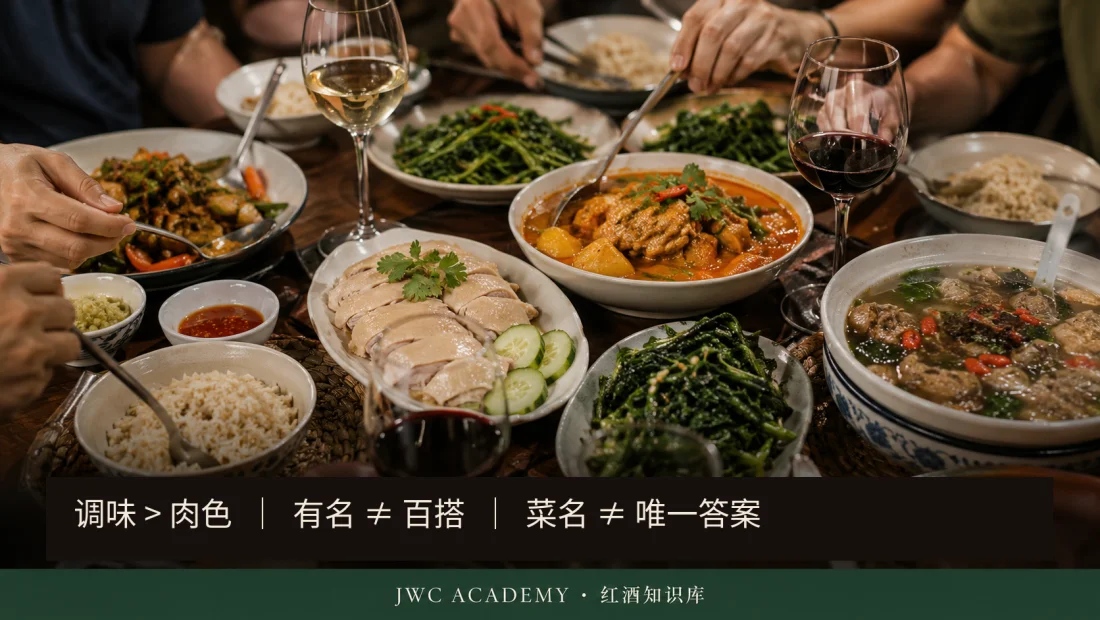
「红肉一定配红酒」——酱汁的调味结构常比肉色更重要;「辣菜绝对不能配酒」——控制好酒精、单宁和甜酸就能配;「一个菜名只有一个标准答案」——同样叫叻沙,亚参叻沙和咖喱叻沙是两道完全不同的题;「贵酒配什么都好」——结构不合照样打架。放下这四条,你才敢相信自己那一口的感觉。
把菜和酒都拆成结构
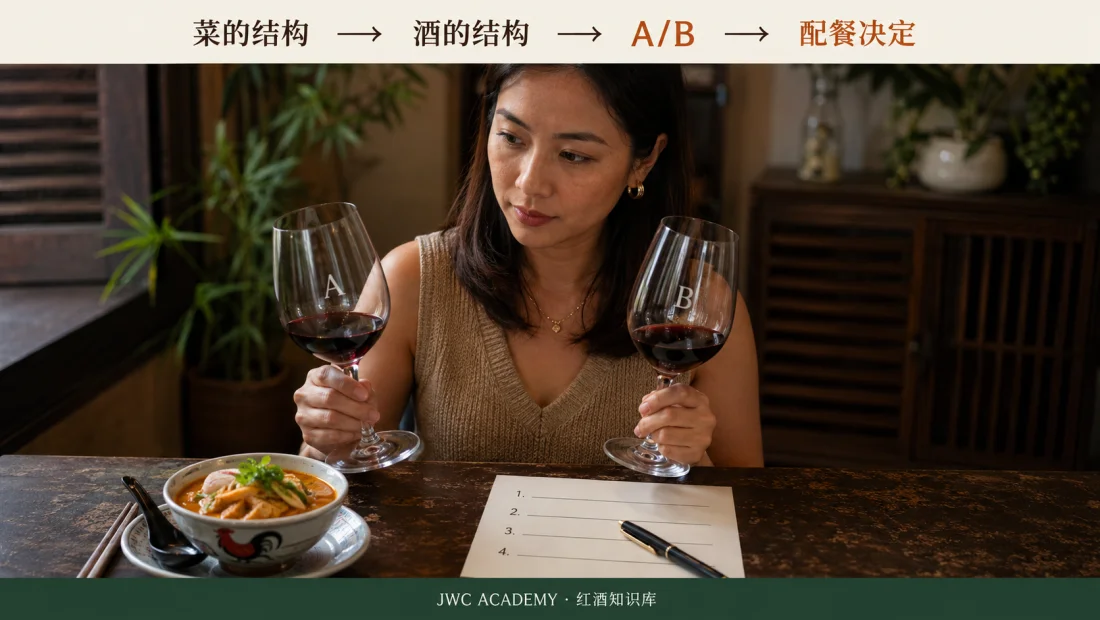
配餐真正的能力,是能同时把「菜」和「酒」翻译成结构变量。在新世界阶段先练会认酸度、单宁、酒体与果味,就能把任何一道本地菜换算成 pairing 参数;进到旧世界,再叠加产区与风土的选择。练到这一步,餐桌上你不必背「某菜配某酒」,拿到一盘菜就知道酒该往哪调。
冷知识
同样叫 laksa,配酒是两道完全不同的题
槟城亚参叻沙(assam laksa)是罗望子(tamarind)的酸辣鱼汤,根本没椰浆;咖喱叻沙(curry laksa)却是浓椰奶打底。前者的酸和鱼鲜会把干白衬得平淡,带点甜、低酒精的反而稳;后者的椰香和辣需要香气足、酸度好的酒去刷厚重。下次有人说「叻沙配 X 酒」,先反问一句:哪一种叻沙?
常见问题
咖喱一定要配甜酒吗?
不一定。适度甜感能缓和部分辣感,但酒精高低、酸度和香气强度要一起看,别只盯甜度这一项。
肉骨茶能配白酒吗?
可以。关键是酒的结构接不接得住当归、白胡椒和油脂,不该只用颜色决定。别一见猪肉就自动上重红酒。
一桌很多菜怎么办?
找中等强度、酸度足、单宁不过度的折中款,再照那桌里最强势的菜微调,别让一瓶去硬扛全部。
为什么同样 laksa 配法会不同?
不同叻沙的椰浆、酸、辣、鱼鲜比例差很大。结构一变,酒的方向就得跟着换。
JWC Wine Course新世界葡萄酒课程
新世界葡萄酒课程
一堂 2.5 小时 · 零基础友好
5 款实杯,比较澳洲、纽西兰、智利、阿根廷与南非。把葡萄品种、香气与结构连成一套下次还能用的选酒方法。小班到店品鉴,无需任何基础。
看课程详情或用 WhatsApp 问 Emily参考资料
- Wine & Spirit Education Trust (WSET) · wsetglobal.com
© JWC Academy · Wine Guides 红酒指南
Wine Knowledge · Food Pairing
JWC Wine Guide · 09 / 12
Curry, laksa, bak kut teh, chicken rice — how do you pair wine without a clash?
Lucas EngPrincipal, JWC Academy · World-stage barista · Wine educator
Quick answer
Don’t ask “which bottle goes with curry” first. Break the dish into structure — spice, fat/coconut, savoury depth, herbs, weight — then match the wine’s acidity, sweetness, tannin and body. No single bottle covers the whole table.
Pair the structure, not the dish name
The most common mistake with Malaysian food is asking “which brand goes with curry” first. Flip the order: break down the structure on the plate — spice level, fat/coconut richness, savoury depth, herbal notes, overall weight — then choose the wine’s acidity, sweetness, tannin and body. Curry and laksa hinge on spice and coconut; bak kut teh leans on herbs, pepper and savoury depth for intensity; Hainanese chicken rice is delicate and hates heavy tannin flattening it. No one bottle covers the whole table.
Score the dish on 5 axes before you pour
Once the food arrives, grade it in your head: how spicy, how oily / how much coconut, how savoury, any herbal notes like angelica root or white pepper, and light or heavy overall. Those five axes decide which way the wine should lean — far more durable than memorising “dish X with wine Y.” Remember this is a sensory framework, not a fixed answer: every shop’s curry and laksa recipe differs, so calibrate to the bowl in front of you.
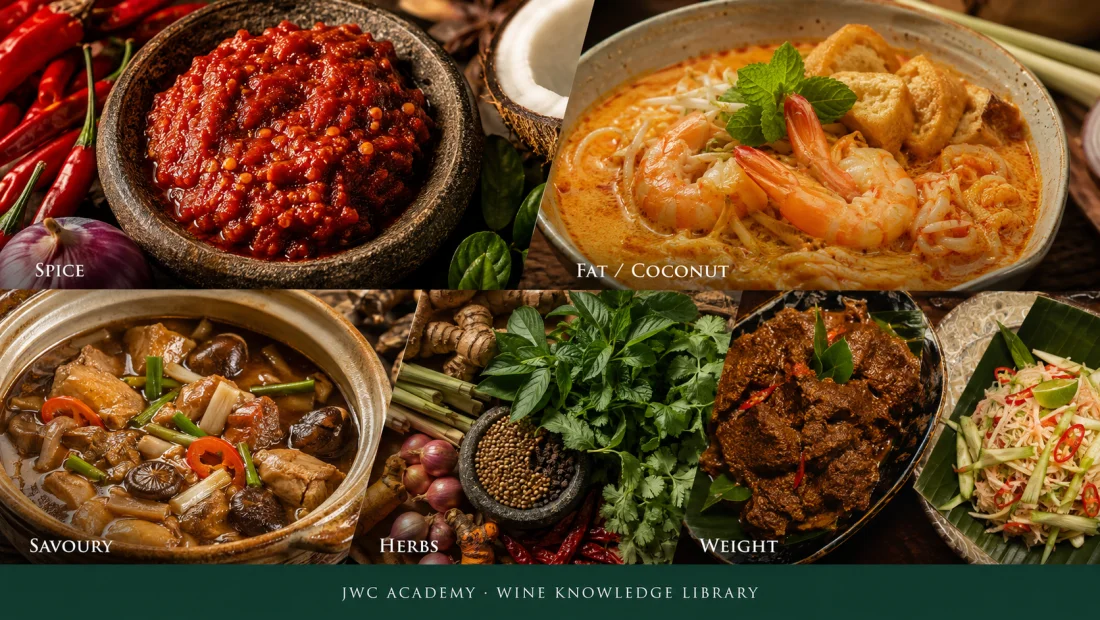
What you hit, and which variable to move first
Match the symptom to its cause and you know what to adjust first:
| Symptom | Likely cause | Adjust first |
|---|---|---|
| Curry gets hotter, wine gets sharper | Alcohol / tannin amplify the heat | Go lighter, fruitier or slightly sweet |
| Laksa buries the wine completely | Coconut, spice and umami too strong | Lift the wine’s aroma and acidity |
| Bak kut teh leaves only bitterness | Herbs / savoury clash with high tannin | Drop tannin, keep enough flavour intensity |
| Chicken rice gets flattened | Body or oak too heavy | Switch to a lighter, fresher structure |
| One bottle for the whole table | Dishes span a wide structure range | Find a mid-weight, high-acid, low-tannin compromise |
Level up · Intermediate
Why does chilli “amplify” alcohol while an off-dry wine tames it?
Spice isn’t a taste — it’s a burning pain triggered by capsaicin. Alcohol fires up the same heat-pain receptors, so a high-alcohol red drinks hotter and hotter with chilli, and tannin’s natural grip reads as more bitter and coarse inside a spiced mouth. Flip it around: a touch of residual sugar (an off-dry wine) soothes the burn, while acidity scrubs away the weight of coconut milk and fat. That’s why a lightly sweet, high-acid, lower-alcohol wine often sits steadier next to curry and laksa than a big heavy red — it’s standard wine-education pairing logic, not folklore.
Four dishes, four diagnostic routes
Take the four apart: curry means handling the spice first, not reaching for a heavy red the moment you see meat; laksa is about coconut and the broth, where rich coconut cream needs aroma and acidity to push back; bak kut teh’s lead actors are angelica root, white pepper and savoury depth, not “there’s pork so pour a big red”; chicken rice is a set of small variables — chicken, oiled rice, ginger-scallion, chilli sauce — and the more delicate it is, the more it fears a loud wine. Read the symptom first, then decide which variable to move.
Change one variable at a time
To practise pairing, put the same dish next to two small glasses with clearly different structure — high tannin vs low, or dry vs slightly sweet. The steps: take a bite, sip A, note how spice / fat / savour shift; reset your palate, take the same bite, sip B; ask only which glass makes the food happier, not which bottle is fancier. Once the structure fits, then compare specific labels. A phone timer is enough — no decanter needed.
Clear four pairing myths along the way
“Red meat always wants red wine” — the sauce’s seasoning structure often matters more than the colour of the meat; “spicy food can never take wine” — control the alcohol, tannin and sweet-acid balance and it works; “one dish name has one right answer” — the same word “laksa” means wildly different things in Penang versus a curry-laksa stall; “an expensive wine goes with anything” — a structural mismatch still clashes. Drop these four and you’ll trust your own mouthful.
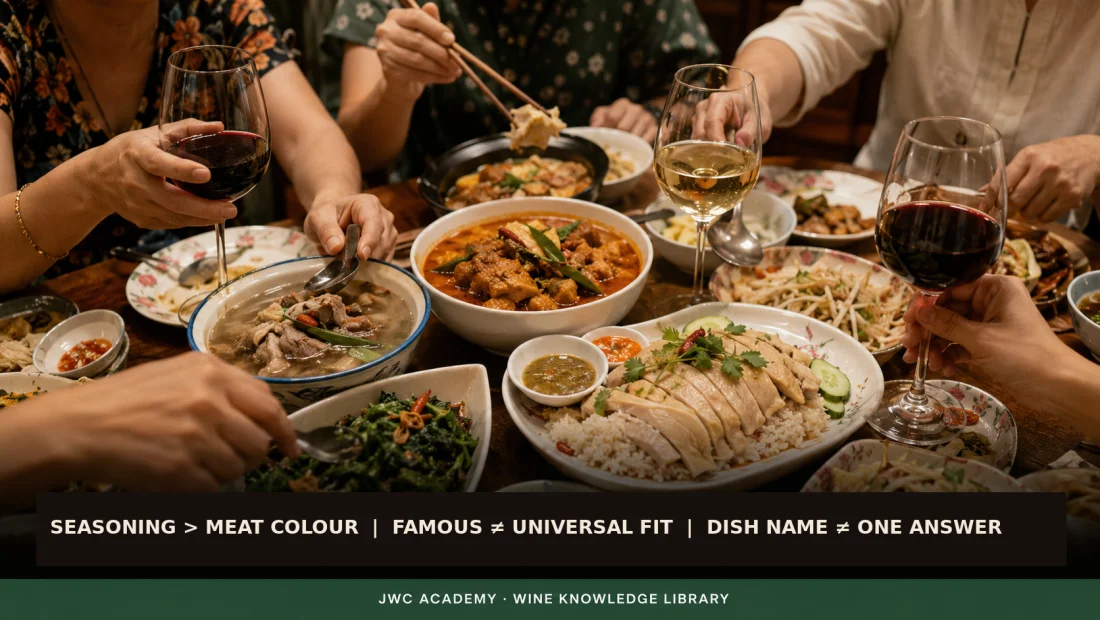
Break both the food and the wine into structure
The real pairing skill is translating both the food and the wine into structural variables. In the New World stage you learn to read acidity, tannin, body and fruit, so you can convert any local dish into pairing parameters; in the Old World stage you layer on region and terroir choices. Get here and you no longer memorise “dish X with wine Y” at the table — you see a plate and know which way to steer the wine.

Did you know
The same “laksa” is two completely different pairing problems
Penang assam laksa is a tamarind-sour fish soup with no coconut milk at all; curry laksa is built on rich coconut cream. The first one’s acidity and fishy savour make a dry white taste flat — a touch of sweetness and lower alcohol sits better; the second’s coconut and chilli need a wine with plenty of aroma and acidity to cut the richness. Next time someone says “laksa goes with X,” ask first: which laksa?
FAQ
Does curry have to be paired with sweet wine?
Not necessarily. A touch of sweetness can ease some of the heat, but alcohol level, acidity and aroma intensity all matter too. Don’t fixate on sweetness alone.
Can bak kut teh be paired with white wine?
Yes. The key is whether the wine’s structure can carry the angelica root, white pepper and fat — don’t let colour decide. Don’t default to a heavy red just because there’s pork.
What about a table full of dishes?
Find a mid-weight wine with enough acidity and restrained tannin as a compromise, then fine-tune to the strongest dish on the table. Don’t ask one bottle to carry everything.
Why does the same laksa pair differently?
Different laksas vary hugely in coconut, sourness, spice and fishy savour. Change the structure and the wine’s direction has to change with it.
JWC Wine CourseNew World Wine Course
New World Wine Course
One 2.5-hour session · Beginner-friendly
Five wines side by side across Australia, New Zealand, Chile, Argentina and South Africa — turning grape, aroma and structure into a method you can use next time you buy. Small in-house tasting class, no experience needed.
See course detailsOr ask Emily on WhatsAppReferences
- Wine & Spirit Education Trust (WSET) · wsetglobal.com
© JWC Academy · Wine Guides