














中EN
红酒知识 · 新旧世界
JWC 红酒指南 · 07 / 12
新世界 vs 旧世界:同一种葡萄,为什么喝起来完全不一样?
 Lucas Eng
JWC Academy 创办人 · 世界赛咖啡师 · 侍酒教学
先给答案
新旧世界 不是两种固定味道,而是地理和传统的快捷说法。别背「新世界果香、旧世界土味」,拿 同一种葡萄、两个产区 并排,比气候、成熟度、酸度、单宁怎么改变结果。
基准线:1 个葡萄 + 2 个产区,比背一张世界地图有效
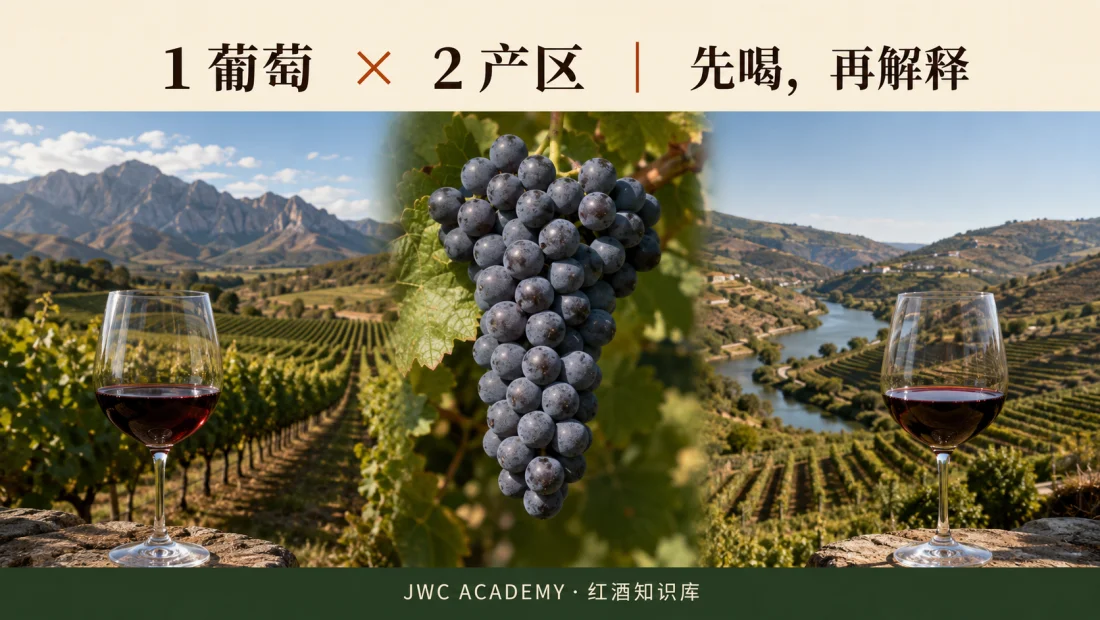
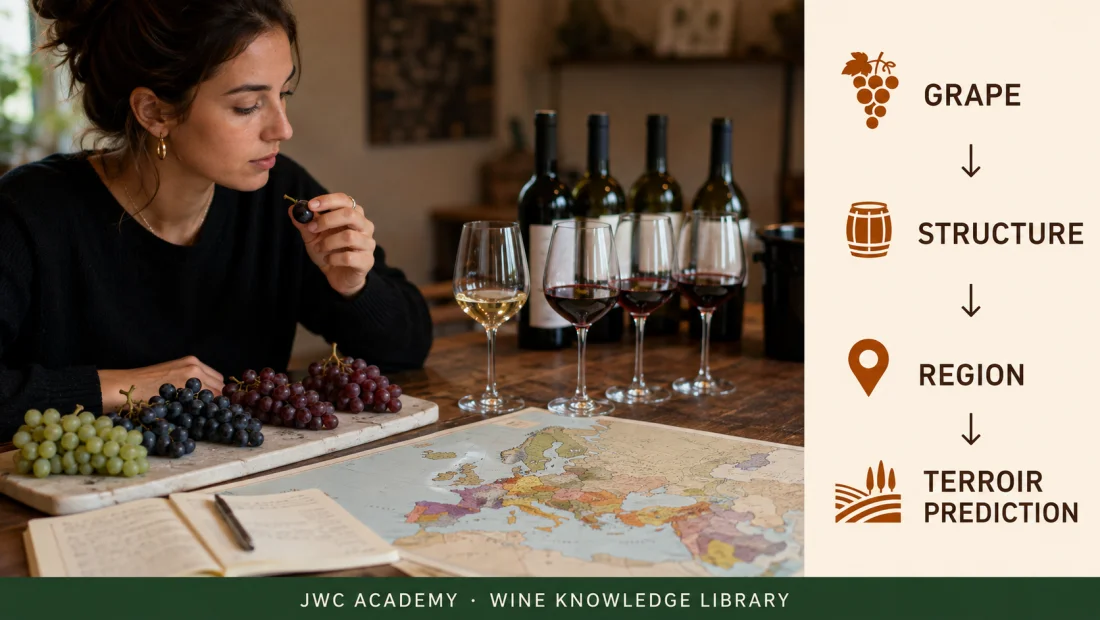
训练新旧世界,最有效的不是背地图,而是固定一个葡萄品种(grape variety),选一个新世界产区、一个旧世界产区并排喝。同样是黑皮诺或赤霞珠,两瓶摆在一起,差异会自己跳出来。诀窍是先写下感官结果——果味多熟、酸度多高、单宁多紧——最后才揭晓产地、解释地理原因,别被「这瓶是旧世界」的印象先带着走。
它不是「二分味道」
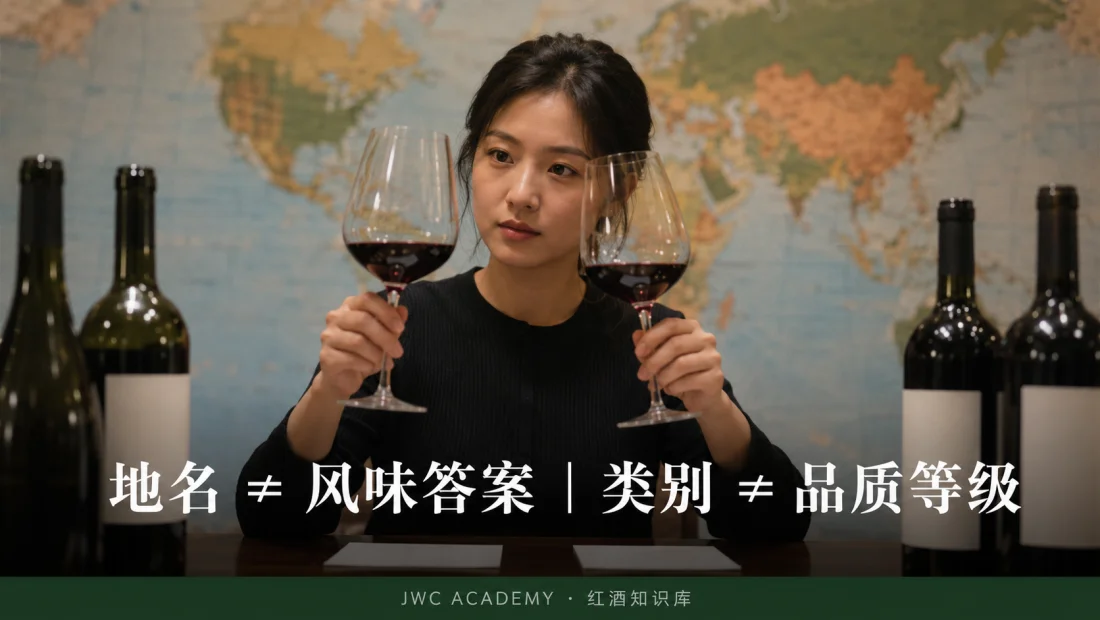
「新世界果香、旧世界土味」是个太好用的口诀,好用到会骗你。新世界也有高酸清瘦的酒,旧世界也有饱满果味的酒。把大类当成绝对规则,一喝到反例就慌。更靠谱的做法:先盲品结构,别急着贴标签;把新旧世界当成「一组线索」,不是「一个答案」。地名给你方向,杯里的味道给你结论。
你遇到的症状,意味着什么
先看症状,再决定动哪一个变量:
| 症状 | 可能原因 | 先做什么 |
|---|---|---|
| 一听旧世界就说 earthy | 被口诀带着走 | 先盲品结构,别先贴标签 |
| 同葡萄味道差很大 | 产区 / 气候 / 酿造不同 | 先固定葡萄,再比较 |
| 欧洲酒标看不懂 | 只会找葡萄名 | 改认产区 / appellation |
| 新世界也喝到高酸清瘦 | 把大类当绝对规则 | 回到具体产区和酒款 |
| 说得出地名,说不出味道 | 知识没接上感官 | 先做同葡萄 A/B |
进阶 · 中级
冷凉 vs 温暖气候,到底改了什么?
同一个葡萄换个气候,味道会系统性偏移。较凉产区(多数旧世界经典产区)成熟慢,糖分累积有限、酸度留得多——酒常是酒精偏低、酸度偏高、果味偏红色系(红樱桃、蔓越莓)、口感更紧。较暖产区(不少新世界地带)成熟更足,酒精高、酸度低、果味偏黑色系(黑莓、黑李)、更饱满圆润。再叠加酿造取向:旧世界传统上衬托产区、用橡木收敛;新世界更愿放大果味、新橡木用得爽快。所以差的从来不只是产地,是气候 × 人为选择一起作用。

气候、产区规则、生产者:三层一起看
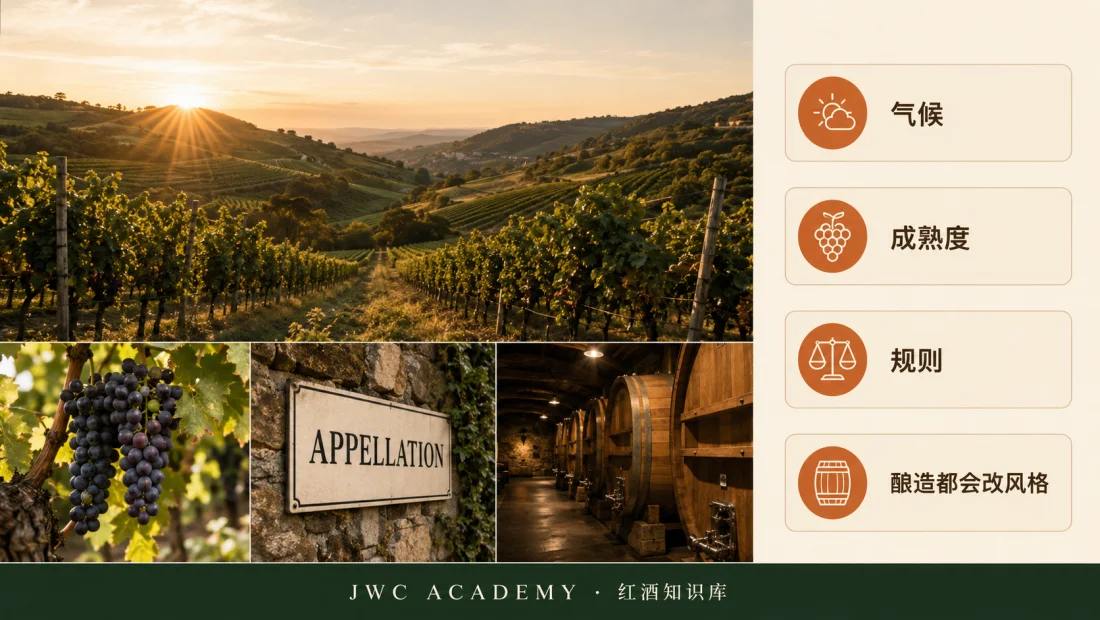
同葡萄喝出差异,通常来自三层叠加。第一层是气候与成熟度:暖=更熟果味更饱满,凉=更多酸度更紧,但这只是倾向。第二层是产区规则:旧世界很多 appellation 对品种、种植、酿造有硬规定,所以「地名」不只是地址,而是风格线索。第三层是生产者:采收、萃取、发酵、熟成、调配,同一个产区也能做出不同性格。别把 terroir 读成「地理决定一切」。
一次只改一个变量
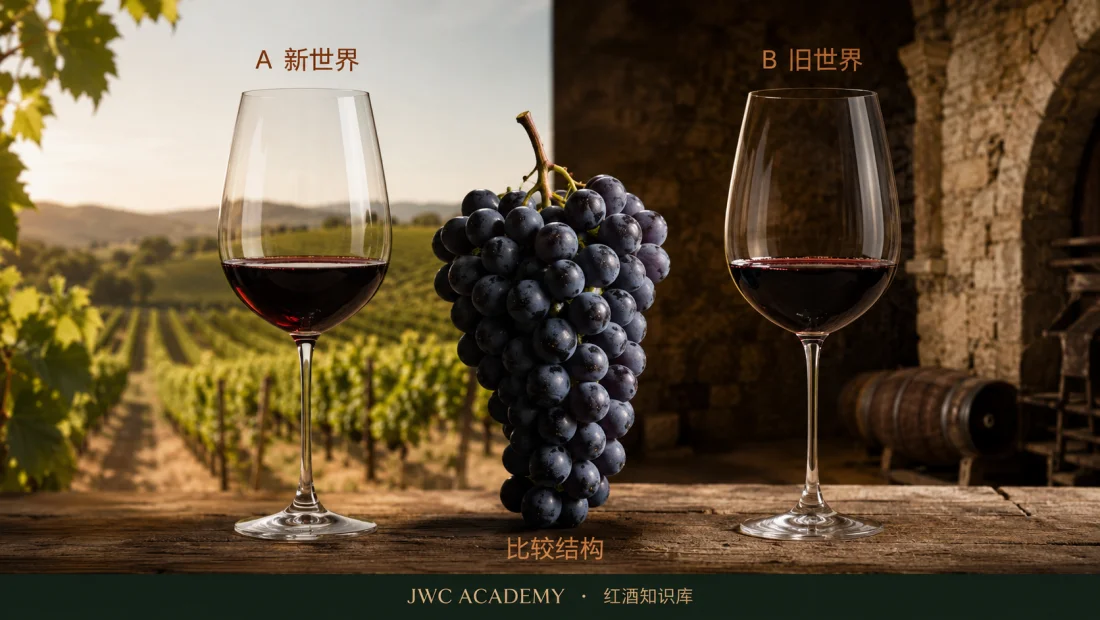
练习就选同一葡萄的新旧世界各一瓶,杯型、温度、饮用时间尽量一致。① 先盲排果味成熟度。② 再排酸度、单宁、酒体。③ 揭晓产区后,把差异连到气候和规则。④ 最后才翻生产者的技术资料。顺序很重要:先感官、后知识,才不会「用标签套味道」。
顺手拆掉四个迷思
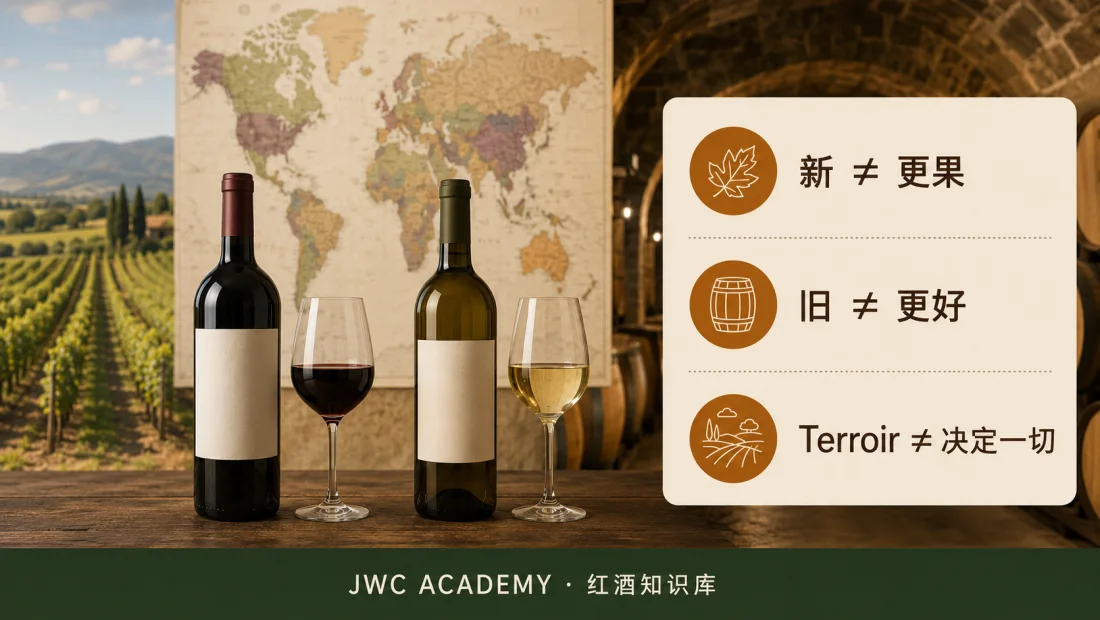
新世界都果味重、旧世界都 earthy、旧世界一定更高级、terroir 决定一切——四个都不成立。前两个是过度概括,反例一大堆;第三个把地理类别当成品质排名,其实新旧世界不是等级;第四个忽略了人的酿造选择。放下这些口诀,你才敢相信杯里真正喝到的东西。
为什么红酒要把两级连起来学
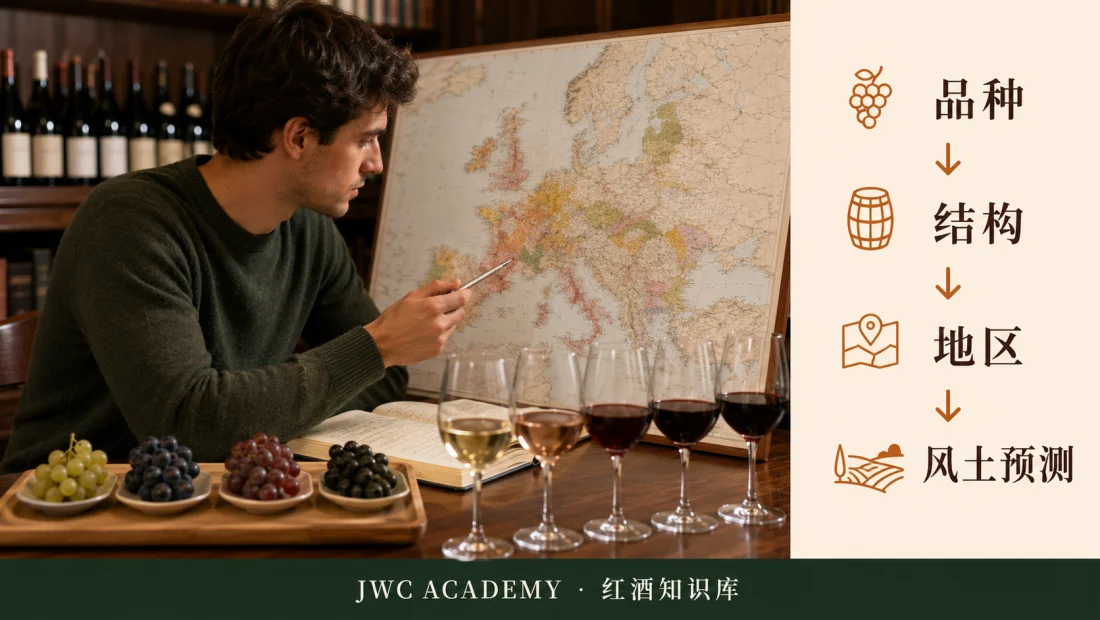
先在新世界用明确的葡萄品种建立感官坐标——这瓶赤霞珠、这瓶黑皮诺大概是什么骨架。再进旧世界,学产区和风土怎么改写同一个品种。两级连起来,你就从「会背地名」升级成「能预测杯里的风格」:看到酒标上的产区,脑子里先有一版味道的草稿。
冷知识
同一个葡萄,两个名字暗示两种风格
Syrah 和 Shiraz 其实是同一个葡萄,但酒标写哪个名字,往往就暗示了风格取向。写 Syrah 的常见于法国罗讷河谷等旧世界,偏向紧、带胡椒和咸鲜;写 Shiraz 的多来自澳洲等新世界,偏向饱满、甜熟黑果。生产者选哪个拼法,等于先给你一个风格暗号——下次逛酒架,先看名字的拼法,你已经在读风土了。
常见问题
哪些国家算新世界、哪些算旧世界?
传统上,欧洲主要产酒国常归旧世界,欧洲以外较新的主要产区常称新世界。这是行业常用框架,不是品质分类,也没有一条精确国界线。
新世界酒一定会写葡萄品种吗?
不一定。只是很多新世界酒标习惯把葡萄品种放在显眼位置,方便消费者认;也有不写的。
旧世界为什么更常写产区?
因为地区法规和传统把产区名变成了葡萄与风格的重要线索。懂了产区,等于同时知道大概的品种和风格。
想快点练出手感,怎么做?
固定同一种葡萄,跨一个新世界、一个旧世界产区做 A/B。比一次喝很多不同葡萄清楚得多。
JWC Wine Course新世界葡萄酒课程
新世界葡萄酒课程
一堂 2.5 小时 · 零基础友好
5 款实杯,比较澳洲、纽西兰、智利、阿根廷与南非。把葡萄品种、香气与结构连成一套下次还能用的选酒方法。小班到店品鉴,无需任何基础。
看课程详情或用 WhatsApp 问 Emily参考资料
- Wine & Spirit Education Trust (WSET) · wsetglobal.com
© JWC Academy · Wine Guides 红酒指南
Wine Knowledge · New vs Old World
JWC Wine Guide · 07 / 12
New World vs Old World: same grape, why does it taste so different?
Lucas EngPrincipal, JWC Academy · World-stage barista · Wine educator
Quick answer
New vs Old World isn’t two fixed flavours — it’s shorthand for geography and tradition. Skip “New World fruity, Old World earthy.” Take one grape across two regions and compare climate, ripeness, acidity and tannin.
Baseline: one grape + two regions beats memorising a world map
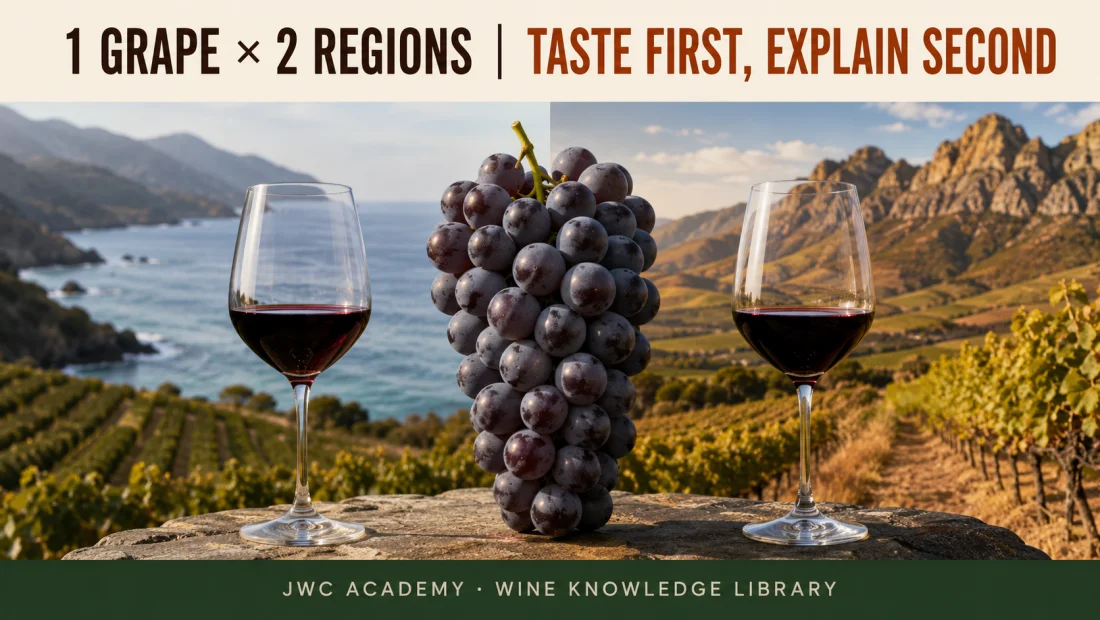
The fastest way to train New vs Old World isn’t memorising a map — it’s fixing one grape variety and pouring a New World region beside an Old World one. Put two Pinot Noirs, or two Cabernets, side by side and the differences reveal themselves. The trick: write down the sensory result first — how ripe the fruit, how high the acid, how firm the tannin — and only then reveal the origin and explain the geography, so the label doesn’t bias you.
It’s not a two-flavour split
“New World fruity, Old World earthy” is a rule of thumb so handy it will fool you. The New World makes lean, high-acid wines too; the Old World makes ripe, fruit-forward ones. Treat the categories as absolute and one counter-example throws you. Better: taste the structure blind before you reach for a label. New vs Old World is a set of clues, not an answer — place points you in a direction, the glass gives the verdict.
The symptom you hit, and what it means
Read the symptom first, then decide which variable to change:
| Symptom | Likely cause | First move |
|---|---|---|
| Call anything Old World “earthy” | Led by the rule of thumb | Taste structure blind before labelling |
| Same grape tastes very different | Region / climate / winemaking differ | Fix the grape, then compare |
| Can’t read European labels | Only hunting for a grape name | Switch to reading region / appellation |
| New World wine is lean and high-acid | Treating a category as an absolute rule | Go back to the specific region and bottle |
| Can name the place but not the taste | Knowledge not linked to the senses | Run a same-grape A/B first |
Level up · Intermediate
Cool vs warm climate — what actually changes?
Move one grape to a different climate and the taste shifts in a predictable way. Cooler regions (many classic Old World areas) ripen slowly, build less sugar and hold more acid — so the wine tends to be lower in alcohol, higher in acid, more “red-fruited” (red cherry, cranberry) and tighter. Warmer regions (much of the New World) ripen fully — higher sugar means higher alcohol, lower acid, “black-fruited” character (blackberry, plum) and a rounder, fuller body. Layer on winemaking intent: the Old World traditionally frames the region and uses oak with restraint; the New World is happier to amplify fruit and reach for new oak. So the difference is never just origin — it’s climate × human choice together.
Climate, region rules, producer: read all three layers
A same-grape difference usually stacks up in three layers. First, climate and ripeness: warm = riper, fuller fruit; cool = more acid, tighter — but only as a tendency. Second, region rules: many Old World appellations regulate grape, growing and winemaking, so the place name is a style clue, not just an address. Third, the producer: harvest timing, extraction, fermentation, ageing and blending give one region many personalities. Don’t read terroir as “geography decides everything.”
Change one variable at a time
For practice, pick one grape as a New World and Old World pair, keeping glass, temperature and timing as consistent as you can. 1) Rank fruit ripeness blind. 2) Then rank acidity, tannin, body. 3) Reveal the regions and link the gaps to climate and rules. 4) Only then open the producer’s tech sheet. Order matters: senses first, knowledge second, so you never force the taste to fit the label.
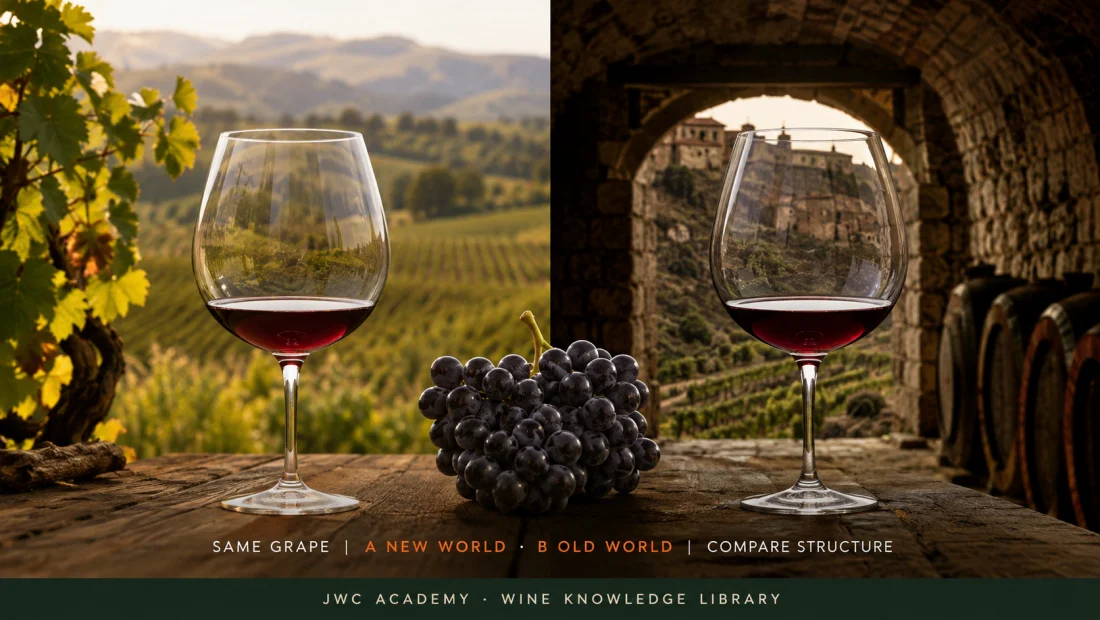
Clear four myths along the way
New World is always fruity, Old World is always earthy, Old World is automatically classier, terroir decides everything — none hold up. The first two are overgeneralisations with piles of counter-examples; the third mistakes a geographic category for a quality ranking; the fourth ignores the human hand in winemaking. Drop the slogans and you’ll trust what’s actually in the glass.
Why the two levels are worth learning together
Start in the New World, using clearly labelled grapes to build sensory coordinates — roughly what a Cabernet or a Pinot skeleton feels like. Then move to the Old World and learn how region and terroir rewrite the same grape. Connect the two and you graduate from “reciting place names” to “predicting the style in the glass”: see a region on the label and you already have a first draft of the taste in mind.
Did you know
One grape, two names hinting at two styles
Syrah and Shiraz are the same grape — but which name is on the label often signals the style. “Syrah” shows up in France’s Rhône and other Old World spots, leaning tight, peppery and savoury; “Shiraz” mostly comes from Australia and other New World regions, leaning full and sweetly ripe with black fruit. The spelling a producer picks is basically a style code — next time you scan a shelf, read the spelling first and you’re already reading terroir.
FAQ
Which countries count as New World vs Old World?
Traditionally, Europe’s major wine countries fall under Old World, and newer major regions outside Europe are called New World. It’s a common industry framework, not a quality grade, and there’s no exact border line.
Do New World wines always name the grape?
Not always. Many New World labels just tend to put the grape variety front and centre so shoppers can recognise it; some don’t.
Why does the Old World name the region more often?
Because regional law and tradition turn the place name into a key clue to grape and style. Know the region and you roughly know both.
What’s the fastest way to build a feel for it?
Fix one grape and run an A/B across one New World and one Old World region. It’s far clearer than tasting many different grapes at once.
JWC Wine CourseNew World Wine Course
New World Wine Course
One 2.5-hour session · Beginner-friendly
Five wines side by side across Australia, New Zealand, Chile, Argentina and South Africa — turning grape, aroma and structure into a method you can use next time you buy. Small in-house tasting class, no experience needed.
See course detailsOr ask Emily on WhatsAppReferences
- Wine & Spirit Education Trust (WSET) · wsetglobal.com
© JWC Academy · Wine Guides