













中EN
红酒知识 · 看懂酒标
JWC 红酒指南 · 08 / 12
欧洲红酒为什么常不写葡萄品种?拿到一瓶到底怎么看?
 Lucas Eng
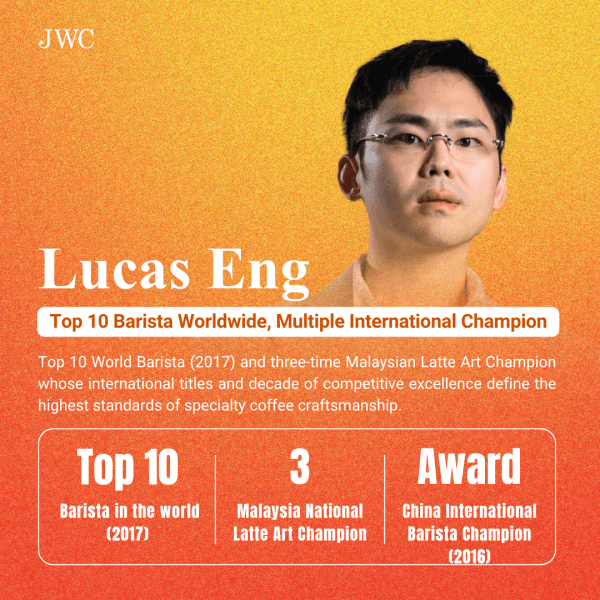
JWC Academy 创办人 · 世界赛咖啡师 · 侍酒教学
先给答案
欧洲酒不写葡萄,不是藏信息,而是把产区当成信息入口。先抓 国家 → 产区/appellation → 生产者,再用产区规则反推品种和风格。
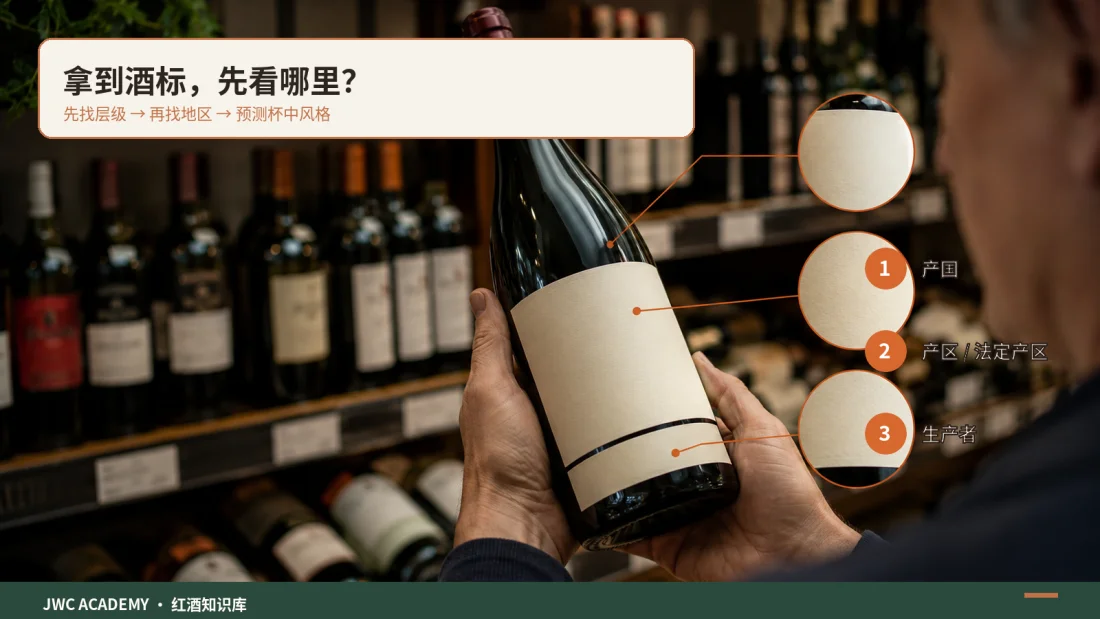
先把酒标压成三层:国家、产区、生产者
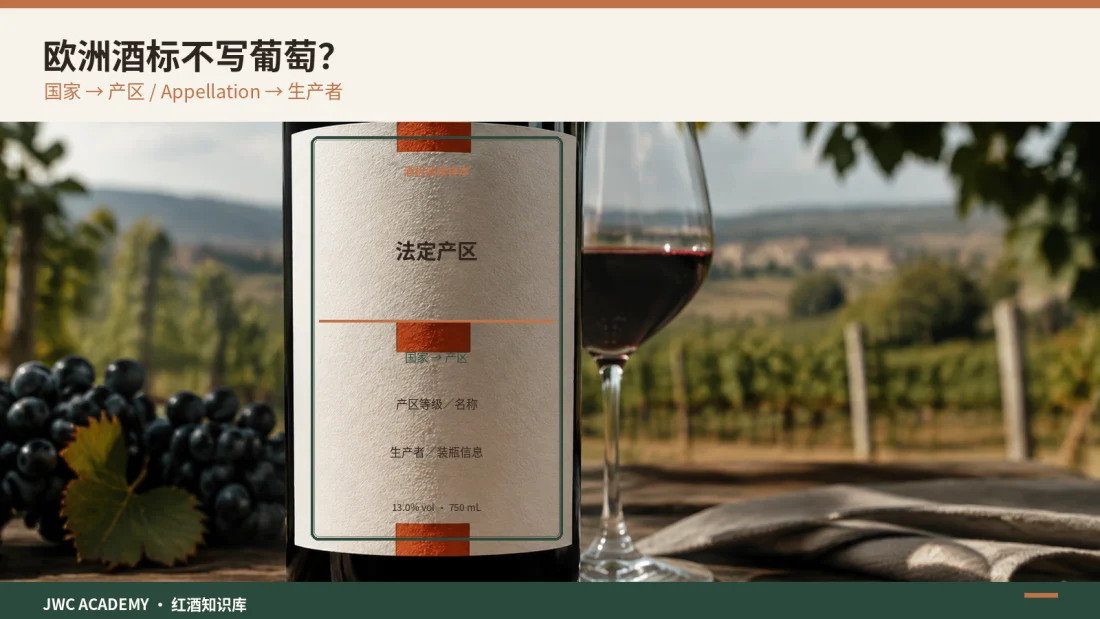
一张法文或意大利文酒标看着吓人,其实只要抓三个信息点:来自哪个国家、哪个产区/appellation、由谁生产。先圈出这三层,再用产区知识去推品种和风格,比在标签上盲找一个英文葡萄名快得多。三层齐了,你已经拿到读懂这瓶酒的骨架。
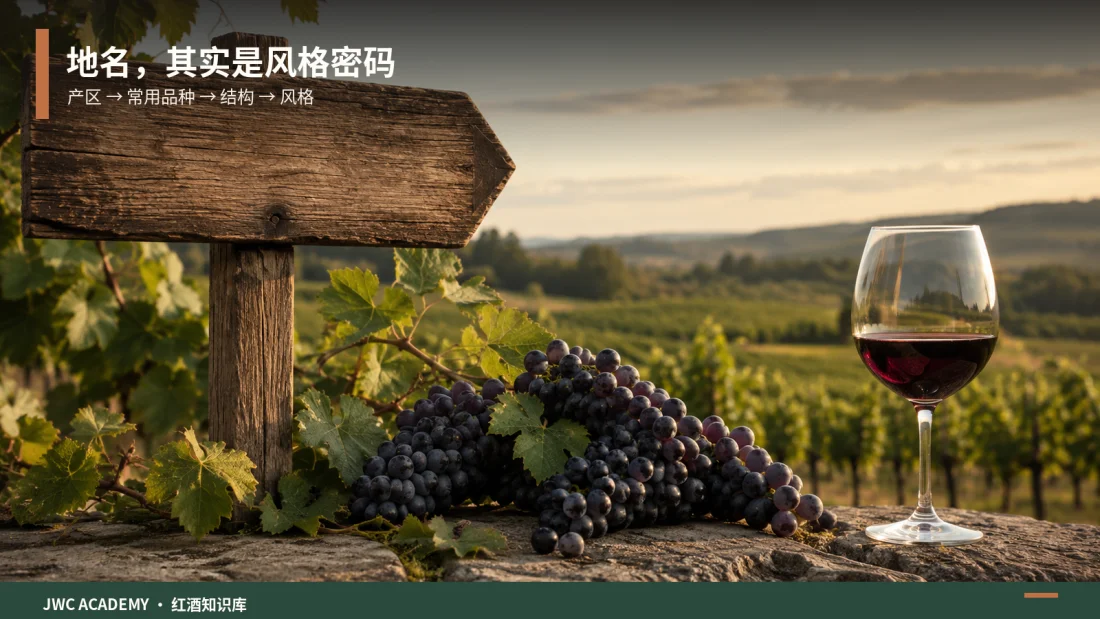
在旧世界,地名是风格代码
旧世界的地名很少只是装饰。它往往连着当地法规、允许的葡萄品种和传统酿法——所以会读地名,本身就是一种品鉴预测力。看到 Chablis,熟悉的人立刻想到未过桶的 Chardonnay;看到 Bordeaux,就想到以 Cabernet 和 Merlot 为主的调配。地名不是障碍,而是压缩好的信息。
标签让你卡住的地方,先动哪个
把症状对上原因,就知道下一步先处理什么:
| 症状 | 可能原因 | 先做什么 |
|---|---|---|
| 正标找不到葡萄名 | 以产区为主的标示传统 | 先圈出 appellation / region |
| 满标法文、意大利文看不懂 | 不知道哪些字重要 | 先分出 国家 / 地区 / 生产者 三层 |
| 记得地名却喝不懂 | 地理没接上感官 | 配一杯典型酒做结构笔记 |
| 同产区不同酒差很多 | 生产者与子产区 / 等级不同 | 补上生产者与更具体来源 |
| 只会靠手机搜答案 | 还没有自己的产区地图 | 建立 产区 → 葡萄 → 结构 卡片 |
进阶 · 中级
为什么旧世界用产区命名?appellation 又怎么「藏」着品种
旧世界的法定产区制度(法国 AOC、意大利 DOC/DOCG 等)通常规定允许的品种、产量和酿造方式,所以地名等于把品种和风格打包进一个词里。经典例子:Bordeaux 正标只写产区,规则却把它锁定在以 Cabernet Sauvignon、Merlot 为主的调配;Burgundy 的红酒几乎等于 Pinot Noir、白酒等于 Chardonnay。所以熟悉的人看到「Chablis」,读到的其实是「勃艮第北部、未过桶的 Chardonnay」——地名替他省下了猜品种这一步。

地名不是装饰,生产者才定成败
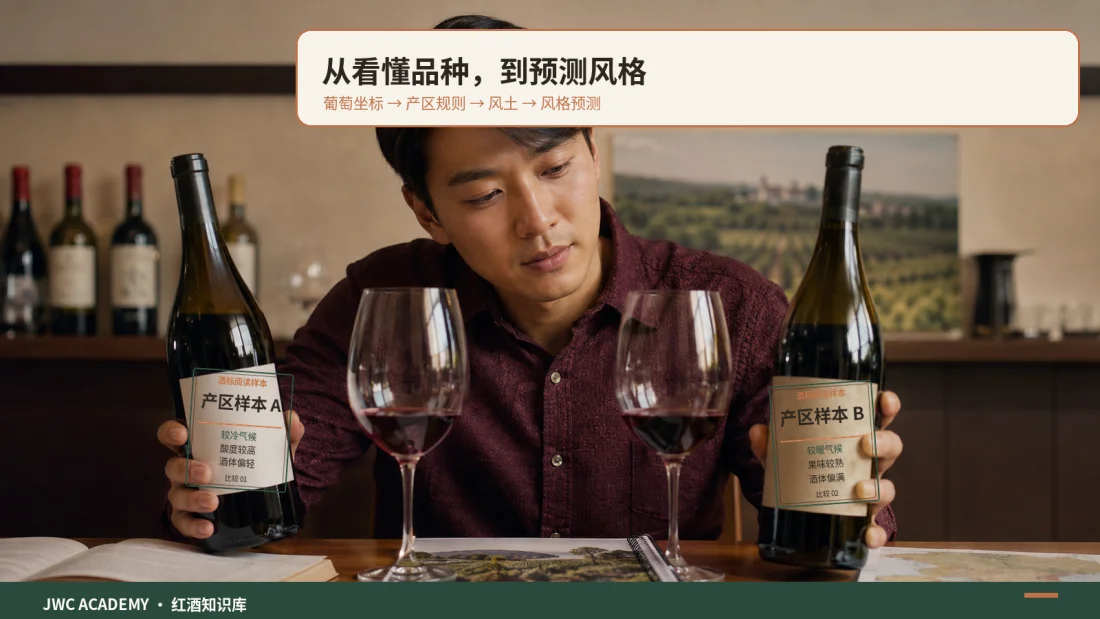
会读地名只是第一步。产区给的是范围——允许的品种和大致风格;真正决定杯中表达的,是生产者用采收时机、发酵、萃取和熟成做的选择。所以同一个 appellation 里,两家酒庄可以差很远。诊断酒标时,先用产区缩小范围,再看生产者和更具体的子产区、等级,别停在「这是波尔多」就以为读懂了。
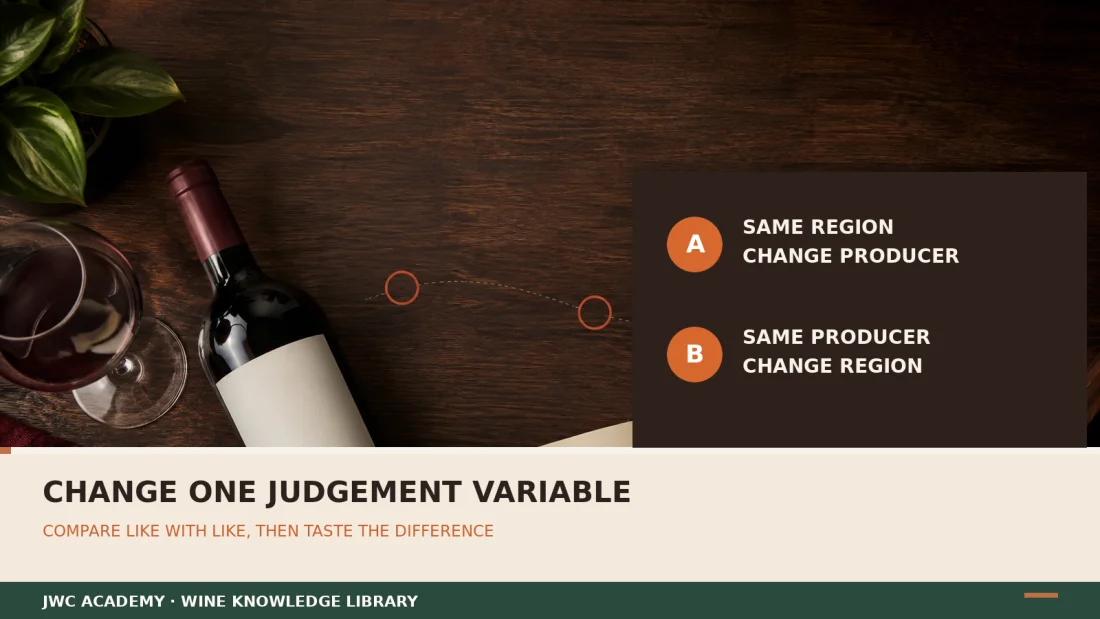
一次只改一个变量:遮标预测法
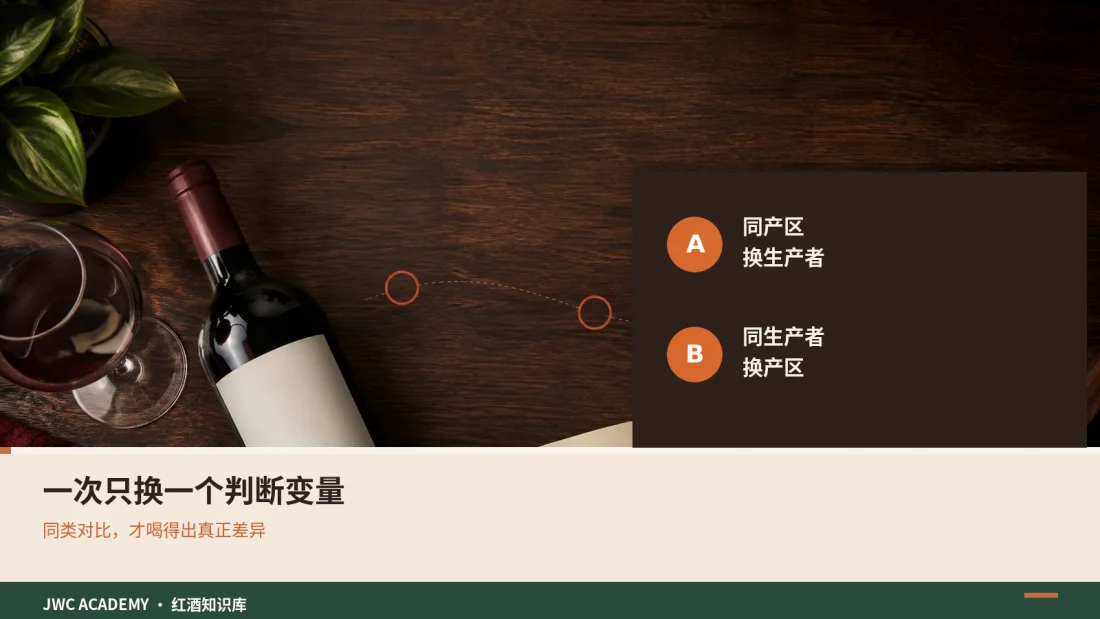
练习时选同一产区的两位生产者,或拿同一葡萄的新世界品种标示和旧世界产区标示做对照。步骤很简单:先遮住背标,圈出三层信息;写下你预测的葡萄和结构;品尝后只比较预测与实际;最后再查官方产区资料补漏。一次只改一个变量,进步才看得见。
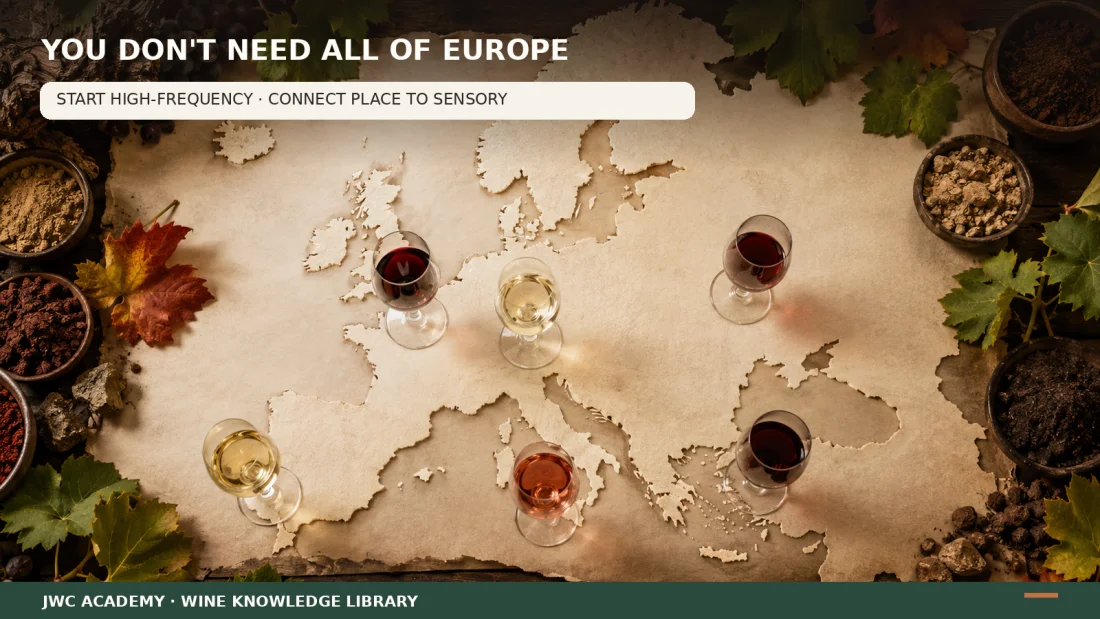
顺手拆掉四个酒标迷思
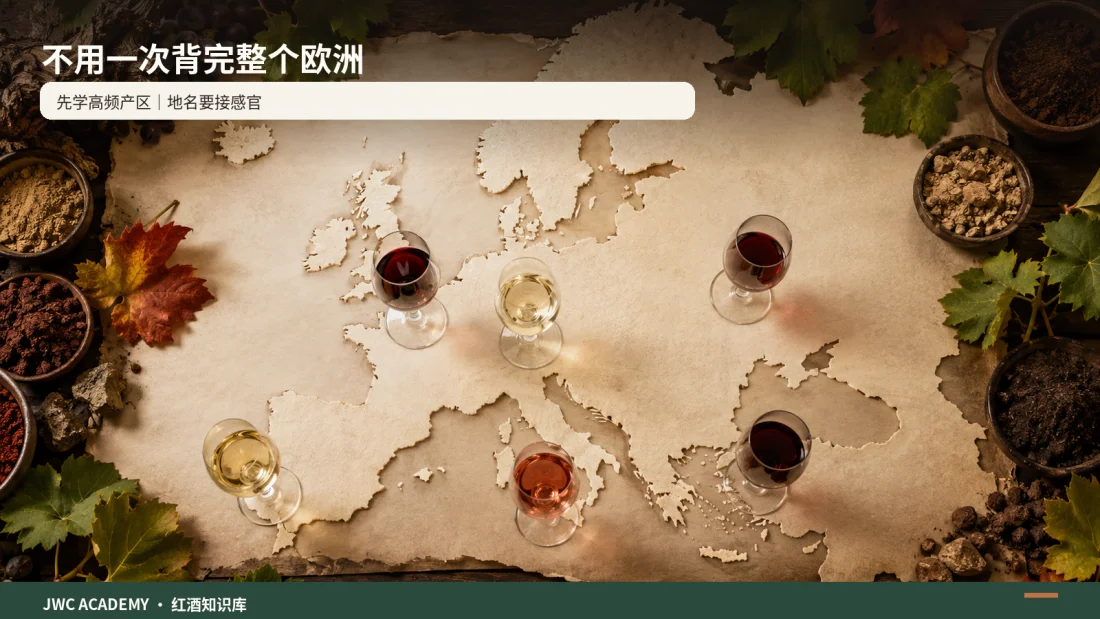
「不写葡萄就是故意装复杂」——产区体系本身就是信息结构;「记住地名就懂酒」——还得接上感官;「同产区就同味」——生产者和具体来源仍会拉开差距;「要背完欧洲地图才敢点酒」——先掌握几个高频产区就够用。放下这些包袱,你才敢相信自己圈出的那三层。
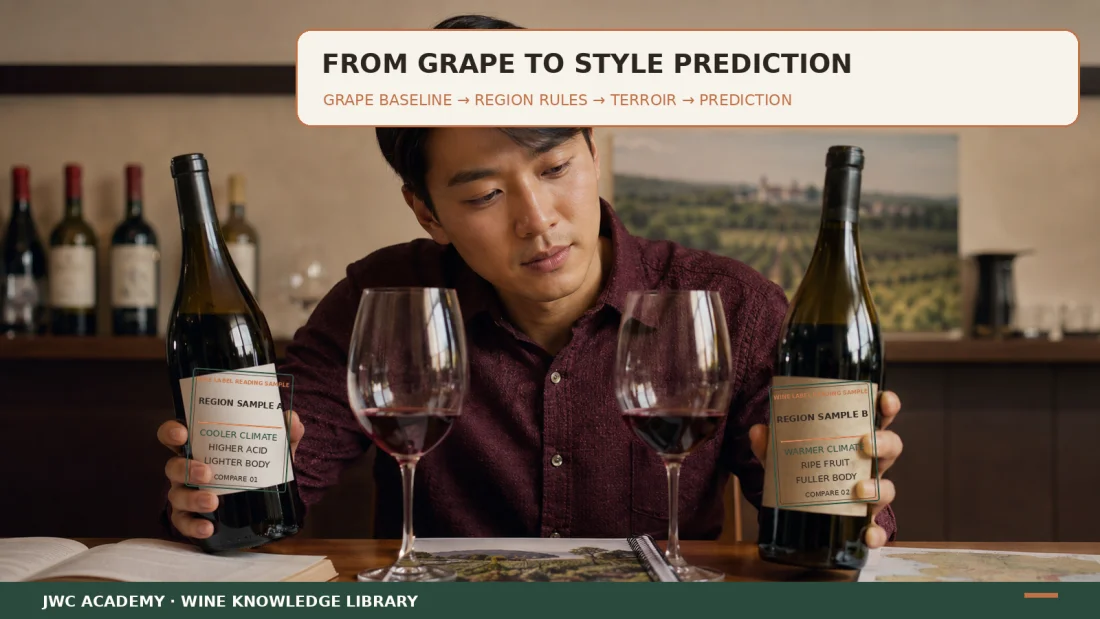
从葡萄到产区:学习顺序别反
初级阶段先把葡萄品种和感官结构(酸度、单宁、酒体)学稳,这是通用底座;进入旧世界高级阶段,再学产区与风土,把「地名 → 味道」的翻译练成直觉。这样你看到一张只写产区的酒标,也能合理预测,而不是每次都只能查手机。高级课卖的从来不是地名,而是这套翻译能力。
冷知识
波尔多的「Château」不一定真有城堡
酒标上的 Château(法文「城堡」)在波尔多其实是「酒庄」的传统叫法,法规并不要求真的有一座城堡。很多挂着 Château 名字的酒,背后只是普通农舍或酒窖建筑。所以下次看到 Château X,别急着脑补气派庄园——它更多是历史与命名传统,跟酒好不好没有必然关系。
常见问题
欧洲酒都不写葡萄吗?
不是。不同国家、产区和产品做法不同,只是很多经典产区更强调地名而不是品种。看到没写葡萄,先当成「以产区为入口」,而不是信息缺失。
Appellation 是品牌吗?
不是。它指受规则管理的地理产区/原产地体系,通常规定允许的品种和酿造方式。品牌是生产者,产区是这瓶酒的出身与规则框架。
完全不会法文、意大利文怎么办?
不用先学整门语言。先认标签层级(国家/地区/生产者)和几个高频产区词,够你在餐桌上做判断,再慢慢扩充。
为什么同产区不同品牌还会差很多?
产区只给范围。生产者、葡萄园位置、采收与酿造选择都会形成差异,所以读完地名,还要看生产者和更具体的来源。
JWC Wine Course新世界葡萄酒课程
新世界葡萄酒课程
一堂 2.5 小时 · 零基础友好
5 款实杯,比较澳洲、纽西兰、智利、阿根廷与南非。把葡萄品种、香气与结构连成一套下次还能用的选酒方法。小班到店品鉴,无需任何基础。
看课程详情或用 WhatsApp 问 Emily参考资料
- Wine & Spirit Education Trust (WSET) · wsetglobal.com
- 欧盟地理标志(PDO/PGI)· agriculture.ec.europa.eu
© JWC Academy · Wine Guides 红酒指南
Wine Knowledge · Reading the Label
JWC Wine Guide · 08 / 12
Why don’t European reds list the grape — and how do you read the bottle?
Lucas EngPrincipal, JWC Academy · World-stage barista · Wine educator
Quick answer
An Old World label that skips the grape isn’t hiding anything — it puts place first. Read country → region/appellation → producer, then let the region’s rules predict grape and style.
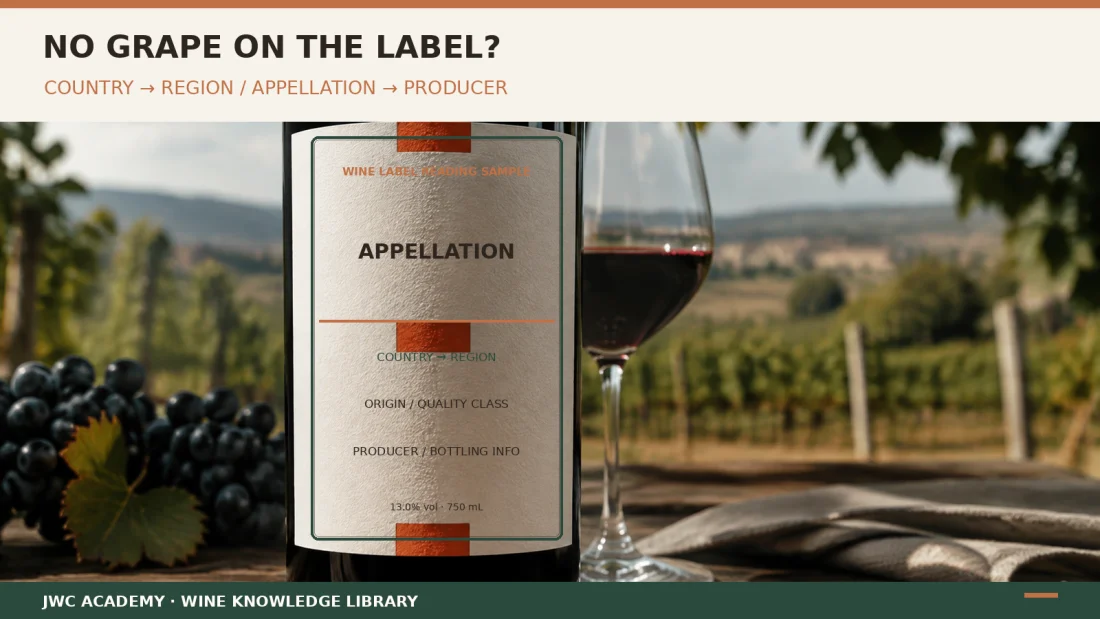
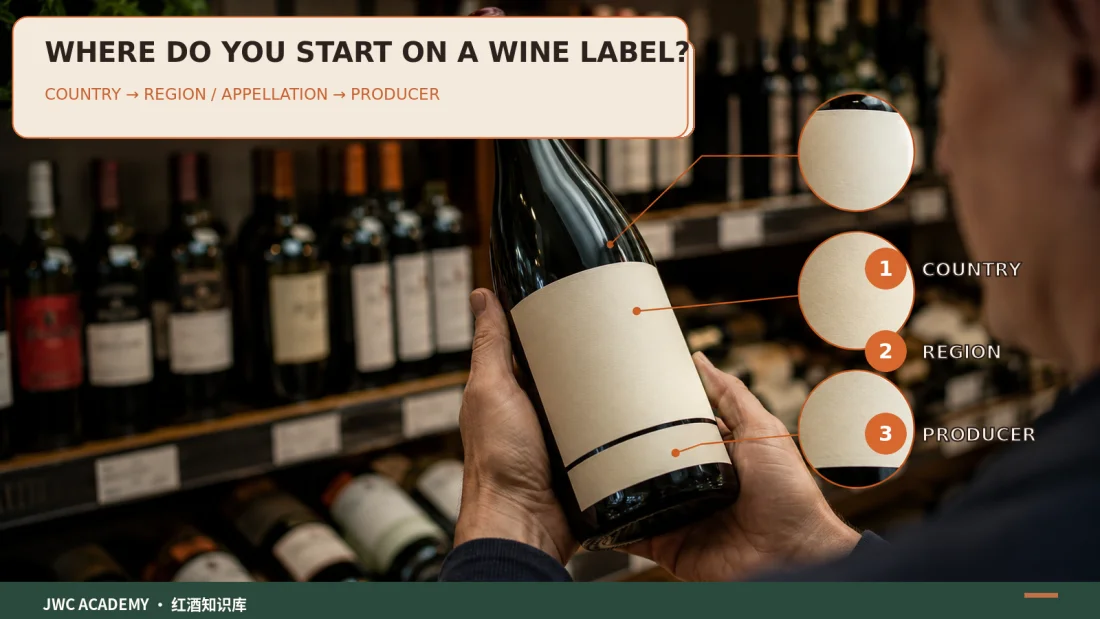
Compress the label into three layers: country, region, producer
A French or Italian label looks intimidating, but you only need three data points: which country, which region/appellation, and who made it. Circle those three layers first, then use regional knowledge to infer grape and style — far faster than hunting the label for an English grape name. With all three, you already hold the skeleton for reading the bottle.
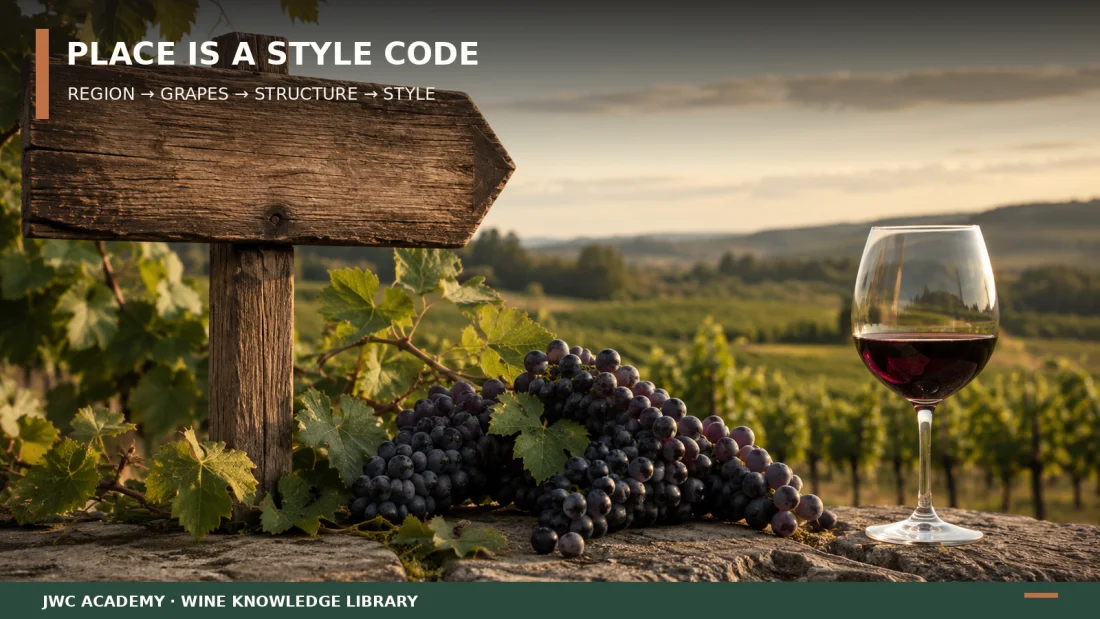
In the Old World, place is a style code
An Old World place name is rarely decoration. It usually ties to local law, permitted grapes and traditional winemaking — so reading the place is itself a predictive tasting skill. See ‘Chablis’ and an experienced drinker thinks unoaked Chardonnay; see ‘Bordeaux’ and thinks a Cabernet-and-Merlot-led blend. The name isn’t an obstacle; it’s compressed information.
Where labels trip you up, and what to fix first
Match the symptom to its cause and you know the next move:
| Symptom | Likely cause | First move |
|---|---|---|
| No grape name on the front label | Region-first labelling tradition | Circle the appellation / region first |
| A wall of French or Italian | Unsure which words matter | Split into country / region / producer |
| Know the place but can’t taste it | Geography not linked to senses | Taste a typical example, note structure |
| Same region, very different wines | Different producer, sub-region or tier | Add producer and a more specific source |
| Only ever Google the answer | No personal map of regions yet | Build region → grape → structure cards |
Level up · Intermediate
Why does the Old World name by region — and how does appellation “hide” the grape?
Old World appellation systems (France’s AOC, Italy’s DOC/DOCG and so on) typically fix the permitted grapes, yields and winemaking — so a place name packs grape and style into a single word. Classic cases: a Bordeaux label may show only the region, yet the rules pin it to a Cabernet Sauvignon- and Merlot-led blend; red Burgundy is essentially Pinot Noir, white Burgundy essentially Chardonnay. That’s why ‘Chablis’ reads, to someone who knows, as ‘unoaked Chardonnay from northern Burgundy’ — the place has already done the grape-guessing for them.
Place isn’t decoration — the producer decides the outcome
Reading the place is only step one. The region sets the range — permitted grapes and rough style; what actually lands in the glass is the producer’s choices in harvest timing, fermentation, extraction and ageing. So within one appellation, two estates can differ sharply. When you diagnose a label, narrow with the region first, then read the producer and any sub-region or tier — don’t stop at ‘it’s Bordeaux’ and assume you’ve read it.
Change one variable: the cover-the-label drill
Practise with two producers from the same region, or the same grape shown New World (by variety) versus Old World (by region). The steps are simple: cover the back label and circle the three layers; write down your predicted grape and structure; taste, then compare only prediction against reality; finally check the official regional info to fill gaps. Change one variable at a time and the progress shows.
Clear four label myths along the way
‘Skipping the grape is just showing off’ — the regional system is itself an information structure. ‘Memorise the place and you know the wine’ — you still need the senses. ‘Same region, same taste’ — producer and specific source still pull wines apart. ‘You must memorise all of Europe to order’ — a handful of high-frequency regions is plenty. Drop this baggage and you’ll trust the three layers you circled.
From grape to region — don’t reverse the order
First lock down grape varieties and sensory structure (acidity, tannin, body) — that’s the universal base. Then, at the advanced Old World stage, learn regions and terroir until translating ‘place → taste’ becomes instinct. Then a region-only label still lets you predict sensibly, instead of reaching for your phone every time. The advanced class never sells place names — it sells that translation skill.
Did you know
A Bordeaux “Château” doesn’t need an actual castle
On a label, Château (French for ‘castle’) is simply the traditional Bordeaux word for a wine estate — the rules don’t require a real castle. Plenty of names carrying ‘Château’ sit behind a modest farmhouse or cellar building. So next time you see Château X, don’t picture a grand palace — it’s mostly history and naming tradition, and says nothing certain about whether the wine is good.
FAQ
Do all European wines skip the grape?
No. Countries, regions and products vary — many classic regions just emphasise place over grape. When you see no grape, treat it as ‘place is the entry point,’ not as missing information.
Is an appellation a brand?
No. It’s a rule-governed geographic origin system that usually sets permitted grapes and winemaking. The brand is the producer; the appellation is the wine’s origin and rulebook.
What if I don’t read French or Italian at all?
You don’t need the whole language. Learn the label hierarchy (country/region/producer) and a few high-frequency region words — enough to judge at the table, then expand over time.
Why do two brands from the same region differ so much?
The region only sets the range. Producer, vineyard site, harvest and winemaking choices all create differences — so after the place, read the producer and a more specific source.
JWC Wine CourseNew World Wine Course
New World Wine Course
One 2.5-hour session · Beginner-friendly
Five wines side by side across Australia, New Zealand, Chile, Argentina and South Africa — turning grape, aroma and structure into a method you can use next time you buy. Small in-house tasting class, no experience needed.
See course detailsOr ask Emily on WhatsAppReferences
- Wine & Spirit Education Trust (WSET) · wsetglobal.com
- EU Geographical Indications (PDO/PGI) · agriculture.ec.europa.eu
© JWC Academy · Wine Guides