














中EN
红酒知识 · 品鉴入门
JWC 红酒指南 · 01 / 12
红酒喝起来又酸又涩,是酒有问题,还是我不会喝?
 Lucas Eng
JWC Academy 创办人 · 世界赛咖啡师 · 侍酒教学
先给答案
又酸又涩 ≠ 酒坏了,也 ≠ 你不会喝。酸 = 喝完更生津;涩 = 口腔发干、抓口。先把这两个感觉分开,再谈平衡。
先分清:酸让你生津,涩让你发干
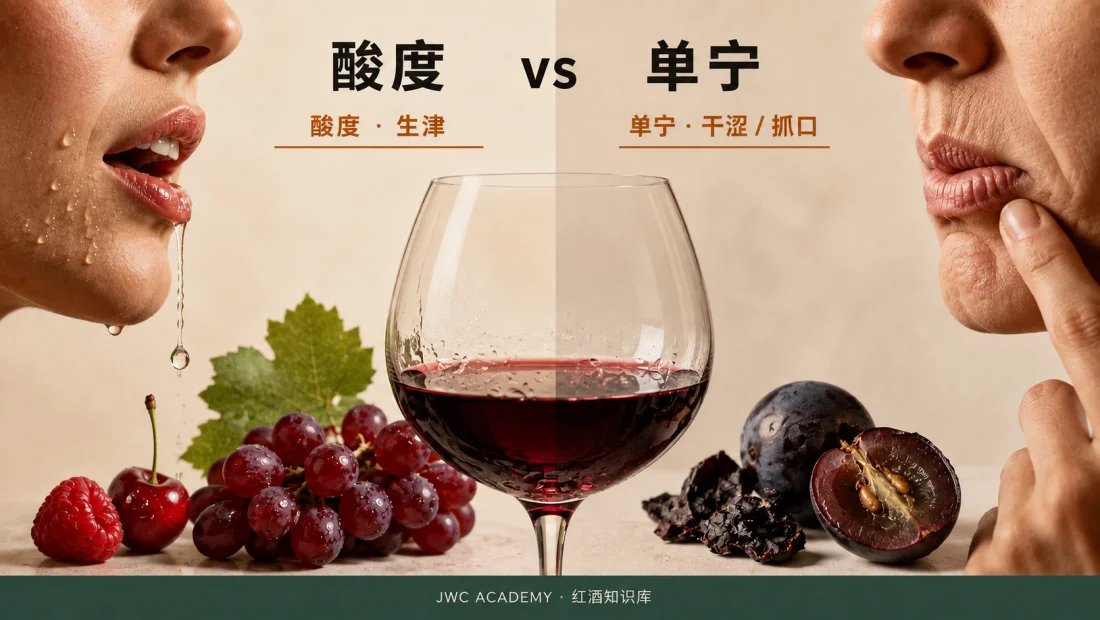
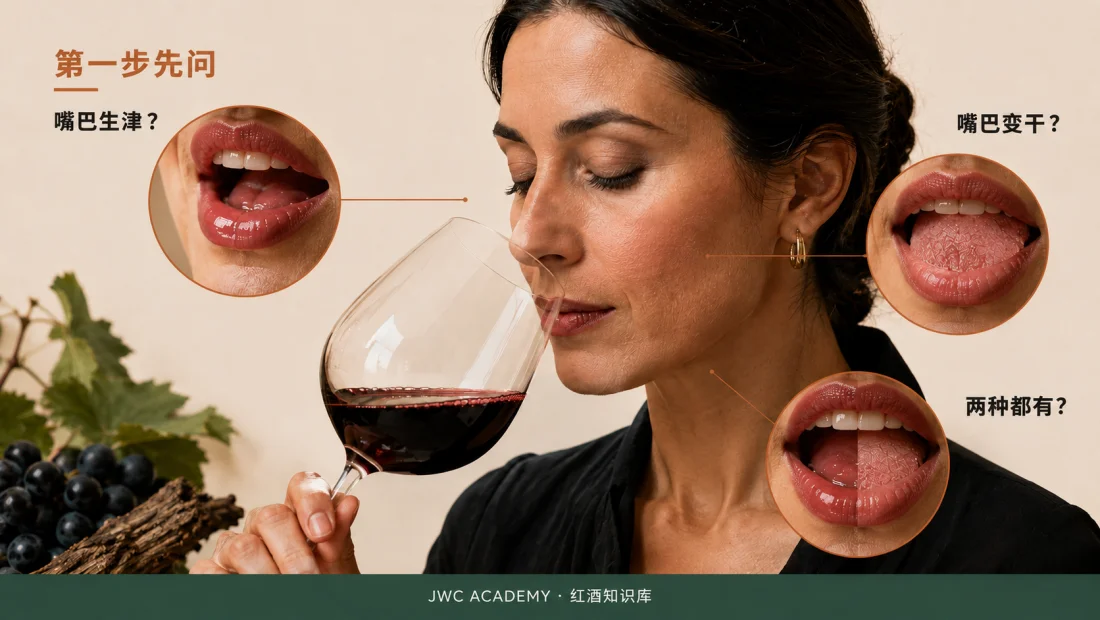
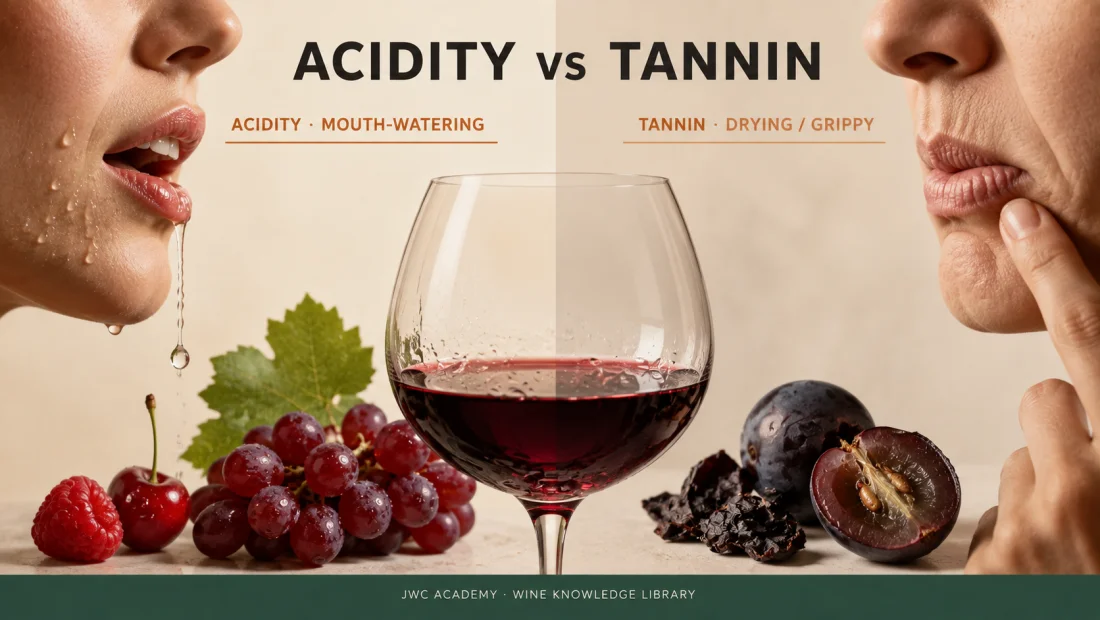
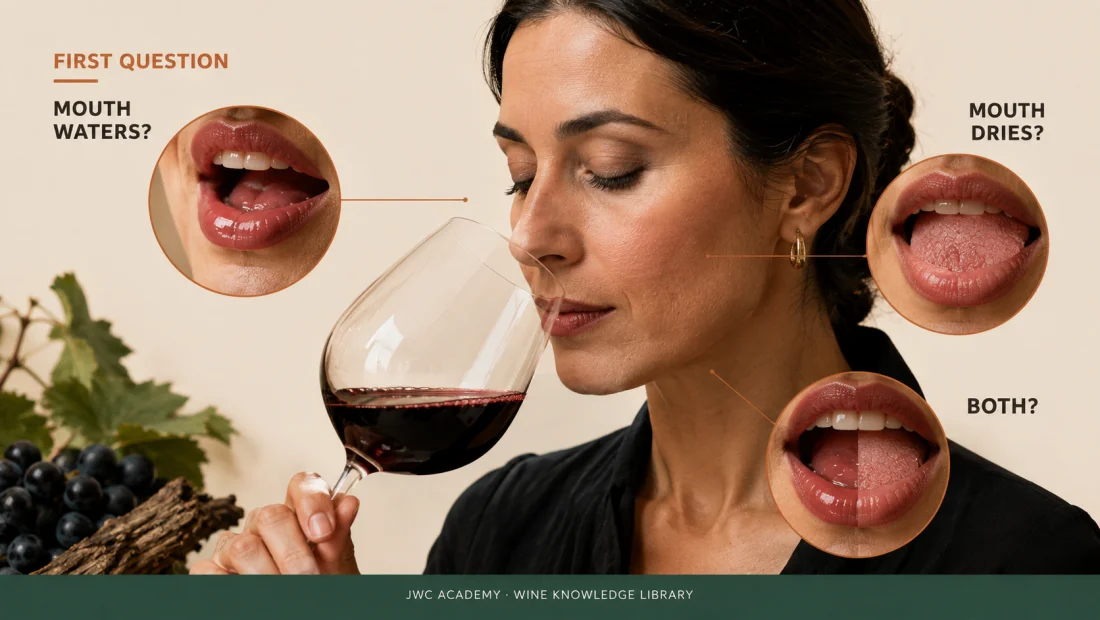
很多人把「酸」和「涩」混成同一种「不好喝」。其实它们是两个不同的身体信号:喝完一口,如果嘴里明显分泌口水,那是酸度(acidity);如果牙龈、舌面发干、有抓口感,那是单宁带来的涩(astringency)。能先把这两种感觉分开,就跨过了「我是不是不会喝」的第一关。
别急着背果味,先问自己一个问题
一听到「酸度」就逼自己找柠檬、青苹果,其实没必要。喝一口、等两三秒,只问一件事:口腔是在生津,还是在发干?WSET 的资料指出,多数葡萄酒总酸约在 5.5–8.5 g/L——酸本来就是正常结构,不是廉价标签。先用身体反应定位,比背一堆香气词更稳。
你感觉到什么,意味着什么
把感觉对上原因,就知道下一步该先调什么:
| 感觉 | 可能原因 | 先做什么 |
|---|---|---|
| 喝完马上很生津 | 酸度明显 | 先别判断好坏,看果味甜感跟不跟得上 |
| 牙龈、舌头发干、抓口 | 单宁 / 涩感 | 分辨细致还是粗糙,别把涩叫成苦 |
| 又生津又口干 | 酸度与单宁都明显 | 分别描述两者强度,再谈平衡 |
| 第一口只觉酒精冲 | 酒温可能偏高 | 稍微降温再复尝,别先怪单宁 |
| 配辛辣后特别涩 | 食物改变了口腔 | 离开食物,单独复尝这支酒 |
| 酸得像醋、气味异常 | 可能是 wine fault | 换杯或找专业人员确认,别赖品种 |
进阶 · 中级
为什么红肉、奶酪能「柔化」单宁?
单宁的涩,本质是单宁分子和你唾液里的蛋白质结合、把口腔那层润滑膜「拉」走,所以你觉得干、觉得抓口。懂了这一点,配餐逻辑就通了:红肉、硬奶酪富含蛋白质,食物里的蛋白会先跟单宁结合,留到你舌头上的单宁就少了——单宁重的年轻赤霞珠配一块牛排会明显变顺,不是错觉。反过来,单宁本来就轻的酒配高蛋白,柔化空间小,差别就没那么戏剧化。

酸、涩、酒精、fault:四条路分开走
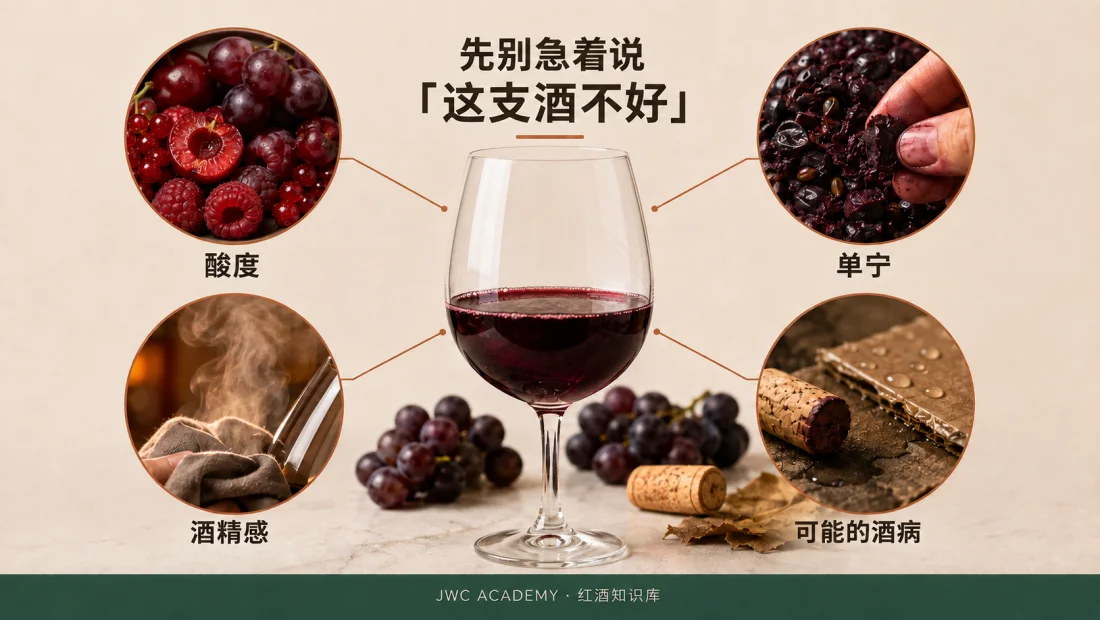
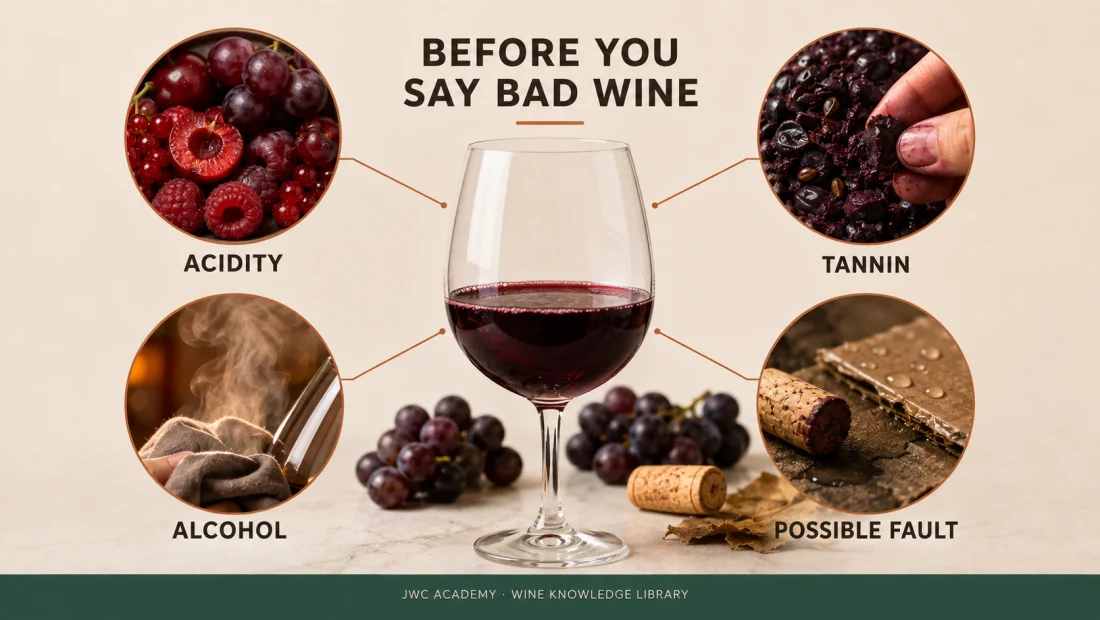
一杯酒喝起来「怪」,可能来自四个不同方向:酸度高、单宁明显、酒精偏冲,或是真正的酒病(wine fault,如醋味、湿纸板味)。前三种是正常的风格差异,只有最后一种才需要换杯或找人确认。别把所有不适都归成「这支坏了」或「这支太涩」。
一次只改一个变量(尤其在马来西亚)
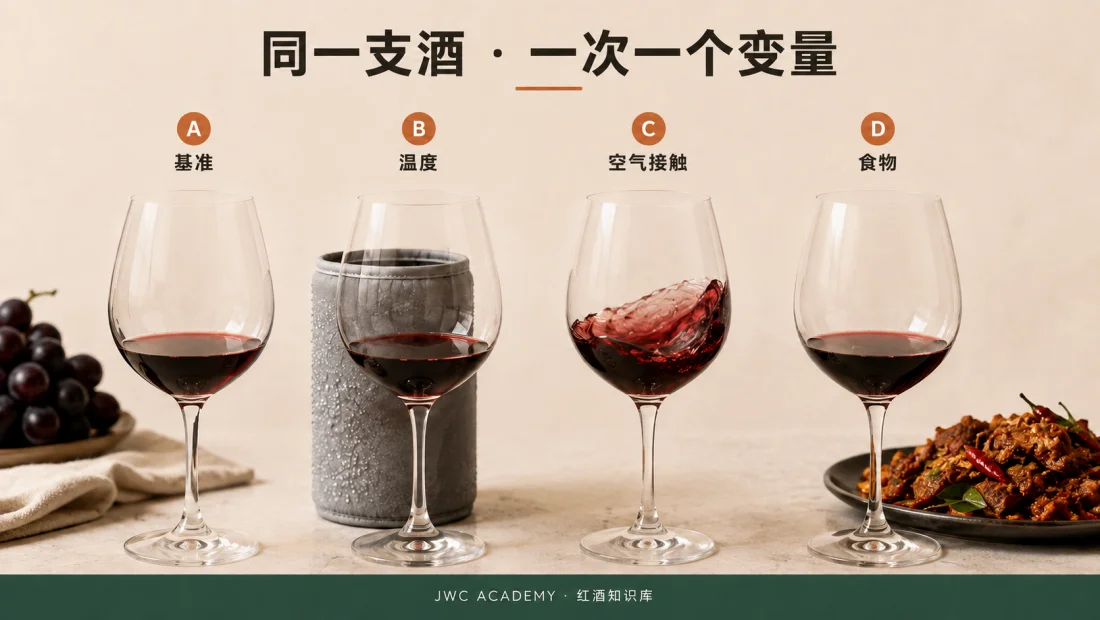
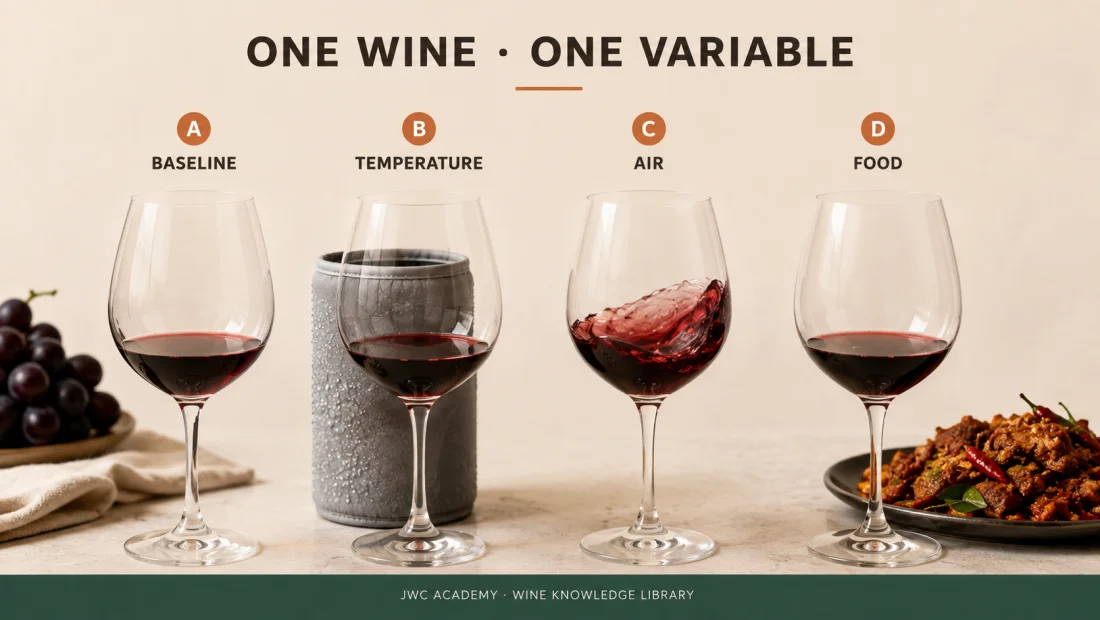
「红酒室温喝」这句话在马来西亚会误导——房间常年 28–31°C,酒精和松散感会被放大。练习时用同一支酒、同一个杯,一次只改一样:先记基准,再稍微降温复尝,再谈空气接触,最后才配食物。不需要醒酒器和温度计,手机计时就够。
顺手拆掉四个「我不会喝」的迷思
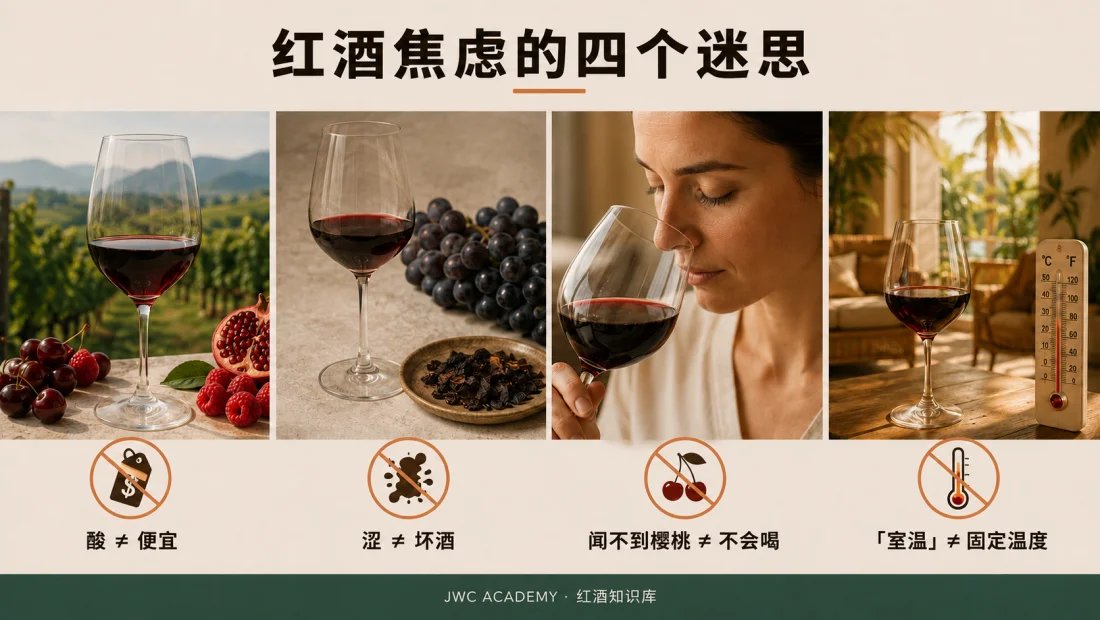
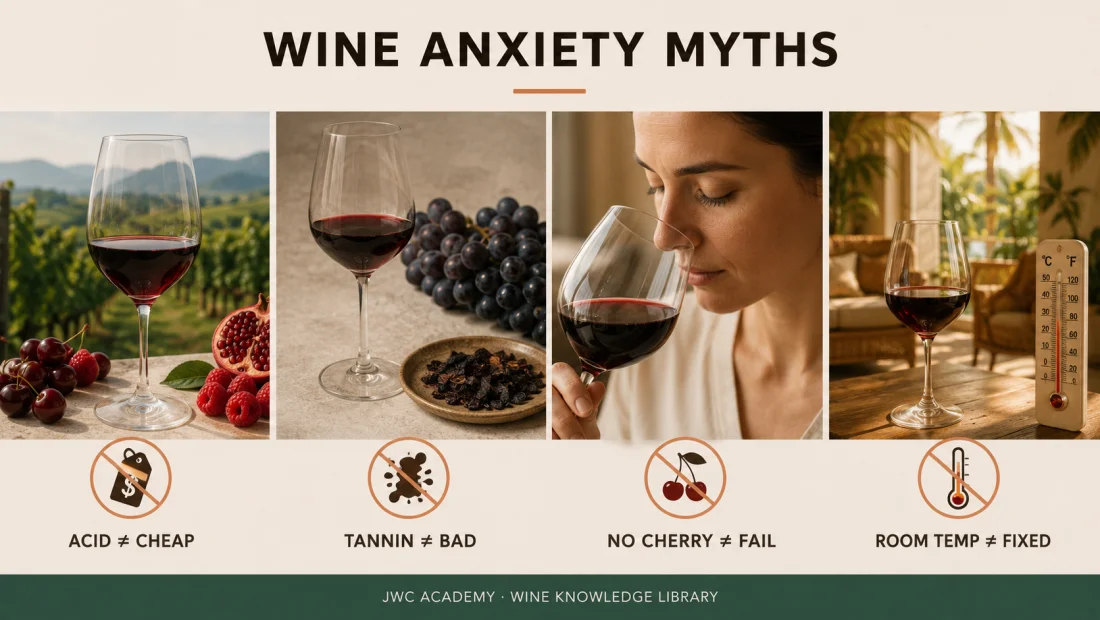
酸=廉价、涩=坏酒、闻不到果味=不懂酒、红酒都要「室温」——这四个说法都不成立。酸和涩是正常结构,感官判断可以从身体反应入门,「室温」更不是全球统一的数字。放下这些包袱,你才敢相信自己的第一感觉。
从「我只觉得酸」到「我知道该看什么」
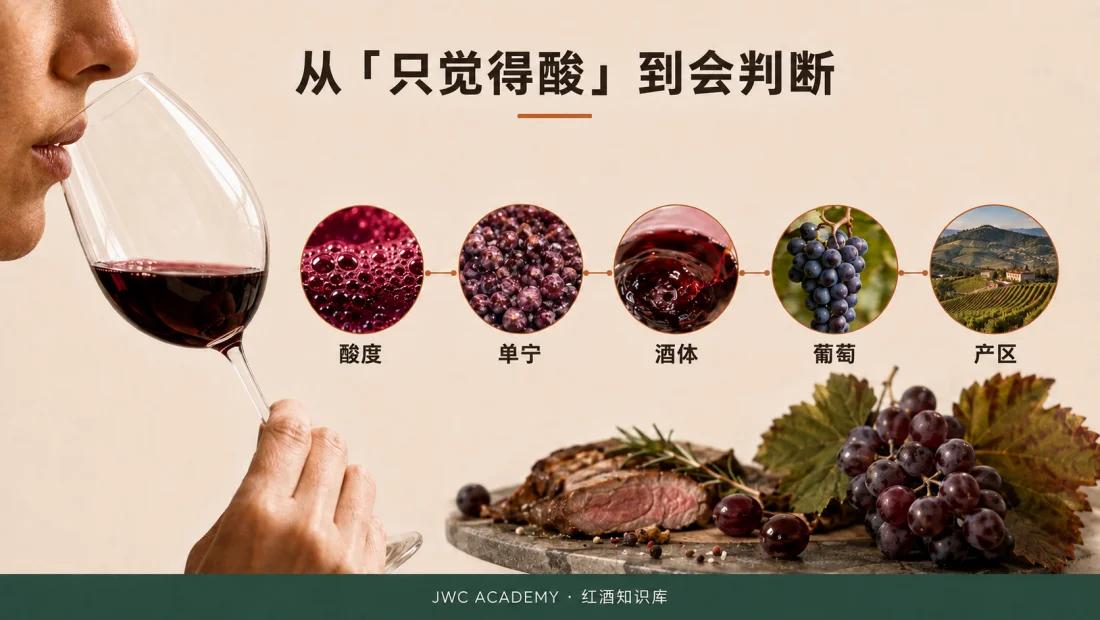
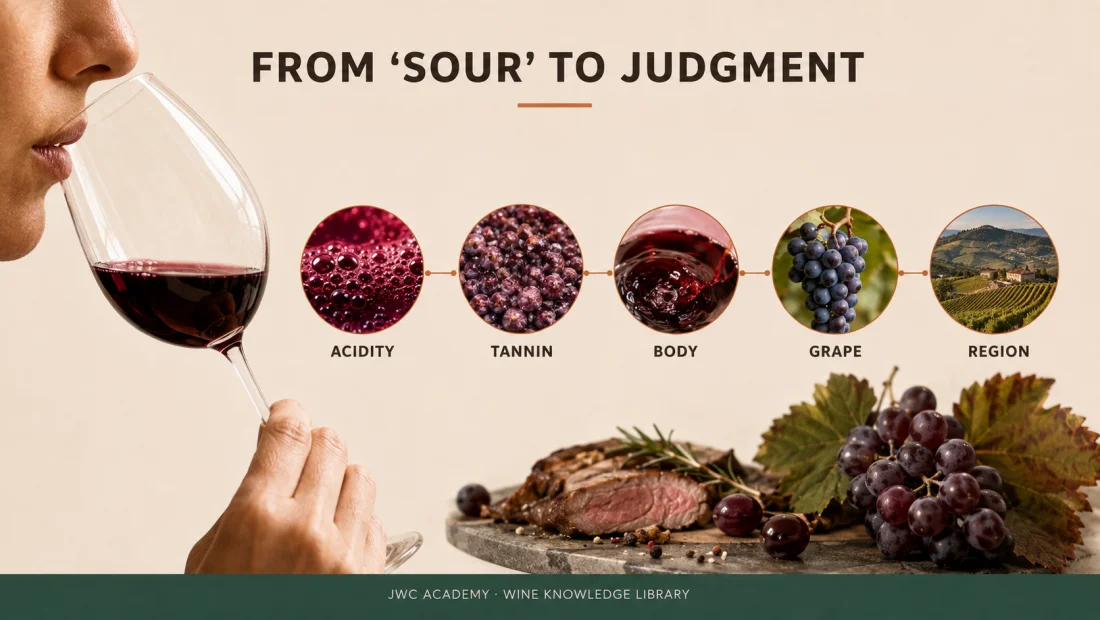
「我觉得酸」已经是有效信息。下一步只是把酸度、单宁、酒体、香气放进同一个判断系统:新世界酒先建立品种与感官基准,再进旧世界,用产区和气候去预测风格。目标不是在饭桌上背术语,而是拿到一杯酒,你清楚自己为什么这样判断。
冷知识
同一支酒,早上和晚上喝会不一样
不是你的错觉:人对酸和苦的敏感度一天里会波动,刚吃过甜的或咸的食物,也会短暂改变味觉阈值——所以饭后那杯「变甜了」的酒,其实是你的嘴变了,酒没变。这也是为什么正式盲品多安排在上午、且要求评审空口清水。下次觉得「今天这支怎么特别涩」,先想想自己刚吃了什么。
常见问题
红酒酸是不是代表坏了?
不是。酸度是葡萄酒的正常结构。真正的 fault 要看异常香气、味道与整体状态,不能只靠「酸」一个字判断。
单宁是不是就是苦味?
不是。单宁带来的 astringency 更接近口腔干燥、抓口的触觉;苦是味觉。两者可同时出现,但不是同一件事。
同一支酒朋友觉得很涩,我却还好?
个体感官敏感度与唾液条件都有差异。先建立自己的校准语言,再用并排比较逐步对齐。
没有醒酒器、温度计还能练吗?
可以。相同杯型、同一支酒、手机计时,一次只改一个变量(温度、空气、食物)。
JWC Wine Course新世界葡萄酒课程
新世界葡萄酒课程
一堂 2.5 小时 · 零基础友好
5 款实杯,比较澳洲、纽西兰、智利、阿根廷与南非。把葡萄品种、香气与结构连成一套下次还能用的选酒方法。小班到店品鉴,无需任何基础。
看课程详情或用 WhatsApp 问 Emily参考资料
- Wine & Spirit Education Trust (WSET) · wsetglobal.com
- 葡萄酒单宁与涩感的相关研究(PubMed)· pubmed.ncbi.nlm.nih.gov
© JWC Academy · Wine Guides 红酒指南
Wine Knowledge · Tasting Basics
JWC Wine Guide · 01 / 12
Red wine tastes sour and astringent — is the wine faulty, or is it me?
Lucas EngPrincipal, JWC Academy · World-stage barista · Wine educator
Quick answer
Sour + drying doesn’t mean the wine is bad, and it doesn’t mean you can’t taste. Acidity makes your mouth water; tannin feels drying and grippy. Separate the two before judging balance.
First, separate them: acid makes you water, tannin dries you
Most people lump “sour” and “astringent” into one “bad” feeling. They are two different body signals: if your mouth clearly waters after a sip, that’s acidity; if your gums and tongue feel dry and grippy, that’s tannin-driven astringency. Telling these two apart is the first step past “maybe I just can’t taste wine.”
Don’t chase fruit words — ask one question first
The moment you hear “acidity” you don’t need to hunt for lemon or green apple. Take a sip, wait two or three seconds, and ask one thing: is my mouth watering, or drying? WSET notes most wines carry roughly 5.5–8.5 g/L total acidity — acid is normal structure, not a cheapness label. Anchoring on the body’s reaction is steadier than memorising aromas.
What you feel, and what it means
Match the sensation to its cause and you know what to adjust first:
| Sensation | Likely cause | First move |
|---|---|---|
| Mouth waters right after a sip | Noticeable acidity | Don’t judge yet — see if fruit & sweetness keep up |
| Gums / tongue dry, grippy | Tannin / astringency | Tell fine from coarse; don’t call it bitter |
| Both watering and drying | Acidity + tannin both high | Describe each separately, then talk balance |
| First sip is just alcohol burn | Wine may be too warm | Cool slightly and re-taste before blaming tannin |
| Extra astringent after spicy food | Food shifted your palate | Re-taste the wine on its own first |
| Vinegar-sour, off aromas | Possible wine fault | Confirm with another glass / a pro, not the grape |
Level up · Intermediate
Why do red meat and cheese “soften” tannin?
Astringency is really tannin molecules binding the proteins in your saliva and stripping away the mouth’s lubricating film — which is why it feels dry and grippy. Once you get that, food pairing makes sense: red meat and hard cheese are protein-rich, so their protein binds the tannin first and less reaches your tongue. A firm young Cabernet genuinely turns smoother next to a steak — it’s not your imagination. A naturally light-tannin wine has little to soften, so the effect is far less dramatic.
Acid, tannin, alcohol, fault: keep the four routes apart
When a glass tastes “off,” it can come from four different directions: high acidity, firm tannin, hot alcohol, or a genuine wine fault (vinegar, wet cardboard). The first three are normal style differences; only the last needs a second glass or a second opinion. Don’t fold every discomfort into “it’s bad” or “it’s too astringent.”
Change one variable at a time (especially in Malaysia)
“Serve red at room temperature” misleads in Malaysia — rooms sit at 28–31°C, which exaggerates alcohol and looseness. Practise with the same wine and the same glass, changing one thing at a time: note a baseline, re-taste slightly cooler, then air, then food. No decanter or thermometer needed — a phone timer is enough.
Clear four “I can’t taste” myths along the way
Sour = cheap, astringent = bad, can’t smell fruit = clueless, all reds want “room temperature” — none of these hold up. Acid and tannin are normal structure, tasting can start from body reactions, and “room temperature” is not one global number. Drop this baggage and you’ll trust your own first impression.
From “I just taste sour” to “I know what to look at”
“I taste sour” is already useful information. Next you just fit acidity, tannin, body and aroma into one system: build grape and sensory baselines from New World wines, then use region and climate to predict Old World styles. The goal isn’t reciting terms at dinner — it’s knowing why you judge a glass the way you do.
Did you know
The same wine tastes different morning vs night
It’s not in your head: our sensitivity to sour and bitter drifts across the day, and eating something sweet or salty briefly shifts your taste thresholds — so the glass that “turned sweeter” after dinner is really your mouth changing, not the wine. It’s also why formal blind tastings are usually held in the morning with judges rinsing on plain water. Next time a wine seems “extra astringent today,” first ask what you just ate.
FAQ
Does sour wine mean it has gone bad?
No. Acidity is a normal structural part of wine. A real fault shows in off aromas, taste and overall state — never from the word “sour” alone.
Is tannin the same as bitterness?
No. Tannin-related astringency is a drying, grippy touch sensation; bitterness is a taste. They can co-occur but are not the same thing.
Why does a friend find a wine astringent while I don’t?
Individual palate sensitivity and saliva differ. Build your own calibration language first, then align via side-by-side tasting.
Can I practise tasting without a decanter or thermometer?
Yes. Same glass, same wine, a phone timer — change only one variable at a time (temperature, air, then food).
JWC Wine CourseNew World Wine Course
New World Wine Course
One 2.5-hour session · Beginner-friendly
Five wines side by side across Australia, New Zealand, Chile, Argentina and South Africa — turning grape, aroma and structure into a method you can use next time you buy. Small in-house tasting class, no experience needed.
See course detailsOr ask Emily on WhatsAppReferences
- Wine & Spirit Education Trust (WSET) · wsetglobal.com
- Research on wine tannin & astringency (PubMed) · pubmed.ncbi.nlm.nih.gov
© JWC Academy · Wine Guides