










中EN
红酒知识 · 餐厅点酒
JWC 红酒指南 · 11 / 12
餐厅让你先试一口红酒,到底在试什么?不喜欢可以换吗?
 Lucas Eng
JWC Academy 创办人 · 世界赛咖啡师 · 侍酒教学
先给答案
那一口检查的是 酒况(condition),不是 你喜不喜欢这个风格。确认瓶子对不对、闻有没有异常、小口确认;只有真有 fault,更换才谈得上。
记住三个动作:确认、闻、喝
服务员倒那一口,不是考你的品味,而是让你确认三件事。先看瓶子——酒标、生产者、年份跟你点的是不是同一支;再闻——有没有湿纸板、霉味这类明显异常;最后小口——确认整体状态正常。你不需要转杯十几下,也不用当场背一段 tasting notes,三个动作十几秒就够。
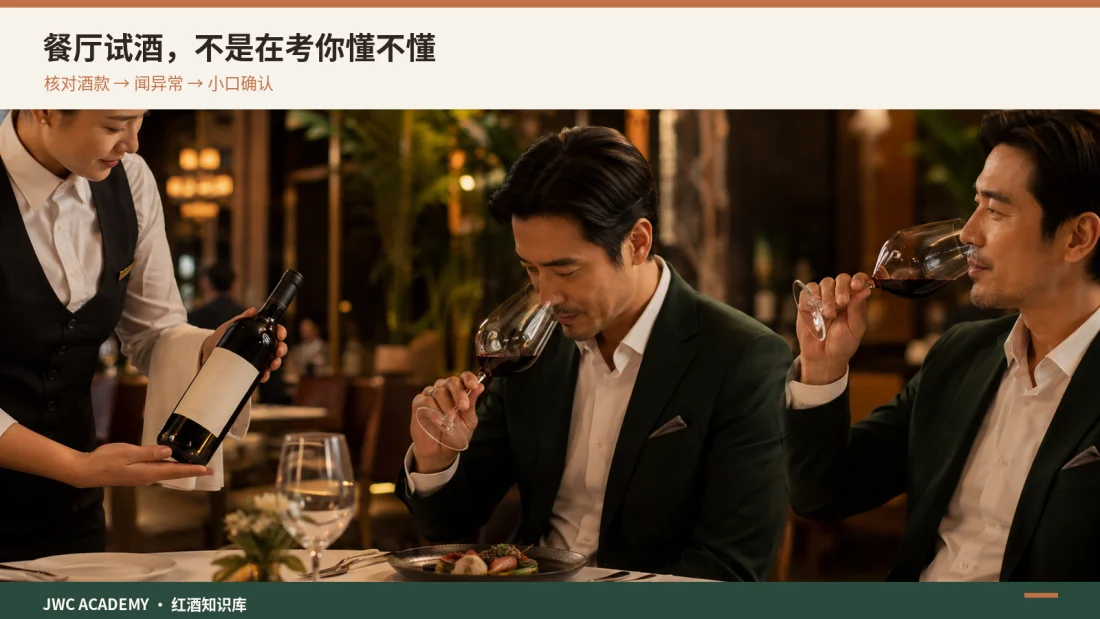
试的是酒况,不是你的喜好
这一口的核心是 condition(酒况),不是 preference(喜好)。Cork taint、明显氧化或其他缺陷,才是要挑出来的东西;「我今天不太爱 Cabernet」通常不算酒有问题。分清这条线很重要:真有 fault,多数餐厅愿意换;只是不合口味,能不能换要看餐厅政策,不是理所当然。
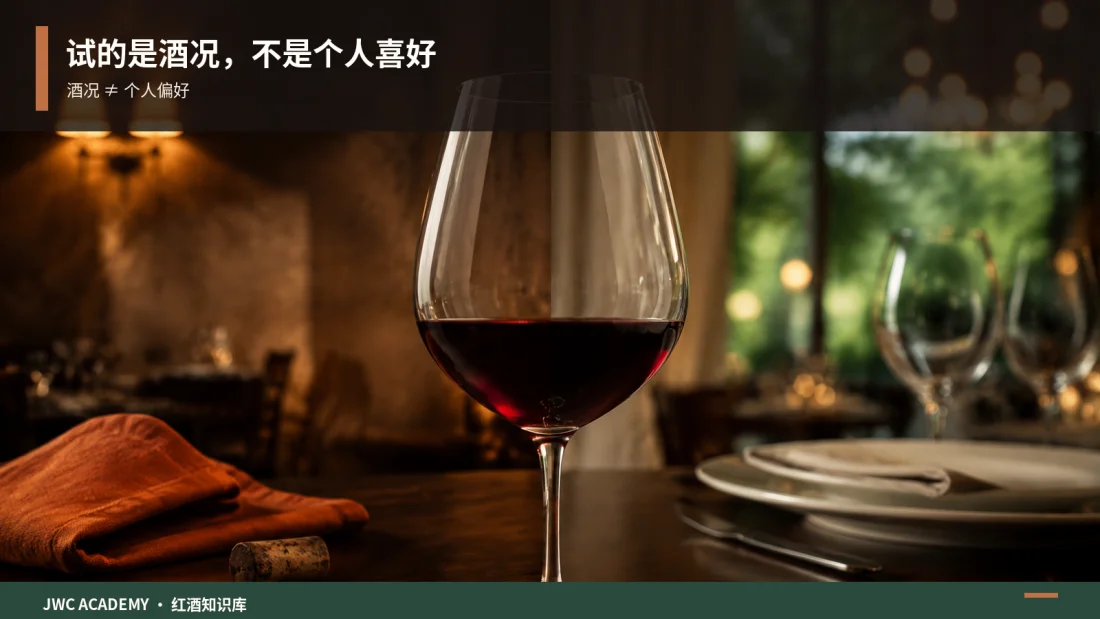
你遇到什么,先动哪一个
把症状对上原因,就知道下一步该先做什么:
| 症状 | 可能原因 | 先做什么 |
|---|---|---|
| 湿纸板/霉味,果香很弱 | 可能 cork taint | 请工作人员一起复核 |
| 比预期酸,但没明显 fault | 多半只是风格 | 先分清「不喜欢」与「有缺陷」 |
| 瓶子和点单不一样 | 服务/点单出错 | 先核对酒标 |
| 杯子本身有洗涤剂味 | 杯具问题 | 请换干净杯再复核 |
| 不确定自己有没有闻错 | 自信不足 | 用具体描述请 staff 一起判断 |
进阶 · 中级
这个「试一口」的仪式,到底在防什么?
侍酒试酒的老传统,最初是主人先尝、向客人保证酒没坏;今天它主要防两类缺陷。一是 cork taint(软木塞污染),元凶是一种叫 TCA 的化合物,人对它极其敏感,微量就能压低果香、带出湿纸板与霉味。二是氧化,果香变钝、出现类似雪莉或烂苹果的气息,颜色偏暗。这两类才算「酒坏了」,属于合理更换的范围;而「太酸」「单宁太重」多半只是风格,不构成退换理由。分清 fault 与风格,才是这一口真正的价值。

说具体症状,比说「这酒怪怪的」有用
判断力不是永远自己下结论,而是知道什么时候、怎么请人复核。第一步其实是核对瓶子,酒标对不对比先秀闻香更重要。真闻到异常,就描述具体:「我闻到湿纸板,而且果香很弱,可以帮我确认吗?」——这已经足够清楚。不确定自己有没有闻错,就用具体描述请工作人员一起判断,不丢脸。
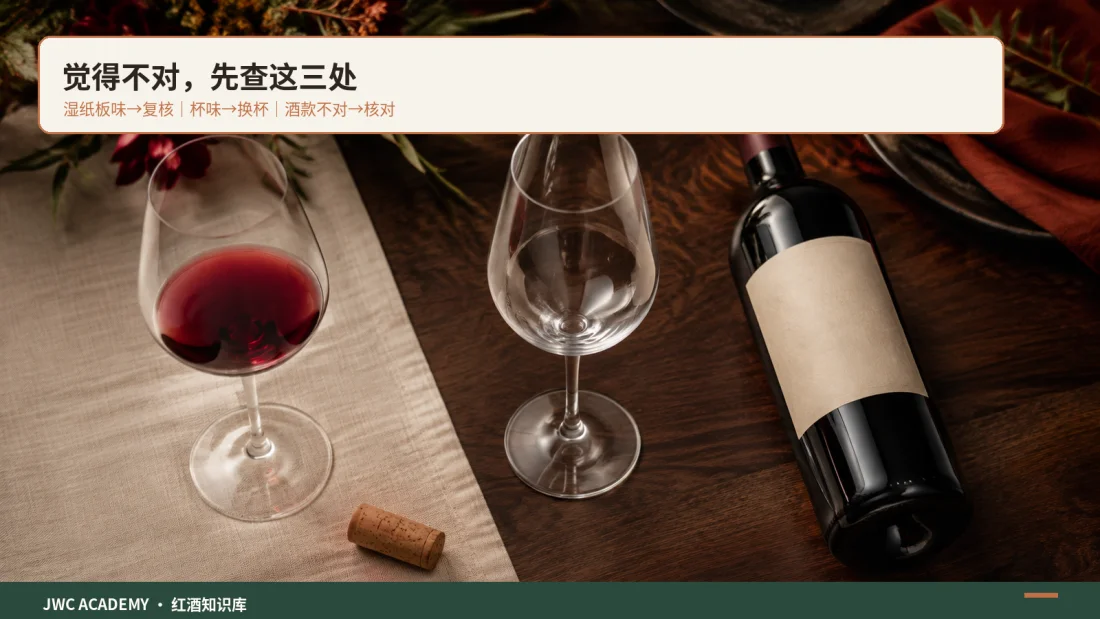
怀疑有问题,一次只换一个变量
觉得不对劲时,别急着加冰、醒酒或调温度去「盖」掉——那会把线索一起盖掉。顺序是:A 原杯先闻;B 同一瓶换一个干净杯再闻,排除洗涤剂或杯子味;C 仍然异常,请工作人员复核;D 确认只是风格、不是 fault,再决定要不要继续喝。一次只改一样,才看得清到底是酒的问题还是杯子的问题。
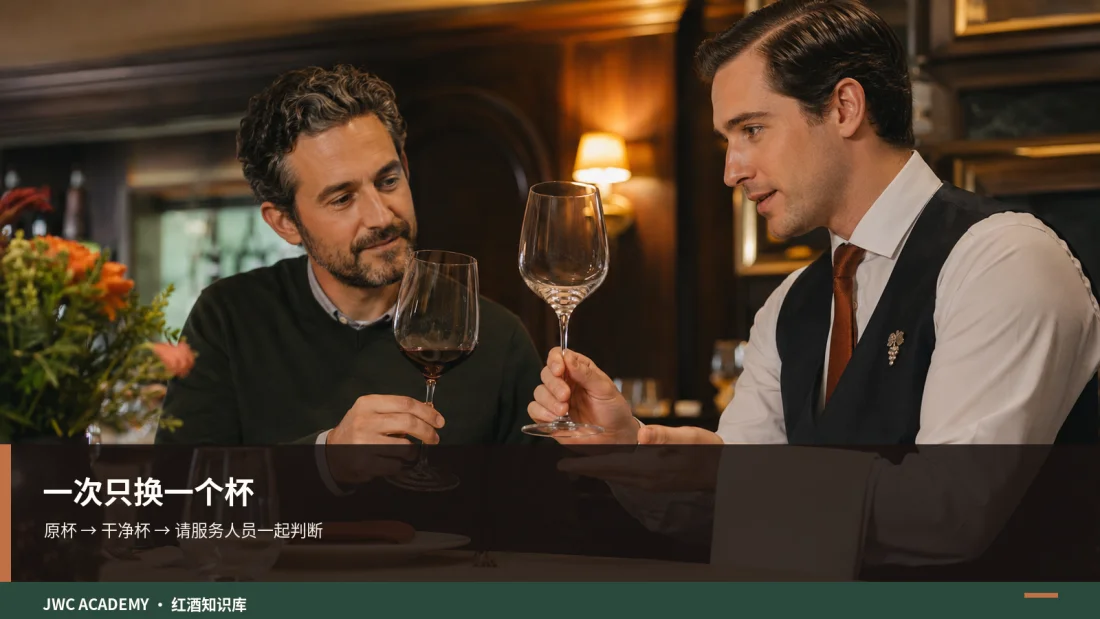
顺手拆掉四个试酒迷思
「试一口就是看我喜不喜欢」——核心是酒况;「要讲很多术语才专业」——具体描述异常就够;「不喜欢就一定能退」——退不退看有没有 fault 加餐厅政策;「没把握就别开口」——可以礼貌请人复核。放下这四个包袱,你才敢相信自己的鼻子。
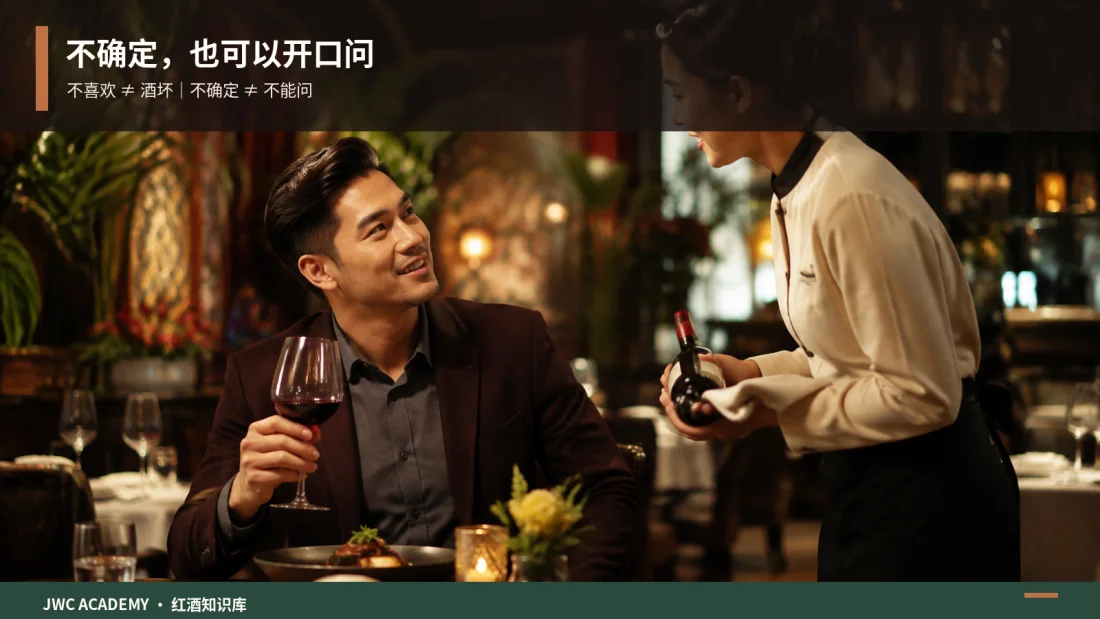
饭桌不出丑,靠流程不靠演
餐桌上的从容,不是背台词,是有一套判断流程。系统品鉴先让你认识正常的酸度、单宁和香气,建立「正常长什么样」的基准,再学会识别偏离。以后服务员倒那一口,你不必表演专业:你清楚自己在检查什么,也知道什么时候该请人复核。
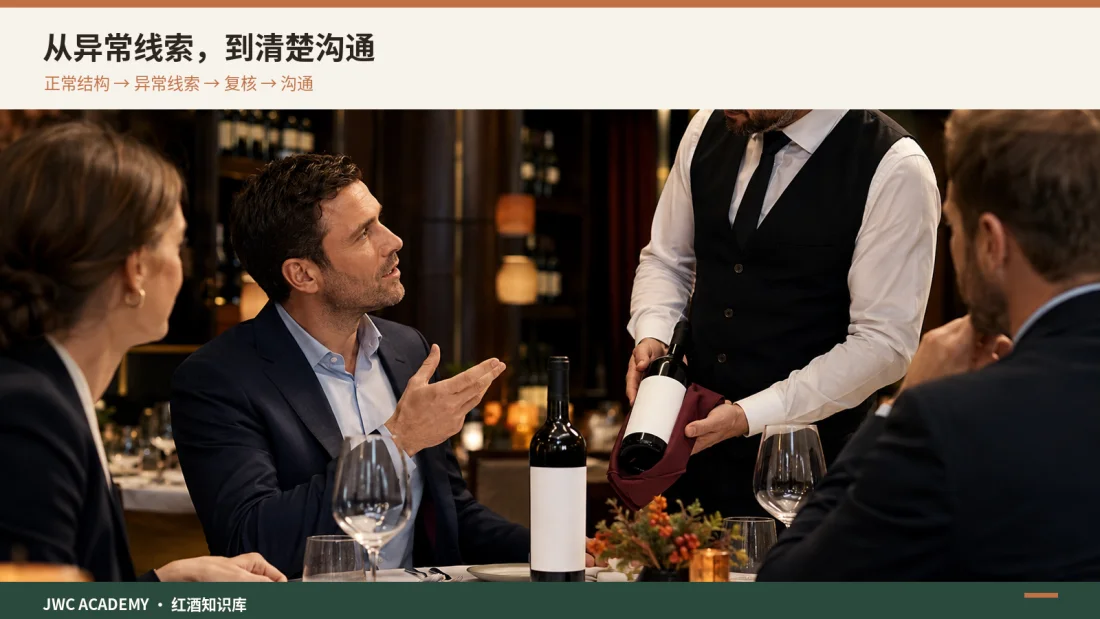
冷知识
服务员把软木塞放你面前,不是要你闻
很多人拿起塞子猛闻,其实那不是重点。塞子是让你「看」的:看它有没有干裂、渗漏,看上面压印的酒庄名跟酒标对不对得上。真正判断酒况,还是靠杯子里那口酒的气味。冷知识:cork taint 只来自软木塞,所以螺旋盖封的酒基本不会「corked」——下次喝到螺旋盖,别再担心这一味。
常见问题
试酒时要先摇杯吗?
可以轻旋帮助闻香,但这不是礼仪考试。核心是确认酒况正常,不是表演动作。
觉得太酸可以换吗?
太酸多半只是风格,不等于 fault。没有明显缺陷时,能不能换取决于餐厅政策,不是理所当然。
怀疑 corked 应该怎么说?
直接描述:闻到湿纸板、霉味,或果香被明显压低,并请工作人员一起复核,不用背术语。
试酒一定要买单的人来吗?
不一定。可以由桌上更愿意负责判断的人尝,具体服务流程由餐厅安排。
JWC Wine Course新世界葡萄酒课程
新世界葡萄酒课程
一堂 2.5 小时 · 零基础友好
5 款实杯,比较澳洲、纽西兰、智利、阿根廷与南非。把葡萄品种、香气与结构连成一套下次还能用的选酒方法。小班到店品鉴,无需任何基础。
看课程详情或用 WhatsApp 问 Emily参考资料
- Australian Wine Research Institute (AWRI) · awri.com.au
- Wine & Spirit Education Trust (WSET) · wsetglobal.com
© JWC Academy · Wine Guides 红酒指南
Wine Knowledge · Ordering Out
JWC Wine Guide · 11 / 12
That first taste at a restaurant — what are you actually checking, and can you swap the bottle?
Lucas EngPrincipal, JWC Academy · World-stage barista · Wine educator
Quick answer
The first pour checks the wine’s condition, not whether you like the style. Confirm it’s the right bottle, smell for obvious faults, take a small sip — a swap is on the table only if there’s a genuine fault.
Three moves: confirm, smell, sip
That pour isn’t a taste exam — it lets you confirm three things. First look: do the label, producer and vintage match what you ordered? Then smell: any obvious wet-cardboard or musty off-note? Finally a small sip to check the wine reads as normal. You don’t need to swirl a dozen times or recite tasting notes — the three moves take about fifteen seconds.
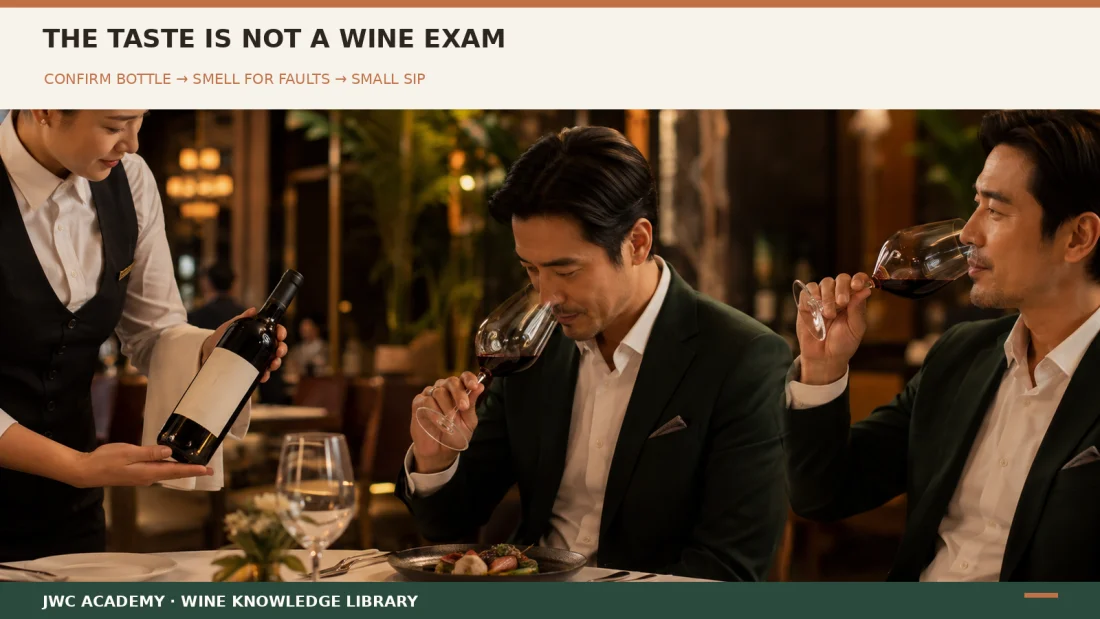
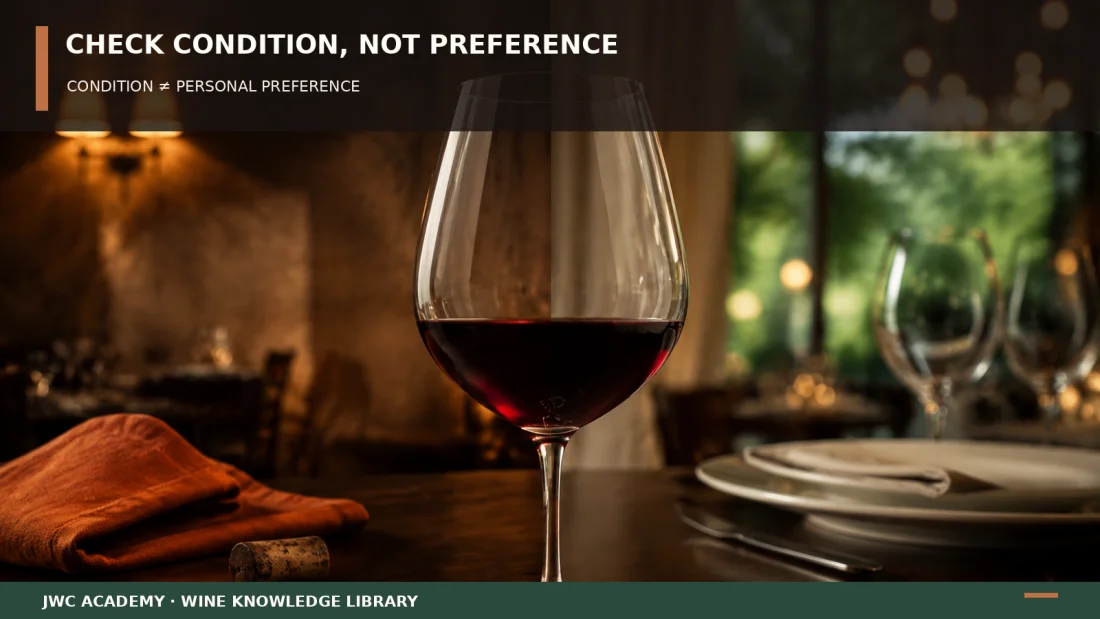
You’re checking condition, not preference
The point of this sip is condition, not preference. Cork taint, obvious oxidation or another defect are what you’re looking for; “I’m just not feeling Cabernet tonight” usually isn’t a fault. That line matters: with a genuine fault most restaurants will replace the bottle; simply disliking the style is subject to the restaurant’s policy, not a guaranteed swap.
What you run into, and what to fix first
Match the symptom to its cause and you know the next move:
| Symptom | Likely cause | First move |
|---|---|---|
| Wet-cardboard / musty, fruit very faint | Possible cork taint | Ask staff to double-check with you |
| Sharper than expected, no clear fault | Probably just the style | Separate “dislike” from “defect” |
| Bottle doesn’t match your order | Service / ordering slip | Check the label first |
| Glass itself smells of detergent | Glassware issue | Ask for a clean glass and re-check |
| Not sure if you misread the smell | Low confidence | Describe it and ask staff to judge with you |
Level up · Intermediate
That “first sip” ritual — what’s it really guarding against?
The old sommelier ritual began with the host tasting first to assure guests the wine was sound; today it mainly guards against two faults. One is cork taint, driven by a compound called TCA that we detect at tiny amounts — it flattens the fruit and brings wet-cardboard, musty notes. The other is oxidation: dulled fruit, a sherry-like or bruised-apple smell, a browner colour. Both mean “the wine is off” and are fair grounds for replacement — whereas “too sour” or “too tannic” is usually just style, not a reason to send it back. Telling fault from style is what this sip is really worth.
Naming the symptom beats “this tastes off”
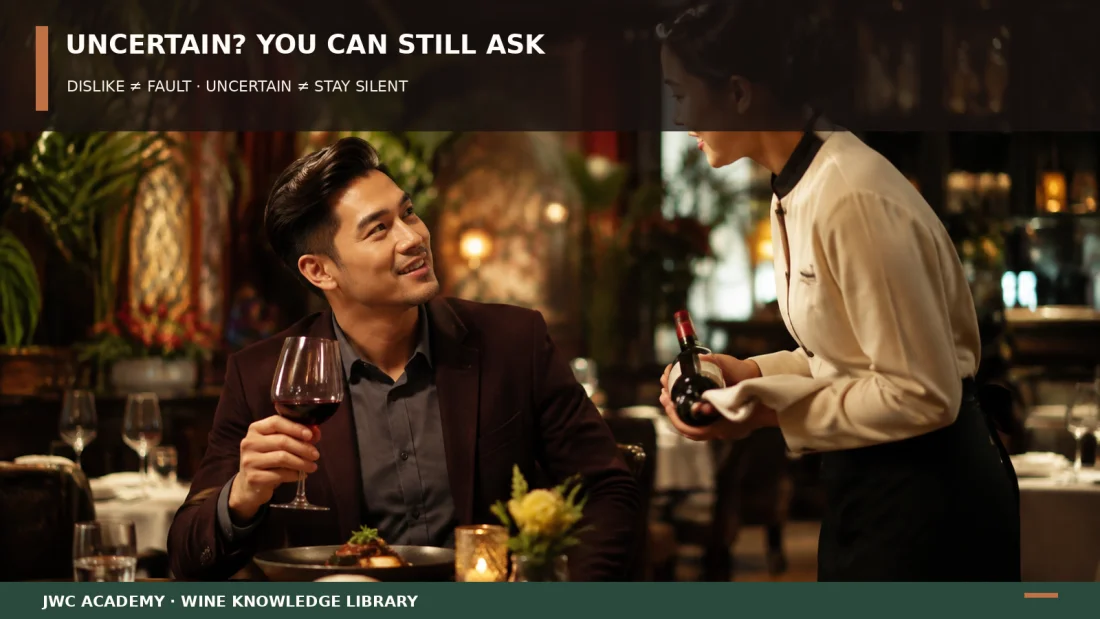
Table confidence isn’t always deciding alone — it’s knowing when and how to ask for a second look. The real first step is checking the bottle; a matching label matters more than a showy swirl. If you do smell something wrong, be specific: “I’m getting wet cardboard and the fruit is very faint — could you check this?” is plenty clear. Unsure you smelled it right? Describe it and let staff judge with you.
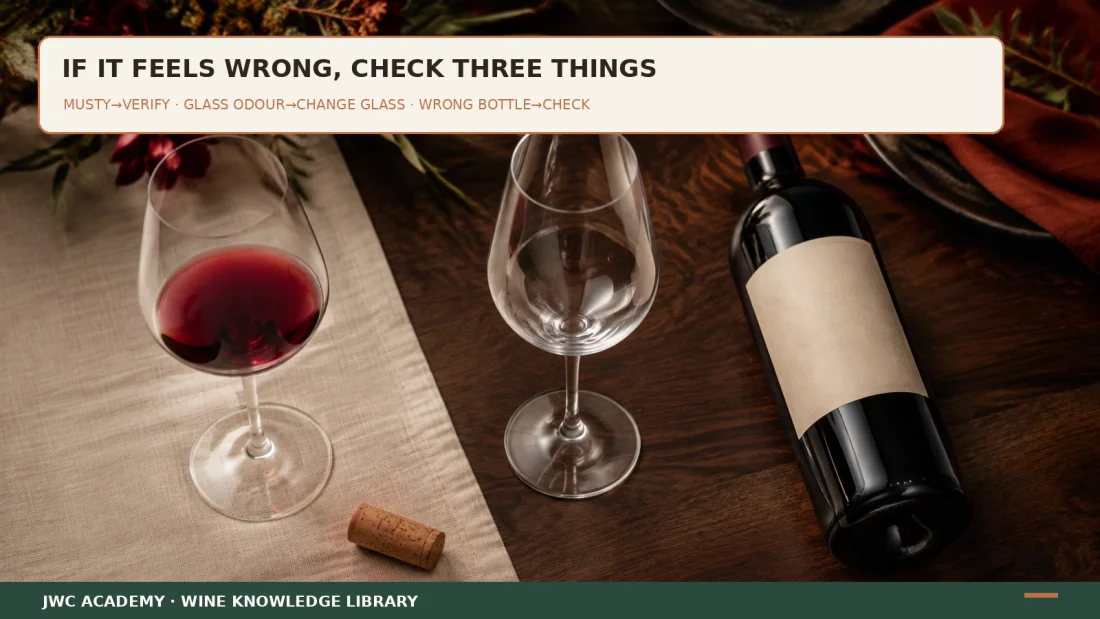
Suspect a fault? Change one variable at a time
When something feels off, don’t rush to add ice, decant or adjust temperature to “mask” it — that buries the clues too. The order is: A, smell the original glass; B, pour from the same bottle into a clean glass to rule out detergent or glassware; C, still off — ask staff to verify; D, once you’re sure it’s style and not a fault, decide whether to carry on. One change at a time shows whether it’s the wine or the glass.

Clear four tasting myths on the way
“The sip is to see if I like it” — it’s about condition. “You need lots of jargon to look pro” — a specific description of the off-note is enough. “Dislike it and you can always send it back” — that depends on a fault plus the restaurant’s policy. “Say nothing unless you’re sure” — you can politely ask for a re-check. Drop these four and you’ll trust your own nose.
Poise at the table is process, not performance
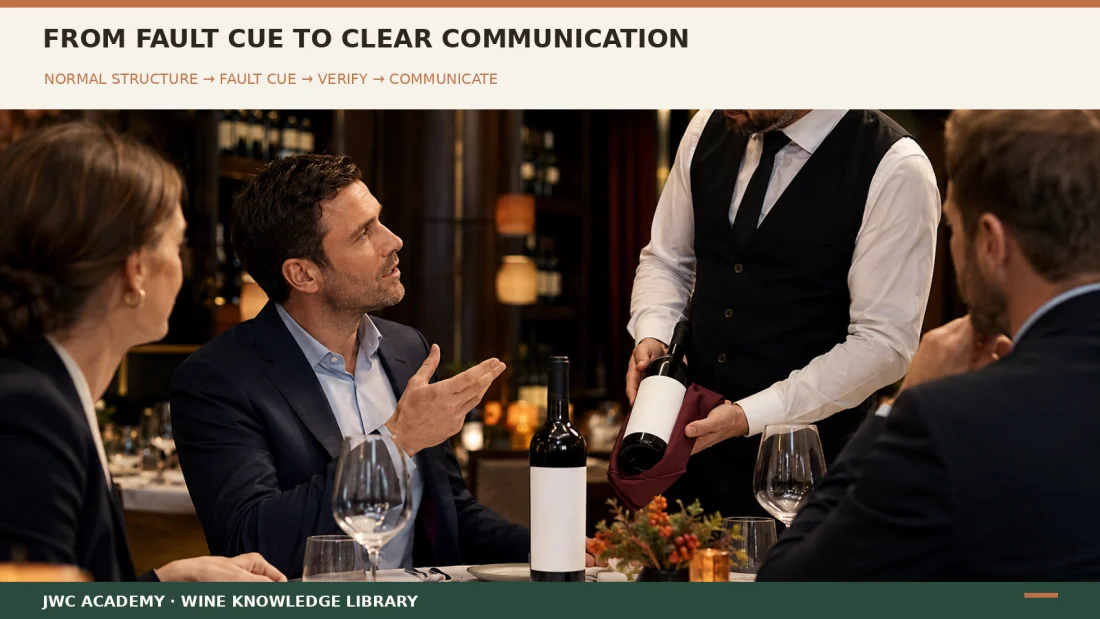
Ease at the table isn’t a script — it’s a process for judging. Systematic tasting first teaches you what normal acidity, tannin and aroma feel like, so you have a baseline for “normal,” then trains you to spot the deviation. Next time the pour lands, you won’t perform expertise: you’ll know exactly what you’re checking, and when to ask for a second opinion.
Did you know
The cork on the table isn’t there to be sniffed
Plenty of people grab the cork and sniff hard — that’s not the point. The cork is there to look at: check it isn’t dried out or leaking, and that the winery name stamped on it matches the label. The real condition check is the smell of the wine in the glass. Fun fact: cork taint only comes from cork, so screwcap-sealed wines basically can’t be “corked” — next time you get a screwcap, that’s one less thing to worry about.
FAQ
Should I swirl before the taste?
A gentle swirl helps release aroma, but this isn’t an etiquette test. The point is confirming the wine’s condition, not performing the motion.
Can I swap it if it’s too sour?
“Too sour” is usually style, not a fault. With no clear defect, whether you can swap depends on the restaurant’s policy — it isn’t guaranteed.
How do I say I suspect it’s corked?
Just describe it: wet cardboard, mustiness, or clearly muted fruit, and ask staff to verify with you. No jargon needed.
Does the person paying have to be the one to taste?
Not necessarily. Whoever at the table is happier to make the call can taste; the exact service flow is up to the restaurant.
JWC Wine CourseNew World Wine Course
New World Wine Course
One 2.5-hour session · Beginner-friendly
Five wines side by side across Australia, New Zealand, Chile, Argentina and South Africa — turning grape, aroma and structure into a method you can use next time you buy. Small in-house tasting class, no experience needed.
See course detailsOr ask Emily on WhatsAppReferences
- Australian Wine Research Institute (AWRI) · awri.com.au
- Wine & Spirit Education Trust (WSET) · wsetglobal.com
© JWC Academy · Wine Guides