














中EN
红酒知识 · 品鉴入门
JWC 红酒指南 · 02 / 12
别人闻到樱桃、莓果,我什么都闻不到,是不是我不会喝?
 Lucas Eng
JWC Academy 创办人 · 世界赛咖啡师 · 侍酒教学
先给答案
闻不到樱桃 ≠ 你不会喝。描述词是把气味连到记忆的语言,不是考试答案。先分「有没有果香」,再分红果/黑果,最后才说具体水果。
先用 3 层香气梯子,别追 30 个形容词
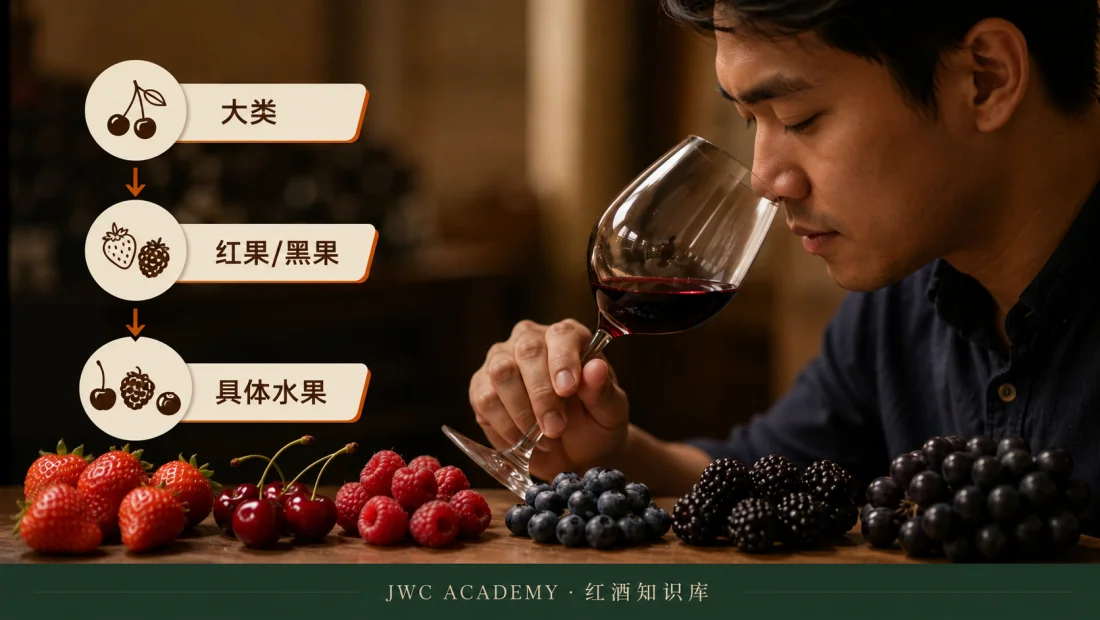
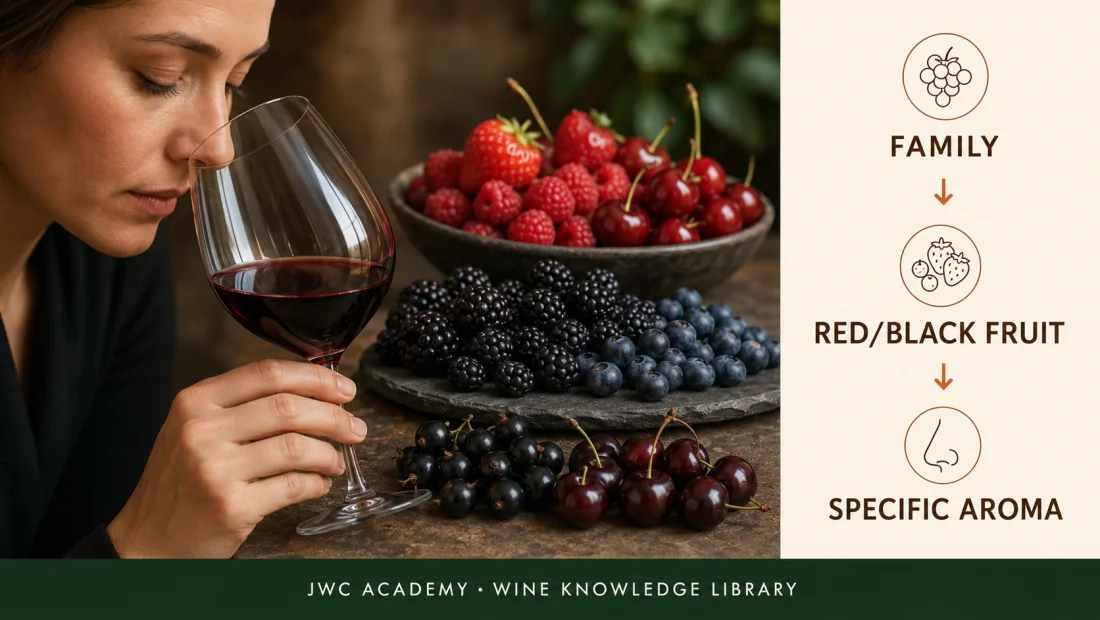
闻香不必一上来就猜樱桃、黑莓。分三层往下走:第一层只判断果香、花香、香料、木质等大类;第二层再分红果还是黑果;第三层才落到樱桃、黑莓这种具体词。能稳定分出大方向,已经比硬背一堆 tasting notes 有用。
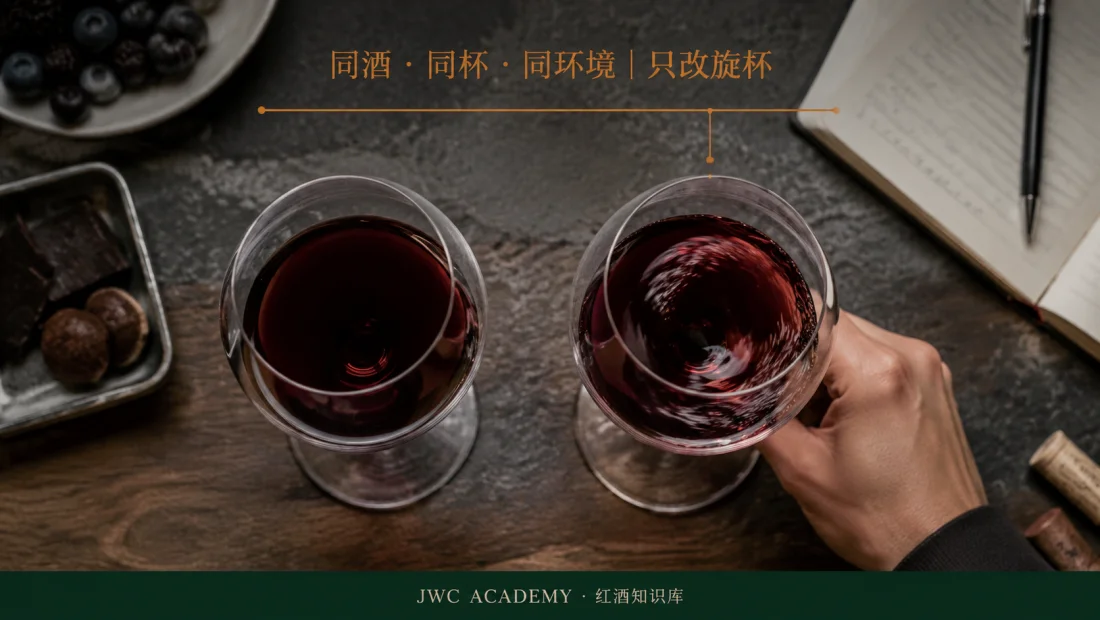
同一杯,旋杯前后做个 A/B
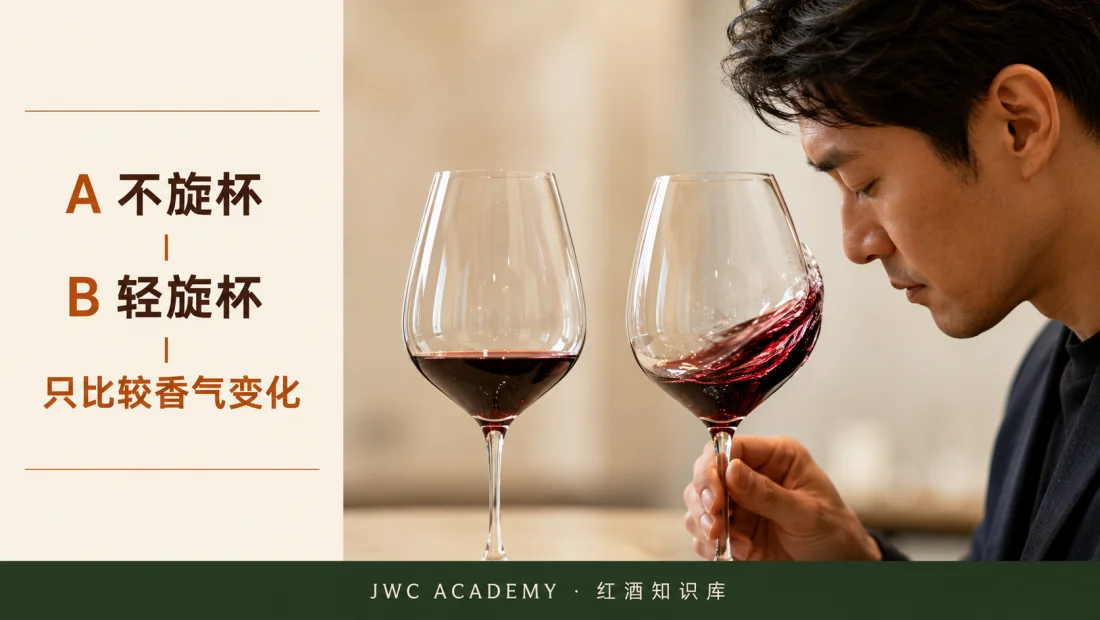
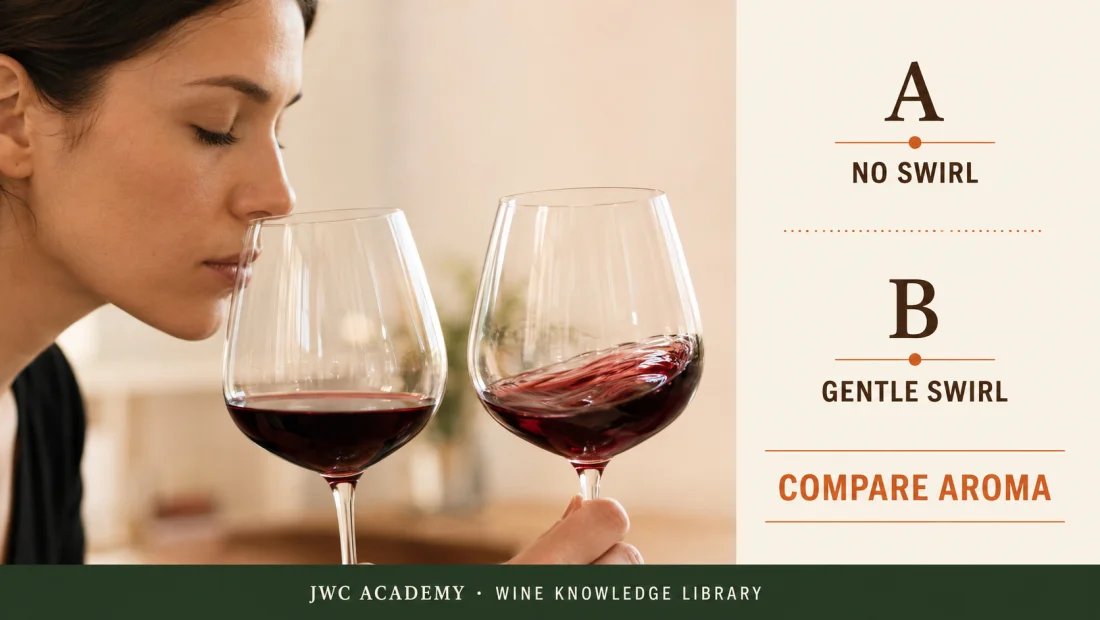
香气会随着接触空气变化。用同一杯酒、同一个杯型:先不旋杯短闻一次(A),再轻旋杯闻一次(B),只记录 B 比 A 多出或增强了哪些方向。WSET 的品鉴方法也是把闻香放进一套可重复的流程,重点是稳定观察,不是证明谁鼻子更灵。
闻不到,先看是哪一种
对上症状,就知道先动哪个变量,而不是直接怀疑自己:
| 症状 | 可能原因 | 先做什么 |
|---|---|---|
| 几乎什么都闻不到 | 环境气味、鼻塞或杯中香气弱 | 换干净环境,比较旋杯前后 |
| 第一下只有酒精感 | 鼻子离杯太近 | 拉开距离、短闻,不急着命名 |
| 知道有果香说不出水果 | 记忆词库还粗 | 先停在红果/黑果,不强猜 |
| 别人说什么就闻到什么 | 语言暗示影响判断 | 先盲写自己的第一印象 |
| 入口后才觉得有果味 | 后鼻嗅觉在起作用 | 把闻香和入口后香气分开记 |
进阶 · 中级
你「闻」到的果味,一大半是从嘴里上来的
人的嗅觉分两条路:鼻子直接吸的「鼻前嗅觉」,和食物入口后气味从口腔后方上行到鼻腔的「后鼻嗅觉」(retronasal)。红酒的果味体验,很大一部分来自后者——这就是为什么捏住鼻子喝,果味几乎消失,一松手,樱桃、莓果一下全回来。下次练闻香,可以刻意做这个「捏鼻—松鼻」对照,你会立刻分清哪些是真·鼻子闻到的,哪些是入口后才补上的。

闻不到具体水果,不等于闻不到香气
先写下「果香明显、偏红果」,这已经是有效信息。越早强迫自己猜是樱桃还是草莓,越容易把品鉴变成猜谜。方向对了,具体词是之后慢慢积累的事。
一次只改一个变量:只改闻法,别改酒
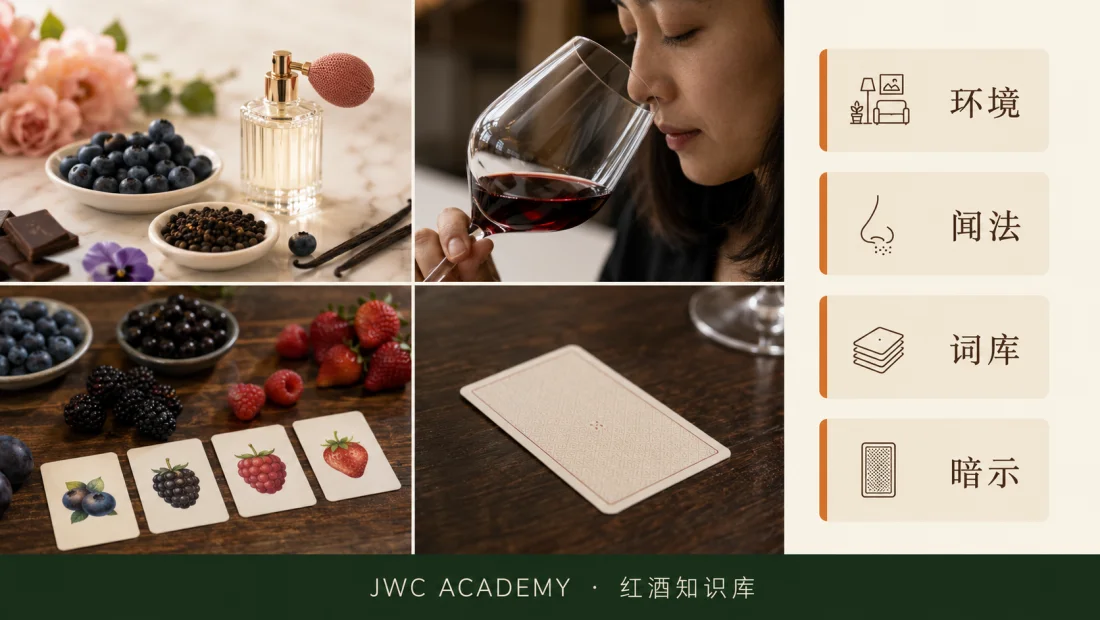
同一杯酒、同一杯型,一次只改一样。A:静置后短闻,写大类;B:轻旋杯再闻,记录新增方向;C:入口后记录后鼻香气;D:最后才对照 tasting notes。别一边换杯一边换酒,不然你不知道差别从哪来。
顺手拆掉四个闻香迷思
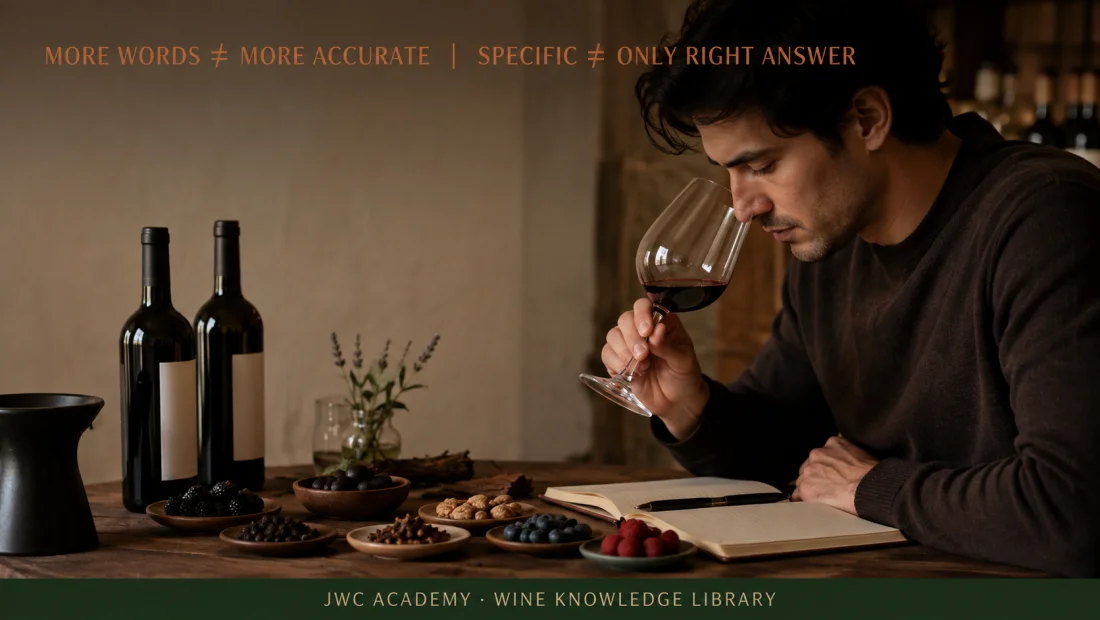
闻不到樱桃=不会喝、酒里真的加了莓果、词越多越专业、先看 tasting notes 更好学——四个都不成立。多数干型葡萄酒的水果味是香气联想;可重复的少数判断,比一长串形容词更有价值。

从「我闻不到」到「我能比较」才是起点
比较通常比命名好练:两杯并排,你更容易说出哪杯更偏红果、哪杯更浓、更有香料感。新世界酒先把品种的重复香气跟酸度、单宁连起来,建立感官坐标;之后进旧世界,才有能力从产区和风土去预测风格,而不是背答案。

冷知识
酒里根本没加樱桃、黑莓
多数干型红酒里,一颗真的樱桃或黑莓都没有。那些果味来自葡萄发酵与熟成时产生的酯类、萜烯等挥发性分子,刚好和樱桃、黑莓的气味分子高度重合——你的大脑是在「气味撞脸」里认亲戚,把陌生分子翻译成熟悉的水果名。所以「闻到樱桃」不是酒里有樱桃,而是你的记忆库刚好有这个词。词库越大,你能叫出的名字越多,但闻到的能力,一开始就在。
常见问题
完全闻不到香气正常吗?
偶尔会。先排除鼻塞、环境香水或食物气味,再用同一杯旋杯前后比较。
一定要闻出樱桃才算对吗?
不用。大类和方向如果稳定,已经是有效的品鉴信息。
为什么入口后更有果味?
味觉和后鼻嗅觉会一起构成你对风味的感受,所以入口后香气常更明显。
可以先看酒标上的 tasting notes 吗?
学习时更建议先写自己的判断,再对照,减少语言暗示。
JWC Wine Course新世界葡萄酒课程
新世界葡萄酒课程
一堂 2.5 小时 · 零基础友好
5 款实杯,比较澳洲、纽西兰、智利、阿根廷与南非。把葡萄品种、香气与结构连成一套下次还能用的选酒方法。小班到店品鉴,无需任何基础。
看课程详情或用 WhatsApp 问 Emily参考资料
- Wine & Spirit Education Trust (WSET) · wsetglobal.com
© JWC Academy · Wine Guides 红酒指南
Wine Knowledge · Tasting Basics
JWC Wine Guide · 02 / 12
Others smell cherry and berry — I smell nothing. Can I just not taste?
Lucas EngPrincipal, JWC Academy · World-stage barista · Wine educator
Quick answer
Not naming cherry doesn’t mean you can’t taste. Descriptors are language that links smells to memory, not exam answers. First ask “is there fruit?”, then red vs black fruit, then a specific name.
Use a three-layer aroma ladder, not 30 adjectives
You don’t have to guess cherry or blackberry on the first sniff. Work down three layers: layer one is just the broad family — fruit, floral, spice, oak; layer two splits red fruit from black fruit; layer three finally lands on cherry or blackberry. Reliably calling the broad direction already beats memorising a pile of tasting notes.
Same glass — run an A/B before and after swirling
Aroma shifts as the wine meets air. With the same wine and glass, sniff once without swirling (A), then sniff again after a gentle swirl (B), and note only what B adds or amplifies over A. WSET’s method also puts smelling inside a repeatable routine — the point is steady observation, not proving whose nose is sharper.
Smelling nothing? First find which case it is
Match the symptom and you know which variable to change first — instead of doubting yourself:
| Symptom | Likely cause | First move |
|---|---|---|
| Almost nothing at all | Room smells, blocked nose, weak aroma | Move to a clean space, compare pre/post swirl |
| Only alcohol on first sniff | Nose too close to the glass | Back off, short sniffs, don’t rush to name |
| Fruit is there but unnameable | Memory vocabulary still coarse | Stop at red/black fruit, don’t force it |
| You smell whatever others say | Verbal suggestion bias | Write your own first impression blind |
| Fruit only after sipping | Retronasal smell at work | Log nose vs after-sip aromas separately |
Level up · Intermediate
Most of the fruit you “smell” comes up from your mouth
Smell runs on two paths: orthonasal (air drawn straight up the nose) and retronasal (aromas rising from the back of your mouth into the nasal cavity after you sip). A large part of a wine’s fruit lives in the second path — which is why pinching your nose makes the fruit vanish, and letting go brings cherry and berry flooding back. Try that pinch-and-release contrast on purpose next time: it instantly separates what your nose truly caught from what only arrived after the sip.
Not naming a fruit isn’t the same as smelling nothing
Writing “clear fruit, leaning red” is already useful information. The sooner you force a guess of cherry or strawberry, the more tasting turns into a guessing game. Get the direction right; specific words accumulate later.

Change one variable: change how you smell, not the wine
Same wine, same glass, one change at a time. A: rest, short sniff, note the family; B: gentle swirl, note what’s added; C: after sipping, note retronasal aroma; D: only then compare tasting notes. Don’t swap glass and wine at once, or you won’t know where the difference came from.

Clear four aroma myths on the way
Can’t smell cherry = can’t taste, there’s real berry added, more words = more expert, tasting notes first is easier — none hold up. In most dry wines the fruit is aroma association; a few repeatable calls are worth more than a long list of adjectives.
From “I smell nothing” to “I can compare” is the real start
Comparing is easier to train than naming: with two glasses side by side you can more easily say which leans red-fruit, which is denser or spicier. New World wines let you link a grape’s repeating aromas to acidity and tannin and build a sensory map; only then can Old World regions be predicted from place and climate, rather than memorised.

Did you know
There’s no actual cherry or blackberry in the wine
Most dry reds contain not a single real cherry or blackberry. Those fruit notes come from esters, terpenes and other volatile molecules created during fermentation and ageing — molecules that happen to overlap closely with the smell of cherry or blackberry. Your brain is recognising a family resemblance and translating an unfamiliar molecule into a familiar fruit name. So “I smell cherry” doesn’t mean cherry is in the glass — it means your memory happens to hold that word. A bigger vocabulary names more; the ability to smell was there from the start.
FAQ
Is smelling nothing at all normal?
Occasionally. First rule out a blocked nose, ambient perfume or food smells, then compare the same glass before and after swirling.
Do I have to smell cherry to be right?
No. If the broad family and direction are stable, that’s already useful tasting information.
Why is there more fruit after I sip?
Taste and retronasal smell together build your sense of flavour, so aromas often read stronger after sipping.
Can I read the label’s tasting notes first?
When learning, write your own call first and compare after — it reduces verbal suggestion.
JWC Wine CourseNew World Wine Course
New World Wine Course
One 2.5-hour session · Beginner-friendly
Five wines side by side across Australia, New Zealand, Chile, Argentina and South Africa — turning grape, aroma and structure into a method you can use next time you buy. Small in-house tasting class, no experience needed.
See course detailsOr ask Emily on WhatsAppReferences
- Wine & Spirit Education Trust (WSET) · wsetglobal.com
© JWC Academy · Wine Guides