














中EN
红酒知识 · 选酒入门
JWC 红酒指南 · 03 / 12
买红酒到底先看品牌、葡萄品种,还是产区?
 Lucas Eng
JWC Academy 创办人 · 世界赛咖啡师 · 侍酒教学
先给答案
想预测「喝起来大概怎样」,先看 葡萄 定大方向,再用 产区 修正风格,最后看 生产者/品牌与系列 落到具体那一瓶。品牌不是不重要,只是单看 logo 解释不了同品牌一整排的差别。
把酒标压缩成三个判断层
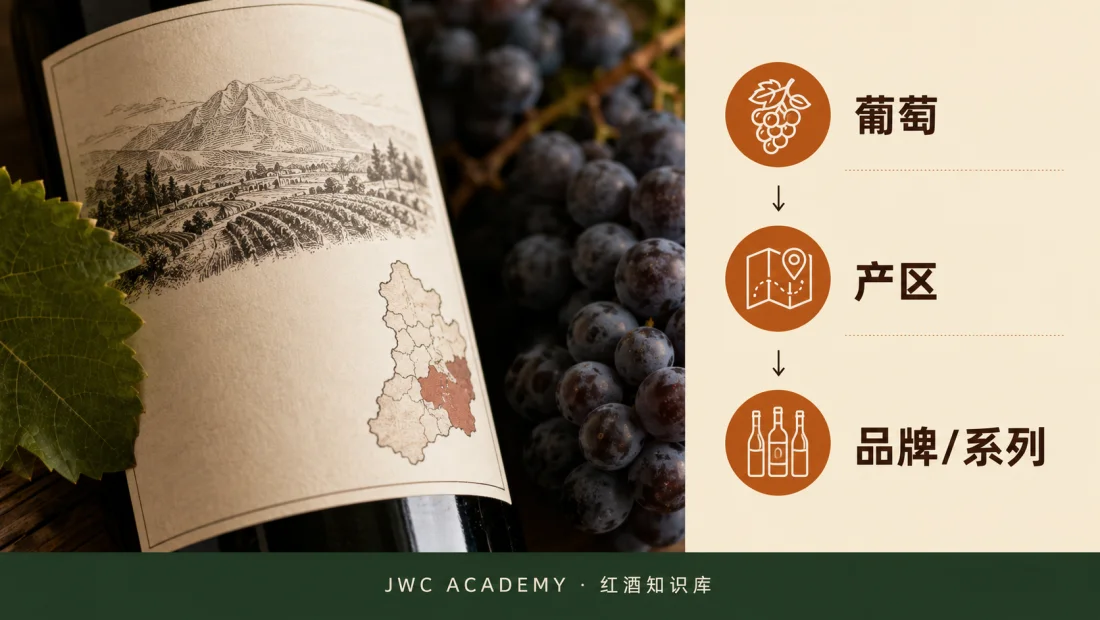
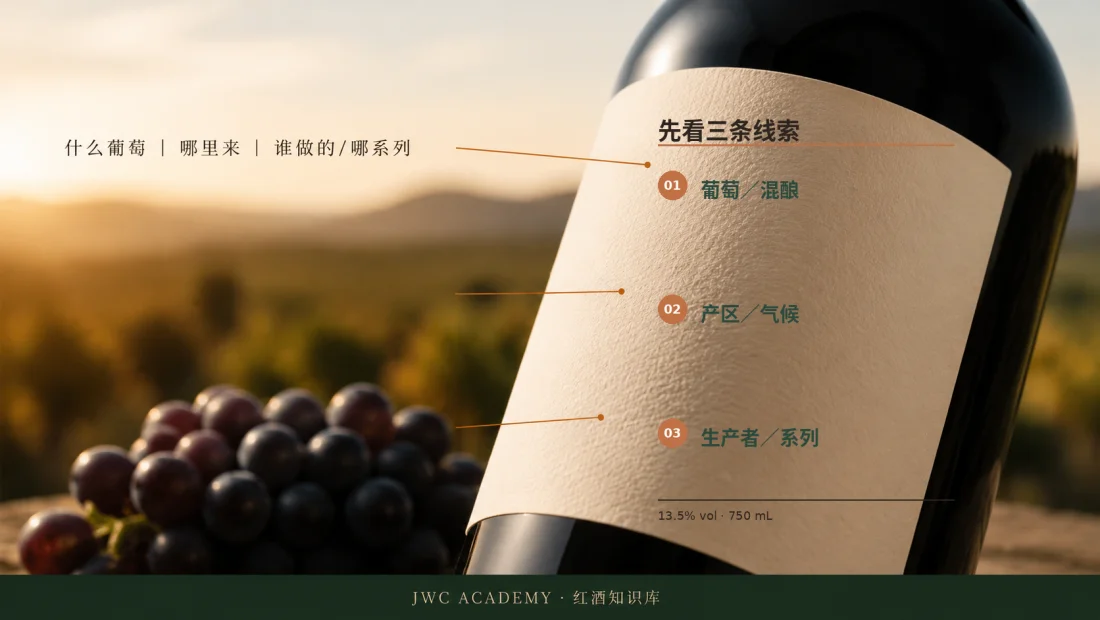
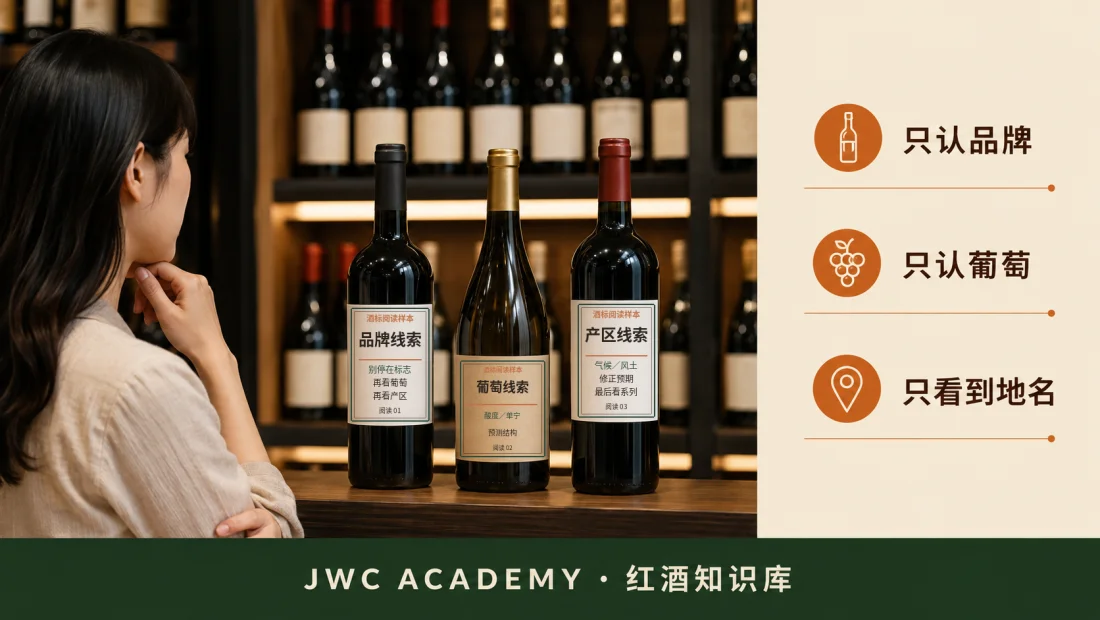
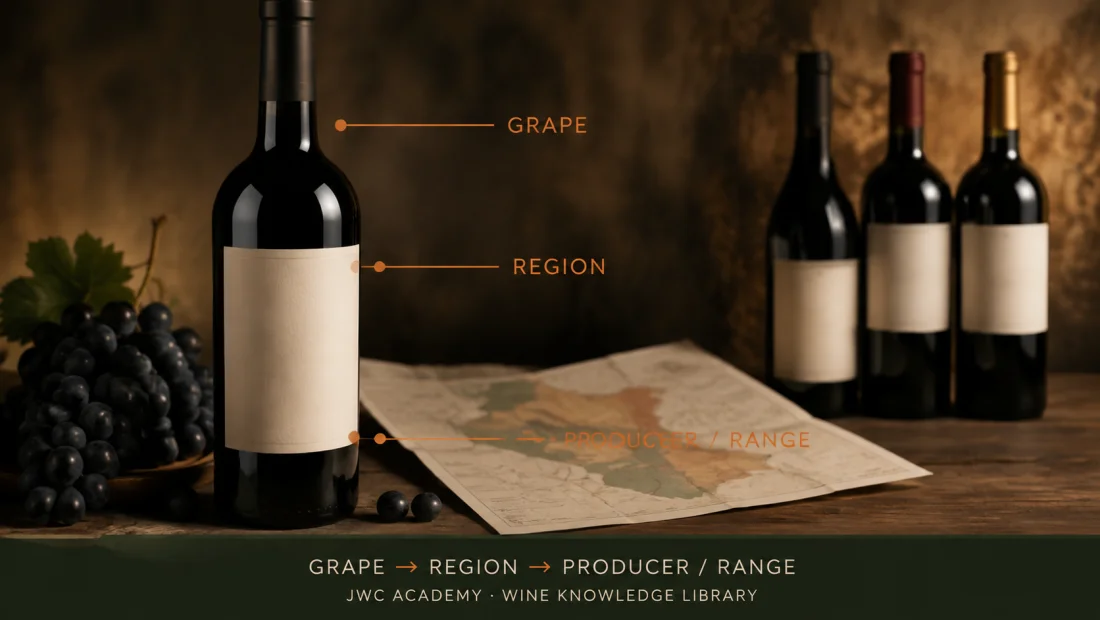
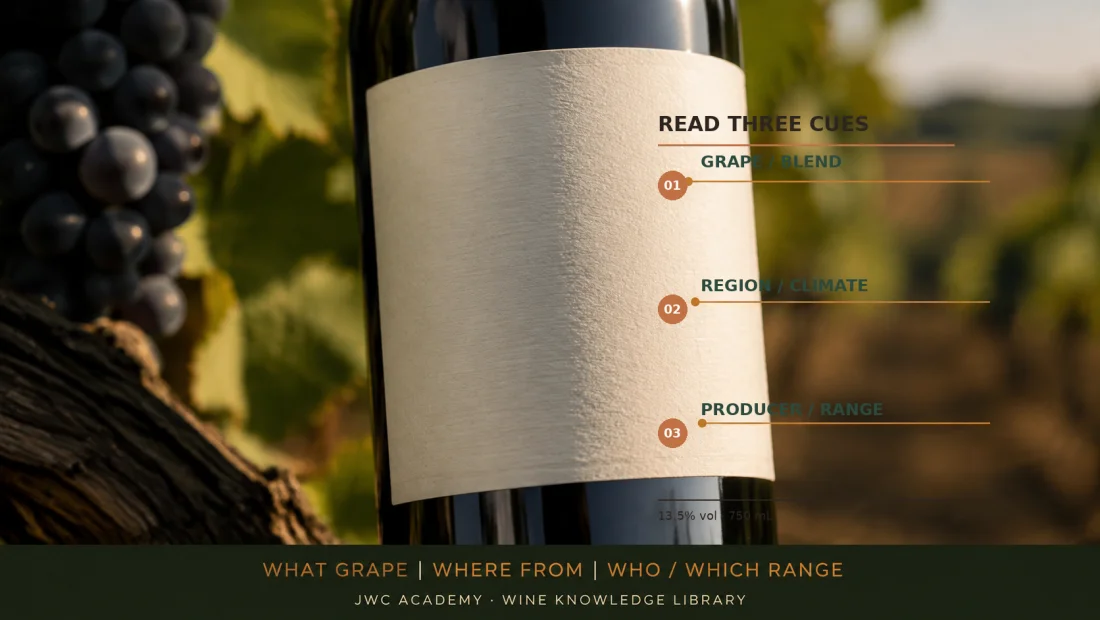
面对酒架信息太多,先把酒标拆成三层:第一层是葡萄或 blend,给你风味的骨架;第二层是产区/原产地,提供气候与法规线索;第三层是生产者、品牌与具体系列,决定最终的酿造与表达。初学者按「葡萄 → 产区 → 生产者」这个顺序读,比只认一个熟悉品牌稳得多。
新世界从葡萄读起,旧世界要反过来
新世界酒标(美国、澳洲、智利等)通常大字写葡萄品种,从第一层切入很直接。很多欧洲旧世界酒标却只写产区地名、不写葡萄——因为产区名称本身就绑定了当地允许的品种和风格。遇到这种酒标,读法反过来:先认出 appellation/产区,再由它推常用品种和大致风格。
你在酒架前的症状,意味着什么
把症状对上原因,就知道下一步先动哪一层:
| 你遇到的症状 | 可能原因 | 先做什么 |
|---|---|---|
| 只认得一个熟悉品牌 | 知道名字,不清楚酒款差异 | 找到系列,再看葡萄与产区 |
| 知道是 Cabernet,但每瓶差很多 | 只靠葡萄预测,用力过度 | 补上产区和生产者两层 |
| 酒标只写欧洲地名 | 缺产区 → 品种的对照知识 | 先认出 appellation/产区 |
| 酒架越看越乱 | 信息没有优先级 | 固定用「葡萄 → 产区 → 品牌」顺序 |
| 同品牌却喝到完全不同风格 | 不同系列/产区/葡萄 | 别把品牌当成单一味道 |
进阶 · 中级
为什么老手买酒更看产区?
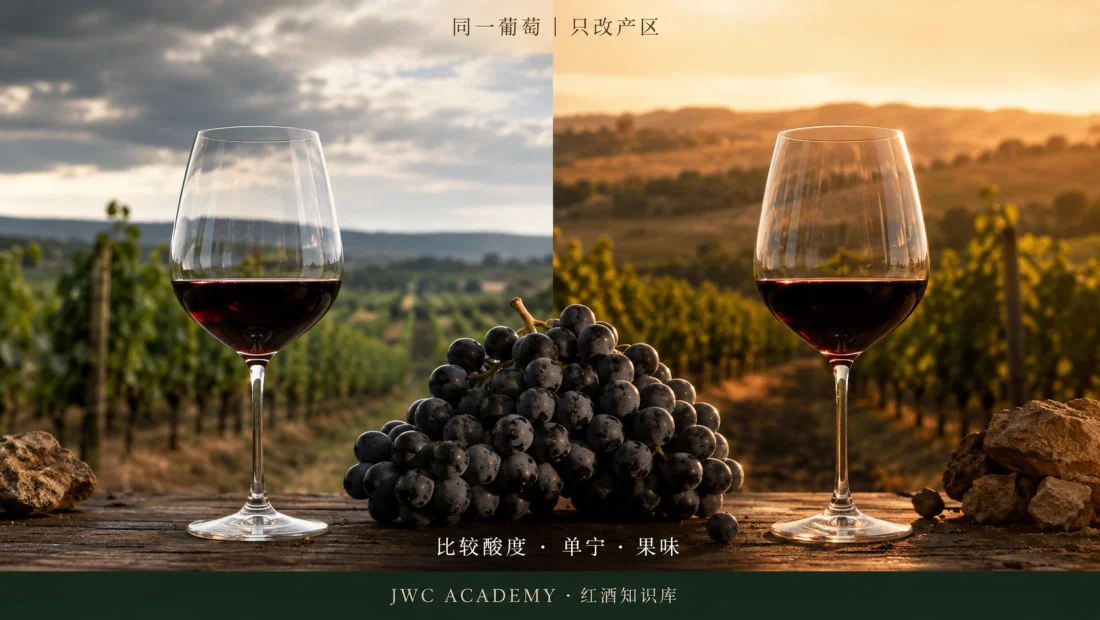
同一个葡萄品种,换个产区可以像两支不同的酒——关键在气候。凉爽产区成熟慢、保留更高酸度、酒精偏低、果味更收敛,常带草本或矿物感;温暖产区果味更熟更甜、酒体更饱满、酒精更高。所以凉爽北罗讷的 Syrah 和温暖澳洲的 Shiraz,同一品种却是两种性格。再加上旧世界产区法规会限制品种、产量和熟成方式,等于把一套风格写进了地名——这就是老手一看产区就八九不离十的原因。

葡萄给骨架,产区修风格,品牌落到具体酒款
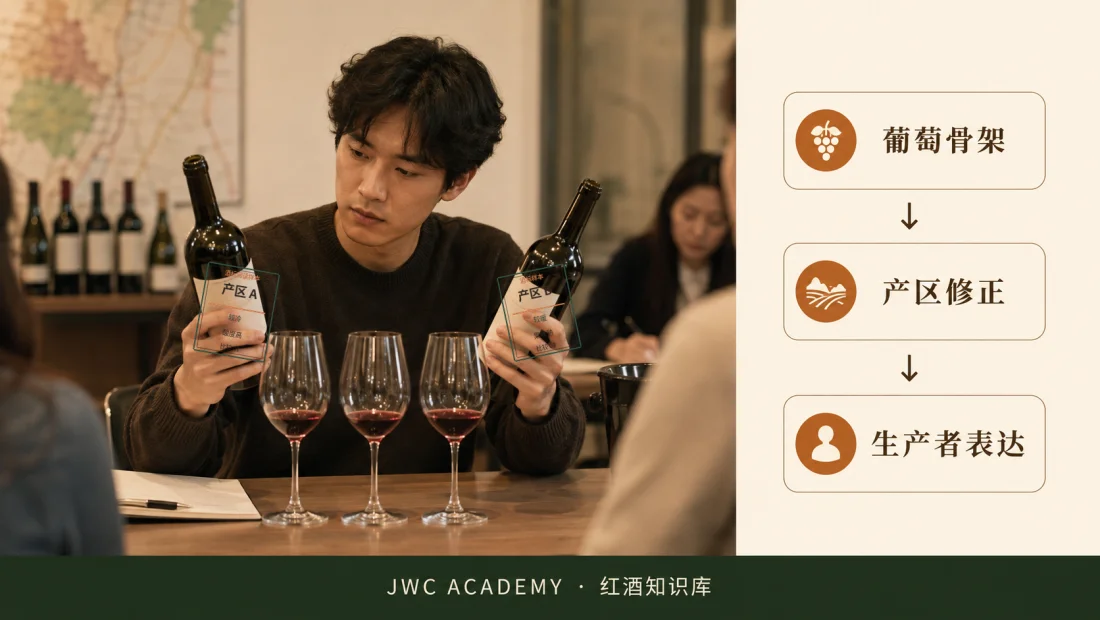
三层各管一件事。葡萄(Cabernet、Pinot Noir、Shiraz…)给你结构倾向,是最容易建立的第一张地图,但不是最终答案;产区告诉你这葡萄在什么气候和规则下长大,会改变酸度、果味与酒体;品牌则要读到「具体哪一瓶」——大品牌常有多系列、多产区、多葡萄,你买的是那支酒,不是抽象的 logo。
练习时一次只改一个变量
想快速进步,别一次换两个对象。拿同一葡萄、两个产区的酒并排喝,记下酸度、单宁和果味成熟度的差别;再固定产区,换不同生产者比较;最后才总结某个品牌的风格。一次只动一层,你才分得清到底是产区、还是酒庄造成的差异。
顺手拆掉四个选酒迷思
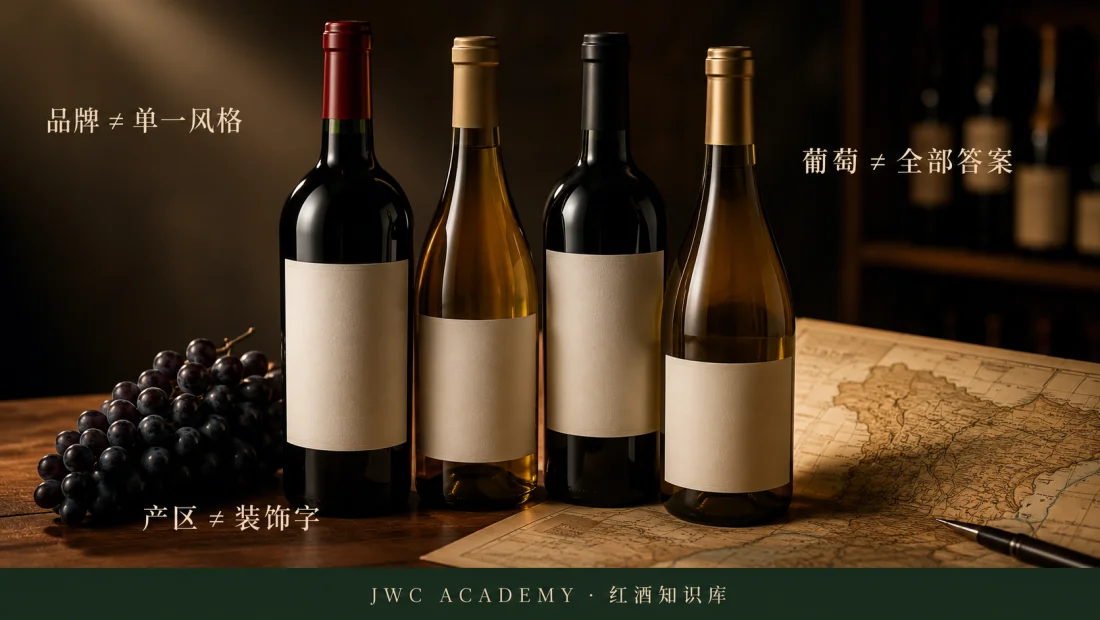
「大品牌一定好喝」——品牌熟悉度不等于合你口味;「知道葡萄就能预测全部」——产区和酿造会大幅改写结果;「欧洲不写葡萄是故意难懂」——产区名本身就承载了当地规则和风格;「品牌之间只差价格」——产品组合、原料来源和酿造风格都可能不同。放下这些包袱,选酒会轻松很多。
会选酒,是会读三层线索,不是背答案
新世界训练先把葡萄和酸度、单宁、酒体连起来,建立感官基准;旧世界再把同一套语言接到产区和风土。两层一起,你才能解释「这瓶为什么会这样」。目标不是在酒架前背一堆产区名,而是拿到一瓶酒,你清楚该先看哪一层、为什么这样判断。
冷知识
「香槟」是地名,不是酒的类型
只有法国香槟产区、用规定方法做的气泡酒,才能合法叫 Champagne;别处做得再像,也只能叫 sparkling wine(cava、prosecco 同样是各自产区的受保护名字,别处也不能乱用)。很多旧世界名字——Champagne、Chianti、Rioja——都是受保护的产区名,而且往往暗示了葡萄和做法。这也是为什么欧洲酒标爱把产区放最大:那个地名本身就是一张风格身份证。
常见问题
完全不懂时先看什么?
如果酒标清楚写了葡萄,就先用葡萄定风味大方向,再补产区和生产者两层。看不到葡萄、只有欧洲地名时,反过来先认产区。
品牌是不是完全不重要?
重要,但要落到具体系列和酒款。同一个品牌可以有很宽的产品组合,logo 本身预测不了那一瓶的味道。
为什么旧世界常要先看产区?
因为很多产区名称本身就绑定了当地允许的品种、产量和风格规则,产区几乎等于告诉你葡萄和大致表达。
买过一支喜欢的酒,怎么学得最快?
记下它的葡萄、产区、生产者和系列,下一次只换其中一层做 A/B 比较,差异会看得很清楚。
JWC Wine Course新世界葡萄酒课程
新世界葡萄酒课程
一堂 2.5 小时 · 零基础友好
5 款实杯,比较澳洲、纽西兰、智利、阿根廷与南非。把葡萄品种、香气与结构连成一套下次还能用的选酒方法。小班到店品鉴,无需任何基础。
看课程详情或用 WhatsApp 问 Emily参考资料
- Wine & Spirit Education Trust (WSET) · wsetglobal.com
- 欧盟地理标志(PDO/PGI)· agriculture.ec.europa.eu
© JWC Academy · Wine Guides 红酒指南
Wine Knowledge · Choosing Wine
JWC Wine Guide · 03 / 12
Buying red wine: grape, region, or brand first?
Lucas EngPrincipal, JWC Academy · World-stage barista · Wine educator
Quick answer
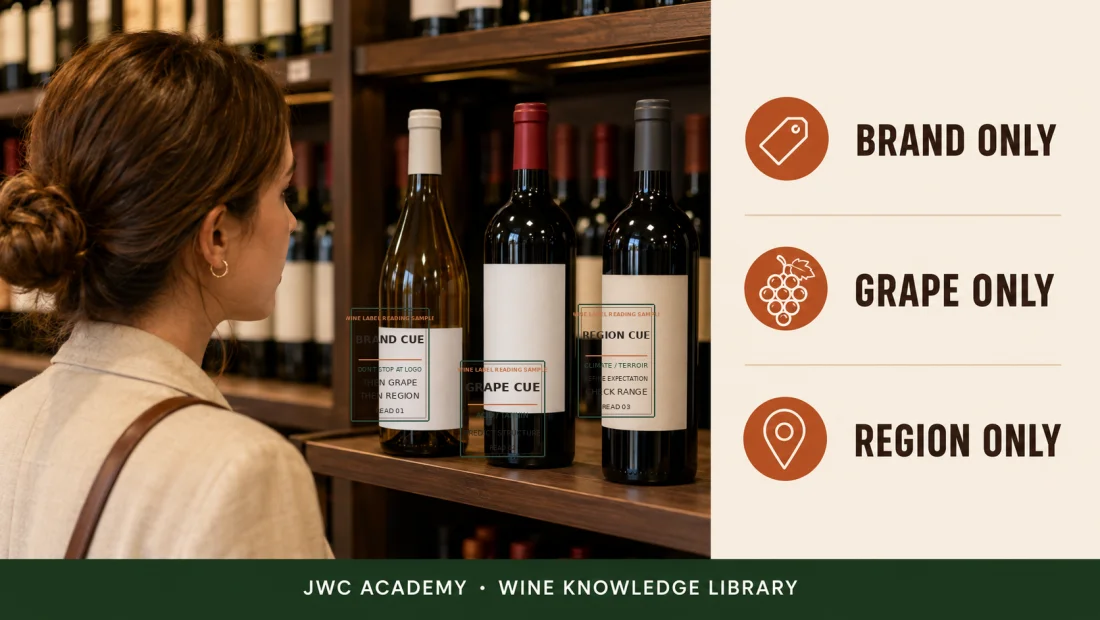
To predict how a bottle will taste, let the grape set the direction, use the region to refine the style, then read the producer/brand and range to land on the exact bottle. Brand still matters — a logo just can’t explain why one brand spans so many different wines.
Compress the label into three decision layers
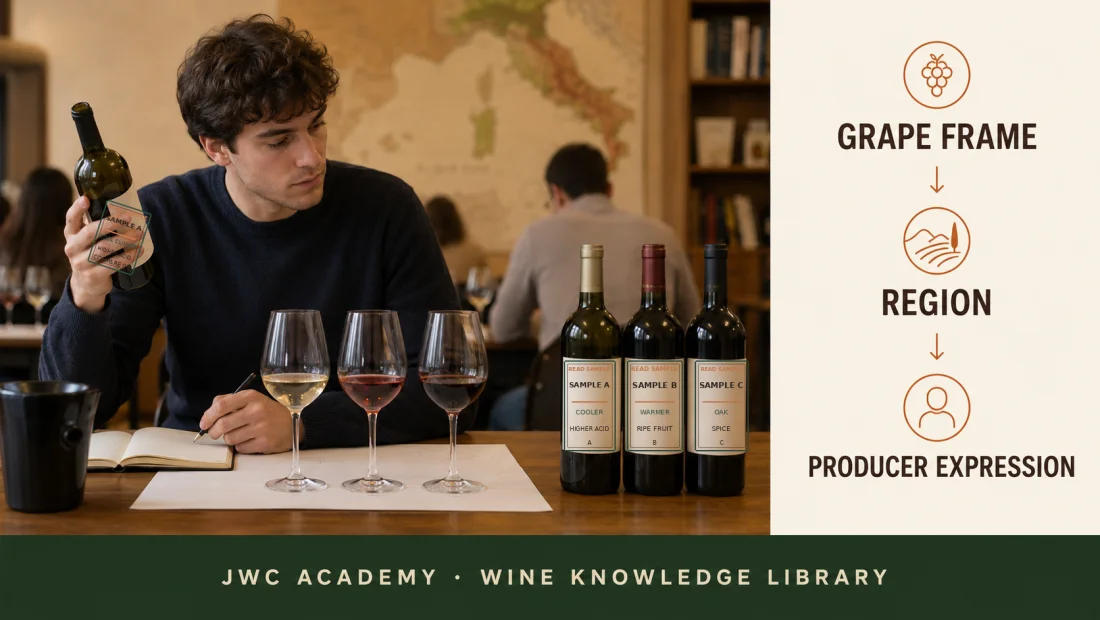
Facing a wall of bottles, split the label into three layers. Layer one is the grape or blend — the skeleton of the flavour. Layer two is the region or origin — climate and rulebook clues. Layer three is the producer, brand and specific range, where the actual winemaking and style live. Reading in the order grape → region → producer beats simply grabbing the one brand you recognise.
New World reads from the grape; Old World reverses it
New World labels (US, Australia, Chile and so on) usually print the grape in big type, so layer one is easy to enter. Many Old World European labels name only the region, not the grape — because the place name is legally tied to the permitted grapes and style. With those bottles you read backwards: identify the appellation/region first, then infer the likely grapes and broad style from it.
What your shelf symptom means
Match the symptom to its cause and you’ll know which layer to work on first:
| Your symptom | Likely cause | First move |
|---|---|---|
| You only recognise one brand | You know the name, not the bottles | Find the range, then check grape & region |
| You know it’s Cabernet but bottles vary wildly | Over-predicting from grape alone | Add the region and producer layers |
| The label shows only a European place | Missing region-to-grape knowledge | Identify the appellation/region first |
| The shelf gets more confusing the longer you look | No priority to the information | Lock in a grape → region → brand order |
| Same brand, totally different styles | Different range / region / grape | Don’t treat a brand as one flavour |
Level up · Intermediate
Why do seasoned buyers look at region more?
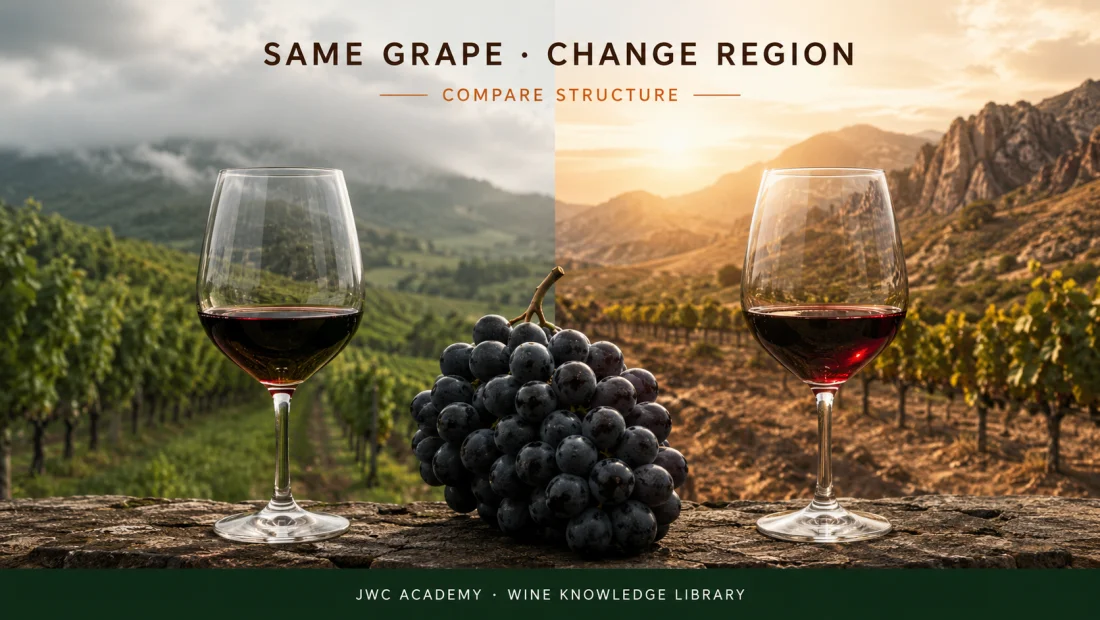
The same grape can taste like two different wines once you change the region — and the lever is climate. Cool regions ripen slowly, hold higher acidity, run lower in alcohol and show more restrained, sometimes herbal or mineral fruit; warm regions give riper, sweeter fruit, fuller body and higher alcohol. That’s why Syrah from the cool Northern Rhône and Shiraz from warm Australia share a grape but not a personality. Add Old World appellation rules on grapes, yields and ageing, and the place name effectively encodes a style — which is why a veteran can read the region and be roughly right.
Grape gives the skeleton, region shapes it, brand pins the bottle
Each layer does one job. The grape (Cabernet, Pinot Noir, Shiraz…) sets structural tendencies and is the easiest first map — but not the final answer. The region tells you the climate and rules the grape grew under, shifting acidity, fruit and body. The brand only helps once you read down to the exact bottle: big brands span many ranges, regions and grapes, and you’re buying that one wine, not an abstract logo.
When practising, change one variable at a time
To improve fast, don’t swap two things at once. Taste the same grape from two regions side by side and note the differences in acidity, tannin and fruit ripeness; then hold the region and compare different producers; only then sum up a brand’s style. Changing one layer at a time is the only way to tell whether the region or the producer caused the difference.
Clear four wine-buying myths along the way
“Big brand must taste good” — familiarity isn’t a match for your palate. “Know the grape and you can predict everything” — region and winemaking rewrite the result. “Europe hides the grape to be difficult” — the place name itself carries local rules and style. “Brands differ only in price” — portfolio, sourcing and winemaking can all differ. Drop this baggage and choosing gets much easier.
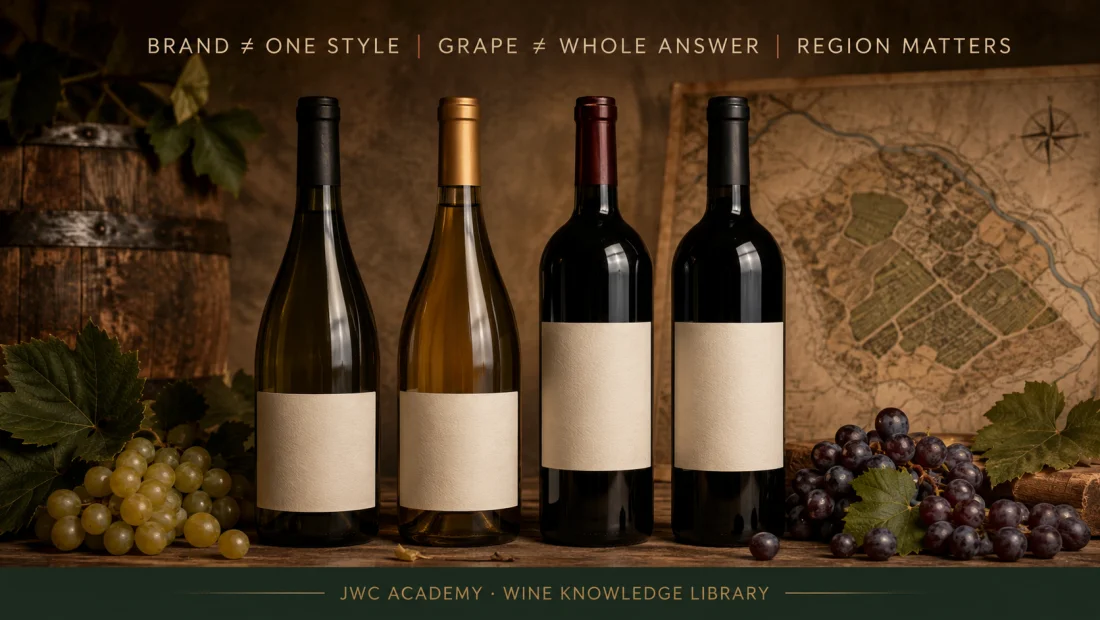
Choosing well means reading three cues, not memorising answers
New World training first links the grape to acidity, tannin and body to build a sensory baseline; Old World then connects that same language to region and terroir. With both layers you can explain why a given bottle tastes the way it does. The goal isn’t reciting region names at the shelf — it’s picking up a bottle and knowing which layer to read first and why.
Did you know
“Champagne” is a place, not a type of wine
Only sparkling wine from France’s Champagne region, made the set way, may legally be called Champagne; anything similar from elsewhere is just sparkling wine (Cava and Prosecco are themselves protected regional names, not free labels either). Many Old World names — Champagne, Chianti, Rioja — are protected region names that also hint at the grapes and methods. It’s exactly why European labels put the region in the biggest type: the place name is a style ID card.
FAQ
What do I look at first when I know nothing?
If the label clearly names the grape, use it to set the flavour direction, then add the region and producer. If you only see a European place name, reverse it and identify the region first.
Is brand completely unimportant?
It matters, but only down to a specific range and bottle. One brand can cover a very wide portfolio, and the logo alone can’t predict how that bottle tastes.
Why does the Old World often need region first?
Because many region names are tied to the permitted grapes, yields and style rules, so the region nearly tells you the grape and broad expression already.
I found a bottle I love — how do I learn fastest?
Write down its grape, region, producer and range, then change just one of those layers next time for an A/B. The difference becomes obvious.
JWC Wine CourseNew World Wine Course
New World Wine Course
One 2.5-hour session · Beginner-friendly
Five wines side by side across Australia, New Zealand, Chile, Argentina and South Africa — turning grape, aroma and structure into a method you can use next time you buy. Small in-house tasting class, no experience needed.
See course detailsOr ask Emily on WhatsAppReferences
- Wine & Spirit Education Trust (WSET) · wsetglobal.com
- EU Geographical Indications (PDO/PGI) · agriculture.ec.europa.eu
© JWC Academy · Wine Guides