














中EN
红酒知识 · 读懂酒庄
JWC 红酒指南 · 12 / 12
同一个品牌,为什么架上一整排都不一样?系列、葡萄、产区差在哪?
 Lucas Eng
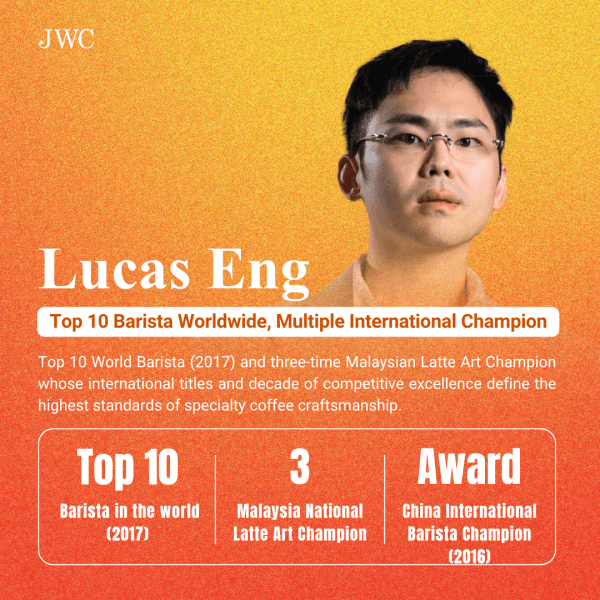
JWC Academy 创办人 · 世界赛咖啡师 · 侍酒教学
先给答案
同品牌一整排 不是一个味道,而是一个「产品家族」。按四层读它:品牌 → 系列 → 葡萄/调配 → 产区,任何一层变,杯中就变。
一个品牌,不等于一个味道:先读四层
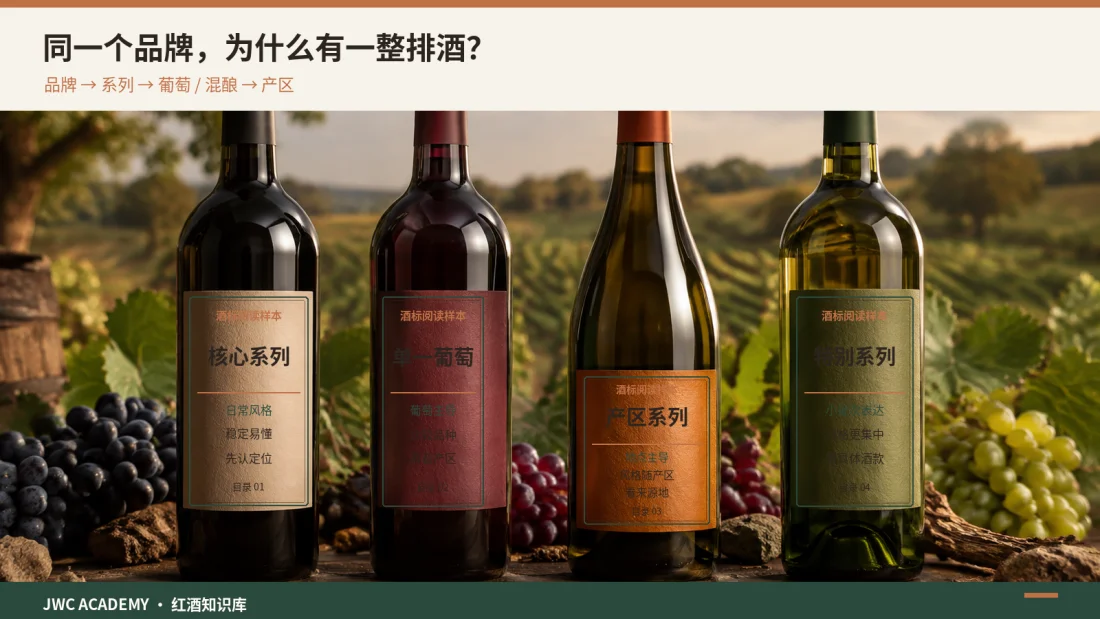
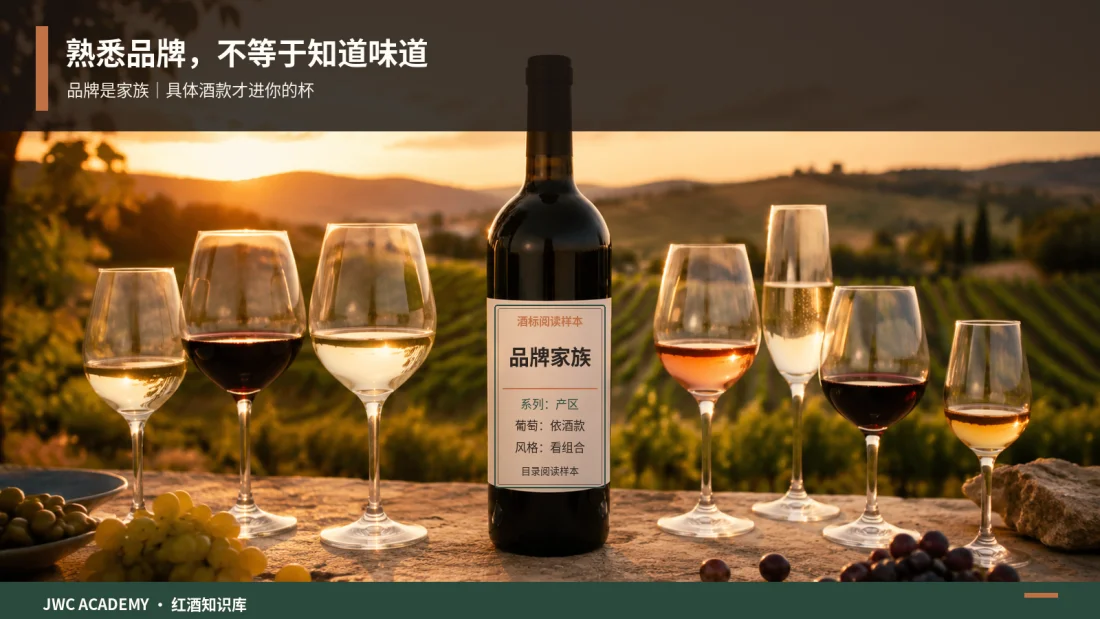
架上同一个 logo 的一整排,常常同时在变四样东西:系列定位、葡萄或调配(blend)、产区来源、以及橡木与熟成。最外层是品牌,它只负责「家族识别」;往里一层层,才是真正决定你杯中体验的东西。把这四层拆开读,比只认得 logo 有用得多——认得牌子,不等于懂这瓶酒。
品牌说「谁做的」,系列说「哪一条产品线」
同一家生产者,会为不同市场、价位和风格建立多个系列(range/series):入门日常线、单一葡萄园、珍藏(Reserve)……别把母品牌的印象直接套在每一瓶上。系列名字看不懂时,先上品牌官网找它的 range 架构,你会发现一整排其实是被刻意分成好几条线的。
你遇到的情况,意味着什么
先看症状,再决定动哪一层:
| 情况 | 可能原因 | 先做什么 |
|---|---|---|
| 认得品牌却选错风格 | 只停在 logo 上 | 往下读系列 + 葡萄 + 产区 |
| 同品牌一瓶轻一瓶重 | 葡萄 / 产区 / 酿造不同 | 并排比较四层信息 |
| 系列名字一堆看不懂 | 产品线层级不清 | 先上官网看 range 架构 |
| 以为高阶系列一定更适合自己 | 把定位当口味保证 | 回到结构与场景需求 |
| 换个品牌就全部重学 | 手里没有通用框架 | 用同一套四层读任何新牌 |
进阶 · 中级
为什么「珍藏」和「单一园」通常更贵、更耐放?
入门线通常从广域产区(regional)大量采购、大批调配,短橡木甚至不过桶,稳定好喝、价位低。往上走,葡萄来源就一路收窄:从大产区收缩到村庄,再到单一葡萄园(single vineyard),产量更小、常用老藤或朝向好的地块,加上更长的橡木与熟成。这些成本和稀缺一起把价位推高,也带来更集中的风味和更长的陈年潜力。所以系列越高,本质是「葡萄来源越窄 + 酿造投入越多」,对应的是不同「品质带」,不是「一定更适合你今晚这顿饭」。

葡萄和产区:真正改变结构的两层
系列告诉你定位,但真正改变你嘴里感觉的,是葡萄和产区。Cabernet、Pinot、Shiraz 或调配,直接决定酸度、单宁、酒体和香气的预期;而同样的葡萄,换个产区——凉一点还是热一点、这个村还是那个村——风格又会挪位。所以看到同品牌两瓶差很多,别急着怪品牌,先问:变的是葡萄,还是产区?
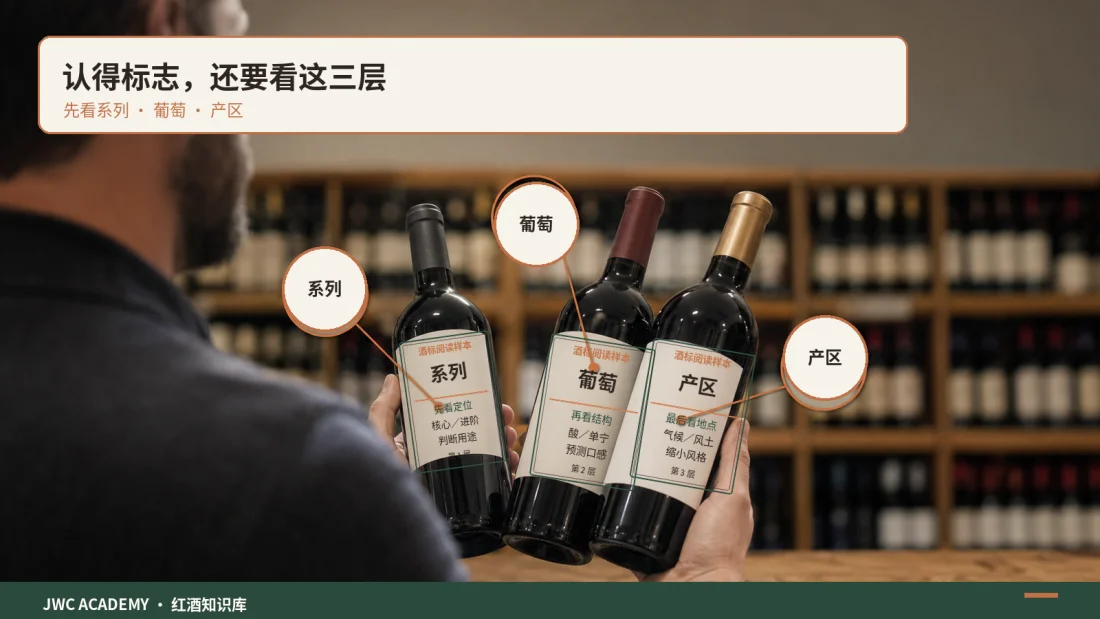
一次只改一层:同品牌 A/B 自己喝一遍
想真的读懂一个品牌,找它两款只差一层的酒来对照。A:同品牌、同系列,只换葡萄;B:或同品牌、同葡萄,只换产区。喝的时候记四件事——酸度、单宁、酒体、香气,最后回头问自己:那个系列定位(入门还是珍藏),你真的喝出来了吗?一次只动一个变量,差别才归得了因。
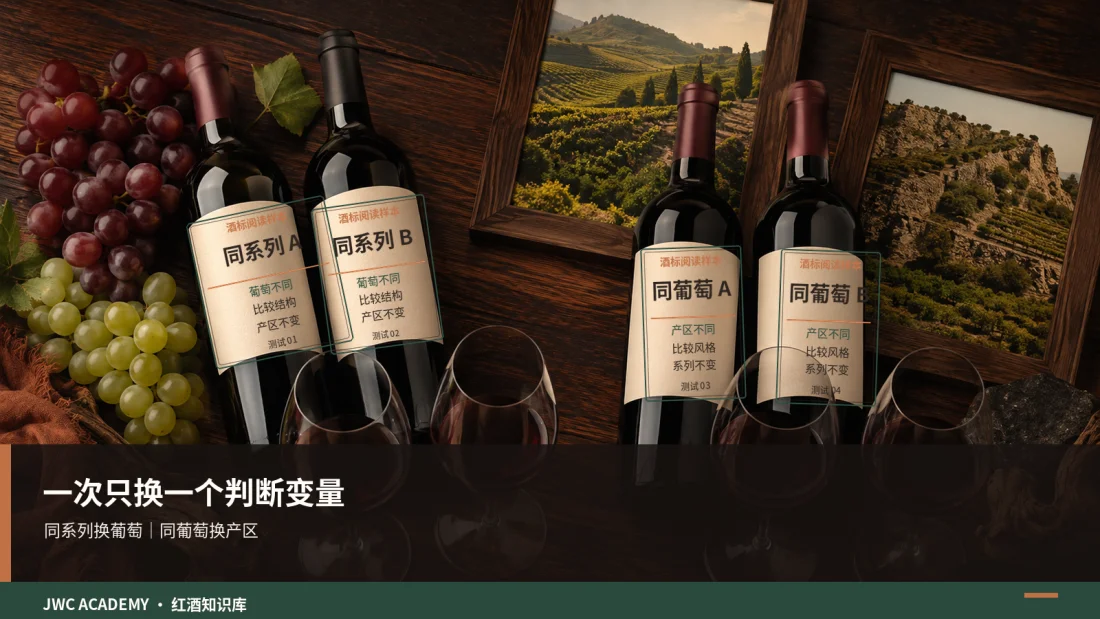
顺手拆掉四个选酒迷思
同品牌味道应该差不多、系列越高越适合所有人、只认 logo 就不会买错、品牌介绍就是背目录——这四个说法都不成立。产品家族可以铺得很宽,定位不等于你的口味,具体酒款信息永远比牌子重要,而真正该学的是产品组合背后的风格逻辑,不是死记名字。
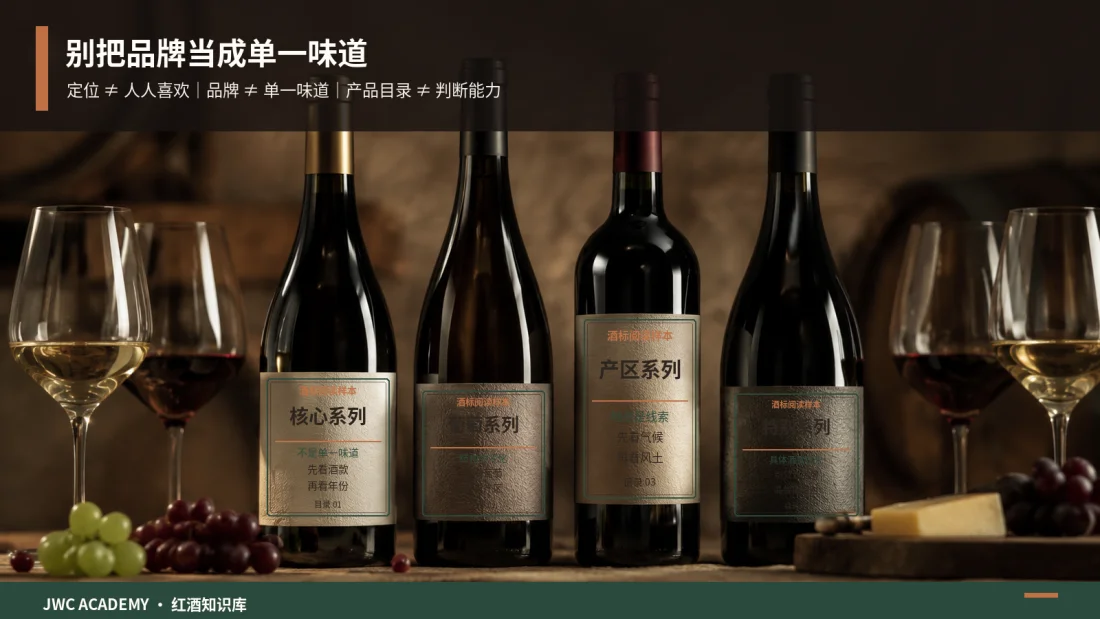
品牌课真正的价值:换一排酒,你照样会选
新世界训练先让你认葡萄和结构,再看品牌怎么用不同系列做出差异;进入旧世界补上产区与风土后,你面对任何一整排都能读出「这瓶为什么摆在这里、为什么这个价」。目标不是背某个品牌的目录,而是拿到没见过的新牌,也能用同一套四层自己判断,不用再问店员「哪瓶最好」。
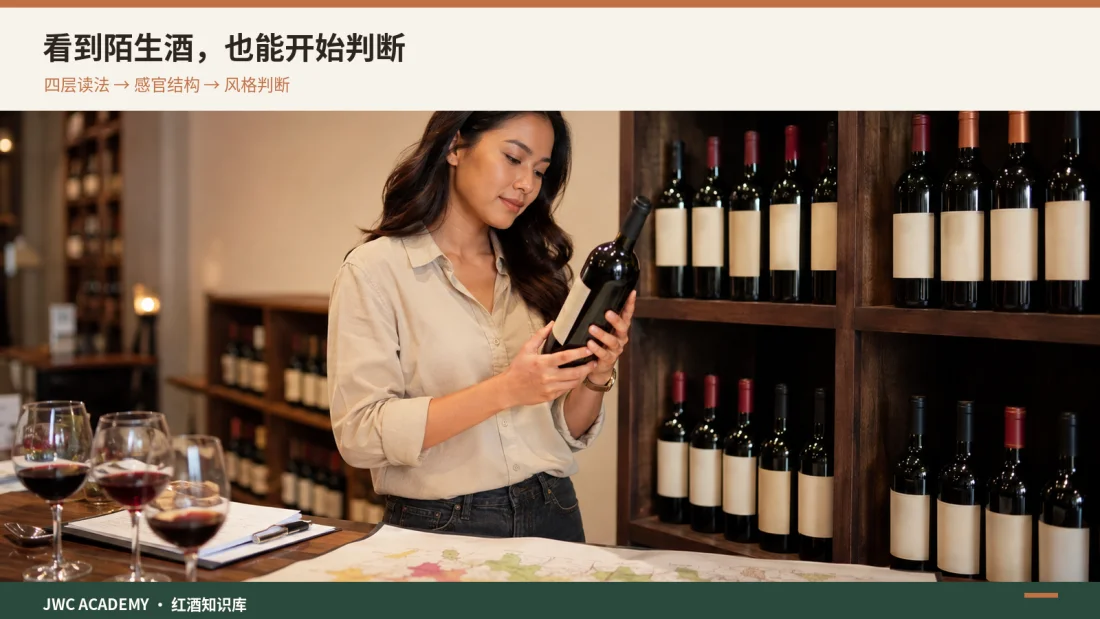
冷知识
名庄的「副牌酒」,其实是故意做便宜的
波尔多不少名庄都有一款「副牌酒」(second wine):用没被选进正牌的地块、或比较年轻的葡萄藤酿成,价格常常只是正牌的零头,却挂着同一个酒庄的血统。所以同品牌里更便宜的那瓶,不一定是偷工减料,而是一套刻意的分层——让你用更低的门槛,先尝到这家的风格。
常见问题
同品牌先买哪一个系列?
先看你的饮用目标和喜欢的结构,再挑具体的葡萄、产区和系列,别只用「系列高低」当唯一标准。日常配餐、送礼和收藏,答案往往不一样。
系列名字是不是全球都一样?
不一定。品牌在不同市场的策略会变,系列名和定位都可能不同,以品牌当前的官方资料为准最稳。
同品牌同葡萄,为什么还是不一样?
产区、原料来源、熟成和酿造选择都还在变。就算葡萄同名,凉热产区和过桶方式不同,风格就会挪位。
品牌官网的 tasting notes 值得看吗?
值得当线索,但先自己喝、再对照,别把营销文字当成唯一标准答案。你的舌头永远是第一手。
JWC Wine Course新世界葡萄酒课程
新世界葡萄酒课程
一堂 2.5 小时 · 零基础友好
5 款实杯,比较澳洲、纽西兰、智利、阿根廷与南非。把葡萄品种、香气与结构连成一套下次还能用的选酒方法。小班到店品鉴,无需任何基础。
看课程详情或用 WhatsApp 问 Emily参考资料
- Wine & Spirit Education Trust (WSET) · wsetglobal.com
© JWC Academy · Wine Guides 红酒指南
Wine Knowledge · Reading a Winery
JWC Wine Guide · 12 / 12
One brand, a whole shelf of different wines — what makes series, grape and region differ?
Lucas EngPrincipal, JWC Academy · World-stage barista · Wine educator
Quick answer
A whole row under one label isn’t one flavour — it’s a product family. Read it in four layers: brand → series → grape/blend → region. Change any layer and the wine changes.
One brand doesn’t mean one taste — start with four layers
A whole row under the same logo is often changing four things at once: the series’ positioning, the grape or blend, the region it’s sourced from, and oak and ageing. The outer layer is the brand — it only carries family identity; the layers underneath are what actually decide what’s in your glass. Reading these four apart beats recognising a logo. Knowing the name isn’t the same as understanding the bottle.
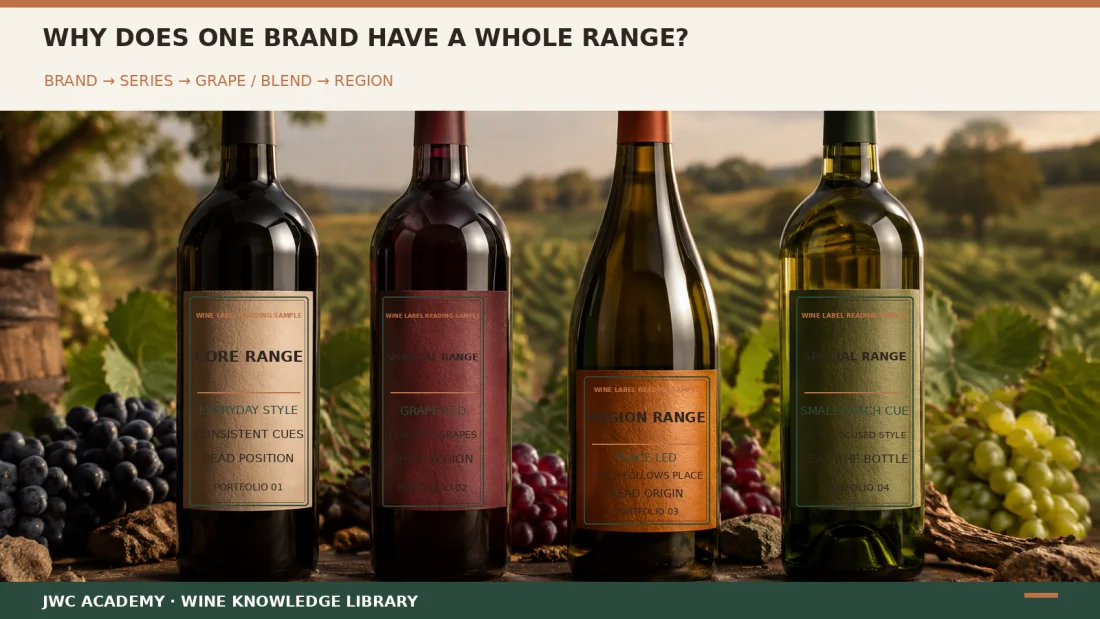
The brand says who made it; the series says which product line
One producer builds several ranges for different markets, price points and styles: an entry everyday line, single-vineyard bottlings, a Reserve, and so on. Don’t paste your impression of the parent brand onto every bottle. When a series name means nothing to you, check the brand’s own site for its range structure — you’ll see the shelf was deliberately split into separate lines.
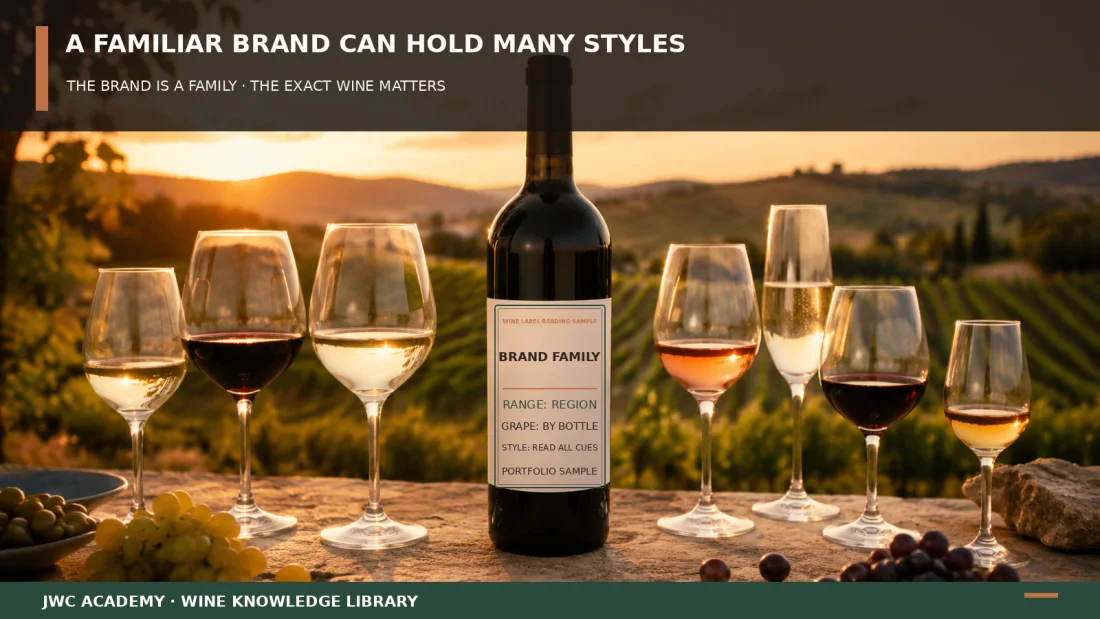
What you’re seeing, and what it means
Read the symptom first, then decide which layer to touch:
| Situation | Likely cause | First move |
|---|---|---|
| Know the brand but pick the wrong style | Stopping at the logo | Read down: series + grape + region |
| Same brand, one light one heavy | Different grape / region / winemaking | Compare the four layers side by side |
| A pile of series names you can’t parse | Unclear product-line hierarchy | Check the brand site’s range structure |
| Assuming a higher range suits you better | Treating positioning as a taste guarantee | Go back to structure and occasion |
| Every new brand means starting over | No general framework | Read any new brand with the same four layers |
Level up · Intermediate
Why are “Reserve” and “single-vineyard” usually pricier and longer-lived?
An entry line is usually blended in volume from a broad regional catchment, with short oak or none — reliable, easy, cheap. Climb the range and the grape source narrows: from a big region down to a village, then to a single vineyard, with smaller yields, often older vines or better-facing plots, plus longer oak and ageing. Those costs and that scarcity push the price up together, and bring more concentrated flavour and longer cellaring potential. So a higher series really means a narrower grape source plus more winemaking input — a different quality band, not a guarantee it fits tonight’s dinner.
Grape and region: the two layers that really move structure
The series tells you positioning, but what actually shifts on your palate is grape and region. Cabernet, Pinot, Shiraz or a blend sets your expectations for acidity, tannin, body and aroma; and the same grape moves style when the region changes — cooler or warmer, this village or that one. So when two bottles from one brand taste very different, don’t blame the brand — ask first: is it the grape that changed, or the region?
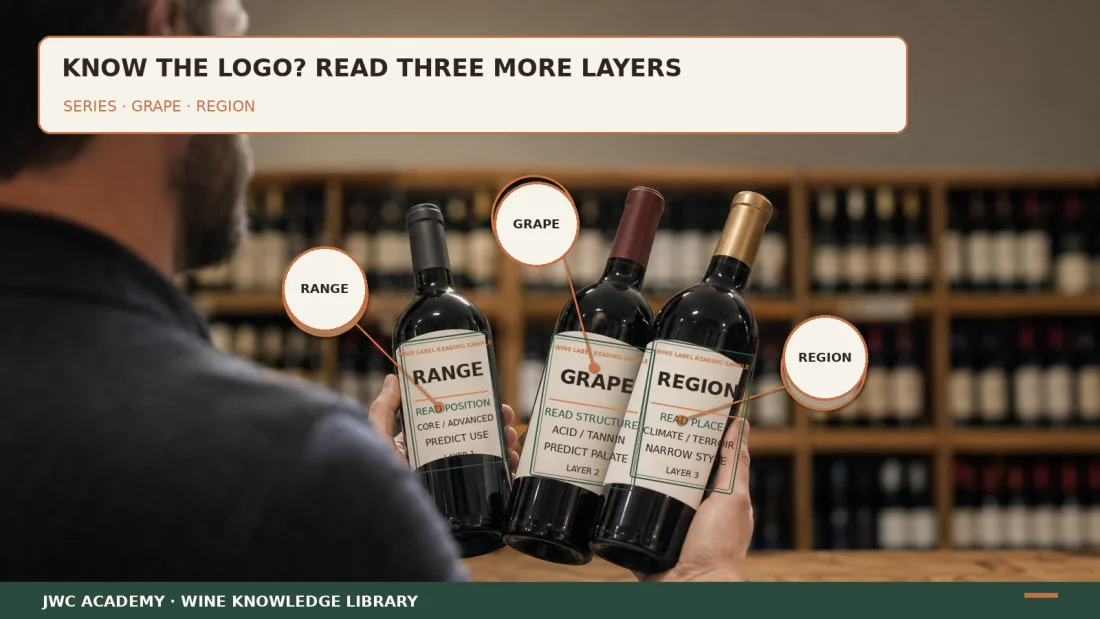
Change one layer at a time — run your own A/B
To really read a brand, find two of its wines that differ by only one layer. A: same brand, same series, only the grape changes. B: same brand, same grape, only the region changes. As you taste, note four things — acidity, tannin, body, aroma — then ask: did you actually taste that series’ positioning (entry vs Reserve)? Move one variable at a time and the difference has a cause.
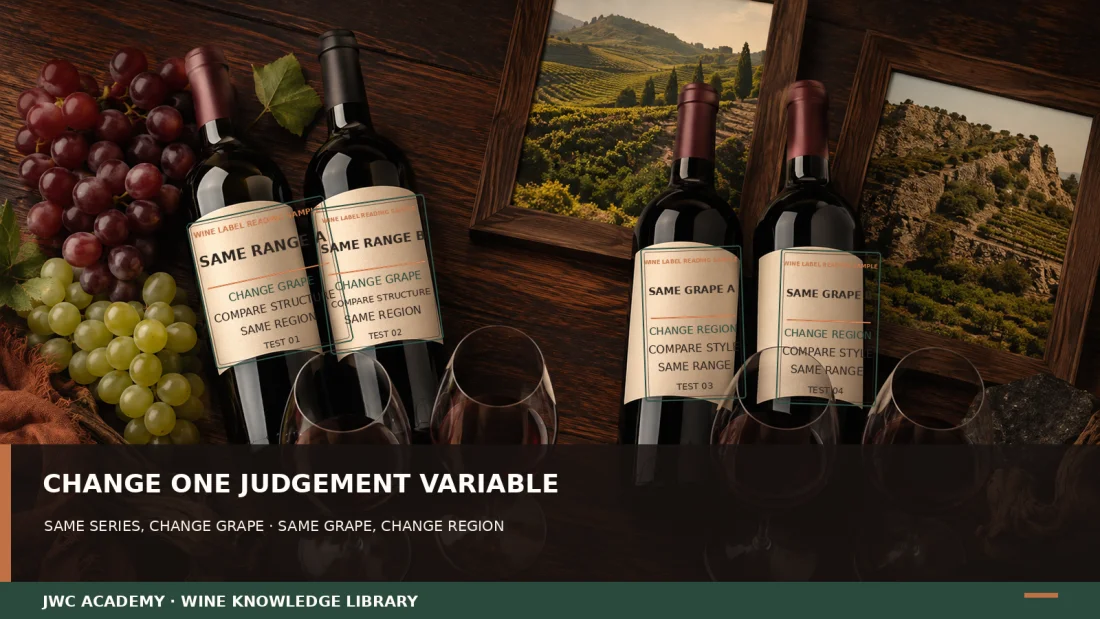
Clear four wine-buying myths along the way
Same brand should taste similar, a higher series suits everyone, recognising the logo means you won’t buy wrong, a brand intro is just reciting the catalogue — none hold up. A product family can spread very wide, positioning isn’t your palate, the exact bottle always matters more than the label, and what’s worth learning is the style logic behind the range, not memorising names.
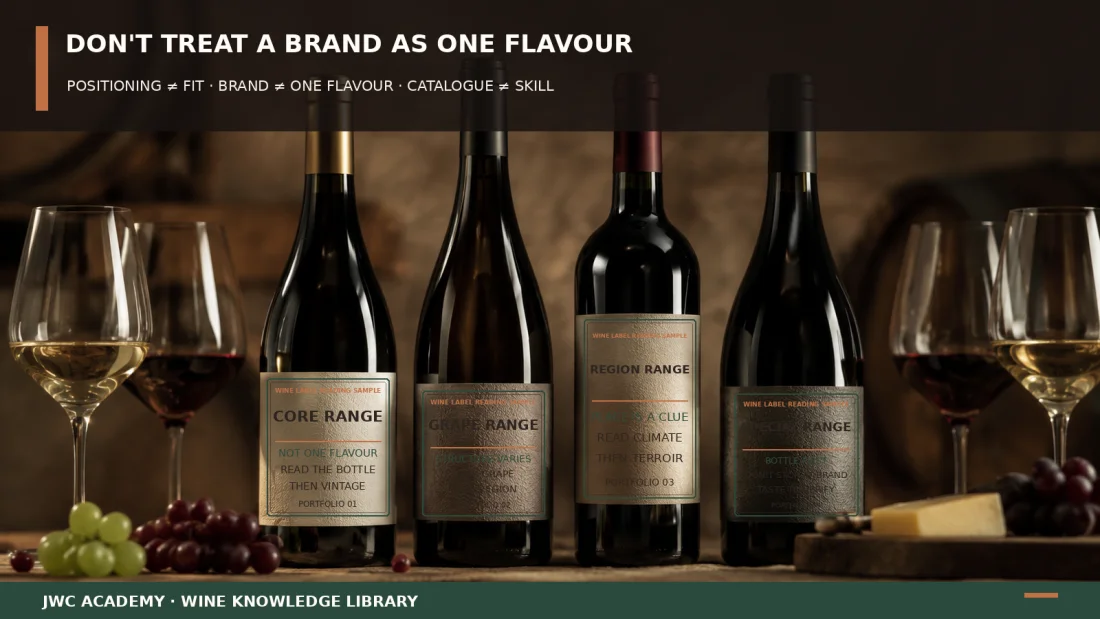
What a brand class is really worth: swap the shelf, you still choose well
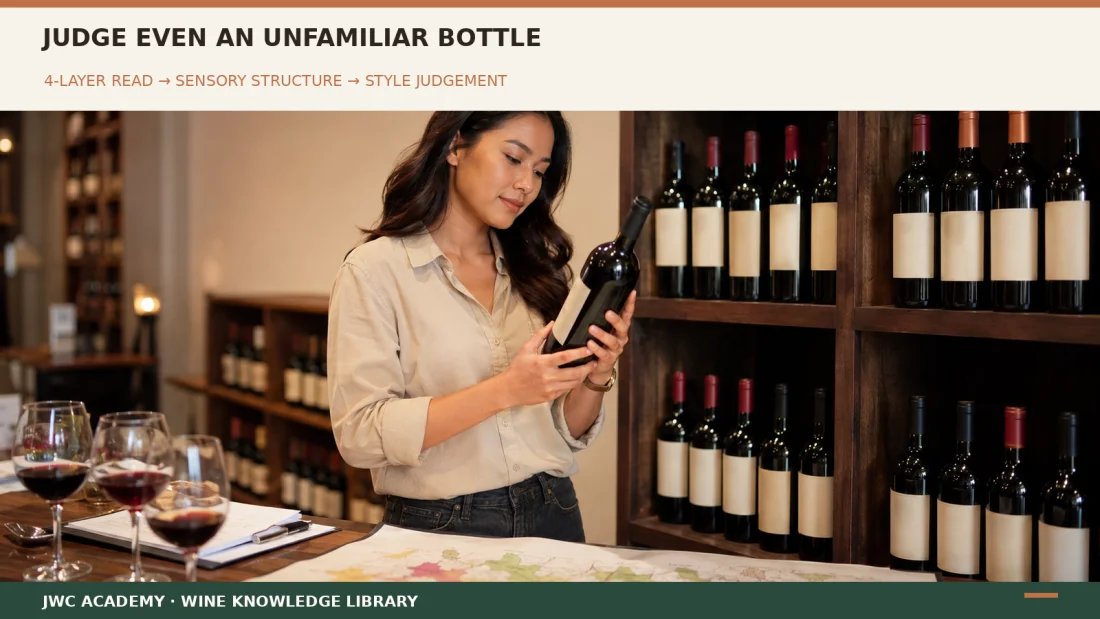
New World training first teaches you grape and structure, then how a brand differentiates its series; add Old World region and terroir and you can read any row — why this bottle sits here, and why it costs what it does. The goal isn’t memorising one brand’s catalogue — it’s picking up a brand you’ve never seen and judging it with the same four layers, no need to ask staff “which one’s best.”
Did you know
A château’s “second wine” is cheap on purpose
Many Bordeaux estates make a second wine: from plots that didn’t make the grand vin, or from younger vines, often at a fraction of the price yet carrying the same estate’s pedigree. So the cheaper bottle within a brand isn’t necessarily cut corners — it’s a deliberate tier, a lower door through which you first taste the house style.
FAQ
Which series of a brand should I buy first?
Start from your drinking goal and the structure you like, then pick the exact grape, region and series — don’t use “higher range” as the only test. Everyday pairing, gifting and cellaring often point to different answers.
Are series names the same worldwide?
Not necessarily. A brand’s strategy shifts by market, so names and positioning can differ. The brand’s current official information is the safest reference.
Same brand, same grape — why still different?
Region, sourcing, ageing and winemaking choices still vary. Even with the same grape name, a cooler or warmer region and different oak move the style.
Are the brand site’s tasting notes worth reading?
Worth it as a clue, but taste first and compare after — don’t treat marketing copy as the only correct answer. Your own palate is always first-hand.
JWC Wine CourseNew World Wine Course
New World Wine Course
One 2.5-hour session · Beginner-friendly
Five wines side by side across Australia, New Zealand, Chile, Argentina and South Africa — turning grape, aroma and structure into a method you can use next time you buy. Small in-house tasting class, no experience needed.
See course detailsOr ask Emily on WhatsAppReferences
- Wine & Spirit Education Trust (WSET) · wsetglobal.com
© JWC Academy · Wine Guides