












中EN
红酒知识 · 送礼选酒
JWC 红酒指南 · 10 / 12
不懂红酒又要送礼,怎么选才不容易出错?
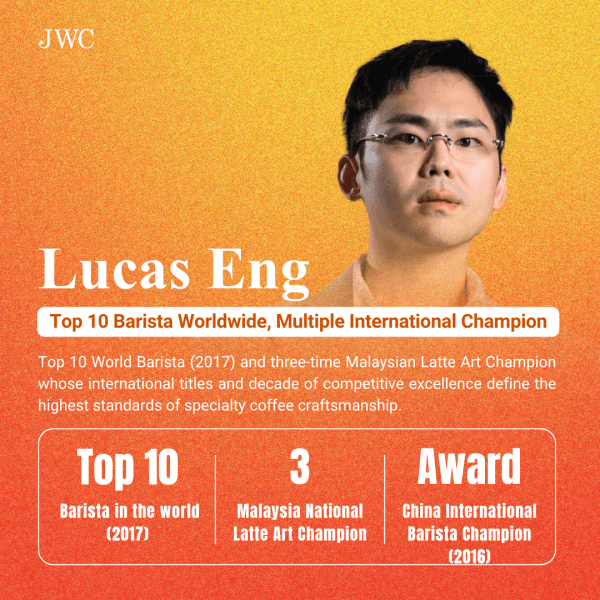 Lucas Eng
JWC Academy 创办人 · 世界赛咖啡师 · 侍酒教学
先给答案
送礼最稳的第一步,不是找最有面子的牌子,而是先拿到三个信息:对方平常喝什么、这瓶马上开还是收着、通常配什么餐或场合。再用葡萄、产区、系列缩小范围。专业感来自理由,不来自背价格。
先问三个问题,把「送一瓶酒」变成具体需求
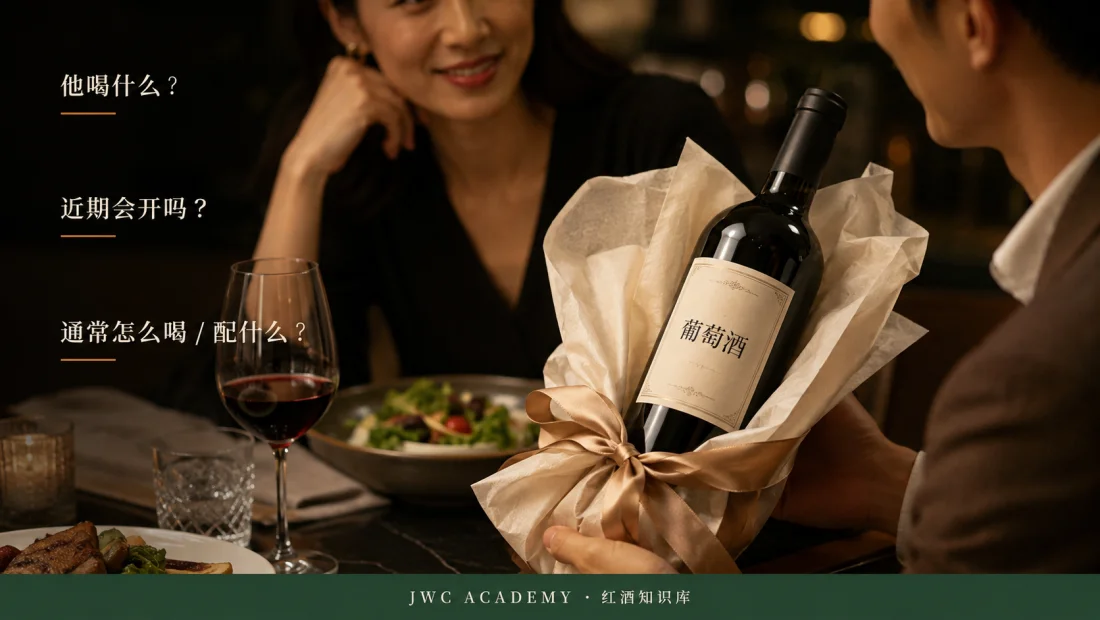
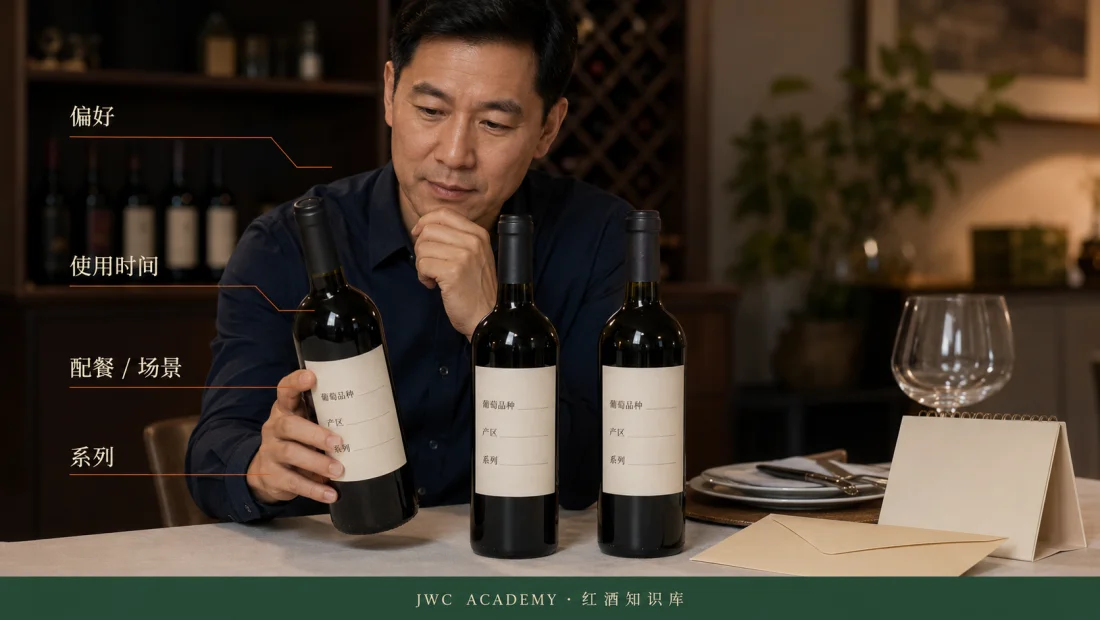
送礼最稳的第一步,不是找「最有面子」的牌子,而是先拿到三个信息:对方平常喝红还是白、偏轻还是偏浓;这瓶是马上开还是收着;通常配什么餐、在什么场合喝。把「送一瓶酒」拆成这三问,需求就具体了。不知道答案时,宁可选风格清晰、来源和标签好解释的酒,也别靠夸张包装猜品质。
理由比 logo 重要
熟悉的大牌能让送礼更好解释,但辨识度不等于口味匹配——同一个品牌,从轻盈果味到浓郁橡木都可能有,选错系列,对方照样不爱喝。真正让人信服的,是一句能说清的理由:「我选这瓶,因为你常吃牛排,它的结构接得住」。理由比 logo 更有底气,也更像懂你。
先看症状,再决定动哪个变量
把当下的困境对上原因,就知道下一步先补哪一块:
| 你遇到的症状 | 可能原因 | 先调什么 |
|---|---|---|
| 只知道对方喝红酒 | 信息太宽 | 再问偏轻盈还是浓郁、常配什么餐 |
| 商务送礼怕不够体面 | 把品牌名气当唯一标准 | 选来源与系列逻辑清楚的酒 |
| 对方可能马上开瓶 | 需要好理解的适饮风格 | 选风格清晰、当下好喝的方向 |
| 完全不知道偏好 | 缺信息 | 优先中等结构、用途广的风格,并说明依据 |
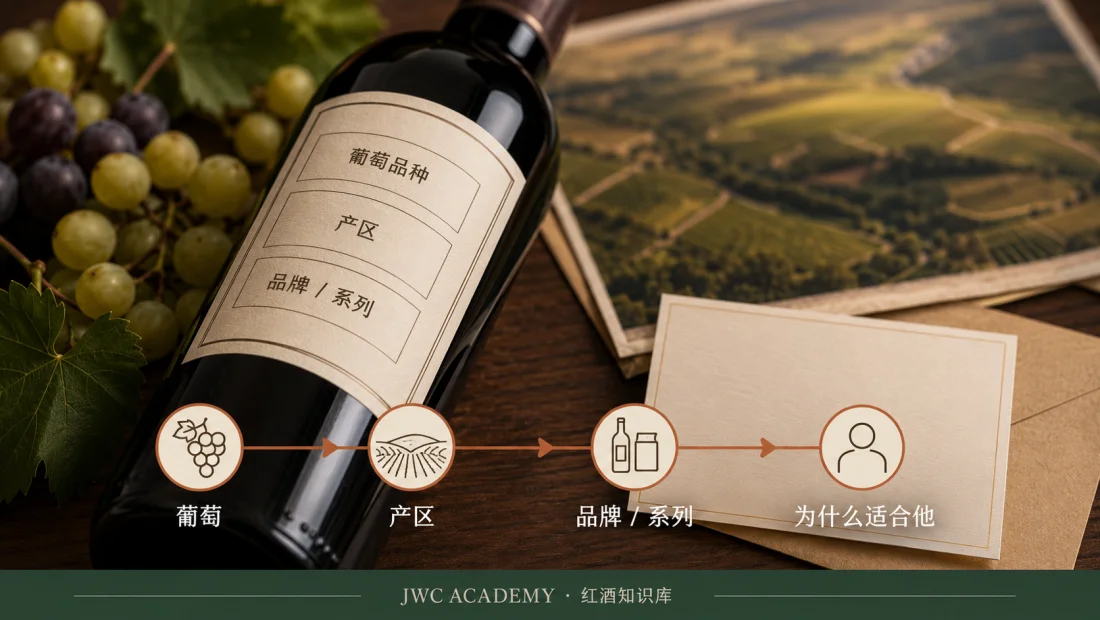
| 店员一次推一堆更乱 | 没有筛选框架 | 回到葡萄 / 产区 / 系列三层 |
进阶 · 中级
价位带、产区名气、包装:三个容易被误读的信号
送礼最常踩的雷,是把「贵」「产区有名」「包装重」当成品质保证。其实:价位带更多反映稀缺、关税和渠道,不直接等于合不合收礼人口味;波尔多、勃艮第这类名产区里,风格从清瘦到厚重都有,名气保证的是辨识度不是适口;瓶子越重、盒子越华丽,也只是包装成本,不是感官证据。更实用的做法是用价位带避雷:在预算内挑一支来源清楚、系列明确的酒,把心力花在「风格对不对人」,而不是「牌子够不够响」。

「有名」给的是辨识度,不是口味匹配
同一个品牌可以从轻盈果味一路做到浓郁橡木,所以看牌子不够,要读到具体葡萄、产区和系列(range)。信息不足时,避开极高单宁、明显甜感、强烈橡木这些更挑人的极端风格,优先较平衡、好解释的方向。选完补一句理由——只要理由不是只剩品牌名,这份礼就站得住。
有两个候选时,一次只改一个变量
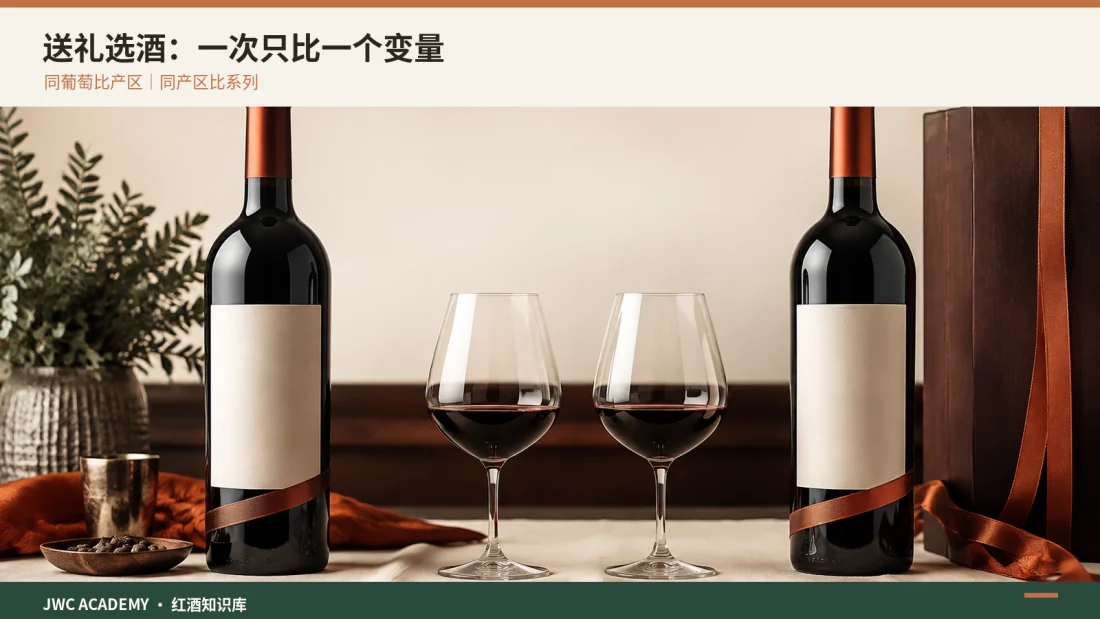
如果能看到两款候选,别同时换葡萄、产区、品牌和风格——那样你无法判断差别从哪来。做法:先固定葡萄,比较两个产区或生产者;或固定产区,比较两个系列。然后写一句「为什么适合收礼人」。如果这句理由只剩品牌名,就回到结构重新选。
顺手拆掉四个送礼迷思
越贵越不会错、包装漂亮就是品质好、大品牌所有系列都一样、不懂就装懂——这四个说法都不成立。价格和包装都不是口味的证据,同品牌的产品线可以很宽,而清楚说出选择理由,比硬撑「我很懂」更让人信任。放下这些包袱,你才敢照对方的实际口味去选。
最有底气的,不是会报品牌,是知道自己为什么选
系统品鉴让你先从葡萄、酸度、单宁和酒体建立判断,再用旧世界产区与风土补上酒标阅读。这样面对陌生的品牌和系列,你手上都有一套选择逻辑——不用背名庄,也能替任何人挑到「说得出理由」的那一瓶。送礼的专业感,从此来自判断,不是价格。
冷知识
瓶底那个凹进去的坑,跟品质没关系
很多人挑送礼酒会翻过瓶子看底部——凹得越深、瓶子越重,好像越高级。其实这个凹槽(punt)主要是历史和工艺留下的:方便早期吹制的瓶子站稳、增加瓶身强度、让沉淀物聚在边缘。它跟酒好不好喝没有可靠关系。下次别再用瓶底的深浅替一瓶礼物打分了。
常见问题
完全不知道对方喜好怎么办?
降低极端风格,选来源、葡萄/产区和系列信息都清楚、用途较广的酒,并保留之后换酒的空间。风格清晰比「够贵」更不容易出错。
送礼是不是一定要选名牌?
不一定。品牌辨识度只是因素之一,具体那一款的风格才决定对方爱不爱喝。来源和系列逻辑清楚,比牌子响更重要。
红酒瓶子越重、包装越豪华越好吗?
不是。瓶重和包装只反映成本,不代表感官品质。别用外观替一瓶酒打分,风格是否对人才是关键。
该跟收礼人解释什么?
一句简洁理由就够:这支的葡萄/产区带来什么风格,为什么和你知道的对方口味或用餐方式相合。
JWC Wine Course新世界葡萄酒课程
新世界葡萄酒课程
一堂 2.5 小时 · 零基础友好
5 款实杯,比较澳洲、纽西兰、智利、阿根廷与南非。把葡萄品种、香气与结构连成一套下次还能用的选酒方法。小班到店品鉴,无需任何基础。
看课程详情或用 WhatsApp 问 Emily参考资料
- Wine & Spirit Education Trust (WSET) · wsetglobal.com
© JWC Academy · Wine Guides 红酒指南
Wine Knowledge · Gifting Wine
JWC Wine Guide · 10 / 12
Buying wine as a gift without knowing wine — how not to get it wrong
Lucas EngPrincipal, JWC Academy · World-stage barista · Wine educator
Quick answer
The safest first move isn’t chasing the most prestigious label — it’s getting three facts: what the recipient usually drinks, whether the bottle gets opened soon, and the usual food or occasion. Then narrow by grape, region and range. Your credibility comes from the reason, not the price tag.
Ask three questions first — turn “a bottle of wine” into a real brief
The safest first step isn’t hunting for the most “impressive” name — it’s getting three facts: does the recipient drink red or white, lighter or fuller; is this bottle for opening soon or keeping; what do they usually eat or where do they drink it. Split “a bottle of wine” into those three questions and the choice gets concrete. When you don’t know, pick a wine with a clear style and easy-to-explain source and label rather than guessing quality from flashy packaging.
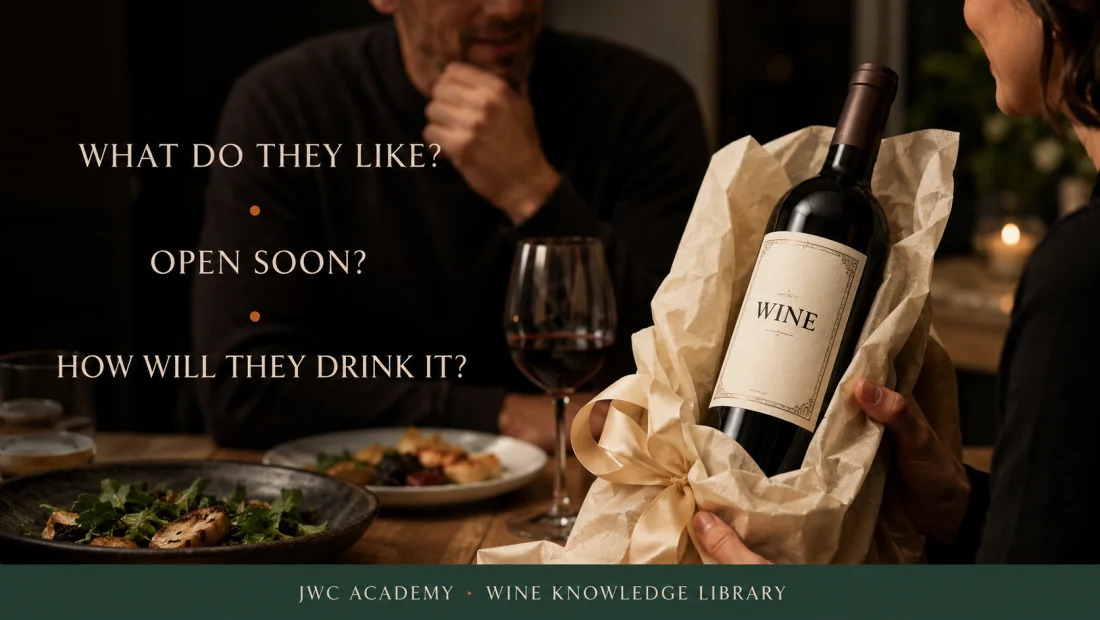
The reason matters more than the logo
A familiar big name makes a gift easier to explain, but recognition isn’t the same as a taste match — one brand can run from light and fruity to dense and oaky, and the wrong range still misses. What actually convinces is a reason you can say out loud: “I picked this because you love steak, and its structure can stand up to it.” A reason gives you more confidence than a logo — and reads as knowing the person.
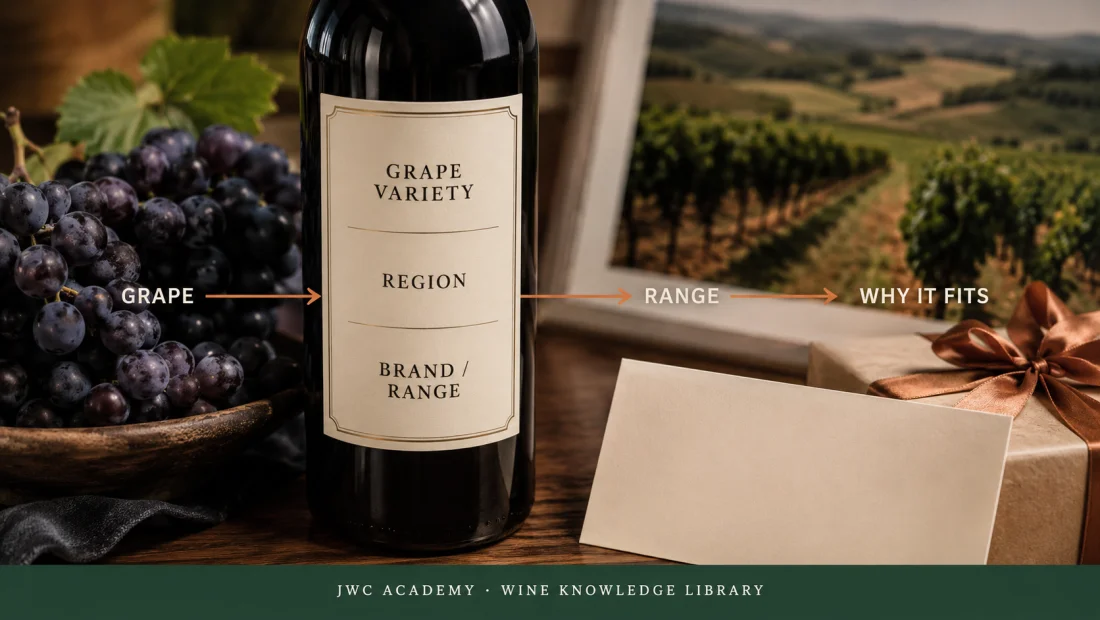
Read the symptom first, then decide which variable to change
Match your situation to its cause and you know which gap to close next:
| Your situation | Likely cause | What to fix first |
|---|---|---|
| You only know they drink red | Brief is too broad | Ask lighter vs fuller, and what they eat with it |
| Business gift, afraid it looks cheap | Brand fame treated as the only yardstick | Choose a wine with clear source and range logic |
| They may open it right away | Needs an easy, ready-to-drink style | Pick a clear, drink-now style |
| No idea of their preference | Missing information | Favour a medium-bodied, versatile style and say why |
| The shop keeps pushing more brands | No filtering framework | Return to grape / region / range |
Level up · Intermediate
Price band, famous region, packaging: three signals people misread
The classic gifting trap is treating “expensive,” “famous region” and “heavy bottle” as proof of quality. In reality: a price band reflects scarcity, tariffs and distribution more than whether it fits your recipient’s taste; famous regions like Bordeaux or Burgundy hold styles from lean to rich, so fame guarantees recognition, not palatability; and a heavier bottle or fancier box is just packaging cost, not sensory evidence. A more useful move is to use the price band as a guardrail — within your budget, pick a wine with a clear source and defined range, and spend your energy on “does the style fit the person,” not “is the name loud enough.”
“Famous” buys recognition, not a taste match
One brand can run from light and fruity all the way to dense and oaky, so the label alone isn’t enough — read down to the actual grape, region and range. When information is thin, avoid crowd-splitting extremes like very high tannin, obvious sweetness or heavy oak, and lean toward a balanced, easy-to-explain style. Then add one reason for the pick — as long as that reason isn’t just the brand name, the gift holds up.
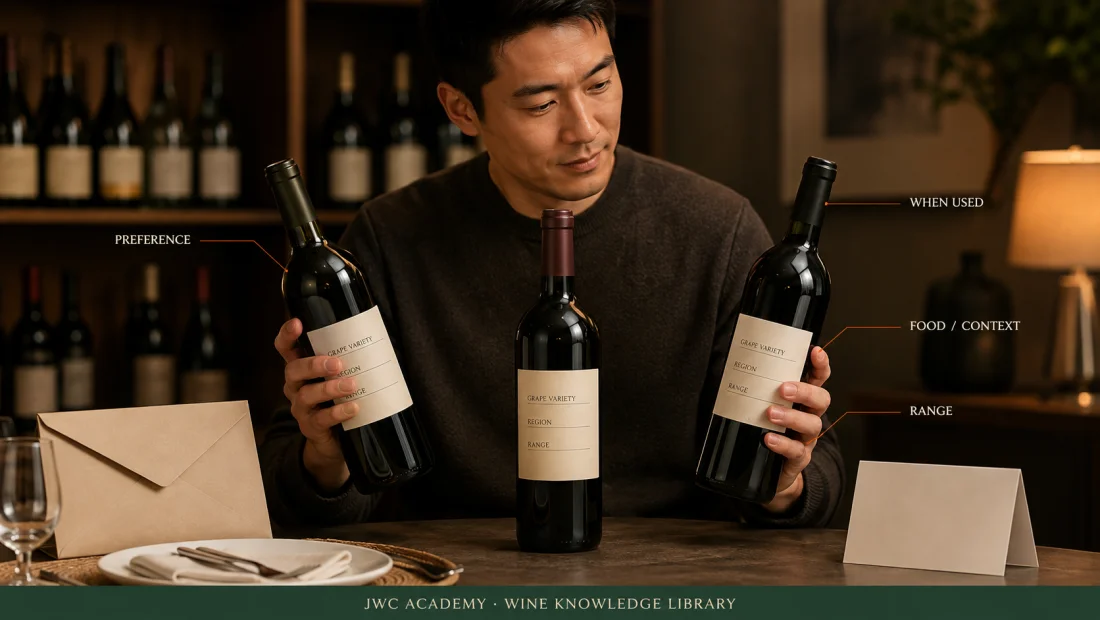
With two candidates, change one variable at a time
If you can see two candidates, don’t swap grape, region, brand and style all at once — you won’t know where the difference came from. Instead: fix the grape and compare two regions or producers; or fix the region and compare two ranges. Then write one line on “why it suits the recipient.” If that line collapses to just a brand name, go back to structure and choose again.
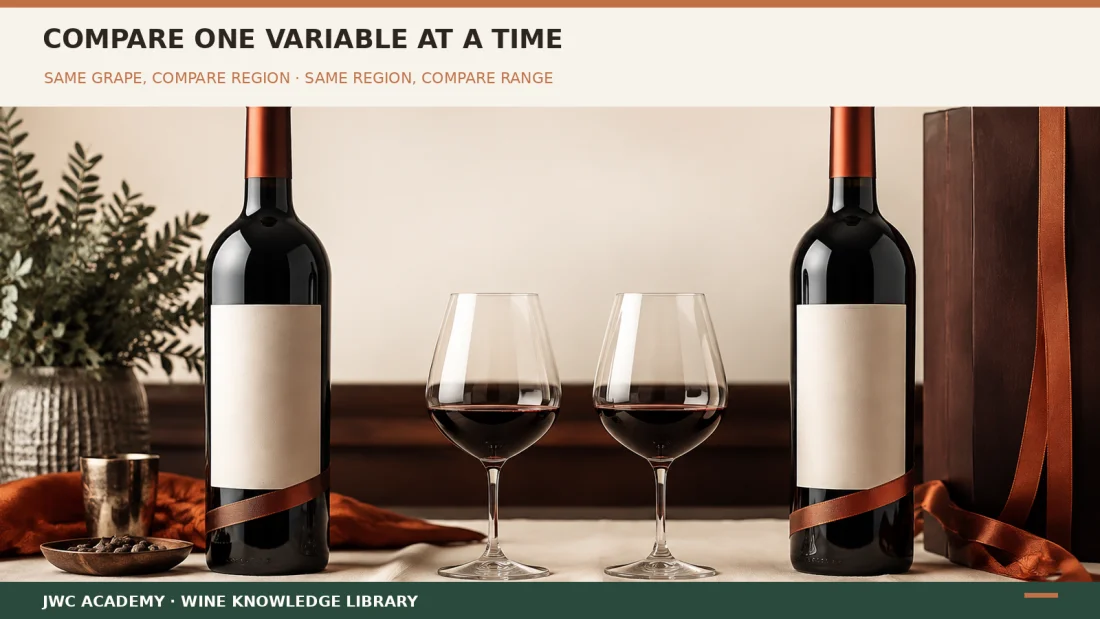
Clear four gifting myths along the way
Pricier is safer, pretty packaging means quality, a big brand’s ranges are all alike, and fake it if you don’t know — none of these hold up. Price and packaging aren’t taste evidence, one brand’s line-up can be very wide, and saying your reason clearly earns more trust than pretending expertise. Drop this baggage and you’ll choose by the recipient’s actual taste.
Real confidence isn’t naming brands — it’s knowing why you chose
Systematic tasting lets you judge from grape, acidity, tannin and body first, then read labels through Old World regions and terroir. Face an unfamiliar brand or range and you still have a selection logic — no need to memorise grand estates to pick a bottle you can justify for anyone. From here, the polish of a wine gift comes from judgement, not price.
Did you know
That dimple in the bottle base has nothing to do with quality
Many people turn a gift bottle over to check the bottom — the deeper the dimple and heavier the glass, the classier it seems. In fact that indent (the punt) is mostly history and craft: it helped early hand-blown bottles stand steady, strengthened the glass, and gathered sediment at the edge. It has no reliable link to how the wine tastes. Next time, don’t grade a gift by how deep its base goes.
FAQ
What if I have no idea what they like?
Dial down extreme styles and pick a wine with clear source, grape/region and range, and broad use — keep room to swap later. A clear style is safer than an expensive one.
Does a gift wine have to be a big-name brand?
No. Brand recognition is just one factor; the style of that specific wine decides whether they enjoy it. Clear source and range logic beats a loud name.
Is a heavier bottle or fancier box better?
No. Bottle weight and packaging only reflect cost, not sensory quality. Don’t grade a wine by its looks — whether the style fits the person is what matters.
What should I explain to the recipient?
One short reason is enough: what style the grape/region gives, and why it matches the taste or the way of eating you know about them.
JWC Wine CourseNew World Wine Course
New World Wine Course
One 2.5-hour session · Beginner-friendly
Five wines side by side across Australia, New Zealand, Chile, Argentina and South Africa — turning grape, aroma and structure into a method you can use next time you buy. Small in-house tasting class, no experience needed.
See course detailsOr ask Emily on WhatsAppReferences
- Wine & Spirit Education Trust (WSET) · wsetglobal.com
© JWC Academy · Wine Guides