













中EN
红酒知识 · 缺陷判断
JWC 红酒指南 · 04 / 12
红酒有湿纸板、霉味,是这支酒坏了吗?
 Lucas Eng
JWC Academy 创办人 · 世界赛咖啡师 · 侍酒教学
先给答案
湿纸板/霉味 加上果香被压低,是 cork taint(软木塞污染)的典型警讯;但 不是所有土味都等于坏酒。先确认杯子干净、再闻一次,必要时和另一杯比较或请人复核。
cork taint 常常不只是「多了一股臭味」
很多人以为坏酒一定是扑鼻恶臭,其实 cork taint 更常见的表现,是果香被明显压低、整支酒变得沉闷无神。你不是闻到强烈异味,而是「这支怎么这么闷、这么没水果味」。所以当湿纸板、潮湿地下室的气味配上被抽走的果香,就值得警觉。单靠鼻子一时的犹豫,不代表你不会喝——这正是很多老手也会停下来再确认的信号。

很低浓度就可能有影响,但阈值不是人人一样
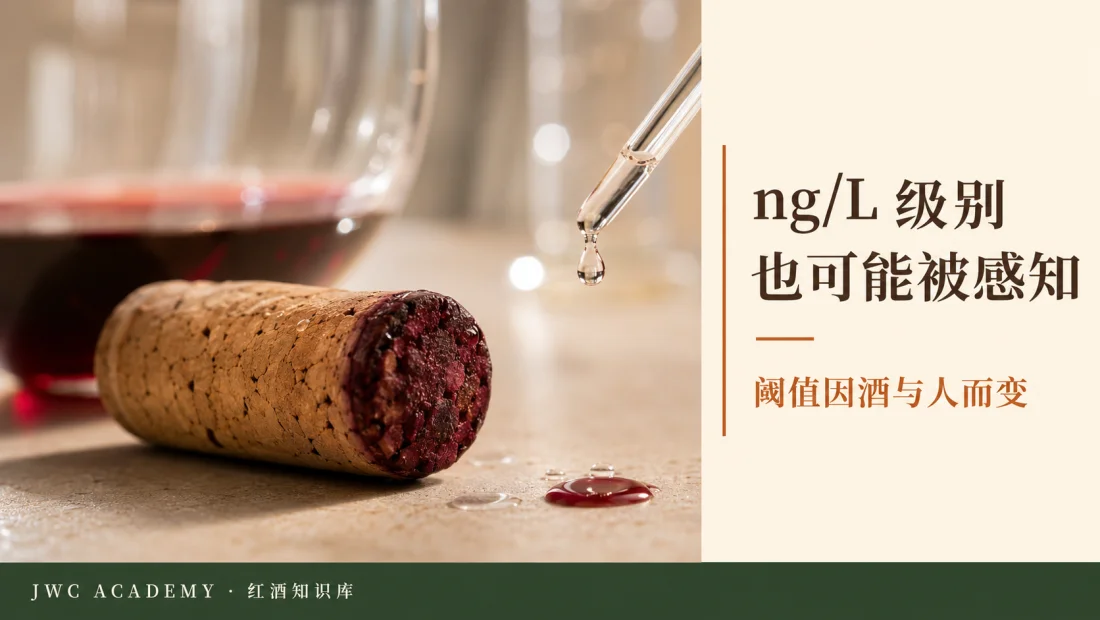
Australian Wine Research Institute 把 TCA 列为 cork taint 的关键化合物,并指出它在极低的 ng/L(万亿分之一)级别就可能被感知。但具体阈值会随酒款结构和饮者体质而变。这也是为什么同一桌,有人一闻就皱眉,有人却完全不确定。别把「我没闻到」当成能力羞辱,也别用「你怎么闻不到」去压别人——敏感度差异是生理现实,不是懂不懂酒的分数。
你遇到什么症状,先动哪一个变量
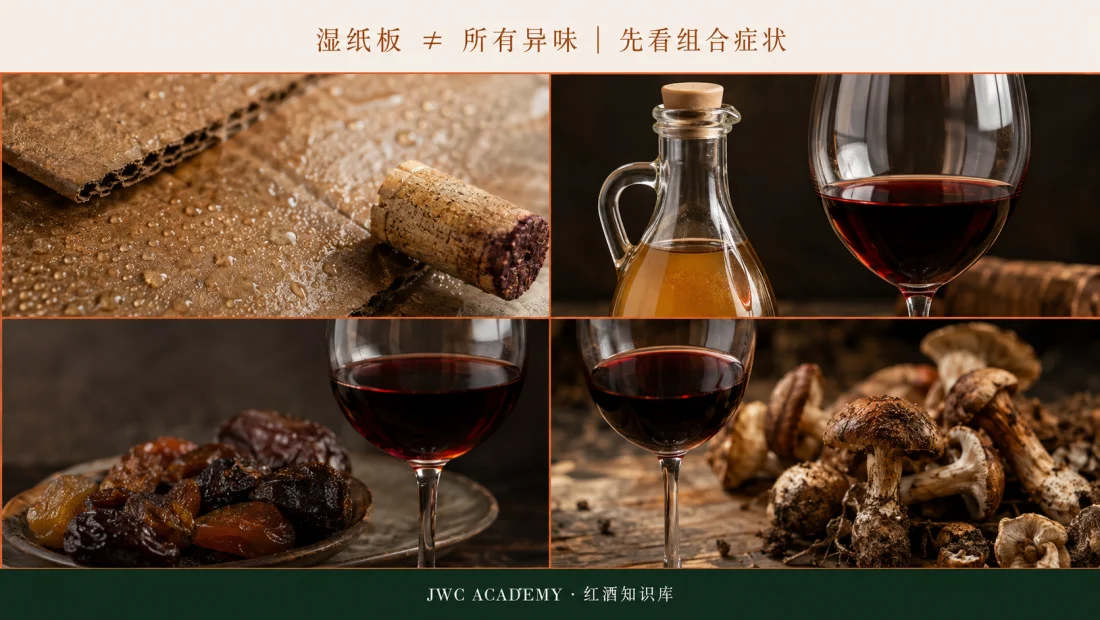
先看症状,再决定动杯子、动比较,还是别急着下结论:
| 症状 | 可能原因 | 先做什么 |
|---|---|---|
| 湿纸板、霉地下室感 + 果香弱 | 可能 cork taint / TCA | 先确认杯子与环境,再请第二人复核 |
| 酸得像醋、挥发感冲鼻 | 可能其他挥发酸/缺陷 | 别一律归成 cork taint |
| 坚果、褐色、果味衰退 | 可能氧化或酒龄/风格 | 先看是否符合酒款预期 |
| 只有土壤、蘑菇感但果香正常 | 可能是风格香气 | 别仅凭 earthy 就判坏 |
| 换个干净杯后异味消失 | 杯具/环境污染 | 先处理杯子,而不是怪酒 |
进阶 · 中级
TCA 是什么?为什么它连果香都一起「关掉」
cork taint 的主角常是 TCA(2,4,6-三氯苯甲醚)。它大致是软木或环境里的含氯物质,被霉菌类微生物代谢转化后的产物——所以问题不在「软木塞」本身,而在这条污染链。TCA 的特别之处有两层:一是它极其强效,微量就能被闻到;二是它不只是「加一股霉味」,还会钝化你的嗅觉,让本该跳出来的果香被一起压下去,酒因此显得空、闷。至于为什么有人一闻就中、有人几乎无感,是因为不同人对 TCA 的敏感阈值天生就有差异,这是生理层面的,与懂不懂酒无关。

先排除杯子和环境,再去怀疑酒
怀疑一支酒坏了,最便宜的第一步不是倒掉,而是换一个干净、无味的杯子再闻。洗碗精残留、橱柜霉味、旁边的香水,都能制造假的「异味」。同样地,「土壤、蘑菇」这类气味,很多酒本来就有,是发展香气,不必一闻到 earthy 就判坏——要结合果香有没有被压制、整体风格对不对。在餐厅试酒,其实是在检查酒的 condition,不是表演术语;直接说「我闻到湿纸板、霉味、果香很弱」,请工作人员一起判断,比硬装懂更专业。
一次只改一个变量:先换杯,别换酒
判断时别一次改一堆东西,否则永远说不清是谁的问题。按顺序走:A,原杯记录当下的气味;B,把同一瓶倒进另一个干净无味的杯子再闻;C,若异味仍在,请另一个人盲闻,看是不是只有你觉得怪;D,有条件的话,再拿同款的另一瓶做对照。这样一步一步隔离变量,你会很清楚问题是出在杯子、环境,还是这瓶酒本身。不需要醒酒器和仪器,多一个干净杯就够。

顺手拆掉四个坏酒判断迷思
有几个说法要放下:「有软木塞就一定很香、不会坏」——天然软木和 cork taint 是两回事;「闻到土味就是 corked」——要看组合症状,不是单一描述词;「只有专家闻得到」——感知阈值因人而异,不是身份测试;「我不喜欢这瓶,就能说它坏了」——个人口味和真正的缺陷必须分开。把这四条拆掉,你才不会冤枉一支好酒,也不会替一支坏酒硬找理由。
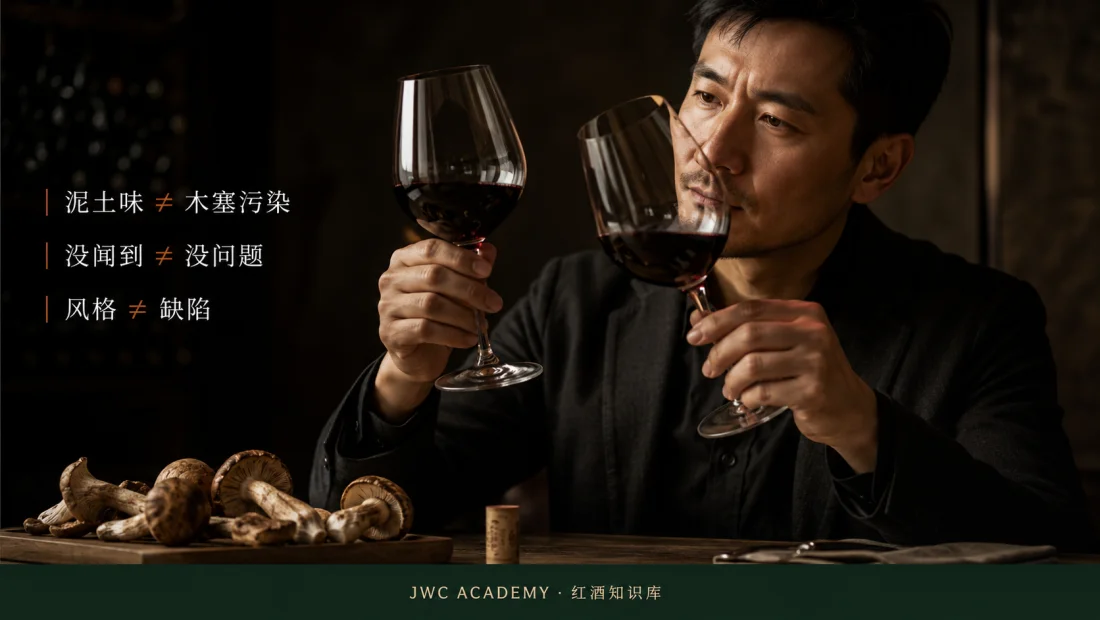
真正的品鉴力,是把「不喜欢」和「有缺陷」分开
系统的品鉴训练,会先帮你建立正常的酸度、单宁与香气坐标,再教你在酒偏离预期时该怎么描述。有了这套坐标,饭局或餐厅遇到问题,你就不用靠胆量瞎猜:这是风格我不爱,还是这支真的有缺陷,你能分得清、说得出。目标不是背一堆术语吓人,而是拿到一杯酒,你知道自己为什么这样判断。

冷知识
螺旋盖不是「便宜货」,反而更防这一味
很多人觉得螺旋盖低档、软木塞才高级,但换螺旋盖的一大理由,正是绕开来自软木的 cork taint。业界常引用的 cork taint 比例落在个位数百分比区间(通识说法,实际随年份和产地波动)——听起来不高,但对一箱好酒来说已经很心疼。所以别再凭「有没有软木塞」猜好坏,不少认真的酒庄反而故意选螺旋盖来保护自家的果香。
常见问题
Cork taint 一定很臭吗?
不一定。轻微时它可能主要表现为果香被压低、整支酒变闷,而不是强烈恶臭。所以「不臭」不代表一定没问题。
旋杯能把 cork taint 救回来吗?
不能。旋杯不会从根本移除 TCA,只是帮你把香气摇出来更好观察。有污染的酒,摇了也还是有污染。
餐厅怀疑酒坏了,能要求换吗?
先礼貌请工作人员一起复核,描述你闻到什么。是否更换取决于确认结果和餐厅政策,不是你说了算,也不是他们说了算。
螺旋盖就不会有任何 wine fault 吗?
不是。螺旋盖能大幅降低来自软木的 cork taint,但氧化、还原、挥发酸等其他缺陷路线依然可能发生。
JWC Wine Course新世界葡萄酒课程
新世界葡萄酒课程
一堂 2.5 小时 · 零基础友好
5 款实杯,比较澳洲、纽西兰、智利、阿根廷与南非。把葡萄品种、香气与结构连成一套下次还能用的选酒方法。小班到店品鉴,无需任何基础。
看课程详情或用 WhatsApp 问 Emily参考资料
- Australian Wine Research Institute (AWRI) · awri.com.au
- Wine & Spirit Education Trust (WSET) · wsetglobal.com
© JWC Academy · Wine Guides 红酒指南
Wine Knowledge · Fault Diagnosis
JWC Wine Guide · 04 / 12
Your wine smells like wet cardboard or mould — is the bottle corked?
Lucas EngPrincipal, JWC Academy · World-stage barista · Wine educator
Quick answer
Wet cardboard / mouldy aromas plus muted fruit are the classic warning of cork taint (TCA). But earthy notes alone don’t prove a fault. Rule out the glass first, re-smell, then compare a second glass or ask for a second opinion.
Cork taint often isn’t just “an added bad smell”
People assume a faulty wine reeks, but the more common sign of cork taint is muted fruit — the whole wine goes flat and lifeless. You don’t smell a strong stink; you think “why is this so dull, where did the fruit go?” So when wet cardboard or damp-cellar notes come together with fruit that’s been stripped out, take it seriously. A moment’s hesitation at the glass doesn’t mean you can’t taste — it’s exactly the pause experienced drinkers make before double-checking.

It can matter at very low levels, but thresholds vary
The Australian Wine Research Institute names TCA as a key cork-taint compound and notes it can be perceived at very low ng/L (parts-per-trillion) levels. The exact threshold shifts with the wine’s structure and the drinker. That’s why at one table someone frowns instantly while another isn’t sure. Don’t treat “I didn’t smell it” as a competence test, and don’t shame someone with “how can you not smell that” — sensitivity differs physiologically, it isn’t a score of who knows wine.

What you notice, and which variable to touch first
Read the symptom first, then decide whether to change the glass, compare, or hold off judging:
| Symptom | Likely cause | First move |
|---|---|---|
| Wet cardboard, damp-cellar note + weak fruit | Possible cork taint / TCA | Check the glass & environment, then get a second opinion |
| Vinegar-sour, sharp volatile edge | Possibly another volatile acid / fault | Don’t lump it all under cork taint |
| Nutty, browning, fading fruit | Possibly oxidation or age / style | Check if it matches what the wine should be |
| Only earthy / mushroom, fruit still fine | Possibly a style aroma | Don’t call it faulty on “earthy” alone |
| Off note gone after a clean glass | Glassware / environment contamination | Fix the glass before blaming the wine |
Level up · Intermediate
What is TCA, and why does it “switch off” the fruit too?
The usual culprit in cork taint is TCA (2,4,6-trichloroanisole). Broadly, it forms when chlorine-based compounds in the cork or environment are transformed by mould-type microbes — so the problem isn’t the cork itself, but this contamination chain. TCA is unusual in two ways: it’s extremely potent, detectable in tiny amounts; and it doesn’t just add a musty note — it dulls your sense of smell, pressing down the fruit that should be leaping out, so the wine reads as hollow and flat. As for why some people catch it instantly while others barely register it: individual detection thresholds for TCA differ from birth. That’s physiology, not how much you know about wine.
Rule out the glass and environment before suspecting the wine
The cheapest first step isn’t pouring it away — it’s smelling again from a clean, odour-free glass. Detergent residue, a musty cupboard, nearby perfume can all fake an “off” aroma. Likewise, earthy and mushroom notes are development aromas many wines simply have; don’t call a fault on “earthy” alone — check whether the fruit is suppressed and whether the style fits. Tasting at a restaurant is really about checking the wine’s condition, not performing jargon. Just say “I smell wet cardboard, mould, very weak fruit” and ask staff to judge with you — that’s more expert than faking it.
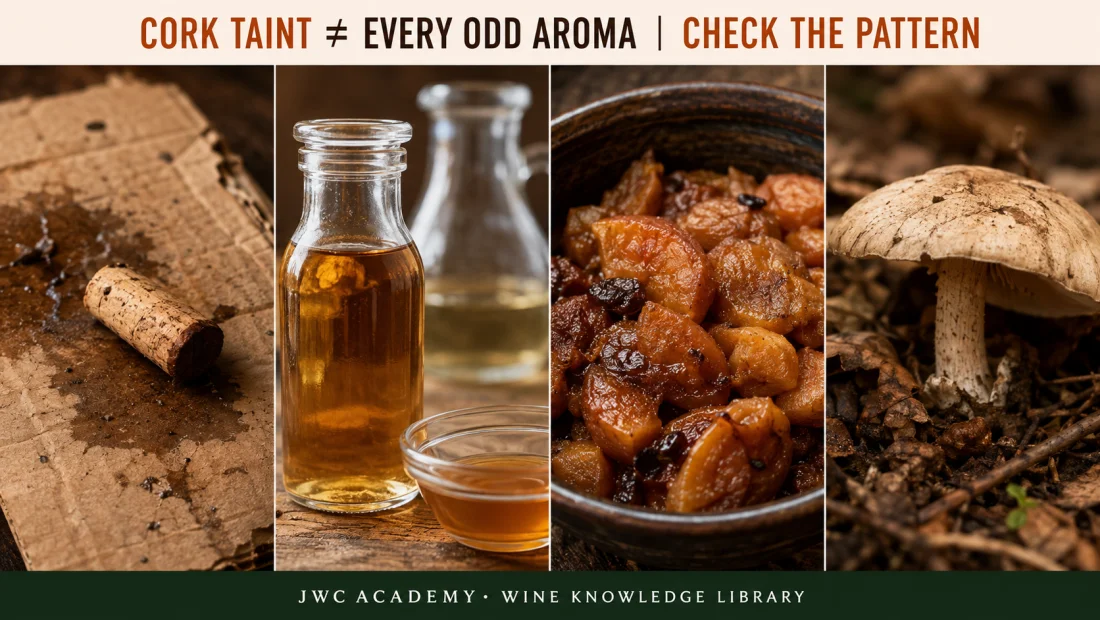
Change one variable at a time: swap the glass, not the wine
Don’t change several things at once or you’ll never know who’s to blame. Go in order: A, note the aroma in the original glass; B, pour the same bottle into another clean, odour-free glass and smell again; C, if the off note persists, have someone else smell blind to see if it’s only you; D, if you can, compare against a second bottle of the same wine. Isolating variables step by step tells you clearly whether it’s the glass, the environment, or the bottle itself. No decanter or instruments needed — one extra clean glass is enough.

Clear four cork-taint myths along the way
A few beliefs to drop: “a cork means it’ll be great and can’t go bad” — natural cork and cork taint are separate things; “any earthy smell means corked” — you need the combination of symptoms, not one word; “only experts can smell it” — thresholds vary by person, it’s not an identity test; “I don’t like this bottle, so I can call it faulty” — personal taste and a genuine fault must be kept apart. Drop these four and you won’t wrongly condemn a good wine, or make excuses for a bad one.

Real tasting skill is separating “don’t like it” from “it’s faulty”
Systematic tasting training first builds your coordinates for normal acidity, tannin and aroma, then teaches you how to describe a wine when it drifts from expectation. With that framework, a problem at dinner or in a restaurant no longer needs a guess made on nerve: is this a style I dislike, or is the bottle genuinely faulty? You can tell them apart and say why. The goal isn’t reciting terms to impress — it’s knowing why you judge a glass the way you do.

Did you know
Screw caps aren’t “cheap” — they dodge this fault
Many assume screw caps are low-end and cork is classy, but one big reason to use a screw cap is to sidestep cork-derived taint. The cork-taint rate people commonly cite sits in the low single-digit percentage range (a general figure that varies by vintage and origin) — modest-sounding, but painful across a case of good wine. So stop guessing quality by “cork or not”: plenty of serious producers deliberately choose screw caps to protect their own fruit.
FAQ
Does cork taint always smell strongly?
No. When mild, it may mainly show as muted fruit and a flat, dull wine rather than a strong stink. “It doesn’t reek” doesn’t guarantee it’s clean.
Can swirling rescue a corked wine?
No. Swirling won’t remove TCA at the root; it only helps you observe the aromas. A contaminated wine stays contaminated after swirling.
If I suspect a fault at a restaurant, can I ask for a replacement?
Ask staff to review it with you first, describing what you smell. Whether it’s replaced depends on that check and the restaurant’s policy — not on either side alone.
Does a screw cap mean no wine faults at all?
No. A screw cap greatly reduces cork-derived taint, but other faults — oxidation, reduction, volatile acidity — can still occur.
JWC Wine CourseNew World Wine Course
New World Wine Course
One 2.5-hour session · Beginner-friendly
Five wines side by side across Australia, New Zealand, Chile, Argentina and South Africa — turning grape, aroma and structure into a method you can use next time you buy. Small in-house tasting class, no experience needed.
See course detailsOr ask Emily on WhatsAppReferences
- Australian Wine Research Institute (AWRI) · awri.com.au
- Wine & Spirit Education Trust (WSET) · wsetglobal.com
© JWC Academy · Wine Guides